Results by title
76 books match the query 'Church and state' and 4 start with h
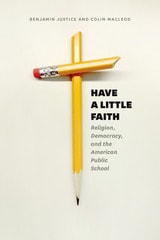
Have a Little Faith
Religion, Democracy, and the American Public SchoolBenjamin Justice and Colin Macleod
University of Chicago Press, 2016
From Bible readings and school prayer to teaching evolution and cultivating religious tolerance, Justice and Macleod consider the key issues and colorful characters that have shaped the way American schools have attempted to negotiate religious pluralism in a politically legitimate fashion. While schools and educational policies have not always advanced tolerance and understanding, Justice and Macleod point to the many efforts Americans have made to find a place for religion in public schools that both acknowledges the importance of faith to so many citizens and respects democratic ideals that insist upon a reasonable separation of church and state. Finally, they apply the lessons of history and political philosophy to an analysis of three critical areas of religious controversy in public education today: student-led religious observances in extracurricular activities, the tensions between freedom of expression and the need for inclusive environments, and the shift from democratic control of schools to loosely regulated charter and voucher programs.
Altogether Justice and Macleod show how the interpretation of educational history through the lens of contemporary democratic theory offers both a richer understanding of past disputes and new ways of addressing contemporary challenges.
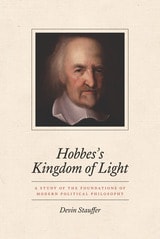
Hobbes's Kingdom of Light
A Study of the Foundations of Modern Political PhilosophyDevin Stauffer
University of Chicago Press, 2018
In Hobbes’s Kingdom of Light, Stauffer argues that Hobbes was engaged in a struggle on multiple fronts against forces, both philosophic and religious, that he thought had long distorted philosophy and destroyed the prospects of a lasting peace in politics. By exploring the twists and turns of Hobbes’s arguments, not only in his famous Leviathan but throughout his corpus, Stauffer uncovers the details of Hobbes’s critique of an older outlook, rooted in classical philosophy and Christian theology, and reveals the complexity of Hobbes’s war against the “Kingdom of Darkness.” He also describes the key features of the new outlook—the “Kingdom of Light”—that Hobbes sought to put in its place. Hobbes’s venture helped to prepare the way for the later emergence of modern liberalism and modern secularism. Hobbes’s Kingdom of Light is a wide-ranging and ambitious exploration of Hobbes’s thought.
Honor and Personhood in Early Modern Mexico
Osvaldo F. Pardo
University of Michigan Press, 2015
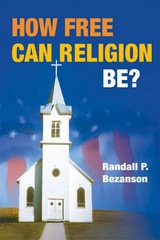
How Free Can Religion Be?
Randall P. Bezanson
University of Illinois Press, 2010
In tracking the evolution of the First Amendment's Free Exercise and Establishment Clause doctrine through Key Supreme Court decisions on religious freedom, legal scholar Randall P. Bezanson focuses on the court's shift from strict separation of church and state to a position where the government accommodates and even fosters religion. Beginning with samples from the latter half of the nineteenth century, the detailed case studies present new problems and revisit old ones as well: the purported belief of polygamy in the Mormon Church; state support for religious schools; the teaching of evolution and creationism in public schools; Amish claims for exemption from compulsory education laws; comparable claims for Native American religion in relation to drug laws; and rights of free speech and equal access by religious groups in colleges and public schools.