233 books match the query 'Cold War' and 8 start with h
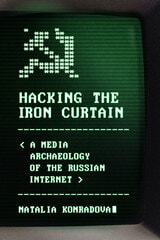
cover of Hacking the Iron Curtain: A Media Archaeology of the Russian Internet

Hacking the Iron Curtain

A Media Archaeology of the Russian Internet

Natalia Konradova

University of Wisconsin Press, 2026

For decades before the internet existed, scientists, technologists, novelists, and enthusiasts of all descriptions dreamed of instantaneous, worldwide communication systems. What forms such systems might take and what technologies could be used to accomplish this goal were open questions—questions asked by people around the world, including in the Cold War–era superpowers of the United States and the Soviet Union. 

Media archaeologist Natalia Konradova examines the history of the internet in Russia and its predecessor state, cutting through layers of technological history and dusting off conceptual artifacts of the past. Inspired by the fundamental question of how Soviets imagined future technologies, she investigates experiments with telepathy alongside the (then equally improbable) dream of a global, digitally connected computer network. Since the story of the Russian internet is inextricably wound up with Soviet society and the history of the Cold War, Hacking the Iron Curtain is as much a cultural and political history as it is a technological one—a history that illustrates how collective dreams can challenge geopolitical ambitions and inspire world-changing technologies.
[more]
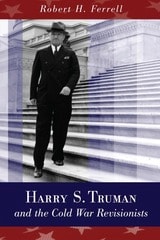
cover of Harry S. Truman and the Cold War Revisionists

Harry S. Truman and the Cold War Revisionists

Robert H. Ferrell

University of Missouri Press, 2006
The idea of revising what is known of the past constitutes an essential procedure in historical scholarship, but revisionists are often hasty and argumentative in their judgments. Such, argues Robert H. Ferrell, has been the case with assessments of the presidency of Harry S. Truman, who was targeted by historians and political scientists in the 1960s and ’70s for numerous failings in both domestic and foreign policy, including launching the cold war—perceptions that persist to the present day.
Widely acknowledged as today’s foremost Truman scholar, Ferrell turns the tables on the revisionists in this collection of classic essays. He goes below the surface appearances of history to examine how situations actually developed and how Truman performed sensibly—even courageously—in the face of unforeseen crises.
While some revisionists see Truman as consumed by a blind hatred of the Soviet Union and adopting an unrestrainedly militant stance, Ferrell convincingly shows that Truman wished to get along with the Soviets and was often bewildered by their actions. He interprets policies such as the Truman Doctrine, the Marshall Plan, and support for NATO as prudent responses to perceived threats and credits the Truman administration for the ways in which it dealt with unprecedented problems.
What emerges most vividly from Ferrell’s essays is a sense of how weak a hand the United States held from 1945 to1950, with its conventional forces depleted by the return of veterans to civil pursuits after the war and with its capacity for delivery of nuclear weapons in a sorry state. He shows that Truman regarded the atomic bomb as a weapon of last resort, not an instrument of policy, and that he took America into a war in Korea for the good of the United States and its allies. Although Truman has been vindicated on many of these issues, there still remains a lingering controversy over the use of atomic weapons in Japan—a decision that Ferrell argues is understandable in light of what Truman faced at the start of his presidency.
Ferrell argues that the revisionists who attacked Truman understood neither the times nor the man—one of the most clearheaded, farsighted presidents ever to occupy the Oval Office. Harry S. Truman and the Cold War Revisionists shows us that Truman’s was indeed a remarkable presidency, as it cautions historians against too quickly appraising the very recent past.
[more]
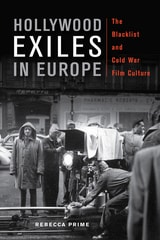
cover of Hollywood Exiles in Europe: The Blacklist and Cold War Film Culture

Hollywood Exiles in Europe

The Blacklist and Cold War Film Culture

Prime, Rebecca

Rutgers University Press, 2014

Rebecca Prime documents the untold story of the American directors, screenwriters, and actors who exiled themselves to Europe as a result of the Hollywood blacklist. During the 1950s and 1960s, these Hollywood émigrés directed, wrote, or starred in almost one hundred European productions, their contributions ranging from crime film masterpieces like Du rififi chez les hommes (1955, Jules Dassin, director) to international blockbusters like The Bridge on the RiverKwai (1957, Carl Foreman and Michael Wilson, screenwriters) and acclaimed art films like The Servant (1963, Joseph Losey, director).

At once a lively portrait of a lesser-known American “lost generation” and an examination of an important transitional moment in European cinema, the book offers a compelling argument for the significance of the blacklisted émigrés to our understanding of postwar American and European cinema and Cold War relations. Prime provides detailed accounts of the production and reception of their European films that clarify the ambivalence with which Hollywood was regarded within postwar European culture. Drawing upon extensive archival research, including previously classified material, Hollywood Exiles in Europe suggests the need to rethink our understanding of the Hollywood blacklist as a purely domestic phenomenon. By shedding new light on European cinema’s changing relationship with Hollywood, the book illuminates the postwar shift from national to transnational cinema.
[more]
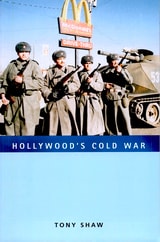
cover of Hollywood's Cold War

Hollywood's Cold War

Tony Shaw

University of Massachusetts Press, 2007

At a moment when American film reflects a deepening preoccupation with the Bush administration's War on Terror, this authoritative and timely book offers the first comprehensive account of Hollywood's propaganda role during the defining ideological conflict of the twentieth century: the Cold War. In an analysis of films dating from America's first Red Scare in the wake of the 1917 Bolshevik Revolution to the collapse of the Berlin Wall in 1989, Tony Shaw examines the complex relationship between filmmakers, censors, politicians, and government propagandists. 

Movies, Shaw demonstrates, were at the center of the Cold War's battle for hearts and minds. Hollywood's comedies, love stories, musicals, thrillers, documentaries, and science fiction shockers played a critical dual role: on the one hand teaching millions of Americans why communism represented the greatest threat their country had ever faced, and on the other selling America's liberal-capitalist ideas around the globe. Drawing on declassified government documents, studio archives, and filmmakers' private papers, Shaw reveals the different ways in which cinematic propaganda was produced, disseminated, and received by audiences during the Cold War. In the process, he addresses subjects as diverse as women's fashions, McCarthyism, drug smuggling, Christianity, and American cultural diplomacy in India. Anyone seeking to understand wartime propaganda today will find striking contemporary resonance in his conclusions about Hollywood's versatility and power.
[more]
cover of Hot Books in the Cold War: The CIA-Funded Secret Western Book Distribution Program Behind the Iron Curtain

Hot Books in the Cold War

The CIA-Funded Secret Western Book Distribution Program Behind the Iron Curtain

Alfred A. Reisch

Central European University Press, 2013
This study reveals the hidden story of the secret book distribution program to Eastern Europe financed by the CIA during the Cold War. At its height between 1957 and 1970, the book program was one of the least known but most effective methods of penetrating the Iron Curtain, reaching thousands of intellectuals and professionals in the Soviet Bloc. Reisch conducted thorough research on the key personalities involved in the book program, especially the two key figures: S. S. Walker, who initiated the idea of a “mailing project,” and G. C. Minden, who developed it into one of the most effective political and psychological tools of the Cold War. The book includes excellent chapters on the vagaries of censorship and interception of books by communist authorities based on personal letters and accounts from recipients of Western material. It will stand as a testimony in honor of the handful of imaginative, determined, and hard-working individuals who helped to free half of Europe from mental bondage and planted many of the seeds that germinated when communism collapsed and the Soviet bloc disintegrated.
[more]
cover of How Reason Almost Lost Its Mind: The Strange Career of Cold War Rationality

How Reason Almost Lost Its Mind

The Strange Career of Cold War Rationality

Paul Erickson, Judy L. Klein, Lorraine Daston, Rebecca Lemov, Thomas Sturm, and Michael D. Gordin

University of Chicago Press, 2013
In the United States at the height of the Cold War, roughly between the end of World War II and the early 1980s, a new project of redefining rationality commanded the attention of sharp minds, powerful politicians, wealthy foundations, and top military brass. Its home was the human sciences—psychology, sociology, political science, and economics, among others—and its participants enlisted in an intellectual campaign to figure out what rationality should mean and how it could be deployed.
           
How Reason Almost Lost Its Mind brings to life the people—Herbert Simon, Oskar Morgenstern, Herman Kahn, Anatol Rapoport, Thomas Schelling, and many others—and places, including the RAND Corporation, the Center for Advanced Study in the Behavioral Sciences, the Cowles Commission for Research and Economics, and the Council on Foreign Relations, that played a key role in putting forth a “Cold War rationality.” Decision makers harnessed this picture of rationality—optimizing, formal, algorithmic, and mechanical—in their quest to understand phenomena as diverse as economic transactions, biological evolution, political elections, international relations, and military strategy. The authors chronicle and illuminate what it meant to be rational in the age of nuclear brinkmanship.
[more]
cover of Human Rights and Transnational Solidarity in Cold War Latin America

Human Rights and Transnational Solidarity in Cold War Latin America

Edited by Jessica Stites Mor

University of Wisconsin Press, 2013

With the end of the global Cold War, the struggle for human rights has emerged as one of the most controversial forces of change in Latin America. Many observers seek the foundations of that movement in notions of rights and models of democratic institutions that originated in the global North. Challenging that view, this volume argues that Latin American community organizers, intellectuals, novelists, priests, students, artists, urban pobladores, refugees, migrants, and common people have contributed significantly to new visions of political community and participatory democracy. These local actors built an alternative transnational solidarity from below with significant participation of the socially excluded and activists in the global South.
    Edited by Jessica Stites Mor, this book offers fine-grained case studies that show how Latin America’s re-emerging Left transformed the struggles against dictatorship and repression of the Cold War into the language of anti-colonialism, socioeconomic rights, and identity.
[more]
cover of Hungary in the Cold War, 1945-1956: Between the United States and the Soviet Union

Hungary in the Cold War, 1945-1956

Between the United States and the Soviet Union

László Borhi

Central European University Press, 2004

Based on new archival evidence, examines Soviet Empire building in Hungary and the American response to it. Hungary was not important enough to resist the Soviets, its democratic opposition failed to win American sympathy, the US simply had no leverage over the Soviets, who sacrificed cooperation with the West for a closed sphere in Eastern Europe. The imposition of a Stalinist regime assured Hungary's unconditional loyalty to Soviet imperial needs. Unlike the GDR, Eastern Europe was never considered a bargaining chip for bettering relations with the West. The book analyzes why, given all its idealism and power, the US failed even in its minimal aims concerning the states of Eastern Europe. Eventually both powers pursued power politics: the Soviets in a naked form, the US subtly, but both with little regard for the fate of Hungarians.
[more]