Results by title
341 books match the query 'Cooking' and 9 start with h
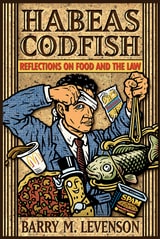
Habeas Codfish
Reflections on Food and the LawBarry M. Levenson
University of Wisconsin Press, 2001
From the McDonald’s hot coffee case to the cattle ranchers’ beef with Oprah Winfrey, from the old English "Assize of Bread" to current nutrition labeling laws, what we eat and how we eat are shaped as much by legal regulations as by personal taste. Barry M. Levenson, the curator of the world-famous (really!) Mount Horeb Mustard Museum and a self-proclaimed "recovering lawyer," offers in Habeas Codfish an entertaining and expert overview of the frustrating, frightening, and funny intersections of food and the law.
Discover how Mr. Peanut shaped the law of trademark infringement for the entire food industry. Consider the plight of the restaurant owner besmirched by a journalist’s negative review. Find out how traditional Jewish laws of kashrut ran afoul of the First Amendment. Prison meals, butter vs. margarine, definitions of organic food, undercover ABC reporters at the Food Lion, the Massachusetts Supreme Court case that saved fish chowder, even recipes—it’s all in here, so tuck in!
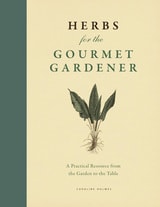
Herbs for the Gourmet Gardener
A Practical Resource from the Garden to the TableCaroline Holmes
University of Chicago Press, 2014
A feast for the eyes and the table, this user-friendly resource traverses the realms of both the garden and the kitchen, addressing the cultivation, storage, and preparation of more than sixty herbs. Practical growing tips, fascinating histories, nutritional information, and classic recipes appear alongside botanical illustrations drawn from the Royal Horticultural Society’s cherished collection. With both familiar varieties and novel options, Herbs for the Gourmet Gardener will inspire you to create a world of new shapes, colors, and tastes.

Homemade
Finnish Rye, Feed Sack Fashion, and Other Simple Ingredients from My Life in FoodBeatrice Ojakangas
University of Minnesota Press, 2018
Beatrice Ojakangas, the oldest of ten children, came by it naturally—the cooking but also the pluck and perseverance that she's served up with her renowned Scandinavian dishes over the years. In the wake of the Moose Lake fires and famine of 1918, Ojakangas tells us in this delightful memoir-cum-cookbook, her grandfather sent for a Finnish mail-order bride—and got one who’d trained as a chef.
Ojakangas’s stories, are, unsurprisingly, steeped in food lore: tales of cardamom and rye, baking salt cake at the age of five on a wood-burning stove, growing up on venison, making egg rolls for Chun King, and sending off a Pillsbury Bake Off–winning recipe without ever making it. And from here, how those early roots flourished through hard work and dedication to a successful (but never easy) career in food writing and a much wider world, from working for pizza roll king Jeno Paulucci to researching food traditions in Finland and appearing with Julia Child and Martha Stewart—all without ever leaving behind the lessons learned on the farm. As she says, “first you have to start with good ingredients and a good idea.”
Chock-full of recipes, anecdotes, and a kind humor that bring to vivid life the Finnish culture of northern Minnesota as well as the wider culinary world, Homemade delivers the savory and the sweet in equal measures and casts a warm light on a rich slice of the country’s cooking heritage.
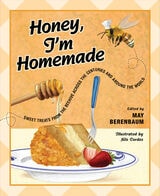
Honey, I'm Homemade
Sweet Treats from the Beehive across the Centuries and around the WorldEdited by May Berenbaum, Illustrated by Nils Cordes
University of Illinois Press, 2010
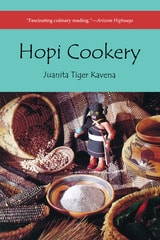
Hopi Cookery
Juanita Tiger Kavena
University of Arizona Press, 1980
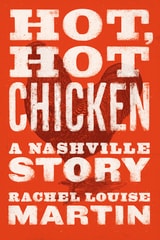
Hot, Hot Chicken
A Nashville StoryRachel Louise Martin
Vanderbilt University Press, 2021
But for almost seventy years, hot chicken was made and sold primarily in Nashville’s Black neighborhoods—and the story of hot chicken says something powerful about race relations in Nashville, especially as the city tries to figure out what it will be in the future.
Hot, Hot Chicken recounts the history of Nashville’s Black communities through the story of its hot chicken scene from the Civil War, when Nashville became a segregated city, through the tornado that ripped through North Nashville in March 2020.
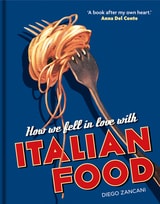
How We Fell in Love with Italian Food
Diego Zancani
Bodleian Library Publishing, 2019
In this book, Diego Zancani maps the extraordinary progress of Italian food, from the legacy of the Roman invasion to its current, ever-increasing popularity. Starting with medieval manuscripts, he traces Italian recipes in Britain back to the thirteenth century, and draws on later travel diaries to explore British and American encounters with Italian food abroad. The book also shows how Italian immigrants, from ice-cream sellers and grocers to chefs and restauranteurs, had a transformative influence on the spread of the cuisine, championing Italian food at pivotal moments throughout history.
Lavishly illustrated with material from the archives of the Bodleian Library and elsewhere, this sumptuous book also includes Italian regional recipes that have come down to us through the centuries, and celebrates the enduring international appeal of delicatessens, pizzerias, trattorias, and the Mediterranean diet.
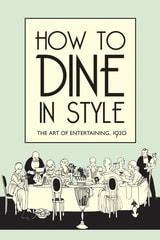
How to Dine in Style
The Art of Entertaining, 1920J. Rey
Bodleian Library Publishing, 2013
By turns a collection of practical advice and a catalog of eccentricities, The Whole Art of Dining, republished by the Bodleian Library as How to Dine in Style, contained everything the would-be socialite needed to know in order to elevate food to high art, from tricks for putting together a proper French menu or throwing a garden party to practical tips on serving wines in the correct order and at the right temperature. Throughout the book are stories of astonishing excess, such as the search for ever-more-elaborate themes and venues, and the more daring of the book’s devotees might have been tempted to emulate efforts like those of the intrepid hostess whose mountaineering-themed dinner party had guests rappel to the rooftop of her Chicago home or American millionaire George A. Kessler, whose infamous “Gondola Party” flooded— for the first and only time—the central courtyard of the Savoy.
A captivating glimpse into the golden age of fine dining, this book will be consumed with interest by discerning diners and fans of the Roaring Twenties—and it may even inspire readers to try their hand at throwing a stylish soiree of their own.