3369 books match the query 'Cultural & Social' and 119 start with h
cover of HAU vol 10 num 2

HAU vol 10 num 2

The University of Chicago Press

University of Chicago Press Journals, 2020
This is volume 10 issue 2 of HAU: Journal of Ethnographic Theory. HAU: Journal of Ethnographic Theory, is an international journal which aims to situate ethnography as the prime heuristic of anthropology, and return it to the forefront of conceptual developments in the discipline. The journal is motivated by the need to reinstate ethnographic theorization in contemporary anthropology as a potent alternative to its "explanation" or "contextualization" by philosophical arguments, moves which have resulted in a loss of the discipline's distinctive theoretical nerve. By drawing out its potential to critically engage and challenge Western cosmological assumptions and conceptual determinations, HAU aims to provide an exciting new arena for evaluating ethnography as a daring enterprise for 'worlding' alien terms and forms of life, by exploiting their potential for rethinking humanity and alterity.
[more]
cover of HAU vol 9 num 1

HAU vol 9 num 1

The University of Chicago Press

University of Chicago Press Journals, 2019
This is volume 9 issue 1 of HAU: Journal of Ethnographic Theory. HAU: Journal of Ethnographic Theory, is an international journal which aims to situate ethnography as the prime heuristic of anthropology, and return it to the forefront of conceptual developments in the discipline. The journal is motivated by the need to reinstate ethnographic theorization in contemporary anthropology as a potent alternative to its "explanation" or "contextualization" by philosophical arguments, moves which have resulted in a loss of the discipline's distinctive theoretical nerve. By drawing out its potential to critically engage and challenge Western cosmological assumptions and conceptual determinations, HAU aims to provide an exciting new arena for evaluating ethnography as a daring enterprise for 'worlding' alien terms and forms of life, by exploiting their potential for rethinking humanity and alterity.
[more]
cover of HAU: Journal of Ethnographic Theory, volume 11 number 2 (Autumn 2021)

HAU

Journal of Ethnographic Theory, volume 11 number 2 (Autumn 2021)

The University of Chicago Press

University of Chicago Press Journals, 2021
This is volume 11 issue 2 of HAU: Journal of Ethnographic Theory. HAU: Journal of Ethnographic Theory, is an international journal which aims to situate ethnography as the prime heuristic of anthropology, and return it to the forefront of conceptual developments in the discipline. The journal is motivated by the need to reinstate ethnographic theorization in contemporary anthropology as a potent alternative to its "explanation" or "contextualization" by philosophical arguments, moves which have resulted in a loss of the discipline's distinctive theoretical nerve. By drawing out its potential to critically engage and challenge Western cosmological assumptions and conceptual determinations, HAU aims to provide an exciting new arena for evaluating ethnography as a daring enterprise for 'worlding' alien terms and forms of life, by exploiting their potential for rethinking humanity and alterity.
[more]
cover of HAU: Journal of Ethnographic Theory, volume 11 number 3 (Winter 2021)

HAU

Journal of Ethnographic Theory, volume 11 number 3 (Winter 2021)

The University of Chicago Press

University of Chicago Press Journals, 2021
This is volume 11 issue 3 of HAU: Journal of Ethnographic Theory. HAU: Journal of Ethnographic Theory, is an international journal which aims to situate ethnography as the prime heuristic of anthropology, and return it to the forefront of conceptual developments in the discipline. The journal is motivated by the need to reinstate ethnographic theorization in contemporary anthropology as a potent alternative to its "explanation" or "contextualization" by philosophical arguments, moves which have resulted in a loss of the discipline's distinctive theoretical nerve. By drawing out its potential to critically engage and challenge Western cosmological assumptions and conceptual determinations, HAU aims to provide an exciting new arena for evaluating ethnography as a daring enterprise for 'worlding' alien terms and forms of life, by exploiting their potential for rethinking humanity and alterity.
[more]
cover of HAU: Journal of Ethnographic Theory, volume 12 number 1 (Spring 2022)

HAU

Journal of Ethnographic Theory, volume 12 number 1 (Spring 2022)

The University of Chicago Press

University of Chicago Press Journals, 2022
This is volume 12 issue 1 of HAU: Journal of Ethnographic Theory. HAU: Journal of Ethnographic Theory, is an international journal which aims to situate ethnography as the prime heuristic of anthropology, and return it to the forefront of conceptual developments in the discipline. The journal is motivated by the need to reinstate ethnographic theorization in contemporary anthropology as a potent alternative to its "explanation" or "contextualization" by philosophical arguments, moves which have resulted in a loss of the discipline's distinctive theoretical nerve. By drawing out its potential to critically engage and challenge Western cosmological assumptions and conceptual determinations, HAU aims to provide an exciting new arena for evaluating ethnography as a daring enterprise for 'worlding' alien terms and forms of life, by exploiting their potential for rethinking humanity and alterity.
[more]
cover of HAU: Journal of Ethnographic Theory, volume 12 number 2 (Autumn 2022)

HAU

Journal of Ethnographic Theory, volume 12 number 2 (Autumn 2022)

The University of Chicago Press

University of Chicago Press Journals, 2022
This is volume 12 issue 2 of HAU: Journal of Ethnographic Theory. HAU: Journal of Ethnographic Theory, is an international journal which aims to situate ethnography as the prime heuristic of anthropology, and return it to the forefront of conceptual developments in the discipline. The journal is motivated by the need to reinstate ethnographic theorization in contemporary anthropology as a potent alternative to its "explanation" or "contextualization" by philosophical arguments, moves which have resulted in a loss of the discipline's distinctive theoretical nerve. By drawing out its potential to critically engage and challenge Western cosmological assumptions and conceptual determinations, HAU aims to provide an exciting new arena for evaluating ethnography as a daring enterprise for 'worlding' alien terms and forms of life, by exploiting their potential for rethinking humanity and alterity.
[more]
cover of HAU: Journal of Ethnographic Theory, volume 12 number 3 (Winter 2022)

HAU

Journal of Ethnographic Theory, volume 12 number 3 (Winter 2022)

The University of Chicago Press

University of Chicago Press Journals, 2022
This is volume 12 issue 3 of HAU: Journal of Ethnographic Theory. HAU: Journal of Ethnographic Theory, is an international journal which aims to situate ethnography as the prime heuristic of anthropology, and return it to the forefront of conceptual developments in the discipline. The journal is motivated by the need to reinstate ethnographic theorization in contemporary anthropology as a potent alternative to its "explanation" or "contextualization" by philosophical arguments, moves which have resulted in a loss of the discipline's distinctive theoretical nerve. By drawing out its potential to critically engage and challenge Western cosmological assumptions and conceptual determinations, HAU aims to provide an exciting new arena for evaluating ethnography as a daring enterprise for 'worlding' alien terms and forms of life, by exploiting their potential for rethinking humanity and alterity.
[more]
cover of HAU: Journal of Ethnographic Theory, volume 13 number 1 (Spring 2023)

HAU

Journal of Ethnographic Theory, volume 13 number 1 (Spring 2023)

The University of Chicago Press

University of Chicago Press Journals, 2023
This is volume 13 issue 1 of HAU: Journal of Ethnographic Theory. HAU: Journal of Ethnographic Theory, is an international journal which aims to situate ethnography as the prime heuristic of anthropology, and return it to the forefront of conceptual developments in the discipline. The journal is motivated by the need to reinstate ethnographic theorization in contemporary anthropology as a potent alternative to its "explanation" or "contextualization" by philosophical arguments, moves which have resulted in a loss of the discipline's distinctive theoretical nerve. By drawing out its potential to critically engage and challenge Western cosmological assumptions and conceptual determinations, HAU aims to provide an exciting new arena for evaluating ethnography as a daring enterprise for 'worlding' alien terms and forms of life, by exploiting their potential for rethinking humanity and alterity.
[more]
cover of HAU: Journal of Ethnographic Theory, volume 13 number 2 (Autumn 2023)

HAU

Journal of Ethnographic Theory, volume 13 number 2 (Autumn 2023)

The University of Chicago Press

University of Chicago Press Journals, 2023
This is volume 13 issue 2 of HAU: Journal of Ethnographic Theory. HAU: Journal of Ethnographic Theory, is an international journal which aims to situate ethnography as the prime heuristic of anthropology, and return it to the forefront of conceptual developments in the discipline. The journal is motivated by the need to reinstate ethnographic theorization in contemporary anthropology as a potent alternative to its "explanation" or "contextualization" by philosophical arguments, moves which have resulted in a loss of the discipline's distinctive theoretical nerve. By drawing out its potential to critically engage and challenge Western cosmological assumptions and conceptual determinations, HAU aims to provide an exciting new arena for evaluating ethnography as a daring enterprise for 'worlding' alien terms and forms of life, by exploiting their potential for rethinking humanity and alterity.
[more]
cover of HAU: Journal of Ethnographic Theory, volume 13 number 3 (Winter 2023)

HAU

Journal of Ethnographic Theory, volume 13 number 3 (Winter 2023)

The University of Chicago Press

University of Chicago Press Journals, 2023
This is volume 13 issue 3 of HAU: Journal of Ethnographic Theory. HAU: Journal of Ethnographic Theory, is an international journal which aims to situate ethnography as the prime heuristic of anthropology, and return it to the forefront of conceptual developments in the discipline. The journal is motivated by the need to reinstate ethnographic theorization in contemporary anthropology as a potent alternative to its "explanation" or "contextualization" by philosophical arguments, moves which have resulted in a loss of the discipline's distinctive theoretical nerve. By drawing out its potential to critically engage and challenge Western cosmological assumptions and conceptual determinations, HAU aims to provide an exciting new arena for evaluating ethnography as a daring enterprise for 'worlding' alien terms and forms of life, by exploiting their potential for rethinking humanity and alterity.
[more]
cover of HAU: Journal of Ethnographic Theory, volume 14 number 1 (Spring 2024)

HAU

Journal of Ethnographic Theory, volume 14 number 1 (Spring 2024)

The University of Chicago Press

University of Chicago Press Journals, 2024
This is volume 14 issue 1 of HAU: Journal of Ethnographic Theory. HAU: Journal of Ethnographic Theory, is an international journal which aims to situate ethnography as the prime heuristic of anthropology, and return it to the forefront of conceptual developments in the discipline. The journal is motivated by the need to reinstate ethnographic theorization in contemporary anthropology as a potent alternative to its "explanation" or "contextualization" by philosophical arguments, moves which have resulted in a loss of the discipline's distinctive theoretical nerve. By drawing out its potential to critically engage and challenge Western cosmological assumptions and conceptual determinations, HAU aims to provide an exciting new arena for evaluating ethnography as a daring enterprise for 'worlding' alien terms and forms of life, by exploiting their potential for rethinking humanity and alterity.
[more]
cover of HAU: Journal of Ethnographic Theory, volume 14 number 2 (Autumn 2024)

HAU

Journal of Ethnographic Theory, volume 14 number 2 (Autumn 2024)

The University of Chicago Press

University of Chicago Press Journals, 2024
This is volume 14 issue 2 of HAU: Journal of Ethnographic Theory. HAU: Journal of Ethnographic Theory, is an international journal which aims to situate ethnography as the prime heuristic of anthropology, and return it to the forefront of conceptual developments in the discipline. The journal is motivated by the need to reinstate ethnographic theorization in contemporary anthropology as a potent alternative to its "explanation" or "contextualization" by philosophical arguments, moves which have resulted in a loss of the discipline's distinctive theoretical nerve. By drawing out its potential to critically engage and challenge Western cosmological assumptions and conceptual determinations, HAU aims to provide an exciting new arena for evaluating ethnography as a daring enterprise for 'worlding' alien terms and forms of life, by exploiting their potential for rethinking humanity and alterity.
[more]
cover of HAU: Journal of Ethnographic Theory, volume 14 number 3 (Winter 2024)

HAU

Journal of Ethnographic Theory, volume 14 number 3 (Winter 2024)

The University of Chicago Press

University of Chicago Press Journals, 2024
This is volume 14 issue 3 of HAU: Journal of Ethnographic Theory. HAU: Journal of Ethnographic Theory, is an international journal which aims to situate ethnography as the prime heuristic of anthropology, and return it to the forefront of conceptual developments in the discipline. The journal is motivated by the need to reinstate ethnographic theorization in contemporary anthropology as a potent alternative to its "explanation" or "contextualization" by philosophical arguments, moves which have resulted in a loss of the discipline's distinctive theoretical nerve. By drawing out its potential to critically engage and challenge Western cosmological assumptions and conceptual determinations, HAU aims to provide an exciting new arena for evaluating ethnography as a daring enterprise for 'worlding' alien terms and forms of life, by exploiting their potential for rethinking humanity and alterity.
[more]
cover of HAU: Journal of Ethnographic Theory, volume 15 number 1 (Spring 2025)

HAU

Journal of Ethnographic Theory, volume 15 number 1 (Spring 2025)

The University of Chicago Press

University of Chicago Press Journals, 2025
This is volume 15 issue 1 of HAU: Journal of Ethnographic Theory. HAU: Journal of Ethnographic Theory, is an international journal which aims to situate ethnography as the prime heuristic of anthropology, and return it to the forefront of conceptual developments in the discipline. The journal is motivated by the need to reinstate ethnographic theorization in contemporary anthropology as a potent alternative to its "explanation" or "contextualization" by philosophical arguments, moves which have resulted in a loss of the discipline's distinctive theoretical nerve. By drawing out its potential to critically engage and challenge Western cosmological assumptions and conceptual determinations, HAU aims to provide an exciting new arena for evaluating ethnography as a daring enterprise for 'worlding' alien terms and forms of life, by exploiting their potential for rethinking humanity and alterity.
[more]
cover of HAU: Journal of Ethnographic Theory, volume 15 number 2 (Autumn 2025)

HAU

Journal of Ethnographic Theory, volume 15 number 2 (Autumn 2025)

The University of Chicago Press

University of Chicago Press Journals, 2025
This is volume 15 issue 2 of HAU: Journal of Ethnographic Theory. HAU: Journal of Ethnographic Theory, is an international journal which aims to situate ethnography as the prime heuristic of anthropology, and return it to the forefront of conceptual developments in the discipline. The journal is motivated by the need to reinstate ethnographic theorization in contemporary anthropology as a potent alternative to its "explanation" or "contextualization" by philosophical arguments, moves which have resulted in a loss of the discipline's distinctive theoretical nerve. By drawing out its potential to critically engage and challenge Western cosmological assumptions and conceptual determinations, HAU aims to provide an exciting new arena for evaluating ethnography as a daring enterprise for 'worlding' alien terms and forms of life, by exploiting their potential for rethinking humanity and alterity.
[more]
cover of HAU: Journal of Ethnographic Theory, volume 15 number 3 (Winter 2025)

HAU

Journal of Ethnographic Theory, volume 15 number 3 (Winter 2025)

The University of Chicago Press

University of Chicago Press Journals, 2025
This is volume 15 issue 3 of HAU: Journal of Ethnographic Theory. HAU: Journal of Ethnographic Theory, is an international journal which aims to situate ethnography as the prime heuristic of anthropology, and return it to the forefront of conceptual developments in the discipline. The journal is motivated by the need to reinstate ethnographic theorization in contemporary anthropology as a potent alternative to its "explanation" or "contextualization" by philosophical arguments, moves which have resulted in a loss of the discipline's distinctive theoretical nerve. By drawing out its potential to critically engage and challenge Western cosmological assumptions and conceptual determinations, HAU aims to provide an exciting new arena for evaluating ethnography as a daring enterprise for 'worlding' alien terms and forms of life, by exploiting their potential for rethinking humanity and alterity.
[more]
cover of HAU: Journal of Ethnographic Theory, volume 16 number 1 (Spring 2026)

HAU

Journal of Ethnographic Theory, volume 16 number 1 (Spring 2026)

The University of Chicago Press

University of Chicago Press Journals, 2026
This is volume 16 issue 1 of HAU: Journal of Ethnographic Theory. HAU: Journal of Ethnographic Theory, is an international journal which aims to situate ethnography as the prime heuristic of anthropology, and return it to the forefront of conceptual developments in the discipline. The journal is motivated by the need to reinstate ethnographic theorization in contemporary anthropology as a potent alternative to its "explanation" or "contextualization" by philosophical arguments, moves which have resulted in a loss of the discipline's distinctive theoretical nerve. By drawing out its potential to critically engage and challenge Western cosmological assumptions and conceptual determinations, HAU aims to provide an exciting new arena for evaluating ethnography as a daring enterprise for 'worlding' alien terms and forms of life, by exploiting their potential for rethinking humanity and alterity.
[more]
cover of HAU: Journal of Ethnographic Theory, volume 16 number 2 (Autumn 2026)

HAU

Journal of Ethnographic Theory, volume 16 number 2 (Autumn 2026)

The University of Chicago Press

University of Chicago Press Journals, 2026
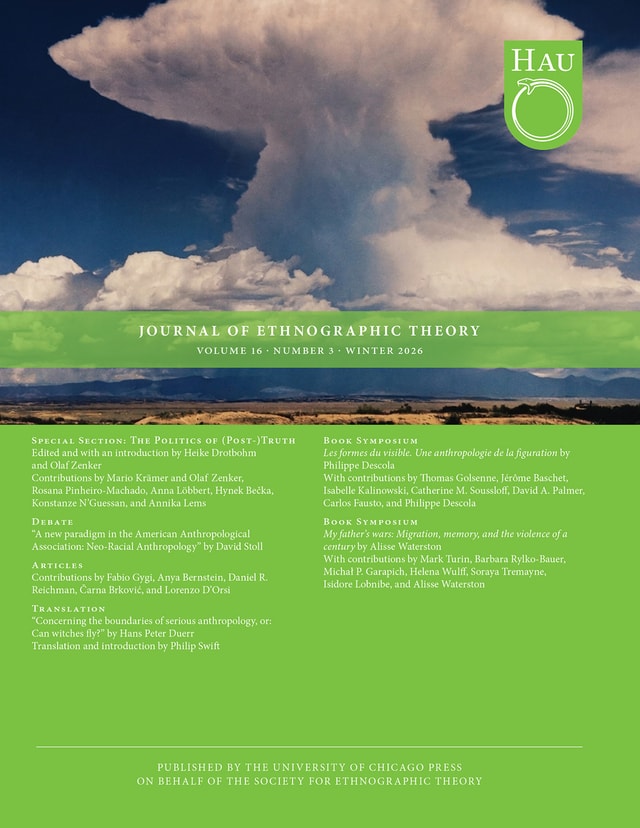
This is volume 16 issue 2 of HAU: Journal of Ethnographic Theory. HAU: Journal of Ethnographic Theory, is an international journal which aims to situate ethnography as the prime heuristic of anthropology, and return it to the forefront of conceptual developments in the discipline. The journal is motivated by the need to reinstate ethnographic theorization in contemporary anthropology as a potent alternative to its "explanation" or "contextualization" by philosophical arguments, moves which have resulted in a loss of the discipline's distinctive theoretical nerve. By drawing out its potential to critically engage and challenge Western cosmological assumptions and conceptual determinations, HAU aims to provide an exciting new arena for evaluating ethnography as a daring enterprise for 'worlding' alien terms and forms of life, by exploiting their potential for rethinking humanity and alterity.
[more]
cover of HAU: Journal of Ethnographic Theory, volume 16 number 3 (Winter 2026)

HAU

Journal of Ethnographic Theory, volume 16 number 3 (Winter 2026)

The University of Chicago Press

University of Chicago Press Journals, 2026

This is volume 16 issue 3 of HAU: Journal of Ethnographic Theory. HAU: Journal of Ethnographic Theory, is an international journal which aims to situate ethnography as the prime heuristic of anthropology, and return it to the forefront of conceptual developments in the discipline. The journal is motivated by the need to reinstate ethnographic theorization in contemporary anthropology as a potent alternative to its "explanation" or "contextualization" by philosophical arguments, moves which have resulted in a loss of the discipline's distinctive theoretical nerve. By drawing out its potential to critically engage and challenge Western cosmological assumptions and conceptual determinations, HAU aims to provide an exciting new arena for evaluating ethnography as a daring enterprise for 'worlding' alien terms and forms of life, by exploiting their potential for rethinking humanity and alterity.
[more]
cover of HIV Exceptionalism: Development through Disease in Sierra Leone

HIV Exceptionalism

Development through Disease in Sierra Leone

Adia Benton

University of Minnesota Press, 2015

WINNER, 2017 RACHEL CARSON PRIZE, SOCIETY FOR THE SOCIAL STUDIES OF SCIENCE

In 2002, Sierra Leone emerged from a decadelong civil war. Seeking international attention and development aid, its government faced a dilemma. Though devastated by conflict, Sierra Leone had a low prevalence of HIV. However, like most African countries, it stood to benefit from a large influx of foreign funds specifically targeted at HIV/AIDS prevention and care.

What Adia Benton chronicles in this ethnographically rich and often moving book is how one war-ravaged nation reoriented itself as a country suffering from HIV at the expense of other, more pressing health concerns. During her fieldwork in the capital, Freetown, a city of one million people, at least thirty NGOs administered internationally funded programs that included HIV/AIDS prevention and care. Benton probes why HIV exceptionalism—the idea that HIV is an exceptional disease requiring an exceptional response—continues to guide approaches to the epidemic worldwide and especially in Africa, even in low-prevalence settings.

In the fourth decade since the emergence of HIV/AIDS, many today are questioning whether the effort and money spent on this health crisis has in fact helped or exacerbated the problem. HIV Exceptionalism does this and more, asking, what are the unanticipated consequences that HIV/AIDS development programs engender?
[more]
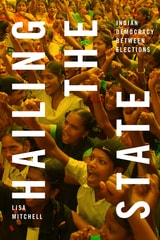
cover of Hailing the State: Indian Democracy between Elections

Hailing the State

Indian Democracy between Elections

Lisa Mitchell

Duke University Press, 2023
In Hailing the State, Lisa Mitchell explores the methods of collective assembly that people in India use to hold elected officials and government administrators accountable, demand inclusion in decision making, and stage informal referendums. Mitchell traces the colonial and postcolonial lineages of collective forms of assembly, in which—rather than rejecting state authority—participants mobilize with expectations that officials will uphold the law and fulfill electoral promises. She shows how assembly, which ranges from sit-ins, hunger strikes, and demands for meetings with officials to massive general strikes and road and rail blockades, is fundamental to the functioning of democracy in India. These techniques are particularly useful for historically marginalized groups and others whose voices may not be easily heard. Moving beyond an exclusive focus on electoral processes, Mitchell argues that to understand democracy—both in India and beyond—we must also pay attention to what occurs between elections, thereby revising understanding of what is possible for democratic action around the world.
[more]
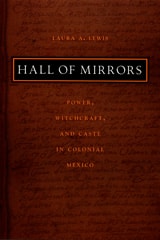
cover of Hall of Mirrors: Power, Witchcraft, and Caste in Colonial Mexico

Hall of Mirrors

Power, Witchcraft, and Caste in Colonial Mexico

Laura A. Lewis

Duke University Press, 2003

Through an examination of caste in sixteenth- and seventeenth-century Mexico, Hall of Mirrors explores the construction of hierarchy and difference in a Spanish colonial setting. Laura A. Lewis describes how the meanings attached to the categories of Spanish, Indian, black, mulatto, and mestizo were generated within that setting, as she shows how the cultural politics of caste produced a system of fluid and relational designations that simultaneously facilitated and undermined Spanish governance.

Using judicial records from a variety of colonial courts, Lewis highlights the ethnographic details of legal proceedings as she demonstrates how Indians, in particular, came to be the masters of witchcraft, a domain of power that drew on gendered and hegemonic caste distinctions to complicate the colonial hierarchy. She also reveals the ways in which blacks, mulattoes, and mestizos mediated between Spaniards and Indians, alternatively reinforcing Spanish authority and challenging it through alliances with Indians. Bringing to life colonial subjects as they testified about their experiences, Hall of Mirrors discloses a series of contradictions that complicate easy distinctions between subalterns and elites, resistance and power.
[more]
cover of Handbook of Middle American Indians, Volumes 14 and 15: Guide to Ethnohistorical Sources, Parts Three and Four

Handbook of Middle American Indians, Volumes 14 and 15

Guide to Ethnohistorical Sources, Parts Three and Four

Robert Wauchope, series editor; Howard F. Cline, volume editor; Charles Gibson and H. B. Nicholson, volume editors

University of Texas Press, 1975

Volumes 14 and 15 of the Handbook of Middle American Indians, published in cooperation with the Middle American Research Institute of Tulane University under the general editorship of Robert Wauchope (1909–1979), constitute Parts 3 and 4 of the Guide to Ethnohistorical Sources. The Guide has been assembled under the volume editorship of the late Howard F. Cline, Director of the Hispanic Foundation in the Library of Congress, with Charles Gibson, John B. Glass, and H. B. Nicholson as associate volume editors. It covers geography and ethnogeography (Volume 12); sources in the European tradition (Volume 13); and sources in the native tradition: prose and pictorial materials, checklist of repositories, title and synonymy index, and annotated bibliography on native sources (Volumes 14 and 15).

The present volumes contain the following studies on sources in the native tradition:

“A Survey of Native Middle American Pictorial Manuscripts,” by John B. Glass

“A Census of Native Middle American Pictorial Manuscripts,” by John B. Glass in collaboration with Donald Robertson

“Techialoyan Manuscripts and Paintings, with a Catalog,” by Donald Robertson

“A Census of Middle American Testerian Manuscripts,” by John B. Glass

“A Catalog of Falsified Middle American Pictorial Manuscripts,” by John B. Glass

“Prose Sources in the Native Historical Tradition,” by Charles Gibson and John B. Glass

“A Checklist of Institutional Holdings of Middle American Manuscripts in the Native Historical Tradition,” by John B. Glass

“The Botutini Collection,” by John B. Glass

“Middle American Ethnohistory: An Overview” by H. B. Nicholson

The Handbook of Middle American Indians was assembled and edited at the Middle American Research Institute of Tulane University with the assistance of grants from the National Science Foundation and under the sponsorship of the National Research Council Committee on Latin American Anthropology.
[more]
cover of Handbook of Middle American Indians, Volumes 7 and 8: Ethnology

Handbook of Middle American Indians, Volumes 7 and 8

Ethnology

Robert Wauchope, series editor; Evon Z. Vogt, volume editor

University of Texas Press, 1975

Ethnology comprises the seventh and eighth volumes in the Handbook of Middle American Indians, published in cooperation with the Middle American Research Institute of Tulane University under the general editorship of Robert Wauchope (1909–1979). The editor of the Ethnology volumes is Evon Z. Vogt (1918–2004), Professor of Anthropology in the Department of Social Relations, Harvard University.

These two books contain forty-three articles, all written by authorities in their field, on the ethnology of the Maya region, the southern Mexican highlands and adjacent regions, the central Mexican highlands, western Mexico, and northwest Mexico. Among the topics described for each group of Indians are the history of ethnological investigations, cultural and linguistic distributions, major postcontact events, population, subsistence systems and food patterns, settlement patterns, technology, economy, social organization, religion and world view, aesthetic and recreational patterns, life cycle and personality development, and annual cycle of life.

The volumes are illustrated with photographs and drawings of contemporary and early historical scenes of native Indian life in Mexico and Central America.

The Handbook of Middle American Indians was assembled and edited at the Middle American Research Institute of Tulane University with the assistance of grants from the National Science Foundation and under the sponsorship of the National Research Council Committee on Latin American Anthropology.
[more]
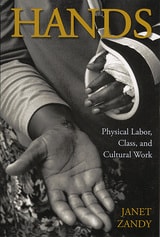
cover of Hands: Physical Labor, Class, and Cultural Work

Hands

Physical Labor, Class, and Cultural Work

Zandy, Janet

Rutgers University Press, 2004

 What are two hands worth?

In linking forms of cultural expression to labor, occupational injuries, and deaths, Hands: Physical Labor, Class, and Cultural Work centers what is usually decentered--the complex culture of working-class people. Janet Zandy begins by examining the literal loss of lives to unsafe jobs and occupational hazards. She asks critical and timely questions about worker representation--who speaks for employees when the mills, mines, factories, and even white-collar cubicles shut down? She presents the voices of working-class writers and artists, and discusses their contribution to knowledge and culture.

This innovative study reveals the flesh and bone beneath the abstractions of labor, class, and culture. It is an essential contribution to the emerging field of working-class studies, offering a hybrid model for bridging communities and non-academic workers to scholars and institutions of knowledge.

[more]
cover of Hans Staden's True History: An Account of Cannibal Captivity in Brazil

Hans Staden's True History

An Account of Cannibal Captivity in Brazil

Hans Staden

Duke University Press, 2008

In 1550 the German adventurer Hans Staden was serving as a gunner in a Portuguese fort on the Brazilian coast. While out hunting, he was captured by the Tupinambá, an indigenous people who had a reputation for engaging in ritual cannibalism and who, as allies of the French, were hostile to the Portuguese. Staden’s True History, first published in Germany in 1557, tells the story of his nine months among the Tupi Indians. It is a dramatic first-person account of his capture, captivity, and eventual escape.

Staden’s narrative is a foundational text in the history and European “discovery” of Brazil, the earliest European account of the Tupi Indians, and a touchstone in the debates on cannibalism. Yet the last English-language edition of Staden’s True History was published in 1929. This new critical edition features a new translation from the sixteenth-century German along with annotations and an extensive introduction. It restores to the text the fifty-six woodcut illustrations of Staden’s adventures and final escape that appeared in the original 1557 edition.

In the introduction, Neil L. Whitehead discusses the circumstances surrounding the production of Staden’s narrative and its ethnological significance, paying particular attention to contemporary debates about cannibalism. Whitehead illuminates the value of Staden’s True History as an eyewitness account of Tupi society on the eve before its collapse, of ritual war and sacrifice among Native peoples, and of colonial rivalries in the region of Rio de Janeiro. He chronicles the history of the various editions of Staden’s narrative and their reception from 1557 until the present. Staden’s work continues to engage a wide range of readers, not least within Brazil, where it has recently been the subject of two films and a graphic novel.
[more]
cover of Harbin and Manchuria: Place, Space, and Identity, Volume 99

Harbin and Manchuria

Place, Space, and Identity, Volume 99

Thomas Lahusen, ed.

Duke University Press, 0

This special issue of South Atlantic Quarterly focuses on the layered cultures of the northeast China city of Harbin and the region formerly known as Manchuria. During the first half of the twentieth-century, Harbin—a by-product of the construction of the Chinese Eastern Railway at the turn of the century—and the rest of Manchuria became the site of conflicting and competing Russian, Western, Japanese, and Chinese colonialisms. Home to émigrés from the famine-ridden Shandong province, impoverished Japanese settlers, Jews fleeing the pogroms of Russia, White Russians escaping the civil war, and Koreans caught between Japanese expansionism and Chinese nationalism, Harbin was a colonial place like no other, one that eventually comprised more than fifty nationalities speaking forty-five languages.
Crossing the boundaries of their specializations, contributors respond to the complexity of this history while considering the concrete concept of place and its relation to the more abstract idea of space. A rare encounter between scholars of East Asian and Slavic studies, this well-illustrated collections includes discussions of history, politics, economics, anthropology, sociology, cinema, and cultural studies. An eclectic and comprehensive exploration of memory and its reconstruction in the Harbin-Manchuria diaspora, Harbin and Manchuria provides the first full treatment of this colonial encounter.

Contributors. Olga Bakich, Sabine Breuillard, James Carter, Elena Chernolutskaya, Prasenjit Duara, Thomas Lahusen, Hyun-Ok Park, Andre Schmid, Mariko Asano Tamanoi, David Wolff

[more]
cover of Hard Luck and Heavy Rain: The Ecology of Stories in Southeast Texas

Hard Luck and Heavy Rain

The Ecology of Stories in Southeast Texas

Joseph C. Russo

Duke University Press, 2023
In Hard Luck and Heavy Rain Joseph C. Russo takes readers into the everyday lives of the rural residents of Southeast Texas. He encounters the region as a kind of world enveloped in on itself, existing under a pall of poverty, illness, and oil refinery smoke. His informants’ stories cover a wide swath of experiences, from histories of LGBTQ+ life and the local petrochemical industries to religiosity among health food store employees and the suffering of cancer patients living in the Refinery Belt. Russo frames their hard-luck stories as forms of verbal art and poetic narrative that render the region a mythopoetic landscape that epitomizes the impasse of American late capitalism. He shows that in this severe world, questions of politics and history are not cut and dry, and its denizens are not simply backward victims of circumstances. Russo demonstrates that by challenging classist stereotypes of rural Americans as passive, ignorant, and uneducated, his interlocutors offer significant insight into the contemporary United States.
[more]
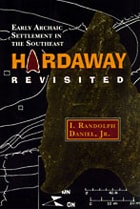
cover of Hardaway Revisited: Early Archaic Settlement in the Southeast

Hardaway Revisited

Early Archaic Settlement in the Southeast

I. Randolph Daniel, Jr.

University of Alabama Press, 1998

A landmark reassessment of Early Archaic settlement and adaptation in the southeastern United States.

Since the early 1970s, southeastern archaeologists have focused their attention on identifying the function of prehistoric sites and settlement practices during the Early Archaic period (ca. 9,000-10,500 B.P.). The Hardaway site in the North Carolina Piedmont, one of the most important archaeological sites in eastern North America, has not yet figured notably in this research. Daniel's reanalysis of the Hardaway artifacts provides a broad range of evidence—including stone tool morphology, intrasite distributions of artifacts, and regional distributions of stoneraw material types—that suggests that Hardaway played a unique role in Early Archaic settlement.

The Hardaway site functioned as a base camp where hunting and gathering groups lived for extended periods. From this camp they exploited nearby stone outcrops in the Uwharrie Mountains to replenish expended toolkits. Based on the  results of this study, Daniel's new model proposes that settlement was conditioned less by the availability of food resources than by the limited distribution of high-quality knappable stone in the region. These results challenge the prevalent view of Early Archaic settlement that group movement was largely confined by the availability of food resources within major southeastern river valleys.
[more]
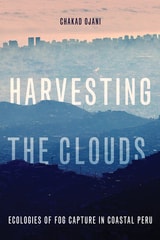
cover of Harvesting the Clouds: Ecologies of Fog Capture in Coastal Peru

Harvesting the Clouds

Ecologies of Fog Capture in Coastal Peru

Chakad Ojani

University of Arizona Press, 2027

Vision limited, sounds muffled. Tiny water droplets reflect light back to its source and make it difficult to locate the origin of sounds: this is fog. In Chakad Ojani’s ethnography, this atmospheric phenomenon plays a pivotal role.

Drawing on long-term ethnographic research on engagements with fog in Lima and coastal Peru, Harvesting the Clouds examines how local NGO workers and fog oasis conservationists sought to utilize coastal fog as a water source. NGO workers installed fog catchers in informal or recently formalized neighborhoods where state infrastructure was absent, while conservationists harnessed ground-touching clouds in order to prevent informal urbanization. As they set out to capture ground-touching clouds to pursue their distinct goals, these collectives became entrapped by activities, demands, and expectations that they had not foreseen. The book frames these relationships as ecologies of capture: emergent webs of relationships held together by conflicting aims and expectations, the possibilities and limitations of fog capture, and the material qualities of fog itself. 

Harvesting the Clouds argues that capture is always only partially successful, but by virtue of this partiality, it becomes productive of social relations—an understanding that the author extends to anthropological inquiry itself as an exercise in the productive impossibility of ethnographic entrapment.
[more]
cover of Hats: A Very UNnatural History

Hats

A Very UNnatural History

Malcolm Smith

Michigan State University Press, 2020
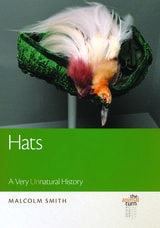
For such simple garments, hats have had a devastating impact on wildlife throughout their long history. Made of wild-caught mammal furs, decorated with feathers or whole stuffed birds, historically they have driven many species to near extinction. By the turn of the twentieth century, egrets, shot for their exuberant white neck plumes, had been decimated; the wild ostrich, killed for its feathers until the early 1900s, was all but extirpated; and vast numbers of birds of paradise from New Guinea and hummingbirds from the Americas were just some of the other birds killed to decorate ladies’ hats. At its peak, the hat trade was estimated to be killing 200 million birds a year. At the end of the nineteenth century, it was a trade valued at £20 million (over $25 million) a year at the London feather auctions. Weight for weight, exotic feathers were more valuable than gold. Today, while no wild birds are captured for feather decoration, some wild animals are still trapped and killed for hatmaking. A fascinating read, Hats will have you questioning the history of your headwear.
[more]
cover of Haunting Biology: Science and Indigeneity in Australia

Haunting Biology

Science and Indigeneity in Australia

Emma Kowal

Duke University Press, 2023

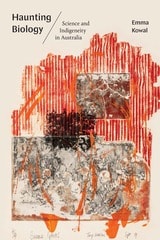
In Haunting Biology Emma Kowal recounts the troubled history of Western biological studies of Indigenous Australians and asks how we now might see contemporary genomics, especially that conducted by Aboriginal and Torres Strait Islander scientists. Kowal illustrates how the material persistence of samples over decades and centuries folds together the fates of different scientific methodologies. Blood, bones, hair, comparative anatomy, human biology, physiology, and anthropological genetics all haunt each other across time and space, together with the many racial theories they produced and sustained. The stories Kowal tells feature a variety of ghostly presences: a dead anatomist, a fetishized piece of hair hidden away in a war trunk, and an elusive white Indigenous person. By linking this history to contemporary genomics and twenty-first-century Indigeneity, Kowal outlines the fraught complexities, perils, and potentials of studying Indigenous biological difference in the twenty-first century.
[more]
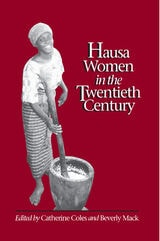
cover of Hausa Women in the Twentieth Century

Hausa Women in the Twentieth Century

Edited by Catherine M. Coles and Beverly Mack

University of Wisconsin Press, 1991

    The Hausa are one of the largest ethnic groups in Africa, with populations in Nigeria, Niger, and Ghana.  Their long history of city-states and Islamic caliphates, their complex trading economies, and their cultural traditions have attracted the attention of historians, political economists, linguists, and anthropologists. The large body of scholarship on Hausa society, however, has assumed the subordination of women to men.
    Hausa Women in the Twentieth Century refutes the notion that Hausa women are pawns in a patriarchal Muslim society.  The contributors, all of whom have done field research in Hausaland, explore the ways Hausa women have balanced the demands of Islamic expectations and Western choices as their society moved from a precolonial system through British colonial administration to inclusion in the modern Nigerian nation. This volume examines the roles of a wide variety of women, from wives and workers to political activists and mythical figures, and it emphasizes that women have been educators and spiritual leaders in Hausa society since precolonial times.  From royalty to slaves and concubines, in traditional Hausa cities and in newer towns, from the urban poor to the newly educated elite, the "invisible women" whose lives are documented here demonstrate that standard accounts of Hausa society must be revised.
    Scholars of Hausa and neighboring West African societies will find in this collection a wealth of new material and a model of how research on women can be integrated with general accounts of Hausa social, religious, political, and economic life. For students and scholars looking at gender and women's roles cross-culturally, this volume provides an invaluable African perspective.
[more]
cover of Havasupai Habitat: A. F. Whiting's Ethnography of a Traditional Indian Culture

Havasupai Habitat

A. F. Whiting's Ethnography of a Traditional Indian Culture

A. F. Whiting; Edited by Steven A. Weber and P. David Seaman

University of Arizona Press, 1985

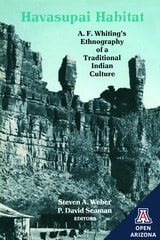
The Havasupai Indians have lived for centuries in Cataract Canyon, and even came to be confined there by treaty. When anthopologist Alfred F. Whiting set out to study the Havasupai in the early 1940s, he found a culture that in many aspect remained unchanged. In Havasupai Habitat editors Weber and Seaman have distilled Whiting's ethnographic research. Part I comprises ten thematic chapters dealing with various aspects of culture, such as hunting and gathering, child care, housing, and religion. Part II offers a systematic presentation of Havasupai knowledge of weather and astronomy, minerals, animals, and plants; and for each item listed, Whiting has provided scientific and common English terminology, phonetic spelling, and a description of usage.

Published in 1985, Havasupai Habitat offers a rich ethnography on lifeways of the Havasupai people.
[more]
cover of Having People, Having Heart: Charity, Sustainable Development, and Problems of Dependence in Central Uganda

Having People, Having Heart

Charity, Sustainable Development, and Problems of Dependence in Central Uganda

China Scherz

University of Chicago Press, 2014

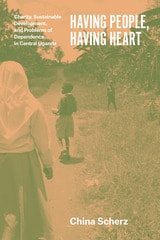
Believing that charity inadvertently legitimates social inequality and fosters dependence, many international development organizations have increasingly sought to replace material aid with efforts to build self-reliance and local institutions. But in some cultures—like those in rural Uganda, where Having People, Having Heart takes place—people see this shift not as an effort toward empowerment but as a suspect refusal to redistribute wealth. Exploring this conflict, China Scherz balances the negative assessments of charity that have led to this shift with the viewpoints of those who actually receive aid.
           
Through detailed studies of two different orphan support organizations in Uganda, Scherz shows how many Ugandans view material forms of Catholic charity as deeply intertwined with their own ethics of care and exchange. With a detailed examination of this overlooked relationship in hand, she reassesses the generally assumed paradox of material aid as both promising independence and preventing it. The result is a sophisticated demonstration of the powerful role that anthropological concepts of exchange, value, personhood, and religion play in the politics of international aid and development.
[more]
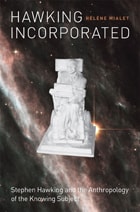
cover of Hawking Incorporated: Stephen Hawking and the Anthropology of the Knowing Subject

Hawking Incorporated

Stephen Hawking and the Anthropology of the Knowing Subject

Hélène Mialet

University of Chicago Press, 2012

These days, the idea of the cyborg is less the stuff of science fiction and more a reality, as we are all, in one way or another, constantly connected, extended, wired, and dispersed in and through technology. One wonders where the individual, the person, the human, and the body are—or, alternatively, where they stop. These are the kinds of questions Hélène Mialet explores in this fascinating volume, as she focuses on a man who is permanently attached to assemblages of machines, devices, and collectivities of people: Stephen Hawking.

Drawing on an extensive and in-depth series of interviews with Hawking, his assistants and colleagues, physicists, engineers, writers, journalists, archivists, and artists, Mialet reconstructs the human, material, and machine-based networks that enable Hawking to live and work. She reveals how Hawking—who is often portrayed as the most singular, individual, rational, and bodiless of all—is in fact not only incorporated, materialized, and distributed in a complex nexus of machines and human beings like everyone else, but even more so. Each chapter focuses on a description of the functioning and coordination of different elements or media that create his presence, agency, identity, and competencies. Attentive to Hawking’s daily activities, including his lecturing and scientific writing, Mialet’s ethnographic analysis powerfully reassesses the notion of scientific genius and its associations with human singularity. This book will fascinate anyone interested in Stephen Hawking or an extraordinary life in science.
[more]
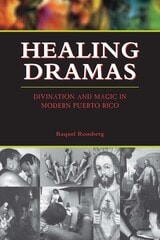
cover of Healing Dramas: Divination and Magic in Modern Puerto Rico

Healing Dramas

Divination and Magic in Modern Puerto Rico

By Raquel Romberg

University of Texas Press, 2009

In this intimate ethnography, Raquel Romberg seeks to illuminate the performative significance of healing rituals and magic works, their embodied nature, and their effectiveness in transforming the states of participants by focusing on the visible, albeit mostly obscure, ways in which healing and magic rituals proceed. The questions posed by Romberg emerge directly from the particular pragmatics of Puerto Rican brujería (witch-healing), shaped by the eclecticism of its rituals, the heterogeneous character of its participants, and the heterodoxy of its moral economy.

What, if any, is the role of belief in magic and healing rituals? How do past discourses on possession enter into the performative experience of ritual in the here and now? Where does belief stop, and where do memories of the flesh begin? While these are questions that philosophers and anthropologists of religion ponder, they acquire a different meaning when asked from an ethnographic perspective.

Written in an evocative, empathetic style, with theoretical ruminations about performance, the senses, and imagination woven into stories that highlight the drama and humanity of consultations, this book is an important contribution to the cross-cultural understanding of our capacity to experience the transcendental in corporeal ways.
[more]
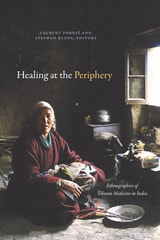
cover of Healing at the Periphery: Ethnographies of Tibetan Medicine in India

Healing at the Periphery

Ethnographies of Tibetan Medicine in India

Laurent Pordié and Stephan Kloos, editors

Duke University Press, 2022

India has long occupied an important place in Tibetan medicine's history and development. However, Indian Himalayan practitioners of Tibetan medicine, or amchi, have largely remained overlooked at the Tibetan medical periphery, despite playing a central social and medical role in their communities. Power and legitimacy, religion and economic development, biomedical encounters and Indian geopolitics all intersect in the work and identities of contemporary Himalayan amchi. This volume examines the crucial moment of crisis and transformation that occurred in the early 2000s to offer insights into the beginnings of Tibetan medicine's professionalization, industrialization, and official recognition in India and elsewhere. Based on fine-grained ethnographic studies in Ladakh, Zangskar, Sikkim, and the Darjeeling Hills, Healing at the Periphery asks how the dynamics of capitalism, social change, and the encounter with biomedicine affect small communities on the fringes of modern India, and, conversely, what local transformations of Tibetan medicine tell us about contemporary society and health care in the Himalayas and the Tibetan world.

Contributors. Florian Besch, Calum Blaikie, Sienna R. Craig, Barbara Gerke, Isabelle Guérin, Kim Gutschow, Pascale Hancart Petitet, Stephan Kloos, Fernanda Pirie, Laurent Pordié
[more]
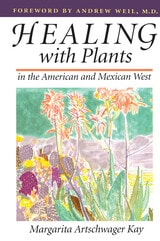
cover of Healing with Plants in the American and Mexican West

Healing with Plants in the American and Mexican West

Margarita Artschwager Kay

University of Arizona Press, 1996

Disenchanted with biomedicine and dismayed by its cost, increasing numbers of people are seeking alternative therapies such as the healing plants discussed in this book. Plant medicine is a billion-dollar business: health food stores, small yerberias, and even giant grocery store chains carry hundreds of medicinal herbs. By one estimate, up to one-third of the U.S. population uses alternative medicine—generally in addition to conventional therapy and commonly without telling their doctors. The heart of this volume is a complete description of 100 plants commonly used today, often for the same purposes reported by chroniclers of the Aztecs or eighteenth-century European explorers. Information for each plant includes botanical and common plant names, history, contemporary uses, a description of how the plant is prepared and administered, and brief phytochemical data. Discussions of folk efficacy and folk properties—beliefs in how and why the herb heals—help to explain the continued use of each plant into the present day. Are any of these plants dangerous, and do any of them really work? Where did they come from, and where are they available now? How can health-care practitioners gain the confidence of their patients to learn whether they are using alternative medicines for specific illnesses, symptoms, or injuries? Perhaps most intriguing, which of these plants might be waiting to take the place of known antibiotics as pathological organisms become increasingly resistant to modern miracle drugs? Answers to these and other questions will pique the interest of general readers and will be an invaluable resource for health-care providers—especially nurses and other primary-care providers, who often must find an interface between biomedical and more traditional therapies. For all readers, the book opens a window into many ethnic cultures of the region—Mexican American communities, desert Pima, coastal Seri, and others. Here is the fascinating saga of how their healing plants from prehistoric times melded with Old World herbs brought by the Europeans to create the unique pharmacopoeia available today here and in other parts of the world. Plants included:
Acacia (Cassie, Acacia)
Achillea (Yarrow)
Agastache (Giant Hyssop)
Agave (Century Plant)
Allium (Garlic, Onion)
Aloe (Aloe)
Ambrosia (Ragweed)
Anemopsis (Yerba Mansa)
Arctostaphylos (Bearberry, Uva Ursi)
Argemone (Prickly Poppy)
Aristolochia (Bithwort, Snakeroot)
Arracacia (Arracacha)
Artemisia (Wormwood, Mugwort, Western Mugwort, Sagebrush)
Asclepias (Milkweed)
Baccharis (Desert Broom, Seep Willow)
Bocconia (Tree Celandine)
Buddleia (Butterfly Bush)
Bursera (Elephant Tree)
Caesalpinia (Mexican Bird-of-Paradise)
Cannabis (Marijuana)
Capsicum (Chili)
Carnegiea (Saguaro)
Casimiroa (Zapote)
Cassia (Senna)
Cereus (Cactus)
Chenopodium (Goosefoot, Wormseed)
Citrus (Lemon, Lime, Orange)
Datura (Jimson Weed)
Ephedra (Mormon Tea)
Equisetum (Horsetail)
Eryngium (Eryngo, Button Snakeroot)
Eucalyptus (Eucalyptus)
Euphorbia (Spurge)
Eysenhardtia (Kidneywood)
Gnaphalium (Everlasting, Cudweed)
Guaiacum (Lignum Vitae)
Guazuma (Guazuma)
Gutierrezia (Turpentine Bush)
Haematoxylon (Logwood)
Haplopappus (Jimmyweed)
Heterotheca (Telegraph Plant, Falso Arnica)
Hintonia (Copalqu¡n)
Ibervillea (Coyote Melon)
Jacquinia (Jacquinia)
Jatropha (Limberbush)
Juniperus (Juniper)
Karwinskia (Coffeeberry)
Kohleria (Tree Gloxinia)
Krameria (Ratany)
Lantana (Lantana)
Larrea (Creosote Bush, Greasewood)
Ligusticum (Lovage)
Lippia (Oregano)
Lysiloma (Featherbush)
Malva (Mallow)
Mammillaria (Pincushion Cactus)
Mascagnia (Mascagnia)
Matricaria (Chamomile)
Mentha (Mint)
Nicotiana (Tobacco)
Ocimum (Basil)
Opuntia (Cholla, Prickly Pear)
Perezia (Perezia)
Persea (Avocado)
Phaseolus (Bean)
Phoradendron, Stru

[more]
cover of Health in Ruins: The Capitalist Destruction of Medical Care at a Colombian Maternity Hospital

Health in Ruins

The Capitalist Destruction of Medical Care at a Colombian Maternity Hospital

César Ernesto Abadía-Barrero

Duke University Press, 2022

In Health in Ruins César Ernesto Abadía-Barrero chronicles the story of El Materno—Colombia’s oldest maternity and neonatal health center and teaching hospital—over several decades as it faced constant threats of government shutdown. Using team-based and collaborative ethnography to analyze the social life of neoliberal health policy, Abadía-Barrero details the everyday dynamics around teaching, learning, and working in health care before, during, and after privatization. He argues that health care privatization is not only about defunding public hospitals; it also ruins rich traditions of medical care by denying or destroying ways of practicing medicine that challenge Western medicine. Despite radical cuts in funding and a corrupt and malfunctioning privatized system, El Materno’s professors, staff, and students continued to find ways to provide innovative, high-quality, and noncommodified health care. By tracking the violences, conflicts, hopes, and uncertainties that characterized the struggles to keep El Materno open, Abadía-Barrero demonstrates that any study of medical care needs to be embedded in larger political histories.
[more]
cover of Health in a Fragile State: Science, Sorcery, and Spirit in the Lower Congo

Health in a Fragile State

Science, Sorcery, and Spirit in the Lower Congo

John M. Janzen

University of Wisconsin Press, 2019

Based on extensive field research in the Manianga region of the Lower Congo, Health in a Fragile State is an anthropological account of public health and health care after the collapse of the Congolese state in the 1980s and 1990s. This work brings into focus John M. Janzen's earlier books on African health and healing, revealing the collaborative effort by local, national, and international agencies to create viable alternative institutions to those that represented the centralized state. This book documents and analyzes the realignment of existing institutions and the creation of new ones that shape health and healing.
Janzen explores the manner in which power and information, including science, are legitimized in the preservation and improvement of health. Institutional validity and knowledge empower citizens and health practitioners to gain the upper hand over the region's principal diseases, including malaria, tuberculosis, typhoid, and HIV/AIDS.
[more]
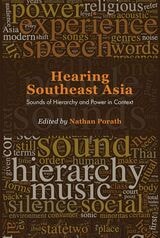
cover of Hearing Southeast Asia: Sounds of Hierarchy and Power in Context

Hearing Southeast Asia

Sounds of Hierarchy and Power in Context

Edited by Nathan Porath

National University of Singapore Press, 2019
There is no moment of our waking life in which we do not experience sounds or make sounds. The human body is a sound-making organism. In densely peopled areas like many parts of Southeast Asia, then, the potential is for tumult, an infinity of different sounds competing to be heard. Pandemonium is not unheard of in Southeast Asia – not least in times of political unrest – but in everyday situations uproar is uncommon; cultural, social, political and personal factors (among others) work to calm, channel or even silence the tumult. Providing focus to this interdisciplinary volume on sound in Southeast Asia are detailed descriptions of the context of sounds and sound-making within the region’s diverse socio-cultural semiotic frames of hierarchy and power. Drawing on examples from Myanmar, Thailand, Malaysia, Indonesia and the Philippines, each author discusses some aspect of sound in relation to their ethnographic context. Sound examples are also found on a companion website. Varied approaches to understanding sound are offered but in some way each relates to hierarchy and power. All show the importance of sound for understanding the processual implementation of hierarchy (or its opposite) in the construction of the social environment and the role of sound in the efficacious engagement of power in a variety of religious and political form. This is a much-needed volume. Those scholars working in sound studies and adjoining fields focused outside the West (e.g. ethnomusicology, anthropology), have long known that the field of sound studies is firmly Eurocentric. This long-overdue study of sound in Southeast Asia not only offers non-Western perspectives; it also goes beyond examining sound in isolation, considering this instead in relation to the other senses and to sociocultural constructions. In such ways, then, the volume offers new directions of study, an exciting prospect.
[more]
cover of Heart of Creation: The Mesoamerican World and the Legacy of Linda Schele

Heart of Creation

The Mesoamerican World and the Legacy of Linda Schele

Edited by Andrea Stone

University of Alabama Press, 2002

This accessible, state-of-the-art review of Mayan hieroglyphics and cosmology also serves as a tribute to one of the field's most noted pioneers.

The core of this book focuses on the current study of Mayan hieroglyphics as inspired by the recently deceased Mayanist Linda Schele. As author or coauthor of more than 200 books or articles on the Maya, Schele served as the chief disseminator of knowledge to the general public about this ancient Mesoamerican culture, similar to the way in which Margaret Mead introduced anthropology and the people of Borneo to the English-speaking world.

Twenty-five contributors offer scholarly writings on subjects ranging from the ritual function of public space at the Olmec site and the gardens of the Great Goddess at Teotihuacan to the understanding of Jupiter in Maya astronomy and the meaning of the water throne of Quirigua Zoomorph P. The workshops on Maya history and writing that Schele conducted in Guatemala and Mexico for the highland people, modern descendants of the Mayan civilization, are thoroughly addressed as is the phenomenon termed "Maya mania"—the explosive growth of interest in Maya epigraphy, iconography, astronomy, and cosmology that Schele stimulated. An appendix provides a bibliography of Schele's publications and a collection of Scheleana, written memories of "the Rabbit Woman" by some of her colleagues and students.

Of interest to professionals as well as generalists, this collection will stand as a marker of the state of Mayan studies at the turn of the 21st century and as a tribute to the remarkable personality who guided a large part of that archaeological research for more than two decades.

 

[more]
cover of Hearts of Darkness: White Women Write Race

Hearts of Darkness

White Women Write Race

Marcus, Jane

Rutgers University Press, 2004

In this book, one of modernism's most insightful critics, Jane Marcus, examines the writings of novelists such as Virginia Woolf, Nancy Cunard, Mulk Raj Anand, and Djuna Barnes-artists whose work coincided with the end of empire and the rise of fascism before the Second World War. All these writers delved into the "dark hearts" of imperialism and totalitarianism, thus tackling some of the most complex cultural issues of the day. Marcus investigates previously unrecognized ways in which social and political tensions are embodied by their works.

The centerpiece of the book is Marcus's dialogue with one of her best-known essays, "Britannia Rules The Waves." In that piece, she argues that The Waves makes a strong anti-imperialist statement. Although many already support that argument, she now goes further in order to question the moral value of such a buried critique on Woolf's part. In "A Very Fine Negress" she analyzes the painful subject of Virginia Woolf's racism in A Room of One's Own. Other chapters traverse the connected issues of modernism, race, and imperialism. In two of them, we follow Nancy Cunard through the making of the Negro anthology and her appearance in a popular novel of the freewheeling Jazz Age. Elsewhere, Marcus delivers a complex analysis of A Passage to India, in a reading that interrogates E. M. Forster's displacement of his fear of white Englishwomen struggling for the vote.

Marcus, as always, brings considerable gifts as both researcher and writer to this collection of new and reprinted essays, a combination resulting in a powerful interpretation of many of modernism's most cherished figures.



[more]
cover of Hebrew Infusion: Language and Community at American Jewish Summer Camps

Hebrew Infusion

Language and Community at American Jewish Summer Camps

Sarah Bunin Benor, Jonathan B. Krasner, and Sharon Avni

Rutgers University Press, 2019

Winner of the 2020 National Jewish Book Award in Education and Jewish Identity

Each summer, tens of thousands of American Jews attend residential camps, where they may see Hebrew signs, sing and dance to Hebrew songs, and hear a camp-specific hybrid language register called Camp Hebraized English, as in: “Let’s hear some ruach (spirit) in this chadar ochel (dining hall)!” Using historical and sociolinguistic methods, this book explains how camp directors and staff came to infuse Hebrew in creative ways and how their rationales and practices have evolved from the early 20th century to today.  Some Jewish leaders worry that Camp Hebraized English impedes Hebrew acquisition, while others recognize its power to strengthen campers’ bonds with Israel, Judaism, and the Jewish people. Hebrew Infusion explores these conflicting ideologies, showing how hybrid language can serve a formative role in fostering religious, diasporic communities. The insightful analysis and engaging descriptions of camp life will appeal to anyone interested in language, education, or American Jewish culture.
[more]
cover of Hegemonies of Language and Their Discontents: The Southwest North American Region Since 1540

Hegemonies of Language and Their Discontents

The Southwest North American Region Since 1540

Carlos G. Vélez-Ibáñez

University of Arizona Press, 2017

Spanish and English have fought a centuries-long battle for linguistic dominance in the Southwest North American Region. Covering the time period of 1540 to the present, Hegemonies of Language and Their Discontents provides a deep and broad understanding of the contradictory methods of establishing language supremacy in this U.S.-Mexico transborder region and the manner in which those affected have responded and acted, often in dissatisfaction and at times with inventive adaptations.

Well-regarded author Carlos G. Vélez-Ibáñez details the linguistic and cultural processes used by penetrating imperial and national states. He argues that these impositions have been not linear but hydra-headed, complex and contradictory, sometimes accommodated and sometimes forcefully imposed. Such impositions have created discontent resulting in physical and linguistic revolts, translanguage versions, and multilayered capacities of use and misuse of imposed languages—even the invention of community-created trilingual dictionaries.

Vélez-Ibáñez gives particular attention to both sides of the border, explaining the consequences of the fragile splitting of the area through geopolitical border formation. He illustrates the many ways those discontents have manifested in linguistic, cultural, educational, political, and legal forms.

From revolt to revitalization, from silent objection to expressive defiance, people in the Southwest North American Region have developed arcs of discontent from the Spanish colonial period to the present. These narratives are supported by multiple sources, including original Spanish colonial documents and new and original ethnographic studies of performance rituals like the matachines of New Mexico. This unique work discusses the most recent neurobiological studies of bilingualism and their implications for cognitive development and language as it spans multiple disciplines. Finally, it provides the most important models for dual language development and their integration to the "Funds of Knowledge" concept as creative contemporary discontents with monolingual approaches.
[more]
cover of Heirloom Seeds and Their Keepers: Marginality and Memory in the Conservation of Biological Diversity

Heirloom Seeds and Their Keepers

Marginality and Memory in the Conservation of Biological Diversity

Virginia D. Nazarea

University of Arizona Press, 2005

Farmers and gardeners have long appreciated a wide variety of plants and have nurtured them for meals, healing, and exchange. But diversity too often has been surrendered to monocultures of fields and spirits, predisposing much of modern agriculture to uniformity and, consequently, vulnerability. Today it is primarily at the individual level—such as growing and saving a strange old bean variety or a curious-looking gourd—that any lasting conservation actually takes place.

As scientists grapple with the erosion of genetic diversity of crops and their wild relatives, old-timey farmers and gardeners continue to save, propagate, and pass on folk varieties and heirloom seeds. Virginia Nazarea focuses on the role of these seedsavers in the perpetuation of diversity. She thoughtfully examines the framework of scientific conservation and argues for the merits of everyday conservation—one that is beyond programmatic design. Whether considering small-scale rice and sweet potato farmers in the Philippines or participants in the Southern Seed Legacy and Introduced Germplasm from Vietnam in the American South, she explores roads not necessarily less traveled but certainly less recognized in the conservation of biodiversity.

Through characters and stories that offer a wealth of insights about human nature and society, Heirloom Seeds and Their Keepers helps readers more fully understand why biodiversity persists when there are so many pressures for it not to. The key, Nazarea explains, is in the sovereign spaces seedsavers inhabit and create, where memories counter a culture of forgetting and abandonment engendered by modernity. A book about theory as much as practice, it profiles these individuals, who march to their own beat in a world where diversity is increasingly devalued as the predictability of mass production becomes the norm.

Heirloom Seeds and Their Keepers offers a much-needed, scientifically researched perspective on the contribution of seedsaving that illustrates its critical significance to the preservation of both cultural knowledge and crop diversity around the world. It opens new conversations between anthropology and biology, and between researchers and practitioners, as it honors conservation as a way of life.
[more]
cover of Held in Memory, Shared in Story: Teachings of the Middle Kuskokwim

Held in Memory, Shared in Story

Teachings of the Middle Kuskokwim

Ann Fienup-Riordan

University of Alaska Press, 2026

Along the winding banks of the Middle Kuskokwim River, stories live in the languages of the land. Shared from our Elders, around kitchen tables on long winter nights and beside summer campfires, these teachings carry the wisdom of the people who have called this place home for generations. Held in Memory, Shared in Story gathers these voices into a collection, a record of resilience and the deep relationship we share with world around us. This book captures the knowledge, shared in writing and orally, of our region and celebrates the storytellers, the listeners, and all who keep these traditions alive. To read these stories is to walk beside the people of the Middle Kuskokwim, to see through their eyes, to hear their laughter, and to understand that the heart of a culture lives in the stories shared across generations.
[more]
cover of Hemispheric American Studies

Hemispheric American Studies

Levander, Caroline F

Rutgers University Press, 2007

This landmark collection brings together a range of exciting new comparative work in the burgeoning field of hemispheric studies. Scholars working in the fields of Latin American studies, Asian American studies, American studies, American literature, African Diaspora studies, and comparative literature address the urgent question of how scholars might reframe disciplinary boundaries within the broad area of what is generally called American studies. The essays take as their starting points such questions as: What happens to American literary, political, historical, and cultural studies if we recognize the interdependency of nation-state developments throughout all the Americas? What happens if we recognize the nation as historically evolving and contingent rather than already formed? Finally, what happens if the "fixed" borders of a nation are recognized not only as historically produced political constructs but also as component parts of a deeper, more multilayered series of national and indigenous histories?

With essays that examine stamps, cartoons, novels, film, art, music, travel documents, and governmental publications, Hemispheric American Studies seeks to excavate the complex cultural history of texts and discourses across the ever-changing and stratified geopolitical and cultural fields that collectively comprise the American hemisphere. This collection promises to chart new directions in American literary and cultural studies.


[more]
cover of Herbert Marcuse: An Aesthetics of Liberation

Herbert Marcuse

An Aesthetics of Liberation

Malcolm Miles

Pluto Press, 2012

When capitalism is clearly catastrophically out of control and its excesses cannot be sustained socially or ecologically, the ideas of Herbert Marcuse become as relevant as they were in the 1960s. This is the first English introduction to Marcuse to be published for decades, and deals specifically with his aesthetic theories and their relation to a critical theory of society.

Although Marcuse is best known as a critic of consumer society, epitomised in the classic One-Dimensional Man, Malcolm Miles provides an insight into how Marcuse's aesthetic theories evolved within his broader attitudes, from his anxiety at the rise of fascism in the 1930s through heady optimism of the 1960s, to acceptance in the 1970s that radical art becomes an invaluable progressive force when political change has become deadlocked.

Marcuse's aesthetics of liberation, in which art assumes a primary role in interrupting the operation of capitalism, made him a key figure for the student movement in the 1960s. As diverse forms of resistance rise once more, a new generation of students, scholars and activists will find Marcuse’s radical theory essential to their struggle.

[more]