Results by title
158 books match the query 'Cultural assimilation' and 9 start with h
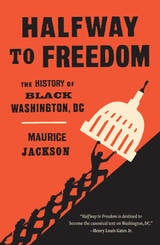
Halfway to Freedom
The History of Black Washington, DCMaurice Jackson. Foreword by Lonnie G. Bunch III.
Duke University Press, 2026
For more than two hundred years, the history and culture of the District of Columbia have been in great part shaped by its Black residents. Several Black men were elected to political positions citywide only a handful of years after the end of the Civil War, and while the years after Reconstruction saw the region plagued with segregation and racial violence, the capital’s Black population continued to grow at all economic levels. Washington became the first major US city with a majority Black population in 1957, a status it held for almost seventy years as gentrification has led to the decline of Black political and economic power in DC in the twenty-first century.
Halfway to Freedom is a social, political, intellectual, and cultural history of African Americans in Washington, DC; it explores the role that race, gender, color, class, and power have played in the city and its relationship with the federal government. Maurice Jackson explores the material conditions that shaped life for African Americans, free and enslaved, from the earliest moments of the District’s history to more contemporary times of organization and activism. Through an array of archival materials, especially firsthand accounts of Black residents in the area, Jackson critiques how and why DC exists as a haven within the Black American imaginary given the realities of conflict its Black residents have faced and continue to face today. In doing so, he highlights and honors the gains they have earned through the concerted struggles of labor organizations, women’s movements, sports, music, art, legal activism, and more.
Hegemonies of Language and Their Discontents
The Southwest North American Region Since 1540Carlos G. Vélez-Ibáñez
University of Arizona Press, 2017
Well-regarded author Carlos G. Vélez-Ibáñez details the linguistic and cultural processes used by penetrating imperial and national states. He argues that these impositions have been not linear but hydra-headed, complex and contradictory, sometimes accommodated and sometimes forcefully imposed. Such impositions have created discontent resulting in physical and linguistic revolts, translanguage versions, and multilayered capacities of use and misuse of imposed languages—even the invention of community-created trilingual dictionaries.
Vélez-Ibáñez gives particular attention to both sides of the border, explaining the consequences of the fragile splitting of the area through geopolitical border formation. He illustrates the many ways those discontents have manifested in linguistic, cultural, educational, political, and legal forms.
From revolt to revitalization, from silent objection to expressive defiance, people in the Southwest North American Region have developed arcs of discontent from the Spanish colonial period to the present. These narratives are supported by multiple sources, including original Spanish colonial documents and new and original ethnographic studies of performance rituals like the matachines of New Mexico. This unique work discusses the most recent neurobiological studies of bilingualism and their implications for cognitive development and language as it spans multiple disciplines. Finally, it provides the most important models for dual language development and their integration to the "Funds of Knowledge" concept as creative contemporary discontents with monolingual approaches.
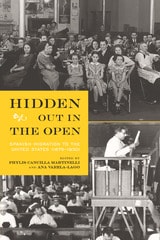
Hidden Out in the Open
Spanish Migration to the United States (1875-1930)Phylis Cancilla Martinelli
University Press of Colorado, 2018
The chapters in this volume are geographically wide-ranging, reflecting the transnational nature of the Spanish diaspora in the Americas, encompassing networks that connected Spain, Cuba, Latin American countries, the United States, and American-controlled territories in Hawai’i and Panama. The geographic diversity reveals the different jobs immigrants engaged in, from construction gangs in the Panama Canal to mining crews in Arizona and West Virginia. Contributors analyze the Spanish experience in the United States from a variety of perspectives, discussing rural and urban enclaves, the role of the state, and the political mobilization of migrants, using a range of methodological approaches that examine ethnicity, race, gender, and cultural practices through the lenses of sociology, history, and cultural studies.
The mention of the Spanish influence in the United States often conjures up images of conquistadores and padres of old. Forgotten in this account are the Spanish immigrants who reached American shores in the late nineteenth and early twentieth centuries. Hidden Out in the Open reveals the role of the modern migration of Spaniards in this "land of immigrants" and rectifies the erasure of Spain in the American narrative. The book will be of interest to scholars and students of US history and the history of modern Spain and Europe, as well as those interested ethnic and migration/diaspora studies, Hispanic/Latino studies, and the study of working class and radicalism.
Contributors: Brian D. Bunk, Christopher J. Castañeda, Thomas Hidalgo, Beverly Lozano, Phylis Cancilla Martinelli, Gary R. Mormino, George E. Pozzetta†, Ana Varela-Lago.
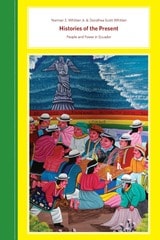
Histories of the Present
People and Power in EcuadorNorman E. Whitten Jr. and Dorothea Scott Whitten
University of Illinois Press, 2011
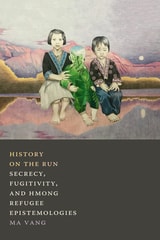
History on the Run
Secrecy, Fugitivity, and Hmong Refugee EpistemologiesMa Vang
Duke University Press, 2021
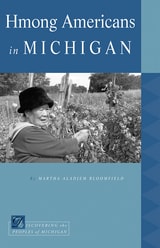
Hmong Americans in Michigan
Martha Aladjem Bloomfield
Michigan State University Press, 2014
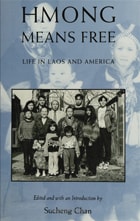
Hmong Means Free
Life in Laos and AmericaSucheng Chan
Temple University Press, 1994
This collection of evocative personal testimonies by three generations of Hmong refugees is the first to describe their lives in Laos as slash-and-burn farmers, as refugees after a Communist government came to power in 1975, and as immigrants in the United States. Reflecting on the homes left behind, their narratives chronicle the difficulties of forging a new identity.
From Jou Yee Xiong's Life Story:
"I stopped teaching my sons many of the Hmong ways because I felt my ancestors and I had suffered enough already. I thought that teaching my children the old ways would only place a burden on them."
From Ka Pao Xiong's (Jou Yee Xiong's son) Life Story:
"It has been very difficult for us to adapt because we had no professions or trades and we suffered from culture shock. Here in America, both the husband and wife must work simultaneously to earn enough money to live on. Many of our children are ignorant of the Hmong way of life…. Even the old people are forgetting about their life in Laos, as they enjoy the prosperity and good life in America."
From Xang Mao Xiong's Life Story:
"When the Communists took over Laos and General Vang Pao fled with his family, we, too, decided to leave. Not only my family, but thousands of Hmong tried to flee. I rented a car for thirty thousand Laotian dollars, and it took us to Nasu…. We felt compelled to leave because many of us had been connected to the CIA…. Thousands of Hmong were traveling on foot. Along the way, many of them were shot and killed by Communist soldiers. We witnessed a bloody massacre of civilians."
From Vue Vang's Life Story:
"Life was so hard in the [Thai refugee] camp that when we found out we could go to the United States, we did not hesitate to grasp the chance. We knew that were we to remain in the camp, there would be no hope for a better future. We would not be able to offer our children anything better than a life of perpetual poverty and anguish."
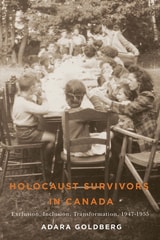
Holocaust Survivors in Canada
Exclusion, Inclusion, Transformation, 1947-1955Adara Goldberg
University of Manitoba Press, 2015
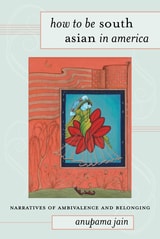
How to Be South Asian in America
Narratives of Ambivalence and BelongingAuthored by anupama jain
Temple University Press, 2011
Providing a useful analysis of and framework for understanding immigration and assimilation narratives, anupama jain's How to Be South Asian in America considers the myth of the American Dream in fiction (Meena Alexander's Manhattan Music), film (American Desi, American Chai), and personal testimonies. By interrogating familiar American stories in the context of more supposedly exotic narratives, jain illuminates complexities of belonging that also reveal South Asians' anxieties about belonging, (trans)nationalism, and processes of cultural interpenetration.
jain argues that these stories transform as well as reflect cultural processes, and she shows just how aspects of identity—gender, sexual, class, ethnic, national—are shaped by South Asians' accommodation of and resistance to mainstream American culture.