Results by title
744 books match the query 'Culture' and 22 start with h
Hair Raising
Beauty, Culture, and African American WomenRooks, Noliwe M
Rutgers University Press, 1996
Healing Logics
Culture and Medicine in Modern Health Belief SystemsErika Brady
Utah State University Press, 2001
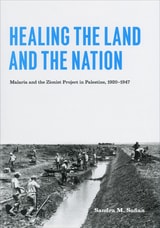
Healing the Land and the Nation
Malaria and the Zionist Project in Palestine, 1920-1947Sandra M. Sufian
University of Chicago Press, 2007
Taking its title from a Jewish public health mantra, Healing the Land and the Nation situates antimalarial medicine and politics within larger colonial histories. By analyzing the science alongside the politics of Jewish settlement, Sufian addresses contested questions of social organization and the effects of land reclamation upon the indigenous Palestinian population in a decidedly innovative way. The book will be of great interest to scholars of the Middle East, Jewish studies, and environmental history, as well as to those studying colonialism, nationalism, and public health and medicine.
Health, Culture, and Community
Benjamin D. Paul
Russell Sage Foundation, 1955
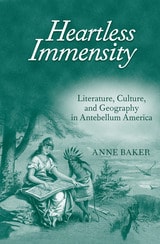
Heartless Immensity
Literature, Culture, and Geography in Antebellum AmericaAnne Baker
University of Michigan Press, 2010
Building on extensive archival research as well as insights from cultural geographers and theorists of nationhood, Heartless Immensity demonstrates that national expansion had a far more complicated, multifaceted impact on antebellum American culture than has previously been recognized. Baker shows that Americans developed a variety of linguistic strategies for imagining the form of the United States and its position in relation to other geopolitical entities. Comparisons
to European empires, biblical allusions, body politic metaphors, and metaphors derived from science all reflected—and often attempted to assuage—fears that the nation was becoming either monstrously large or else misshapen in ways that threatened cherished beliefs and national self-images.
Heartless Immensity argues that, in order to understand the nation’s shift from republic to empire and to understand American culture in a global context, it is first necessary to pay close attention to the processes by which the physical entity known as the United States came into being. This impressively thorough study will make a valuable contribution to the fields of American studies and literary studies.
Anne Baker is Assistant Professor of English at North Carolina State University.
Hegemony and Culture
Politics and Religious Change among the YorubaDavid D. Laitin
University of Chicago Press, 1986
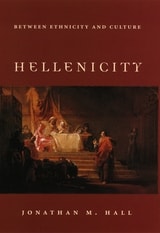
Hellenicity
Between Ethnicity and CultureJonathan M. Hall
University of Chicago Press, 2002
With Hellenicity, Jonathan M. Hall explores these questions in the context of ancient Greece, drawing on an exceptionally wide range of evidence to determine when, how, why, and to what extent the Greeks conceived themselves as a single people. Hall argues that a subjective sense of Hellenic identity emerged in Greece much later than is normally assumed. For instance, he shows that the four main ethnic subcategories of the ancient Greeks—Akhaians, Ionians, Aiolians, and Dorians—were not primordial survivals from a premigratory period, but emerged in precise historical circumstances during the eighth and seventh centuries B.C. Furthermore, Hall demonstrates that the terms of defining Hellenic identity shifted from ethnic to broader cultural criteria during the course of the fifth century B.C., chiefly due to the influence of Athens, whose citizens formulated a new Athenoconcentric conception of "Greekness."
Heritage Dynamics
Understanding and Adapting to Change in Diverse Heritage ContextsKalliopi Fouseki
University College London, 2022
As a sociocultural concept, heritage flows through cycles of emergence, change, disappearance, and revival. These lifecycles are influenced by heritage environments such as museums, landscapes, cities, and intangible networks of cultural circulation. In Heritage Dynamics, Kalliopi Fouseki develops a new theoretical and methodological framework that will enable heritage scholars and practitioners to unpack the ways and conditions under which heritage changes. Under the contexts of urban cities, residential buildings, museum collections, and subjects of intangible heritage especially concerning flamenco, this work re-orients the consideration of heritage as an object, process, or discourse, towards a more systemic thinking that captures the complexity of this historical-cultural force.
Heritage or Heresy
Archaeology and Culture on the Maya RivieraCameron Jean Walker
University of Alabama Press, 2008
How can we effectively interpret and present one culture to another without stereotypes or over-simplifications? What is the best way to present an authoritative version of a national heritage without also endangering ancient sites or being insensitive to the local customs, beliefs, and religious practices of the indigenous peoples?
This volume addresses the ongoing thrust in archaeology to take the next step after preserving the past: interpreting that past for the future. That future audience includes both local citizens and tourists who may have little background in archaeology, anthropology, or the history of the culture featured. Walker presents the key components of the anthropological study of tourism as a global phenomenon, with particular emphasis on the more prominent arguments for how and why tourism is a universal and meaningful human activity. The highly controversial topic of authenticity is examined, with special attention given to how "authentic" has been defined and how it relates to the ways in which archaeological sites, artifacts, and cultural traditions are presented--or not presented--to the visiting public. The ephemeral promise of “authenticity” drives the heritage tourism industry, which is a key consideration for the long term economy of the Maya Riviera and elsewhere. Through analysis of seven archaeological sites on the Yucatan peninsula that are open to heritage touring, Walker reveals the planned growth of the Maya Riviera since the early 1970s and examines the impact of international tourism on both ancient structures and the contemporary Maya people and culture.
Hierarchy, History, and Human Nature
The Social Origins of Historical ConsciousnessDonald E. Brown
University of Arizona Press, 1988
"This is an intriguing and stimulating study of historical differences in the indigenous historiography of parts of Asia, the Middle East, and Europe."—American Anthropologist.
Hispanic Nation
Culture, Politics, and the Constructing of IdentityGeoffrey Fox
University of Arizona Press, 1997
History Within
The Science, Culture, and Politics of Bones, Organisms, and MoleculesMarianne Sommer
University of Chicago Press, 2016
Our interpretation of gene sequences, like our interpretation of other historical evidence, inevitably tells a story laden with political and moral values. Focusing on the work of Henry Fairfield Osborn, Julian Sorell Huxley, and Luigi Luca Cavalli-Sforza in paleoanthropology, evolutionary biology, and human population genetics, History Within asks how the sciences of human origins, whether through the museum, the zoo, or the genetics lab, have shaped our idea of what it means to be human. How have these biologically based histories influenced our ideas about nature, society, and culture? As Marianne Sommer shows, the stories we tell about bones, organisms, and molecules often change the world.
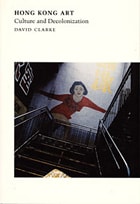
Hong Kong Art
Culture and DecolonizationDavid Clarke
Duke University Press, 2002
Clarke shows how a sense of local identity emerged in Hong Kong as the transition approached and found expression in the often politicized art produced. Given the recent international exposure of mainland Chinese contemporary art, this book considers the uniqueness of the art of China’s most cosmopolitan city. With a modern visual culture that was flourishing even when the People’s Republic was still closed to the outside world, Hong Kong has established itself as an exemplary site for both local and transnational elements to formulate into brilliant and groundbreaking art.
The author writes about individual artists and art works with a detail that will appeal to artists, curators, and art historians, as well as to postcolonial scholars, cultural studies scholars, and others.
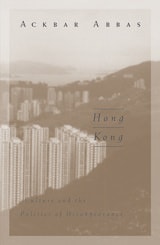
Hong Kong
Culture and the Politics of DisappearanceAckbar Abbas
University of Minnesota Press, 1997
A consideration of what the culture of Hong Kong tells us about the state of the world at the fin-de-siècle.
On June 30, 1997, Hong Kong as we know it will disappear, ceasing its singular and ambiguous existence as a colonial holdover and becoming part of the People’s Republic of China. In an intriguing and provocative exploration of its cinema, architecture, photography, and literature, Ackbar Abbas considers what Hong Kong, with its unique relations to decolonization and disappearance, can teach us about the future of both the colonial city and the global city.
The culture of Hong Kong encompasses Jackie Chan and John Woo, British colonial architecture and postmodern skyscrapers. Ironically, it was not until they were faced with the imposition of Mainland power—with the signing of the Sino-British Joint Agreement in 1984—that the denizens of the colony began the search for a Hong Kong identity. According to Abbas, Hong Kong’s peculiar lack of identity is due to its status as “not so much a place as a space of transit,” whose residents think of themselves as transients and migrants on their way from China to somewhere else. Abbas explores the way Hong Kong’s media saturation changes its people’s experience of space so that it becomes abstract, dominated by signs and images that dispel memory, history, and presence.Hong Kong disappears through simple dualities such as East/West and tradition/modernity. What is missing from a view of Hong Kong as merely a colony is the paradox that Hong Kong has benefited from and made a virtue of its dependent colonial status, turning itself into a global and financial city and outstripping its colonizer in terms of wealth.Combining sophisticated theory and a critical perspective, this rich and thought-provoking work captures the complex situation of the metropolis that is contemporary Hong Kong. Along the way, it challenges, entertains, and makes an important contribution to our thinking about the surprising processes and consequences of colonialism.Copublished with Hong Kong University Press
How the Workers Became Muslims
Immigration, Culture, and Hegemonic Transformation in EuropeFerruh Yilmaz
University of Michigan Press, 2016
Yilmaz’s primary case study is Danish immigration discourse, but his argument contextualizes his study in terms of questions of current concern across Europe, where right-wing groups that were long on the fringes of “legitimate” politics have managed to make significant gains with populations traditionally aligned with the Left. Specifically, Yilmaz argues that sociopolitical space has been transformed in the last three decades such that group classification has been destabilized to emphasize cultural rather than economic attributes.
According to this point-of-view, traditional European social and political splits are jettisoned for new “cultural” alliances pulling the political spectrum to the right, against the “corrosive” presence of Muslim immigrants, whose own social and political variety is flattened into an illusion of alien sameness.
How to Have Theory in an Epidemic
Cultural Chronicles of AIDSPaula A. Treichler
Duke University Press, 1999
“AIDS is more than an epidemic disease,” Treichler writes, “it is an epidemic of meanings.” Exploring how such meanings originate, proliferate, and take hold, her essays investigate how certain interpretations of the epidemic dominate while others are obscured. They also suggest ways to understand and choose between overlapping or competing discourses. In her coverage of roughly fifteen years of the AIDS epidemic, Treichler addresses a range of key issues, from biomedical discourse and theories of pathogenesis to the mainstream media’s depictions of the crisis in both developed and developing countries. She also examines representations of women and AIDS, treatment issues, and the role of activism in shaping the politics of the epidemic. Linking the AIDS tragedy to a uniquely broad spectrum of contemporary theory and culture, this collection concludes with an essay on the continued importance of theoretical thought for untangling the sociocultural phenomena of AIDS—and for tackling the disease itself.
With an exhaustive bibliography of critical and theoretical writings on HIV and AIDS, this long-awaited volume will be essential to all those invested in studying the course of AIDS, its devastating medical effects, and its massive impact on contemporary culture. It should become a standard text in university courses dealing with AIDS in biomedicine, sociology, anthropology, gay and lesbian studies, women’s studies, and cultural and media studies.

How to Read Barthes' Image-Music-Text
Ed White
Pluto Press, 2012
Roland Barthes remains one of the most influential cultural theorists of the postwar period and Image-Music-Text collects his most influential essays. Ed White provides students with a clear guide to this essential but difficult text.
As students are increasingly expected to write across a range of media, Barthes' work can be understood as an early mapping of what we now call interdisciplinary or multidisciplinary study. The book's detailed section-by-section readings makes Barthes' most important writings accessible to undergraduate readers.
This book is a perfect companion for teaching and learning Barthes' ideas in cultural studies and literary theory.
Human Rights, Culture and Context
Anthropological PerspectivesRichard A. Wilson
Pluto Press, 1998
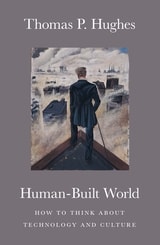
Human-Built World
How to Think about Technology and CultureThomas P. Hughes
University of Chicago Press, 2004
Hughes draws on an enormous range of literature, art, and architecture to explore what technology has brought to society and culture, and to explain how we might begin to develop an "ecotechnology" that works with, not against, ecological systems. From the "Creator" model of development of the sixteenth century to the "big science" of the 1940s and 1950s to the architecture of Frank Gehry, Hughes nimbly charts the myriad ways that technology has been woven into the social and cultural fabric of different eras and the promises and problems it has offered. Thomas Jefferson, for instance, optimistically hoped that technology could be combined with nature to create an Edenic environment; Lewis Mumford, two centuries later, warned of the increasing mechanization of American life.
Such divergent views, Hughes shows, have existed side by side, demonstrating the fundamental idea that "in its variety, technology is full of contradictions, laden with human folly, saved by occasional benign deeds, and rich with unintended consequences." In Human-Built World, he offers the highly engaging history of these contradictions, follies, and consequences, a history that resurrects technology, rightfully, as more than gadgetry; it is in fact no less than an embodiment of human values.
Humanism of the Other
Emmanuel Levinas
University of Illinois Press, 2003
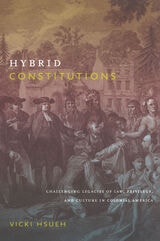
Hybrid Constitutions
Challenging Legacies of Law, Privilege, and Culture in Colonial AmericaVicki Hsueh
Duke University Press, 2010
Hsueh traces the historical development and theoretical implications of proprietary constitutionalism by examining the founding of the colonies of Maryland, Carolina, and Pennsylvania. She provides close readings of colonial proclamations, executive orders, and assembly statutes, as well as the charter granting Cecilius Calvert the colony of Maryland in 1632; the Fundamental Constitutions of Carolina, adopted in 1669; and the treaties brokered by William Penn and various Lenni Lenape and Susquehannock tribes during the 1680s and 1690s. These founding documents were shaped by ambition, contingency, and limited resources; they reflected an ambiguous and unwieldy colonialism rather than a purposeful, uniform march to modernity. Hsueh concludes by reflecting on hybridity as a rubric for analyzing the historical origins of colonialism and reconsidering contemporary indigenous claims in former settler colonies such as Australia, New Zealand, and the United States.
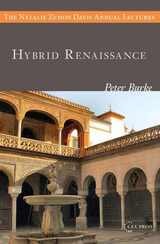
Hybrid Renaissance
Culture, Language, ArchitecturePeter Burke
Central European University Press, 2016
Hybrid Renaissance introduces the idea that the Renaissance in Italy, elsewhere in Europe, and in the world beyond Europe is an example of cultural hybridization.
The two key concepts used in this book are “hybridization” and “Renaissance”. Roughly speaking, hybridity refers to something new that emerges from the combination of diverse older elements. (The term “hybridization” is preferable to “hybridity” because it refers to a process rather than to a state, and also because it encourages the writer and the readers alike to think in terms of degree: where there is more or less, rather than presence versus absence.)
The book begins with a discussion of the concept of cultural hybridization and a cluster of other concepts related to it. Then comes a geography of cultural hybridization focusing on three locales: courts, major cities (whether ports or capitals) and frontiers. The following seven chapters describe the hybridity of the Renaissance in different fields: architecture, painting and sculpture, languages, literature, music, philosophy and law and finally religion. The essay concludes with a brief account of attempts to resist hybridization or to purify cultures or domains from what was already hybridized.