436 books match the query 'Disability' and 12 start with h

cover of HandiLand: The Crippest Place on Earth

HandiLand

The Crippest Place on Earth

Elizabeth A. Wheeler

University of Michigan Press, 2019

HandiLand looks at young adult novels, fantasy series, graphic memoirs, and picture books of the last 25 years in which characters with disabilities take center stage for the first time. These books take what others regard as weaknesses—for instance, Harry Potter’s headaches or Hazel Lancaster’s oxygen tank—and redefine them as part of the hero’s journey. HandiLand places this movement from sidekick to hero in the political contexts of disability rights movements in the United States, the United Kingdom, and Ghana.
 
Elizabeth A. Wheeler invokes the fantasy of HandiLand, an ideal society ready for young people with disabilities before they get there, as a yardstick to measure how far we’ve come and how far we still need to go toward the goal of total inclusion. The book moves through the public spaces young people with disabilities have entered, including schools, nature, and online communities. As a disabled person and parent of children with disabilities, Wheeler offers an inside look into families who collude with their kids in shaping a better world. Moving, funny, and beautifully written, HandiLand: The Crippest Place on Earth is the definitive study of disability in contemporary literature for young readers.
 

[more]
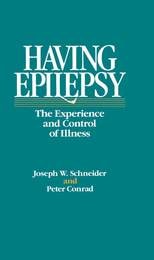
cover of Having Epilepsy: The Experience and Control of Illness

Having Epilepsy

The Experience and Control of Illness

Joseph W. Schneider and Peter Conrad

Temple University Press, 1985
"Well written and fascinating to read. This fine book takes a large step in...contributing to the only slowly dawning awareness of the general public, and the health workers too, of the significance of chronic illness." --Anselm Strauss, University of California, San Francisco Based on in-depth interviews with eighty people who have epilepsy, this book gives a first-hand account of what it is like to cope with a chronic illness, while working, playing, and building relationships. The authors recount how people discover they have epilepsy and what it means; how families respond to someone labeled "epileptic"; how seizures affect a person's sense of self and self-control. Epilepsy patients explain what they want from their doctors and why the medication practices they develop may not coincide with "doctor's orders." The variety of experiences of epilepsy is suggested both by the interviews and by the range of terms for seizures--Petit Mal, Grand Mal, auras, fits, absences. The principal difficulty for many people with epilepsy is not the medical condition but the social stigma. A person with epilepsy has to cope with discrimination in obtaining a job, insurance, or a driver's license, and he or she may be cautious about revealing this "disabling" condition to an employer or even a spouse. People with epilepsy may manage information about themselves and their "lapses" and look for "safe places" like restrooms where they can be alone should a seizure begin. Many of those interviewed complained of overreactions to seizures by colleagues or bystanders: epilepsy patients were embarrassed at having provoked a public crisis or were annoyed at waking up in a hospital emergency room. This is a book for people who have epilepsy, for their families and friends; for health care professionals who deal with chronic illnesses; and for students of medical sociology and the sociology of deviance. "For anyone who would like to 'get inside' the experience of having epilepsy, this book is probably as close as one can come." --Epilepsia "In dispelling the notion that 'the person is the illness,' these interviews with 80 individuals reveal that those suffering from epilepsy have learned to accept it as merely another facet of their lives. A valuable contribution for those with epilepsy, for their family and friends, for medical personnel, and for the general public." --Booklist "...carefully outlined and clearly written.... Those affected by chronic conditions may find the book most helpful.... Family and helping professionals may discover new insights.... Social scientists, especially those interested in chronic illnesses, will benefit from the research conclusions and suggestions for further research." --Medical Anthropology Quarterly "It represents an important advance in the medical sociology literature as well as a contribution to qualitative sociology. I think that the book should become a contemporary classic in medical sociology." --Qualitative Sociology "...an important contribution.... In focusing on what it is like to have epilepsy in this society, Schneider and Conrad have reversed an earlier concern for the medicalization of deviance, opting in this work for an understanding of the stigmatization of illness." --Contemporary Sociology
[more]
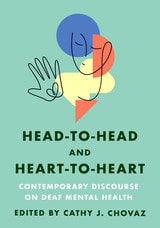
cover of Head-to-Head and Heart-to-Heart: Contemporary Discourse on Deaf Mental Health

Head-to-Head and Heart-to-Heart

Contemporary Discourse on Deaf Mental Health

Cathy J. Chovaz

Gallaudet University Press, 2026
Bridging the head and the heart by interspersing scholarly discussion with non-fiction narratives, this comprehensive edited volume illuminates critical issues that diverse deaf people face in the mental health domain and rehabilitative systems, primarily in Canada and the United States as well as other international settings. Through illustrative case studies and narratives contextualized within the scholarship, authors provide insight, analysis, and recommendations; these include a review of the repercussions of language deprivation, the need for linguistic and cultural competence in assessment, guidelines for mental health interpreting, the distinct needs of Deaf+ people, and the factors that shape risk and resilience. With particular attention to the impacts of language, including the deep and pervasive effects of language deprivation, chapters are organized around the lived experiences of deaf individuals over the lifespan and in multiple settings. An attempt to bridge the gap between clinical approaches and lived experiences, this book is unique in that it brings together a theoretical foundation and powerful stories from real people. Authors discuss assessment, resources, and best practices for a range of settings, including home, community, school, carceral system, and clinic. A helpful guide for clinicians, practitioners, academics, and sign language interpreters, Head-to-Head and Heart-to-Heart: Contemporary Discourse on Deaf Mental Health affirms that a deeper understanding emerges when heads and hearts connect, yielding expert, person-centered, mental health care for deaf and hard-of-hearing people.
[more]
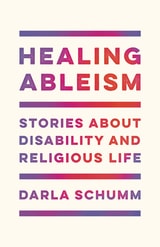
cover of Healing Ableism: Stories About Disability and Religious Life

Healing Ableism

Stories About Disability and Religious Life

Darla Schumm

Rutgers University Press, 2026
Most people encounter disability at some point in their lives, either in their own bodies or through a friend or loved one. Faith leaders, sacred texts, and members of religious communities frequently offer religious teachings and metaphors as explanation for the presence of disability, but rarely do we hear the voices of people living with disabilities reflecting on their experiences of God, faith, or religious life. In Healing Ableism: Stories about Disability and Religious Life, Darla Schumm explores the extraordinary stories of people with disabilities who struggle with the ordinary human challenges of faith and doubt, exclusion and inclusion, and injustice and justice. Blending candid story-telling, cultural critique, and theory, Schumm invites readers to reflect on the experiences of people with disabilities in religious communities and organizations. Schumm argues that it’s not disability that needs healing, it’s ableism that needs healing. In the final chapter, Schumm offers accessible love as one avenue for healing ableism.
[more]
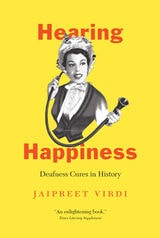
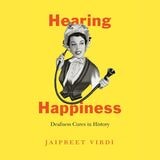
cover of Hearing Happiness: Deafness Cures in History

Hearing Happiness

Deafness Cures in History

Jaipreet Virdi

University of Chicago Press, 2020

Weaving together lyrical history and personal memoir, Virdi powerfully examines society’s—and her own—perception of life as a deaf person in America.

At the age of four, Jaipreet Virdi’s world went silent. A severe case of meningitis left her alive but deaf, suddenly treated differently by everyone. Her deafness downplayed by society and doctors, she struggled to “pass” as hearing for most of her life. Countless cures, treatments, and technologies led to dead ends. Never quite deaf enough for the Deaf community or quite hearing enough for the “normal” majority, Virdi was stuck in aural limbo for years. It wasn’t until her thirties, exasperated by problems with new digital hearing aids, that she began to actively assert her deafness and reexamine society’s—and her own—perception of life as a deaf person in America.
 
Through lyrical history and personal memoir, Hearing Happiness raises pivotal questions about deafness in American society and the endless quest for a cure. Taking us from the 1860s up to the present, Virdi combs archives and museums in order to understand the long history of curious cures: ear trumpets, violet ray apparatuses, vibrating massagers, electrotherapy machines, airplane diving, bloodletting, skull hammering, and many more. Hundreds of procedures and products have promised grand miracles but always failed to deliver a universal cure—a harmful legacy that is still present in contemporary biomedicine.

Weaving Virdi’s own experiences together with her exploration into the fascinating history of deafness cures, Hearing Happiness is a powerful story that America needs to hear.
[more]
cover of Hearing Happiness: Deafness Cures in History

Hearing Happiness

Deafness Cures in History

Jaipreet Virdi

University of Chicago Press, 2020

This is an auto-narrated audiobook edition of this book.

Weaving together lyrical history and personal memoir, Virdi powerfully examines society’s—and her own—perception of life as a deaf person in America.

At the age of four, Jaipreet Virdi’s world went silent. A severe case of meningitis left her alive but deaf, suddenly treated differently by everyone. Her deafness downplayed by society and doctors, she struggled to “pass” as hearing for most of her life. Countless cures, treatments, and technologies led to dead ends. Never quite deaf enough for the Deaf community or quite hearing enough for the “normal” majority, Virdi was stuck in aural limbo for years. It wasn’t until her thirties, exasperated by problems with new digital hearing aids, that she began to actively assert her deafness and reexamine society’s—and her own—perception of life as a deaf person in America.
 
Through lyrical history and personal memoir, Hearing Happiness raises pivotal questions about deafness in American society and the endless quest for a cure. Taking us from the 1860s up to the present, Virdi combs archives and museums in order to understand the long history of curious cures: ear trumpets, violet ray apparatuses, vibrating massagers, electrotherapy machines, airplane diving, bloodletting, skull hammering, and many more. Hundreds of procedures and products have promised grand miracles but always failed to deliver a universal cure—a harmful legacy that is still present in contemporary biomedicine.

Weaving Virdi’s own experiences together with her exploration into the fascinating history of deafness cures, Hearing Happiness is a powerful story that America needs to hear.

[more]
cover of Heavy Metal and Disability: Crips, Crowds, and Cacophonies

Heavy Metal and Disability

Crips, Crowds, and Cacophonies

Edited by Jasmine Hazel Shadrack and Keith Kahn-Harris

Intellect Books, 2024

A study of the distinctive relationship between metal and disability.

Persisting across metal’s subgenres is a preoccupation with exploring and questioning the boundary that divides the body that has agency from the body that has none. This boundary is one that is familiar to those for whom the agency of the body is an everyday matter of survival. While metal scholars who contribute to this collection see metal as a space of possibility, in which dis/ability and other intersectional identities can be validated and understood, the collection does not imply that the possibilities that metal affords are always actualized. This collection situates itself in a wider struggle to open up metal, challenging its power structures—a struggle in which metal studies has played a significant part.

Metal’s preoccupation with unleashing and controlling sensorial overload acts both as an analog of neurodiversity and as a space in which those who are neurodivergent find ways to understand and leverage their sensory capacities. Metal offers potent resources for the self-understanding of people with disabilities. It does not necessarily mean that this potential is always explored or that metal scenes are hospitable to those with disabilities. This collection is disability-positive, validating people with disabilities as different and not damaged.

[more]
cover of Hidden Inequities in Labor-Based Contract Grading

Hidden Inequities in Labor-Based Contract Grading

Ellen C. Carillo

Utah State University Press, 2021

Current Arguments in Composition Series

The Hidden Inequities in Labor-Based Contract Grading intervenes in the increasingly popular practice of labor-based grading by expanding the scope of this assessment practice to include students who are disabled and multiply marginalized. Through the lens of disability studies, the book critiques the assumption that labor is a neutral measure by which to assess students and explores how labor-based grading contracts put certain groups of students at a disadvantage. Ellen C. Carillo offers engagement-based grading contracts as an alternative that would provide a more equitable assessment model for students of color, those with disabilities, and students who are multiply marginalized.
 
This short book explores the history of labor-based grading contracts, reviews the scholarship on this assessment tool, highlights the ways in which it normalizes labor as an unbiased tool, and demonstrates how to extend the conversation in new and generative ways both in research and in classrooms. Carillo encourages instructors to reflect on their assessment practices by demonstrating how even assessment methods that are designed through a social-justice lens may unintentionally privilege some students over others.
 

[more]
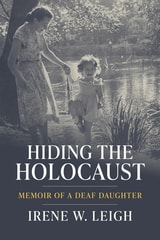
cover of Hiding the Holocaust: Memoir of a Deaf Daughter

Hiding the Holocaust

Memoir of a Deaf Daughter

Irene W. Leigh

Gallaudet University Press, 2026
From her parents, deaf psychologist Irene W. Leigh learned how quickly safety could be yanked away. Her parents, Jews who barely escaped Nazi Germany on the eve of World War II, tried to shield Leigh from harm, never talking about the horrors they endured, and it was not until recently that she began to discover the truth by uncovering a shocking document. Having rebuilt their lives from scratch, first in England and then in America, Leigh’s parents passed down a legacy of ambition, persistence, and achievement, shaping her resilience in response to bias and discrimination. In this deeply personal memoir, Hiding the Holocaust, Leigh explores how this unspoken history and inherited trauma has informed her personal, familial, academic, and career experiences. Using a lifespan narrative structure focusing on memories, reflections, and recreated dialogue, Leigh narrates the subtle ways in which Holocaust trauma and loss affected not only her parents but also herself as a deaf child, teen, adult, and parent.
[more]
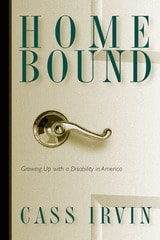
cover of Home Bound: Growing Up With A Disability

Home Bound

Growing Up With A Disability

Cass Irvin

Temple University Press, 2003
"When I was growing up, I learned that if you were a girl you went to school and college, then you married, became a wife and had a family. . . . When I became disabled, my journey, I was pretty sure, was not going to take me in those directions. What was I supposed to be? What kind of life was I supposed to have?"Once polio had made her a quadriplegic, Cass Irvin didn't know where she fit in or what would become of her. Neither did her parents, teachers, counselors, or rehabilitation therapists. And so began her search for a place to call home.In this memoir, Cass Irvin tells of the remarkable journey that transformed her from a young girl too timid to ask for help to a community activist and writer who speaks forcefully about the needs of people with disabilities. As a young girl she was taken to Warm Springs, Georgia, where she learned about living as a disabled person and found a hero in Franklin Delano Roosevelt, the famously if silently disabled president. Bright and inquisitive, Cass soon began to question the prevailing assumptions of a society that had no place for her and to question her own meekness.In time, her keen sense of injustice gave her the courage to fight for a college education. That personal victory emboldened her to find the means to live independently, but it also persuaded her that political work is the key to enabling all people with disabilities to live fulfilling lives. This book, then, is testimony to the importance of community building and organizing as well as the story of one woman's struggle for independence.
[more]
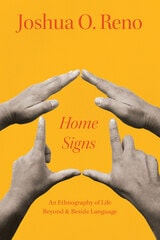
cover of Home Signs: An Ethnography of Life beyond and beside Language

Home Signs

An Ethnography of Life beyond and beside Language

Joshua O. Reno

University of Chicago Press, 2024

An intimate account of an anthropologist’s relationship with his non-verbal son and how it has shaped and transformed his understanding of closeness and communication.

Home Signs grew out of the anthropologist Joshua Reno’s experience of caring for and trying to communicate with his teenage son, Charlie, who cannot speak. To manage interactions with others, Charlie uses what are known as “home signs,” gestures developed to meet his need for expression, ranging from the wiggle of a finger to a subtle sideways glance. Though he is nonverbal, he is far from silent: in fact, he is in constant communication with others.
 
In this intimate reflection on language, disability, and togetherness, the author invites us into his and Charlie’s shared world. Combining portraits of family life and interviews with other caregivers, Reno upends several assumptions, especially the idea that people who seem not to be able to speak for themselves need others to speak on their behalf. With its broad exploration of nonverbal communication in both human and nonhuman contexts, Home Signs challenges us to think harder about what it means to lead a “normal” life and to connect with another person.

[more]
cover of Hush: Media and Sonic Self-Control

Hush

Media and Sonic Self-Control

Mack Hagood

Duke University Press, 2019

For almost sixty years, media technologies have promised users the ability to create sonic safe spaces for themselves—from bedside white noise machines to Beats by Dre's “Hear What You Want” ad campaign, in which Colin Kaepernick's headphones protect him from taunting crowds. In Hush, Mack Hagood draws evidence from noise-canceling headphones, tinnitus maskers, LPs that play ocean sounds, nature-sound mobile apps, and in-ear smart technologies to argue the true purpose of media is not information transmission, but rather the control of how we engage our environment. These devices, which Hagood calls orphic media, give users the freedom to remain unaffected in the changeable and distracting spaces of contemporary capitalism and reveal how racial, gendered, ableist, and class ideologies shape our desire to block unwanted sounds. In a noisy world of haters, trolls, and information overload, guarded listening can be a necessity for self-care, but Hagood argues our efforts to shield ourselves can also decrease our tolerance for sonic and social difference. Challenging our self-defeating attempts to be free of one another, he rethinks media theory, sound studies, and the very definition of media.
[more]