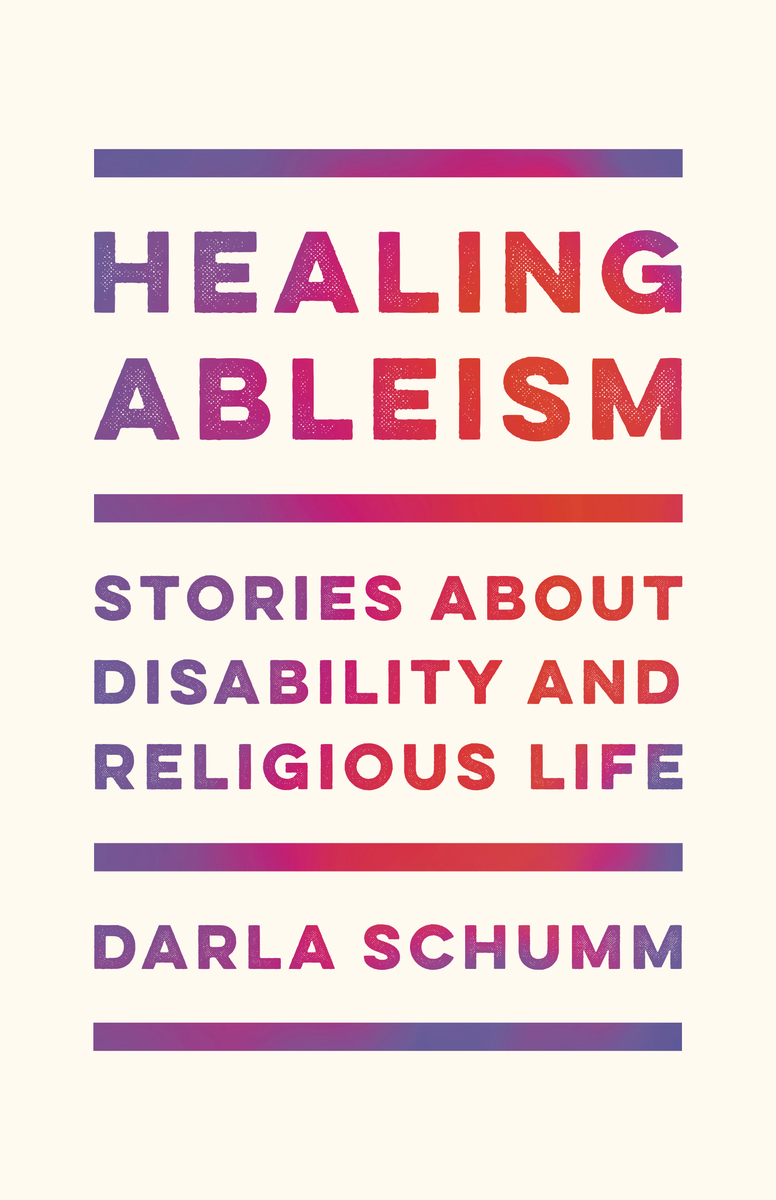
Healing Ableism: Stories About Disability and Religious Life
Rutgers University Press, 2026
Cloth: 978-1-9788-4221-2 | Paper: 978-1-9788-4220-5 | eISBN: 978-1-9788-4222-9 (ePub) | eISBN: 978-1-9788-4223-6 (PDF)
Library of Congress Classification BV4910.S38 2025
Dewey Decimal Classification 261.8324
Cloth: 978-1-9788-4221-2 | Paper: 978-1-9788-4220-5 | eISBN: 978-1-9788-4222-9 (ePub) | eISBN: 978-1-9788-4223-6 (PDF)
Library of Congress Classification BV4910.S38 2025
Dewey Decimal Classification 261.8324
ABOUT THIS BOOK | AUTHOR BIOGRAPHY | REVIEWS | TOC
ABOUT THIS BOOK
Most people encounter disability at some point in their lives, either in their own bodies or through a friend or loved one. Faith leaders, sacred texts, and members of religious communities frequently offer religious teachings and metaphors as explanation for the presence of disability, but rarely do we hear the voices of people living with disabilities reflecting on their experiences of God, faith, or religious life. In Healing Ableism: Stories about Disability and Religious Life, Darla Schumm explores the extraordinary stories of people with disabilities who struggle with the ordinary human challenges of faith and doubt, exclusion and inclusion, and injustice and justice. Blending candid story-telling, cultural critique, and theory, Schumm invites readers to reflect on the experiences of people with disabilities in religious communities and organizations. Schumm argues that it’s not disability that needs healing, it’s ableism that needs healing. In the final chapter, Schumm offers accessible love as one avenue for healing ableism.
See other books on: Comparative Religion | Disabilities | Disability | People with disabilities | Religious life
See other titles from Rutgers University Press