Results by title
300 books match the query 'Economic Development' and 6 start with h

Haciendas and Economic Development
Guadalajara, Mexico, at IndependenceBy Richard B. Lindley
University of Texas Press, 1983
Agriculture, commerce, and mining were the engines that drove New Spain, and past historians have treated these economic categories as sociological phenomena as well. For these historians, society in eighteenth-century New Spain was comprised, on the one hand, of creoles, feudalistic land barons who were natives of the New World, and, on the other, of peninsulars, progressive, urban merchants born on the Iberian peninsula. In their view, creole-peninsular resentment ultimately led to the wars for independence that took place in the American hemisphere in the early nineteenth century.
Richard B. Lindley’s study of Guadalajara’s wealthy citizens on the eve of independence contradicts this view, clearly demonstrating that landowners, merchants, creoles, and peninsulars, through intermarriage, formed large family enterprises with mixed agricultural, commercial, and mining interests. These family enterprises subdued potential conflicts of interest between Spaniards and Americans, making partners of potential competitors.
When the wars for national independence began in 1810, Spain’s ability to protect its colonies from outside influence was destroyed. The resultant influx of British trade goods and finance shook the structure of colonial society, as abundant British capital quickly reduced the capital shortage that had been the main reason for large-scale, diversified family businesses.
Elite family enterprises survived, but became less traditional and more specialized institutions. This transformation from traditional, personalized community relations to modern, anonymous corporations, with all that it implied for government and productivity, constitutes the real revolution that began in 1810.
Helping People Help Themselves
From the World Bank to an Alternative Philosophy of Development AssistanceDavid Ellerman
University of Michigan Press, 2006
David Ellerman relates a deep theoretical groundwork for a philosophy of development, while offering a descriptive, practical suggestion of how goals of development can be better set and met. Beginning with the assertion that development assistance agencies are inherently structured to provide help that is ultimately unhelpful by overriding or undercutting the capacity of people to help themselves, David Ellerman argues that the best strategy for development is a drastic reduction in development assistance. The locus of initiative can then shift from the would-be helpers to the doers (recipients) of development. Ellerman presents various methods for shifting initiative that are indirect, enabling and autonomy-respecting. Eight representative figures in the fields of education, community organization, economic development, psychotherapy and management theory including: Albert Hirschman, Paulo Freire, John Dewey, and Søren Kierkegaard demonstrate how the major themes of assisting autonomy among people are essentially the same.
David Ellerman is currently a Visiting Scholar in the Economics Department at the University of California at Riverside.

Higgling
Transactors and Their Markets in the History of EconomicsNeil De Marchi
Duke University Press, 1994
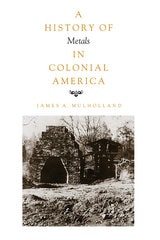
History of Metals in Colonial America
James A. Mulholland
University of Alabama Press, 1981
History of the Alps, 1500 - 1900
Environment, Development, and SocietyJon Mathieu, translated by Matthew Vester
West Virginia University Press, 2009
In the 1700s, Jean-Jacques Rousseau celebrated the Alps as the quintessence of the triumph of nature over the “horrors” of civilization. Now available in English, History of the Alps, 1500-1900: Environment, Development, and Society provides a precise history of one of the greatest mountain range systems in the world. Jon Mathieu’s work disproves a number of commonly held notions about the Alps, positioning them as neither an inversion of lowland society nor a world apart with respect to Europe. Mathieu’s broad historical portrait addresses both the economic and sociopolitical—exploring the relationship between population levels, development, and the Alpine environment, as well as the complex links between agrarian structure, society, and the development of modern civilization. More detailed analysis examines the relationship between various agrarian structures and shifting political configurations, several aspects of family history between the late Middle Ages and the turn of the twentieth century, and exploration of the Savoy, Grisons, and Carinthia regions.
Housing Needs and Policy Approaches
Trends in Thirteen CountriesWillem Van Vliet , Elizabeth Huttman, and Sylvia Fava, eds.
Duke University Press, 1985