Results by title
145 books match the query 'Family relationships' and 8 start with h
Help Your Marriage Survive
The Death Of A ChildPaul Rosenblatt
Temple University Press, 2000
Based on intensive interviews of 29 couples who experienced the death of a child, this book offers perspectives and advice on common marital problems experienced by bereaved parents. Each couple's problems are unique, but often the problems are connected to couple communication, sexuality, parenting of other children, the use of alcohol and drugs, blaming, and differences in such areas as whether to have another child, how to grieve, how to talk about the child who died, whether to go outside the marriage for support, and what to do with things and spaces that were the child's.
Although the book deals with pain and marital distress, it offers a message of hope. Grieving parents can and do get through the hard times, based on respect for differences, mutual understanding, and shared history.
Helping Yourself Help Others
A Book for CaregiversRosalynn Carter
University of Arkansas Press, 2023
“A practical, highly informative, and sympathetic guide.”
—The Washington Post
Most of us will become a caregiver at some point in our lives. And we will assume this role for the most personal reason imaginable: wanting to help someone we love. But we may not know where to start, and we may be afraid of losing ourselves in this daunting task.
Former first lady Rosalynn Carter, a longtime advocate for caregivers and mental health, knows firsthand the challenges of this labor of love. Drawing upon her own experiences and those of hundreds of others whose stories she gathered over many decades, Mrs. Carter offers reassuring, practical advice to any caregiver who has faced stress, anxiety, or loneliness.
Helping Yourself Help Others, reissued here with a new foreword, is as relevant as ever. Long before the COVID-19 pandemic inspired national conversations about the vast undervaluing of unpaid caregiving, the dangers of burnout, and the merits of self-care for relief, Rosalynn Carter was shining a light on these matters and everything else that caregivers confront. Filled with empathy, this encouraging guide will help you meet a difficult challenge head-on and find fulfillment and empowerment in your caregiving role.
Hidden Victims
The Effects of the Death Penalty on Families of the AccusedSharp, Susan F
Rutgers University Press, 2005
"Everyone concerned with the effects of capital punishment must have this book."—Margaret Vandiver, professor, department of criminology and criminal justice, University of Memphis
Murderers, particularly those sentenced to death, are considered by most to be unusually heinous, often sub-human, and entirely different from the rest of us. In Hidden Victims, sociologist Susan F. Sharp challenges this culturally ingrained perspective by reminding us that those individuals facing a death sentence, in addition to being murderers, are brothers or sisters, mothers or fathers, daughters or sons, relatives or friends. Through a series of vivid and in-depth interviews with families of the accused, she demonstrates how the exceptionally severe way in which we view those on death row trickles down to those with whom they are closely connected. Sharp shows how family members and friends—in effect, the indirect victims of the initial crime—experience a profoundly complicated and socially isolating grief process.
Departing from a humanist perspective from which most accounts of victims are told, Sharp makes her case from a sociological standpoint that draws out the parallel experiences and coping mechanisms of these individuals. Chapters focus on responses to sentencing, the particular structure of grieving faced by this population, execution, aftermath, wrongful conviction, family formation after conviction, and the complex situation of individuals related to both the killer and the victim.
Powerful, poignant, and intelligently written, Hidden Victims challenges all of us—regardless of which side of the death penalty you are on—to understand the economic, social, and psychological repercussions that shape the lives of the often forgotten families of death row inmates.
Hir
A PlayTaylor Mac
Northwestern University Press, 2015
Finalist, 2015 Lambda Literary Award for LGBT Drama
Discharged from the Marines under suspicious circumstances, Isaac comes home from the wars, only to find the life he remembers upended. Isaac’s father, who once ruled the family with an iron fist, has had a debilitating stroke; his younger sister, Maxine, is now his brother, Max; and their mother, Paige, is committed to revolution at any cost. Determined to be free of any responsibility toward her formerly abusive husband—or the home he created—Paige fervently believes she can lead the way to a "new world order." Hir, Taylor Mac’s subversive comedy, leaves many of our so-called normative and progressive ideas about gender, families, the middle class—and cleaning—in hilarious and ultimately tragic disarray.
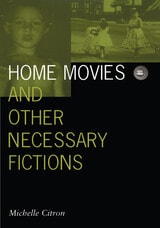
Home Movies and Other Necessary Fictions
Michelle Citron
University of Minnesota Press, 1998
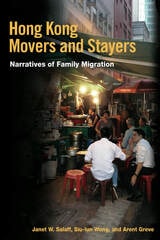
Hong Kong Movers and Stayers
Narratives of Family MigrationJanet W. Salaff, Siu-lun Wong, and Arent Greve
University of Illinois Press, 2010
Half a million Hong Kong residents fled their homeland during the thirteen years before Hong Kong's reversion to China in 1997. Nearly half of those returned within the next several years. Filled with detailed, first-hand stories of nine Hong Kong families over nearly two decades, Hong Kong Movers and Stayers is a multifaceted yet intimate look at the forces behind Hong Kong families' successful, and failed, efforts at migration and settlement.
Defining migration as a process, not a single act of leaving, Hong Kong Movers and Stayers provides an antidote to ethnocentric and simplistic theories by uncovering migration stories as they relate to social structures and social capital. The authors meld survey analysis, personal biography, and sociology and compare multiple families in order to give voice to the interplay of gender, age, and diverse family roles as motivating factors in migration.
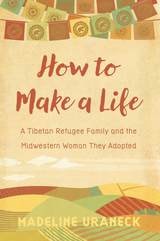
How to Make a Life
A Tibetan Refugee Family and the Midwestern Woman They AdoptedMadeline Uraneck
Wisconsin Historical Society Press, 2018
When Madeline Uraneck said hello to the Tibetan woman cleaning her office cubicle, she never imagined the moment would change her life. After learning that Tenzin Kalsang had left her husband and four children behind in a Tibetan refugee settlement in India to try to forge a better life for them, Madeline took on the task of helping her apply for US visas. When the family reunited in their new Midwestern home, Madeline became swept up in their lives, from homework and soccer games to family dinners and shared holiday traditions. By reaching out, she found more than she bargained for—a family who welcomed her as their own and taught her more than she offered them.
An evocative blend of immersion journalism and memoir, How to Make a Life shares the immigration story of a Tibetan refugee family who crossed real and cultural bridges to make a life in Madison, Wisconsin, with the assistance of the Midwestern woman they befriended. From tales of escaping Tibet over the Himalayas, to striking a balance between old traditions with new, to bridging divides one friendly gesture at a time, readers will expand their understanding of family, culture, and belonging.
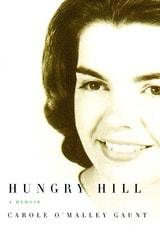
Hungry Hill
A MemoirCarole O'Malley Gaunt
University of Massachusetts Press, 2007
On a sweltering June night in 1959, Betty O'Malley died from lymphatic cancer, leaving behind an alcoholic husband and eight shell-shocked children—seven sons and one daughter, ranging in age from two to fifteen years. The daughter, Carole, was thirteen at the time. In this poignant memoir, she recalls in vivid detail the chaotic course of her family life over the next four years.
The setting for the story is Hungry Hill, an Irish-Catholic working-class neighborhood in Springfield, Massachusetts. The author recounts her sad and turbulent story with remarkable clarity, humor, and insight, punctuating the narrative with occasional fictional scenes that allow the adult Carole to comment on her teenage experiences and to probe the impact of her mother's death and her father's alcoholism.