Results by title
207 books match the query 'Feminist theory' and 10 start with h
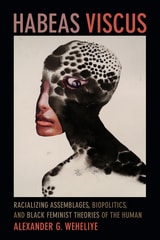
Habeas Viscus
Racializing Assemblages, Biopolitics, and Black Feminist Theories of the HumanAlexander G. Weheliye
Duke University Press, 2014

Hanoi Jane
Lembcke Jerry
University of Massachusetts Press, 2010

Hanoi Jane
War, Sex, and Fantasies of BetrayalJerry Lembcke
University of Massachusetts Press, 2010
From Aristophanes' Lysistrata to the notorious Mata Hari and the legendary Tokyo Rose, stories of female betrayal during wartime have recurred throughout human history. The myth of Hanoi Jane, Jerry Lembcke argues, is simply the latest variation on this enduring theme. Like most of the iconic femmes fatales who came before, it is based on a real person, Jane Fonda. And also like its predecessors, it combines traces of fact with heavy doses of fiction to create a potent symbol of feminine perfidy—part erotic warrior-woman Barbarella, part savvy antiwar activist, and part powerful entrepreneur.
Hanoi Jane, the book, deconstructs Hanoi Jane, the myth, to locate its origins in the need of Americans to explain defeat in Vietnam through fantasies of home-front betrayal and the emasculation of the national will-to-war. Lembcke shows that the expression “Hanoi Jane” did not reach the eyes and ears of most Americans until five or six years after the end of the war in Vietnam. By then, anxieties about America's declining global status and deteriorating economy were fueling a populist reaction that pointed to the loss of the war as the taproot of those problems. Blaming the antiwar movement for undermining the military's resolve, many found in the imaginary Hanoi Jane the personification of their stab-in-the- back theories.
Ground zero of the myth was the city of Hanoi itself, which Jane Fonda had visited as a peace activist in July 1972. Rumors surrounding Fonda's visits with U.S. POWs and radio broadcasts to troops combined to conjure allegations of treason that had cost American lives. That such tales were more imagined than real did not prevent them from insinuating themselves into public memory, where they have continued to infect American politics and culture.
Hanoi Jane is a book about the making of Hanoi Jane by those who saw a formidable threat in the Jane Fonda who supported soldiers and veterans opposed to the war they fought, in the postcolonial struggle of the Vietnamese people to make their own future, and in the movements of women everywhere for gender equality.

Haunting Violations
Feminist Criticism and the Crisis of the "Real"Edited by Wendy S. Hesford and Wendy Kozol
University of Illinois Press, 2000
Feminist critics place a premium on the "real" stories told by the victimized and the oppressed. Haunting Violations offers a corrective to such uncritical acceptance of the "real" in confessional, testimonial, and ethnographic narratives. Through close readings of a wide variety of texts, contributors argue that depictions of the "real" are inherently performative, crafted within the limits and in the interests of specific personal, political, or social projects.
Haunting Violations explores the inseparability of discourse and politics in quasi-autobiographical works such as I, Rigoberta Menchú and When Heaven and Earth Changed Places. Contributors consider how the Sri Lankan Mother's Front movement exploits the sanctity of the maternal and how multiple political purposes on both sides bleed through government "documentary" photographs of Japanese-American concentration camp internees. This volume also investigates how South Asian feminists use the authority of their personal experience to critique the film Mississippi Masala and how realist narratives, such as Janet Campbell Hale's autobiographical Bloodlines, Margie Strosser's documentary film Rape Stories, and Shekur Kapur's film Bandit Queen, reexamine how assumptions about power and trauma are embedded in the promise of the real.

Higher Ground
From Utopianism to Realism in American Feminist Thought and TheorySally L. Kitch
University of Chicago Press, 2000
Drawing on the history of utopian thought, as well as on her own research on utopian communities, Kitch defines utopian thinking, explores the pitfalls of pursuing social change based on utopian ideas, and argues for a "higher ground" —a contrasting approach she calls realism. Replacing utopianism with realism helps to eliminate self-defeating notions in feminist theory, such as false generalization, idealization, and unnecessary dichotomies. Realistic thought, however, allows feminist theory to respond to changing circumstances, acknowledge sameness as well as difference, value the past and the present, and respect ideological give-and-take.
An important critique of feminist thought, Kitch concludes with a clear, exciting vision for a feminist future without utopia.
History and Theory
Feminist Research, Debates, ContestationsEdited by Barbara Laslett, Ruth-Ellen Boetcher Joeres, Mary Jo Maynes, Evelyn Brooks Higginbotham
University of Chicago Press, 1997
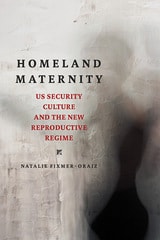
Homeland Maternity
US Security Culture and the New Reproductive RegimeNatalie Fixmer-Oraiz
University of Illinois Press, 2019

How We Write Now
Living with Black Feminist TheoryJennifer C. Nash
Duke University Press, 2024
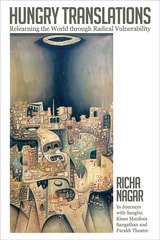
Hungry Translations
Relearning the World through Radical VulnerabilityRicha Nagar
University of Illinois Press, 2019
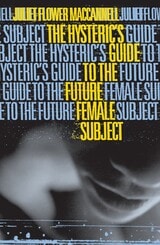
Hysteric's Guide to the Future Female Subject
Juliet Flower Maccannell
University of Minnesota Press, 1999
Proposes an ethics of the feminine through an examination of women’s writing.
The Hysteric’s Guide to the Future Female Subject was first published in 1999. Minnesota Archive Editions uses digital technology to make long-unavailable books once again accessible, and are published unaltered from the original University of Minnesota Press editions.
How can a girl become a woman today—an ethical woman and a member of society—without being either a victim or a manipulator? Reflecting on this question, Juliet Flower MacCannell takes us for the first time beyond the flawed models for “becoming woman” left to us by Freud and Sade.Having previously explored the logic of feminine sexuality, MacCannell sets out in the Hysteric’s Guide to locate an ethics of the feminine. She does this by examining instances of the (often hysterical) feminine confrontation with (usually perverse) masculine subjects, confrontations that represent crucial scenes in the constitution of female sexuality. Her study takes us into Sadean ethics and the prescriptions of Freudian psychoanalysis; post-Enlightenment colonialism; racism during and after World War I; genocidal fascism in World War II; and the slowing of time and generation during the Cold War.MacCannell treats contemporary art, fiction, and theory, considering works by Arendt, Angelou, Rousseau, Kant, Stendhal, Kleist, Hitchcock, Atwood, Klein, Chodorow, Adorno, and Duras. Ultimately, this book reasserts “becoming woman” as an issue that has, until now, been denied for want of a feminine ethic relevant to contemporary life.