Results by title
279 books match the query 'Film & Video' and 4 start with h
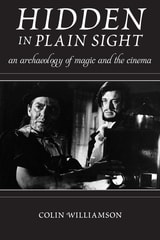
Hidden in Plain Sight
An Archaeology of Magic and the CinemaWilliamson, Colin
Rutgers University Press, 2015
To answer these questions, Colin Williamson situates film within a long tradition of magical practices that combine art and science, involve deception and discovery, and evoke two forms of wonder—both awe at the illusion displayed and curiosity about how it was performed. He thus considers how, even as they mystify audiences, cinematic illusions also inspire them to learn more about the technologies and techniques behind moving images. Tracing the overlaps between the worlds of magic and filmmaking, Hidden in Plain Sight examines how professional illusionists and their tricks have been represented onscreen, while also considering stage magicians who have stepped behind the camera, from Georges Méliès to Ricky Jay.
Williamson offers an insightful, wide-ranging investigation of how the cinema has functioned as a “device of wonder” for more than a century, while also exploring how several key filmmakers, from Orson Welles to Christopher Nolan and Martin Scorsese, employ the rhetoric of magic. Examining pre-cinematic visual culture, animation, nonfiction film, and the digital trickery of today’s CGI spectacles, Hidden in Plain Sight provides an eye-opening look at the powerful ways that magic has shaped our modes of perception and our experiences of the cinema.

Historical Comedy on Screen
Edited by Hannu Salmi
Intellect Books, 2011
In 1893 Friedrich Engels branded history “the cruelest goddess of all.” This sorrowful vision of the past is deeply rooted in the Western imagination, and history is thus presented as a joyless playground of inevitability rather than a droll world of possibilities. There are few places this is more evident than in historical cinema which tends to portray the past in a somber manner.
Historical Comedy on Screen examines this tendency paying particular attention to the themes most difficult to laugh at and exploring the place where comical and historical storytelling intersect. The book emphasizes the many oft-overlooked comical renderings of history and asks what they have to tell us if we begin to take them seriously.
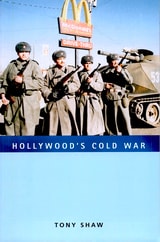
Hollywood's Cold War
Tony Shaw
University of Massachusetts Press, 2007
At a moment when American film reflects a deepening preoccupation with the Bush administration's War on Terror, this authoritative and timely book offers the first comprehensive account of Hollywood's propaganda role during the defining ideological conflict of the twentieth century: the Cold War. In an analysis of films dating from America's first Red Scare in the wake of the 1917 Bolshevik Revolution to the collapse of the Berlin Wall in 1989, Tony Shaw examines the complex relationship between filmmakers, censors, politicians, and government propagandists.
Movies, Shaw demonstrates, were at the center of the Cold War's battle for hearts and minds. Hollywood's comedies, love stories, musicals, thrillers, documentaries, and science fiction shockers played a critical dual role: on the one hand teaching millions of Americans why communism represented the greatest threat their country had ever faced, and on the other selling America's liberal-capitalist ideas around the globe. Drawing on declassified government documents, studio archives, and filmmakers' private papers, Shaw reveals the different ways in which cinematic propaganda was produced, disseminated, and received by audiences during the Cold War. In the process, he addresses subjects as diverse as women's fashions, McCarthyism, drug smuggling, Christianity, and American cultural diplomacy in India. Anyone seeking to understand wartime propaganda today will find striking contemporary resonance in his conclusions about Hollywood's versatility and power.
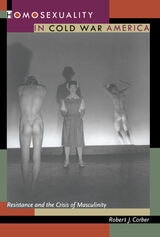
Homosexuality in Cold War America
Resistance and the Crisis of MasculinityRobert J. Corber
Duke University Press, 1997
By exploring the representation of gay men in film noir, Corber suggests that even as this Hollywood genre reinforced homophobic stereotypes, it legitimized the gay male "gaze." He emphasizes how film noir’s introduction of homosexual characters countered the national "project" to render gay men invisible, and marked a deep subversion of the Cold War mentality. Corber then considers the work of gay male writers Tennessee Williams, Gore Vidal, and James Baldwin, demonstrating how these authors declined to represent homosexuality as a discrete subculture and instead promoted a model of political solidarity rooted in the shared experience of oppression. Homosexuality in Cold War America reveals that the ideological critique of the dominant culture made by gay male authors of the 1950s laid the foundation for the gay liberation movement of the following decade.