Results by title
484 books match the query 'Foreign relations' and 17 start with h
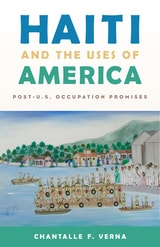
Haiti and the Uses of America
Post-U.S. Occupation PromisesVerna, Chantalle F.
Rutgers University Press, 2017
In the years following the U.S. occupation of Haiti (1915-1934), Haitian politicians and professionals with a cosmopolitan outlook shaped a new era in Haiti-U.S. diplomacy. Their efforts, Verna shows, helped favorable ideas about the United States, once held by a small segment of Haitian society, circulate more widely. In this way, Haitians contributed to and capitalized upon the spread of internationalism in the Americas and the larger world.
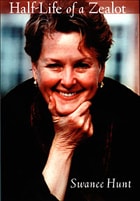
Half-Life of a Zealot
Swanee Hunt
Duke University Press, 2006
Half-Life of a Zealot tells how the girl who spoke against “Reds” alongside her father became a fierce advocate for progressive change in America and abroad, an innovative philanthropist, and Bill Clinton’s Ambassador to Austria. In captivating prose, Hunt describes the warmth and wear of Southern Baptist culture, which instilled in her a calling to help those who are vulnerable. The reader is drawn into her full-throttle professional life as it competes with critical family needs.
Hunt gives a remarkably frank account of her triumphs and shortcomings; her sorrows, including a miscarriage and the failure of a marriage; the joys and struggles of her second marriage; and her angst over the life-threatening illness of one of her three children. She is candid about the opportunities her fortune has created, as well as the challenge of life as an heiress.
Much of Swanee Hunt’s professional life is devoted to expanding women’s roles in making and shaping public policy. She is the founding director of Harvard’s Women and Public Policy Program at the Kennedy School of Government, chair of the Initiative for Inclusive Security, and president of the Hunt Alternatives Fund.
Swanee Hunt’s autobiography brims over with strong women: her mother, whose religious faith and optimism were an inspiration; her daughter, who fights the social stigma of mental disorders; the women of war-torn Bosnia, who transformed their grief into action; and friends like Hillary Clinton, who used her position as First Lady to strengthen the voices of others.
Hunt is one more strong woman. Half-Life of a Zealot is her story—so far.
Hands Across the Sea?
U.S.-Japan Relations, 1961–1981Timothy P. Maga
Ohio University Press, 1997
In 1961, the U.S. economy and military remained unassailable in the eyes of the world. Within twenty years, America faced defeat in Vietnam and its economy had been shaken. Japan was now considered the great economic superpower, while the U.S. and Japan reversed roles as surplus and debtor nations. Hands across the Sea? examines this reversal of roles, determining how and why America and Japan became the post-World War II era’s most argumentative allies.
Through extensive research in a number of presidential libraries and author interviews with both American and Japanese policy-makers, Professor Maga finds a U.S.-Japan relationship forever troubled by cultural misunderstanding, America’s Cold War obsession, Japanese pride, and strangely conflicting goals in both trade and defense. Given the intensity of the arguments over some of these issues, it is remarkable that Washington and Tokyo continued a working dialogue during this critical time.
Hands across the Sea? represents the first in-depth study of the modern U.S.-Japan relationship. It especially discovers how serious the U.S.-Japan disagreements over trade, defense, the direction of the Cold War, nuclear policy, and the environment had become.
Whereas American observers of U.S.-Japan relations are quick to point out their fellow countrymen’s ignorance of other cultures and Japan’s brilliance in analyzing American policy and life, the evidence suggests otherwise. Steering far away from anyone’s political correctness, this book’s bottom line involves hard-hitting investigation and analysis.
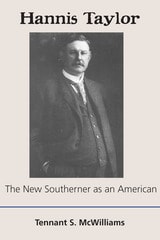
Hannis Taylor
The New Southerner as an AmericanTennant McWilliams
University of Alabama Press, 1978
During the late nineteenth and early twentieth centuries, American life took on contradictions that were later to surface with considerable poignancy. While many publicists and politicians foresaw an America of harmony and great opportunity, they also clung tenaciously to such doctrines as Anglo-Saxon racial superiority and the righteousness of liberal capitalism-notions that worked to defeat the progress they espoused. Here is a study of one of those persons, Hannis Taylor.
For a number of reasons Taylor’s life is uniquely useful for the historian interested in the paradoxes of American life at the turn of the century. Unlike many others of the era who have been examined through biography, Taylor pursued the multifaceted career of practicing attorney, constitutional historian, journalist, diplomat, and ever-aspiring politician. Hence he had occasion to write and speak on almost every intellectual and popular issue of the period. His record serves as a microcosm of many of the contradictions spanning American thought during that time. Further, Taylor was a Southerner. Before moving to Washington, D.C. in 1902, Taylor had grown up in a North Carolina torn by the Civil War and had taken an active role in Alabama affairs during the three decades following Reconstruction. His life shows how a proponent of the New South creed could move easily to advocate the nationalistic foreign and domestic policies often associated with Theodore Roosevelt. Finally, from a humanistic standpoint Taylor's life permits a study in human strivings for achievement. American historiography gravitates to the successful; here is an account of a more common stereotype, the man who worked relentlessly at becoming a noted American by supporting popular causes and who failed tragically.
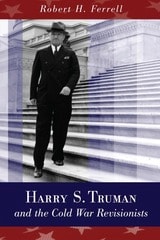
Harry S. Truman and the Cold War Revisionists
Robert H. Ferrell
University of Missouri Press, 2006
Hegemony
The New Shape Of Global PowerJohn Agnew
Temple University Press, 2005
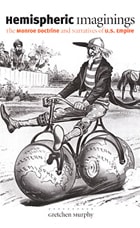
Hemispheric Imaginings
The Monroe Doctrine and Narratives of U.S. EmpireGretchen Murphy
Duke University Press, 2005
Murphy juxtaposes close readings of novels with analyses of nonfiction texts. From uncovering the literary inspirations for the Monroe Doctrine itself to tracing visions of hemispheric unity and transatlantic separation in novels by Lydia Maria Child, Nathaniel Hawthorne, María Amparo Ruiz de Burton, Lew Wallace, and Richard Harding Davis, she reveals the Doctrine’s forgotten cultural history. In making a vital contribution to the effort to move American Studies beyond its limited focus on the United States, Murphy questions recent proposals to reframe the discipline in hemispheric terms. She warns that to do so risks replicating the Monroe Doctrine’s proprietary claim to isolate the Americas from the rest of the world.

Herbert Hoover
Great War And Its AftermathLawrence E. Gelfand
University of Iowa Press, 1979
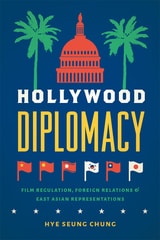
Hollywood Diplomacy
Film Regulation, Foreign Relations, and East Asian RepresentationsHye Seung Chung
Rutgers University Press, 2020

Hope and Folly
The United States and UNESCO, 1945-1985William Preston Jr., Edward S. Herman, and Herbert I. SchillerIntroduction by Ellen Ray and William H. SchappSean MacBride
University of Minnesota Press, 1989
Hope and Folly was first published in 1989. Minnesota Archive Editions uses digital technology to make long-unavailable books once again accessible, and are published unaltered from the original University of Minnesota Press editions.
Created in a burst of idealism after World War II, the United Nations Educational, Scientific, and Cultural Organization (UNESCO) existed for forty years in a state of troubled yet often successful collaboration with one of its founders and benefactors, the United States. In 1980, UNESCO adopted the report of a commission that surveyed and criticized the dominance, in world media, of the United States, Japan, and a handful of European countries. The report also provided the conceptual underpinnings for what was later called the New World Information and Communication Order, a general direction adopted by UNESCO to encourage increased Third World participation in world media. This direction - it never became an official program - ultimately led to the United States's withdrawal from UNESCO in 1984.
Hope and Folly is an interpretive chronicle of U.S./ UNESCO relations. Although the information debated has garnered wide attention in Europe and the Third World, there is no comparable study in the English language, and none that focuses specifically on the United States and the broad historical context of the debate. In the first three parts, William Preston covers the changing U.S./ UNESCO relationship from the early cold war years through the period of anti-UNESCO backlash, as well as the politics of the withdrawal. Edward Herman's section is an interpretive critique of American media coverage of the withdrawal, and Herbert Schiller's is a conceptual analysis of conflicts within the United States's information policies during its last years in UNESCO. The book's appendices include an analysis of Ed Bradley's notorious "60 Minutes" broadcast on UNESCO.
Hotel Trópico
Brazil and the Challenge of African Decolonization, 1950–1980Jerry Dávila
Duke University Press, 2010

How America Gets Away with Murder
Illegal Wars, Collateral Damage and Crimes Against HumanityMichael Mandel
Pluto Press, 2004
How Holocausts Happen
The United States in Central AmericaDouglas V. Porpora
Temple University Press, 1992
"History repeats itself, but it never repeats itself exactly," observes Douglas Porpora in this powerful indictment of U.S. intervention in Central America. Comparing the general public’s reaction to the Holocaust in Nazi Germany with American public opinion of U.S. participation in the genocidal policies of Nicaraguan counter-revolutionary forces, and the governments of Guatemala and El Salvador among others, Porpora demonstrates that moral indifference to the suffering of others was the common response. With reference to Hannah Arendt’s thesis of the banality of evil, he develops the concept of a "Holocaust-like event" and examines how even a democratic society can be capable of something on the order of a Holocaust.
Unlike other accounts of the Holocaust and genocide, this book focuses on the citizenry served or ruled by genocidal governments rather than on the governments themselves. Porpora argues that moral indifference and lack of interest in critical reflection are key factors that enable Holocaust-like events to happen And he characterizes American society as being typically indifferent to the fate of other people, uninformed, and anti-intellectual.
Porpora cites numerous horrifying examples of U.S.-backed Latin American government actions against their own peasants, Indians, and dissident factions. He offers finally a theory of public moral indifference and argues that although such indifference is socially created by government, the media, churches, and other institutions, we, the public, must ultimately take responsibility for it. How Holocausts Happen is at once a scholarly examination of the nature of genocide and a stinging indictment of American society.
How Presidents Test Reality
Decisions on Vietnam, 1954 and 1965John P. Burke, Fred L. Greenstein, Larry Berman, and Richard Immerman
Russell Sage Foundation, 1991
Just as famines and plagues can provide opportunities for medical research, the unhappy course of United States relations with Vietnam is a prime source of evidence for students of American political institutions. How Presidents Test Reality draws on the record of American decision making about Vietnam to explore the capacity of top government executives and their advisers to engage in effective reality testing.
Authors Burke and Greenstein compare the Vietnam decisions of two presidents whose leadership styles and advisory systems diverged as sharply as any in the modern presidency. Faced with a common challenge—an incipient Communist take-over of Vietnam—presidents Eisenhower and Johnson engaged in intense debates with their aides and associates, some of whom favored intervention and some of whom opposed it. In the Dien Bien Phu Crisis of 1954, Eisenhower decided not to enter the conflict; in 1965, when it became evident that the regime in South Vietnam could not hold out much longer, Johnson intervened.
How Presidents Test Reality uses declassified records and interviews with participants to assess the adequacy of each president’s use of advice and information. This important book advances our historical understanding of the American involvement in Vietnam and illuminates the preconditions of effective presidential leadership in the modern world.
"An exceptionally thoughtful exercise in what ‘contemporary history’ ought to be. Illuminates the past in a way that suggests how we might deal with the present and the future." —John Lewis Gaddis
"Burke and Greenstein have written what amounts to an owner's manual for operating the National Security Council....This is a book Reagan's people could have used and George Bush ought to read." —Bob Schieffer, The Washington Monthly
How World Politics Is Made
France and the Reunification of GermanyTilo Schabert
University of Missouri Press, 2009
Humanitarian Violence
The U.S. Deployment of DiversityNeda Atanasoski
University of Minnesota Press, 2013
When is a war not a war? When it is undertaken in the name of democracy, against the forces of racism, sexism, and religious and political persecution? This is the new world of warfare that Neda Atanasoski observes in Humanitarian Violence, different in name from the old imperialism but not so different in kind. In particular, she considers U.S. militarism—humanitarian militarism—during the Vietnam War, the Soviet-Afghan War, and the 1990s wars of secession in the former Yugoslavia.
What this book brings to light—through novels, travel narratives, photojournalism, films, news media, and political rhetoric—is in fact a system of postsocialist imperialism based on humanitarian ethics. In the fiction of the United States as a multicultural haven, which morally underwrites the nation’s equally brutal waging of war and making of peace, parts of the world are subject to the violence of U.S. power because they are portrayed to be homogeneous and racially, religiously, and sexually intolerant—and thus permanently in need of reform. The entangled notions of humanity and atrocity that follow from such mediations of war and crisis have refigured conceptions of racial and religious freedom in the post–Cold War era. The resulting cultural narratives, Atanasoski suggests, tend to racialize ideological differences—whereas previous forms of imperialism racialized bodies. In place of the European racial imperialism, U.S. settler colonialism, and pre–civil rights racial constructions that associated racial difference with a devaluing of nonwhite bodies, Humanitarian Violence identifies an emerging discourse of race that focuses on ideological and cultural differences and makes postsocialist and Islamic nations the potential targets of U.S. disciplining violence.
Hungary in the Cold War, 1945-1956
Between the United States and the Soviet UnionLászló Borhi
Central European University Press, 2004