153 books match the query 'Genres' and 4 start with h

[more]
cover of Hoodlum Movies: Seriality and the Outlaw Biker Film Cycle, 1966-1972

Hoodlum Movies

Seriality and the Outlaw Biker Film Cycle, 1966-1972

Stanfield, Peter

Rutgers University Press, 2018
From The Wild Angels in 1966 until its conclusion in 1972, the cycle of outlaw motorcycle films contained forty-odd formulaic examples. All but one were made by independent companies that specialized in producing exploitation movies for drive-ins, neighborhood theaters, and rundown inner city theaters. Despised by critics, but welcomed by exhibitors denied first-run films, these cheaply and quickly produced movies were made to appeal to audiences of mobile youths. The films are repetitive, formulaic, and eminently forgettable, but there is a story to tell about all of the above, and it is one worth hearing. Hoodlum Movies is not only about the films, its focus is on why and how these films were made, who they were made for, and how the cycle developed through the second half of the 1960s and came to a shuddering halt in 1972.   
[more]
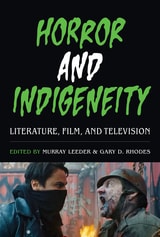
cover of Horror and Indigeneity: Literature, Film, and Television

Horror and Indigeneity

Literature, Film, and Television

Edited by Murray Leeder and Gary D. Rhodes

University of Texas Press, 2026

A collection of essays about Indigeneity and horror in cinema, literature, and beyond.

How did Indigeneity come to be horrifying? Think of the “Indian burial ground” trope, a staple of 1970s horror cinema, not to mention decades of Western films and fictions that made “savage Indians” the face of fear in popular culture. Can horror do something else in the hands of Indigenous people? Creators such as Eden Robinson and Jeff Barnaby have self-consciously turned to horror to tell new kinds of stories, stories that question who is a monster and what constitutes the monstrous.

Horror and Indigeneity explores representations of Indigenous people in settler horror texts and in the growing corpus of horror by Indigenous writers and filmmakers. Widely spanning time periods and media, the contributors to this edited volume address themes such as cannibalism, eco-horror, historical trauma, and contemporary antiracism as they relate to classical horror cinema and recent works such as The Dead Can’t Dance, Lovecraft Country, and Stephen Graham Jones’s The Only Good Indians. Also featuring interviews with Jones and director T. J. Cuthand, Horror and Indigeneity rethinks the terror of the Other in potent and provocactive terms.
[more]
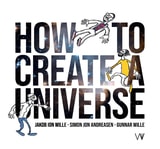
cover of How to Create a Universe

How to Create a Universe

Jakob Ion Wille, Simon Jon Andreasen, and Gunnar Wille

University of Westminster Press, 2025

How to Create a Universe helps you create and understand the universes that you love from books, films, TV series and games. Through ideas, reflections, drawings, conversations, theories and first-hand examples, the book takes the mystery out of universe building and provides new knowledge and methods for understanding and creating content for fictional universes. You can use the methods in the book to develop, conceptualize and devise universes whether you are a game creator, film producer, writer, TV series showrunner, designer, theatre director, artist, researcher, student or educator – or simply enjoy being a curious explorer wishing to understand the creative process of building a fictional universe. The book follows a similar approach to design research by focusing on methods and tools and, not least, interdisciplinary collaboration. Combining approaches from art research and the humanities with media studies and development processes, the book draws on extensive studies of works across different media, including film, TV series, games, computer games, theatre, literature and oral lore. We are inspired by explanations from narrative theory and biological evolution of the human urge to create and delve into fiction and fictive universes. Furthermore, we share the interest in methods, tools and collaboration models that characterizes design thinking.The book’s nine chapters contain insights into the process of universe building from idea to publication; interviews with some of the world’s leading universe thinkers and builders; practical exercises for developing universes across traditional, new and future media formats; and more than 200 drawings and illustrations of models and examples to provide support and inspiration. The authors draw on knowledge and information collected around the world over several years. In the book, you will meet people who have been involved in creating and developing the universes for Squid Game, Fight Club, The Terminal, Minority Report, Your Name, Suzume, Black Mirror, Mr. Turner, Wallace and Gromit, Pandemic Legacy, Dead of Winter, Dark, Lego, El Tigre, Avatar, Spiderman, Halo, Quirky Circuits, End of Night, The Guilty and Enforcement.
[more]