Results by title
60 books match the query 'Ghana' and 2 start with h
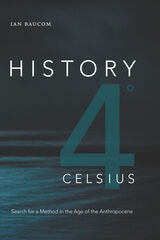
History 4° Celsius
Search for a Method in the Age of the AnthropoceneIan Baucom
Duke University Press, 2020
In History 4° Celsius Ian Baucom continues his inquiries into the place of the Black Atlantic in the making of the modern and postmodern world. Putting black studies into conversation with climate change, Baucom outlines how the ongoing concerns of critical race, diaspora, and postcolonial studies are crucial to understanding the Anthropocene. He draws on materialist and postmaterialist thought, Sartre, and the science of climate change to trace the ways in which evolving political, cultural, and natural history converge to shape a globally destructive force. Identifying the quest for limitless financial gain as the primary driving force behind both the slave trade and the continuing increase in global greenhouse gas emissions, Baucom demonstrates that climate change and the conditions of the Black Atlantic, colonialism, and the postcolony are fundamentally entwined. In so doing, he argues for the necessity of establishing a method of critical exchange between climate science, black studies, and the surrounding theoretical inquiries of humanism and posthumanism.
[more]
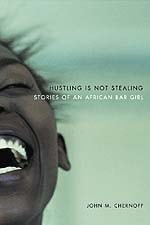
Hustling Is Not Stealing
Stories of an African Bar GirlJohn M. Chernoff
University of Chicago Press, 2003
While living in West Africa in the 1970s, John Chernoff recorded the stories of “Hawa,” a spirited and brilliant but uneducated woman whose insistence on being respected and treated fairly propelled her, ironically, into a life of marginality and luck as an “ashawo,” or bar girl. Rejecting traditional marriage options and cut off from family support, she is like many women in Africa who come to depend on the help they receive from one another, from boyfriends, and from the men they meet in bars and nightclubs. Refusing to see herself as a victim, Hawa embraces the freedom her lifestyle permits and seeks the broadest experience available to her.
In Hustling Is Not Stealing and its follow-up, Exchange Is Not Robbery, a chronicle of exploitation is transformed by verbal art into an ebullient comedy. In Hustling Is Not Stealing, Hawa is a playful warrior struggling against circumstances in Ghana and Togo. In Exchange Is Not Robbery, Hawa returns to her native Burkina Faso, where she achieves greater control over her life but faces new difficulties. As a woman making sacrifices to live independently, Hawa sees her own situation become more complex as she confronts an atmosphere in Burkina Faso that is in some ways more challenging than the one she left behind, and the moral ambiguities of her life begin to intensify.
Combining elements of folklore and memoir, Hawa’s stories portray the diverse social landscape of West Africa. Individually the anecdotes can be funny, shocking, or poignant; assembled together they offer a sweeping critical and satirical vision.
[more]