Results by title
13 books match the query 'Midwifery'
A Pleasing Birth
Midwives And Maternity CareRaymond De Vries
Temple University Press, 2005

Birth Figures
Early Modern Prints and the Pregnant BodyRebecca Whiteley
University of Chicago Press, 2023
Birth figures are printed images of the pregnant womb, always shown in series, that depict the variety of ways in which a fetus can present for birth. Historian Rebecca Whiteley coined the term and here offers the first systematic analysis of the images’ creation, use, and impact. Whiteley reveals their origins in ancient medicine and explores their inclusion in many medieval gynecological manuscripts, focusing on their explosion in printed midwifery and surgical books in Western Europe from the mid-sixteenth to the mid-eighteenth century. During this period, birth figures formed a key part of the visual culture of medicine and midwifery and were widely produced. They reflected and shaped how the pregnant body was known and treated. And by providing crucial bodily knowledge to midwives and surgeons, birth figures were also deeply entangled with wider cultural preoccupations with generation and creativity, female power and agency, knowledge and its dissemination, and even the condition of the human in the universe.
Birth Figures studies how different kinds of people understood childbirth and engaged with midwifery manuals, from learned physicians to midwives to illiterate listeners. Rich and detailed, this vital history reveals the importance of birth figures in how midwifery was practiced and in how people, both medical professionals and lay readers, envisioned and understood the mysterious state of pregnancy.
Delivering Health
Midwifery and Development in MexicoLydia Z. Dixon
Vanderbilt University Press, 2020
Maternal health outcomes are a key focus of global health initiatives. In Delivering Health, author Lydia Z. Dixon uncovers the ways such outcomes have been shaped by broader historical, political, and social factors in Mexico, through the perspectives of those who are at the front lines fighting for change: midwives.
Midwives have long been marginalized in Mexico as remnants of the country's precolonial past, yet Dixon shows how they are now strategically positioning themselves as agents of modernity and development. Midwifery education programs have popped up across Mexico, each with their own critique of the health care system and vision for how midwifery can help. Delivering Health ethnographically examines three such schools with very different educational approaches and professional goals. From San Miguel de Allende to Oaxaca to Michoacán and points between, Dixon takes us into the classrooms, clinics, and conferences where questions of what it means to provide good reproductive health care are being taught, challenged, and implemented. Through interviews, observational data, and even student artwork, we are shown how underlying inequality manifests in poor care for many Mexican women. The midwives in this book argue that they can improve care while also addressing this inequality. Ultimately, Delivering Health asks us to consider the possibility that marginalized actors like midwives may hold the solution to widespread concerns in health.

Desert Birthright
A Midwife's MemoirLori Wrankle
University of Utah Press, 2025
Lori Wrankle was sixteen when she helped deliver her first baby. “I witnessed the entire universe unfold at my feet,” she writes in Desert Birthright. Later, working as a hospital doula, Wrankle observed firsthand the suffering inflicted upon birthing women by male-dominated Western childbirth practices, from casual racism to unnecessary and nonconsensual procedures, including the dreaded “husband stitch.” After a traumatic labor and delivery of her own, she decided to take back woman-centered childbirth and start a homebirth midwifery practice.
Desert Birthright traverses twenty-five years of midwifery, often in fundamentalist polygamist circles, weaving together birth stories with childhood memories as Wrankle grapples with her shifting Mormon faith. Her poetic voice shines—a placenta becomes the tree of life, the folds in a baby’s arm layers of sand in the desert. Desert Birthright is a deeply personal story of life, death, and modern womanhood in the rural Southwest, and of one midwife’s journey of faith, self-discovery, and liberation in the face of adversity.
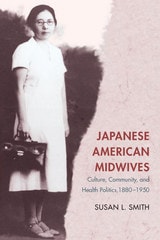
Japanese American Midwives
Culture, Community, and Health Politics, 1880-1950Susan L. Smith
University of Illinois Press, 2005
In the late nineteenth century, Japan's modernizing quest for empire transformed midwifery into a new woman's profession. With the rise of Japanese immigration to the United States, Japanese midwives (sanba) served as cultural brokers as well as birth attendants for Issei women. They actively participated in the creation of Japanese American community and culture as preservers of Japanese birthing customs and agents of cultural change.
Japanese American Midwives reveals the dynamic relationship between this welfare state and the history of women and health. Susan L. Smith blends midwives' individual stories with astute analysis to demonstrate the impossibility of clearly separating domestic policy from foreign policy, public health from racial politics, medical care from women's caregiving, and the history of women and health from national and international politics. By setting the history of Japanese American midwives in this larger context, Smith reveals little-known ethnic, racial, and regional aspects of women's history and the history of medicine.
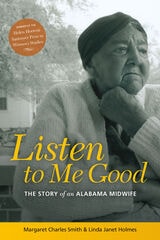
Listen to Me Good
The Story of an Alabama MidwifeMargaret Charles Smith and Linda Janet Holmes
The Ohio State University Press, 1996
Margaret Charles Smith, a ninety-one-year-old Alabama midwife, has thousands of birthing stories to tell. Sifting through nearly five decades of providing care for women in rural Greene County, she relates the tales that capture the life-and-death struggle of the birthing experience and the traditions, pharmacopeia, and spiritual attitudes that influenced her practice. She debunks images of the complacent southern “granny” midwife and honors the determination, talent, and complexity of midwifery.
Fascinating to read, this book is part of the new genre of writing that recognizes the credibility of midwives who have emerged from their own communities and were educated through apprenticeship and personal experience. Past descriptions of southern black midwives have tended to denigrate their work in comparison with professional established medicine. Believed to be the oldest living (though retired) traditional African American midwife in Alabama, Smith is one of the few who can recount old-time birthing ways. Despite claims that midwives contributed to high infant mortality rates, Smith’s story emphasizes midwives' successes in facing medical challenges and emergencies.

MAKING MIDWIVES LEGAL
Childbirth, Medicine, and the Law, Second EditionRaymond G. DeVries
The Ohio State University Press, 1996

Midwifery and Childbirth in America
Judith Rooks
Temple University Press, 1999
The author vividly describes the history of struggle among health care providers over the meaning and handling of the birth process. The medical model and the midwifery model continue to collide today, the former focusing on pathology and monitoring the patient for it, the latter focusing on birth as a normal, healthy process.
The education and professional training of those who care for women during pregnancy, childbirth, and the important postpartum period reflects these divisions. Obstetrics, family physicians, midwives, nurses, and others play roles in providing the necessary care. In focusing on midwives, Rooks deals fairly and sensitively between certified nurse-midwives and direct-entry midwives, most of whom lack formal educational preparation in midwifery.
This book describes clearly and with documented scientific evidence the specific benefits of the midwifery approach to the care of pregnant women and their families. In clear language accessible to the lay reader, Rooks summarizes the research on the unintended effects of obstetrical interventions, such as episiotomies, epidurals, C-sections, and continuous electronic fetal heart monitoring, and the effectiveness and important benefits of an approach that focuses on the positive potential of childbearing, as contrasted with a narrow focus of potential for pathology. While she acknowledges the importance of access to medical care, extensive research shows the advantages of the midwifery approach. Much that passes for "routine" obstetric care in the United States has been found to be unnecessary, ineffective, or even harmful when applied to women with normal pregnancies.
The arguments over the control of childbirth are set in the context of recent changes in health care, including the current transition to managed care; the impact of the women's movement and movements for natural childbirth, home birth, and breastfeeding; and women's fear of and concern about the pain associated with labor. Rooks also explains the influence of the reports and recommendations of prestigious scientific and health-policy commissions and of federal initiatives and programs on the care provided to pregnant women in this country. She contrasts U.S. practices with those of comparable industrialized countries like the European states, Canada, Australia, New Zealand, and Japan.
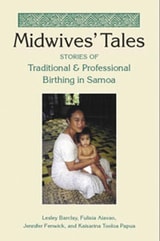
Midwives' Tales
Stories of Traditional and Professional Birthing in SamoaLesley Barclay
Vanderbilt University Press, 2005
The overall picture of changing birthing practices is complex and sometimes tinged with ironies. As the introduction says, "These Samoan nurses and midwives did not immediately attempt to mediate new and old ways of birthing after the colonial leadership of their profession left. They themselves became cultural agents for change as they continued the role of 'colonizing' their own birth tradition and taught the fa'atosaga [Samoan for midwife] Western techniques, at the same time trying to provide a professional midwife for all women. Paradoxically they often chose a social midwife for their own births and supported or at least condoned the social midwives close to them. . . . Kaisarina, while working as the leading professional midwife in the country, and working almost totally in hospital practice herself, simultaneously assisted her mother-in-law with her social practice of midwifery. Vipulo's story shows how a professional midwife preferred to have her mother, a social midwife, deliver her at home."
A particular objective of the authors is to encourage a reconception of maternity care in countries where professional services are rare and not available to all women. The book challenges common assumptions, still held in many postcolonial countries, that a simple migration of Western-style, hospital-focused care is necessarily always an achievable or desirable goal. It also demonstrates the considerable progress that one group has made in rethinking and developing a model of maternity care that works within their society and culture. As these midwives' stories suggest, solutions to some of the problems caused by gaps in the kinds of resources that Westerners take for granted can be found in partnerships and cultural wisdom that already exist in Samoa and, by extension, other developing countries.
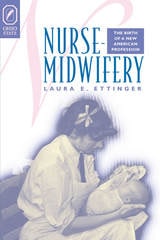
NURSE-MIDWIFERY
THE BIRTH OF A NEW AMERICAN PROFESSIONLaura E. Ettinger
The Ohio State University Press, 2006
Today, nurse-midwives have assumed a larger role in mainstream health care than before, yet they are still marginalized. As in the past, nurse-midwives’ futures will depend on continuing changes in American attitudes about childbirth, health care, and women professionals as well as on their own ability to adapt to the changes. The history of the profession suggests that nurse-midwives will continue to navigate in difficult waters in a middle space between the mainstream and the margins of medicine and between the nursing profession and midwifery traditions.
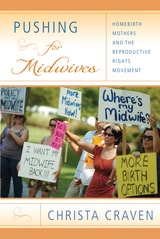
Pushing for Midwives
Homebirth Mothers and the Reproductive Rights MovementAuthored by Christa Craven
Temple University Press, 2010
With the increasing demand for midwives, activists are lobbying to loosen restrictions that deny legal access to homebirth options. In Pushing for Midwives, Christa Craven presents a nuanced history of women’s reproductive rights activism in the U.S. She also provides an examination of contemporary organizing strategies for reproductive rights in an era increasingly driven by “consumer rights.”
An historical and ethnographic case study of grassroots organizing, Pushing for Midwives is an in-depth look at the strategies, successes, and challenges facing midwifery activists in Virginia. Craven examines how decades-old race and class prejudices against midwives continue to impact opposition to—as well as divisions within—women’s contemporary legislative efforts for midwives. By placing the midwifery struggle within a broader reproductive rights context, Pushing for Midwives encourages activists to reconsider how certain political strategies have the potential to divide women. This reflection is crucial in the wake of neoliberal political-economic shifts that have prioritized the rights of consumers over those of citizens—particularly if activists hope to maintain their commitment to expanding reproductive rights for all women.
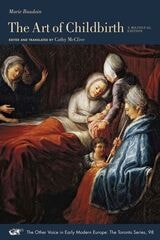
The Art of Childbirth
A Seventeenth-Century Midwife’s Epistolary Treatise to Doctor Vallant: A Bilingual EditionMarie Baudoin
Iter Press, 2022
In 1671, Marie Baudoin (1625–1700), head midwife and governor of the Hôtel-Dieu of Clermont-Ferrand, sent a treatise on the art of childbirth to her powerful Parisian patron, Dr. Vallant. The story of how Baudoin’s knowledge and expertise as a midwife came to be expressed, recorded, and archived raises the question: Was Baudoin exceptional because she was herself extraordinary, or because her voice has reached us through Vallant’s careful archival practices? Either way, Baudoin’s treatise invites us to reconsider the limits of what we thought we knew midwives “could be and do” in seventeenth-century France. Grounding Marie Baudoin’s text in a microanalysis of her life, work, and the Jansenist network between Paris and Clermont-Ferrand, this book connects historiographies of midwifery, Jansenism, hospital administration, public health, knowledge and record-keeping, and women’s work, underscoring both Baudoin’s capabilities and the archival accidents and intentions behind the preservation of her treatise in a letter.

The Court Midwife
Justine Siegemund
University of Chicago Press, 2005