Results by title
85 books match the query 'Heart' and 14 start with h
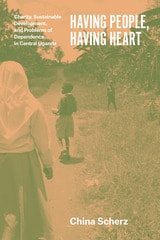
Having People, Having Heart
Charity, Sustainable Development, and Problems of Dependence in Central UgandaChina Scherz
University of Chicago Press, 2014
Through detailed studies of two different orphan support organizations in Uganda, Scherz shows how many Ugandans view material forms of Catholic charity as deeply intertwined with their own ethics of care and exchange. With a detailed examination of this overlooked relationship in hand, she reassesses the generally assumed paradox of material aid as both promising independence and preventing it. The result is a sophisticated demonstration of the powerful role that anthropological concepts of exchange, value, personhood, and religion play in the politics of international aid and development.
Head and Heart
Perspectives from Religion and PsychologyFraser Watts
Templeton Press, 2013
The fact that this distinction has been so persistent makes it an important area of study. Head and Heart: Perspectives from Religion and Psychology takes an inter-disciplinary approach, linking the thinking of theologians and philosophers with theory and research in present-day psychology. The tradition of using framing questions that have been developed in theology and philosophy can now be brought into dialogue with scientific approaches developed within cognitive psychology and neuroscience. Though these scientific approaches have not generally used the terms “head” and “heart,” they have arrived at a similar distinction in other ways. There is a notable convergence upon the realization that humans have two modes of cognition at their disposal that correspond to “head” and “heart.” The time is therefore ripe to bring the approaches of theology and science in to dialogue—an important dialogue that has been heretofore neglected.
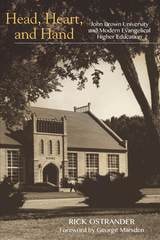
Head, Heart, and Hand
John Brown University and Modern Evangelical Higher EducationRick Ostrander
University of Arkansas Press, 2018
Head-to-Head and Heart-to-Heart
Contemporary Discourse on Deaf Mental HealthCathy J. Chovaz
Gallaudet University Press, 2026
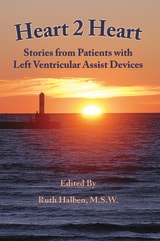
Heart 2 Heart
Stories from Patients with Left Ventricular Assist DevicesEdited by Ruth Halben, M.S.W.
Michigan Publishing Services, 2016
hardships they and their families endured as well as how many found hope after receiving an LVAD.
Each chapter is written by a different patient or a patient’s family member, creating a unique
collection of stories that reveals the realities of living life with an implanted heart pump. Heart 2 Heart is composed of seventeen patient voices, where fourteen males and three females of different ethnicities and ages share with the reader their tale--from their initial diagnosis, to their eventual LVAD procedure performed at the University of Michigan Hospital.
The editor, Ruth Halben, M.S.W., is a clinical social worker in the University of Michigan Health System who works with LVAD patients and their families. Ruth is one of the first LVAD social workers in the nation, and she draws both from her expertise and her heartfelt relationships with her patients to bring together this wonderful resource for current and future LVAD patients.
Heart Of The Sound
Marybeth Holleman
University of Utah Press, 2004
"You can’t step in the same river twice—although I once believed I could. I believed that the pieces of my life I had chosen, those I held close to my heart, would, once chosen and held, remain the same."—from the book
How does one recover from disaster? That question is at the heart of Marybeth Holleman’s lyrical, elegiac response to the repercussions of the Exxon Valdez oil spill that devastated Alaska’s Prince William Sound in 1989. Twining together the destruction of an ecosystem and the disintegration of her marriage, Holleman explores the resiliency of nature—both wild and human—and the ways in which that resiliency is tested. Like the oil that remains pooled beneath rocks years after the tanker spill, the emotional wounds of the past lie just below the surface. Recovery and restoration from the pain wrought by human hands does not come easily.
If much of nature writing is about the heart’s search for an unspoiled, perfect landscape, The Heart of the Sound is about what happens when the return-to-paradise fantasy is over and paradise is lost. In language rich with passion and hard-won insight, Holleman creates a captivating picture of a woman who found her Eden in the sweeping fjords of Alaska only to lose it to ecological tragedy. But somewhere within that loss, she finds herself.
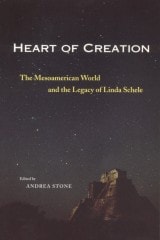
Heart of Creation
The Mesoamerican World and the Legacy of Linda ScheleEdited by Andrea Stone
University of Alabama Press, 2002
This accessible, state-of-the-art review of Mayan hieroglyphics and cosmology also serves as a tribute to one of the field's most noted pioneers.
The core of this book focuses on the current study of Mayan hieroglyphics as inspired by the recently deceased Mayanist Linda Schele. As author or coauthor of more than 200 books or articles on the Maya, Schele served as the chief disseminator of knowledge to the general public about this ancient Mesoamerican culture, similar to the way in which Margaret Mead introduced anthropology and the people of Borneo to the English-speaking world.
Twenty-five contributors offer scholarly writings on subjects ranging from the ritual function of public space at the Olmec site and the gardens of the Great Goddess at Teotihuacan to the understanding of Jupiter in Maya astronomy and the meaning of the water throne of Quirigua Zoomorph P. The workshops on Maya history and writing that Schele conducted in Guatemala and Mexico for the highland people, modern descendants of the Mayan civilization, are thoroughly addressed as is the phenomenon termed "Maya mania"—the explosive growth of interest in Maya epigraphy, iconography, astronomy, and cosmology that Schele stimulated. An appendix provides a bibliography of Schele's publications and a collection of Scheleana, written memories of "the Rabbit Woman" by some of her colleagues and students.
Of interest to professionals as well as generalists, this collection will stand as a marker of the state of Mayan studies at the turn of the 21st century and as a tribute to the remarkable personality who guided a large part of that archaeological research for more than two decades.
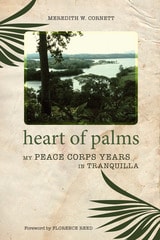
Heart of Palms
My Peace Corps Years in TranquillaMeredith W. Cornett
University of Alabama Press, 2014
A memoir of service, culture and transformation in a rural Panamanian village by a young American woman trained as a community forester for the Peace Corp.
In the storied fifty-year history of the US Peace Corps, Heart of Palms is the first Peace Corps memoir set in Panama, the slender isthmus that connects two continents and two oceans. In her memoir, Meredith Cornett transports readers to the remote village of Tranquilla, where dugout canoes are the mainstay of daily transportation, life and nature are permeated by witchcraft, and a restful night’s sleep may be disturbed by a raiding phalanx of army ants.
Cornett is sent to help counter the rapid deforestation that is destroying the ecosystem and livelihoods of the Panama Canal watershed region. Her first chapters chronicle her arrival and struggles not only with the social issues of language, loneliness, and insecurity, but also with the tragicomic basics of mastering open-fire cookery and intrusions by insects and poisonous snakes. As she grows to understand the region and its people, her keen eye discerns the overwhelming scope of her task. Unable to plant trees faster than they are lost, she writes with moving clarity about her sense of powerlessness.
Combating deforestation leads Cornett into an equally fierce battle against her own feelings of fear and isolation. Her journey to Panama becomes a parallel journey into herself. In this way, Heart of Palms is much more than a record of her Peace Corps service; it is also a moving environmental coming-of-age story and nuanced meditation on one village’s relationship to nature. When she returns home two years later, Cornett brings with her both skills and experience and a remarkable, newfound sense of confidence and mission.
Writing with rueful, self-deprecating humor, Cornett lets us ride along with her on a wave of naïve optimism, a wave that breaks not only on fear and intimidation, but also on tedium and isolation. Heart of Palms offers a bracing alternative to the romantic idealism common to Peace Corps memoirs and will be valued as a welcome addition to writing about the Peace Corps and environmental service.
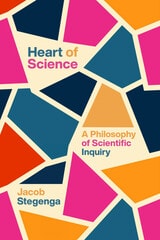
Heart of Science
A Philosophy of Scientific InquiryJacob Stegenga
University of Chicago Press, 2026
In Heart of Science, philosopher Jacob Stegenga breaks with the most dominant epistemologies of science to argue that in judging scientific activity, we should focus on its justification, not the achievement of truth or knowledge. Yet, Stegenga argues, the aim of science goes far beyond justification and is, instead, a special kind of truth—common knowledge, a broadly shared and mutually justified scientific finding.
Drawing on both historical examples and recent events like the COVID-19 pandemic, Stegenga outlines his approach before delving into its implications for scientific evaluation, testimony, values, progress, and credit, as well as the nature of science during times of crisis. Truth, he shows, may not be easily identified in the short term. However, an evaluation of scientific justification, grounded in shared standards, is possible. This framework helps us appraise—and appreciate—historical theories that ultimately weren’t accurate and offers fresh insights about appropriate science communication and public trust in scientific research. Justification and scientific rigor are not just means to an end, Stegenga writes, but the very heart of good science.
Ambitious, authoritative, and accessible, Heart of Science offers a new vision for the philosophy of science.
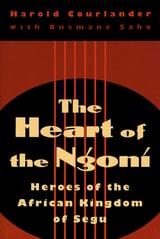
Heart of the Ngoni
Heroes of the African Kingdom of SeguHarold Courlander
University of Massachusetts Press, 1994
The heroic legends described here recreate the events and annals of the kingdom of Segu and of the Bambara tribe that formed a series of important city-states along the Niger River during the 17th century.

Heart of the Stone / El corazón de la piedra / Uk'u'x ri ab'aj
By Rosa Chávez, translated by Gabriela Ramirez-Chavez and Wel Raxulew
Amherst College Press, 2027
In Heart of the Stone, Rosa Chávez celebrates a Maya spirituality that recognizes all things—stones included—as part of the web of life. At the center of the collection is tijax, the poet's nawal represented by obsidian, the volcanic stone. Her verses cut through grief and fear to address colonization, injustices, and environmental abuse, while carving out a space for tenderness and deep healing.
Originally written in Spanish and translated into Maya K'iche' by Wel Raxulew, this stunning trilingual edition brings the poems into English for the first time in Gabriela Ramirez-Chavez's translation. The volume is framed by an introduction from Ramirez-Chavez, photography by Carlos Bernardo Euler Coy, and illustrations by Erick Boror.
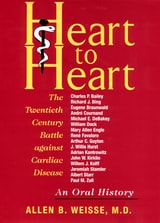
Heart to Heart
The Twentieth Century Battle against Cardiac Disease--An Oral HistoryWeisse, Allen B
Rutgers University Press, 2002
In Heart to Heart, Dr. Allen B. Weisse presents the first collection of in-depth conversations with some of the world's most renowned cardiologists and surgeons. Weisse's interviews bring a special vitality to the doctors' recollections of the people and events that influenced them, their motivations, their problems, their interactions with their contemporaries, and their hopes and beliefs for the future. Since not every doctor who has made important contributions to the treatment and prevention of heart disease could be interviewed for this volume, Weisse includes a biographical section listing other prominent cardiologists and surgeons as well as a list of recommended reading. This comprehensive history will be a resource for any student of cardiology or general medicine.
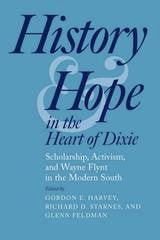
History and Hope in the Heart of Dixie
Scholarship, Activism, and Wayne Flynt in the Modern SouthEdited by Gordon E. Harvey, Richard D. Starnes and Glenn Feldman
University of Alabama Press, 2006
Exploring the history, challenges, and promise of a changing South through the legacy of Wayne Flynt.
This collection of essays on the social and political history of the modern South consider the region’s poor, racial mores and race relations, economic opportunity, Protestant activism, political coalitions and interest groups, social justice, and progressive reform. History and Hope in the Heart of Dixie illuminates the dual role of historian and public advocate in modern America. In a time when the nation’s eyes have been focused by Hurricanes Katrina and Rita onto the vulnerability and dire condition of poor people in the South, the applicability of research, teaching, and activism for this voiceless element seems all the more relevant.
Responding to the example of Wayne Flynt, whose fierce devotion to his state of Alabama and its region has not blinded his recognition of the inequities and despair that define southern life for so many, the scholars assembled in this work present contributions to the themes Flynt so passionately explored in his own work.Two seasoned observers of southern history and culture—John Shelton Reed and Dan T. Carter—offer assessments of Flynt’s influence on the history profession as a whole and on the region of the South in particular.
Hope, Heart, and the Humanities
How a Free College Course is Changing LivesJean Cheney and L. Jackson Newell, editors, with Hikmet Sidney Loe, Jeff Metcalf, and Bridget M. Newell
University of Utah Press, 2016
Hope, Heart, and the Humanities tells the story of how Venture, a free, interdisciplinary college humanities course inspired by the national Clemente Course, has helped open doors to improve the lives of people with low incomes who face barriers to attending college. For over a decade, this course has given hundreds of adults, some of them immigrants or refugees, the knowledge, confidence, and power to rechart their lives.
Readers will go inside Venture classrooms to see what occurs when adults enter serious discussions about literature, critical writing, art history, American history, and philosophy. Apparent also are the difficulties nontraditional students, who range in age from 18 to 60, often encounter in a college classroom and the hard choices they and their teachers make. What readers may remember most are the stories and words from people whose views of the world broaden and whose directions in life changed.
Interview with Tom Williams at Access Utah