Results by title
883 books match the query 'Historical' and 28 start with h
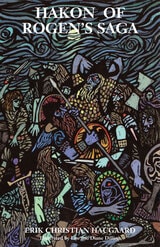
Hakon of Rogen's Saga
Erik Christian Haugaard
University of Minnesota Press, 2013
An American Library Association Notable Book and his first book for children, Erik Christian Haugaard’s Hakon of Rogen’s Saga is a remarkable novel that perfectly catches the mood of a harsh but heroic people. Set at the end of the Viking period, it tells of a young boy, Hakon, from the island of Rogen who, after his chieftain father is murdered, undertakes to reclaim his birthright from his treacherous uncle. The illustrations by renowned artists Leo and Diane Dillon make this captivating story come alive.
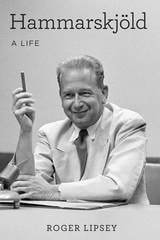
Hammarskjöld
A LifeRoger Lipsey
University of Michigan Press, 2015
After his mysterious death, Dag Hammarskjöld was described by John F. Kennedy as the "greatest statesman of our century." Second secretary-general of the United Nations (1953 - 61), he is the only person to have been awarded the Nobel Peace Prize posthumously. Through extensive research in little explored archives and personal correspondence, Roger Lipsey has produced the definitive biography of Dag Hammarskjöld. Hammarskjöld: A Life provides vivid new insights into the life and mind of a truly great individual. Hammarskjöld the statesman and Hammarskjöld the author of the classic spiritual journal Markings meet in this new biography - and the reader will meet them both in these pages. A towering mid-twentieth-century figure, Hammarskjöld speaks directly to our time.
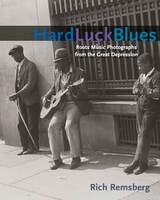
Hard Luck Blues
Roots Music Photographs from the Great DepressionRich Remsberg
University of Illinois Press, 2010
Showcasing American music and music making during the Great Depression, Hard Luck Blues presents more than two hundred photographs created by the New Deal's Farm Security Administration photography program. With an appreciation for the amateur and the local, FSA photographers depicted a range of musicians sharing the regular music of everyday life, from informal songs in migrant work camps, farmers' homes, barn dances, and on street corners to organized performances at church revivals, dance halls, and community festivals. Captured across the nation from the northeast to the southwest, the images document the last generation of musicians who learned to play without the influence of recorded sound, as well as some of the pioneers of Chicago's R & B scene and the first years of amplified instruments. The best visual representation of American roots music performance during the Depression era, Hard Luck Blues features photographs by Jack Delano, Dorothea Lange, Russell Lee, Arthur Rothstein, Ben Shahn, Marion Post Wolcott, and others.
Photographer and image researcher Rich Remsberg breathes life into the images by providing contextual details about the persons and events captured, in some cases drawing on interviews with the photographers' subjects. Also included are a foreword by author Nicholas Dawidoff and an afterword by music historian Henry Sapoznik.
Published in association with the Library of Congress.

Hardwood Glory
A Life of John WoodenBarbara Olenyik Morrow
Indiana Historical Society Press, 2014

Harley and the Davidsons
Motorcycle LegendsPete Barnes
Wisconsin Historical Society Press, 2007
This addition to the Badger Biographies series tells the story of four young inventors who shared a dream: to create the best motorized bicycle in America. Their turn of the century aspirations took them from a backyard machine shop to a highly successful business empire - and all in the span of just a few years. With grit, determination, and not a little elbow grease, Bill Harley and the Davidson brothers - Arthur, William, and Walter - used their engineering and machine-shop expertise to continually perfect their designs and present the best possible products to the American public. Along the way they made their mark on the racing circuit and introduced safety measures that continue to this day. After their deaths, their sons and daughters continued this legacy, buying back the company after it changed hands and re-establishing Harley-Davidson as the king of the motorcycle world. From the old Knucklehead, Panhead and Shovelhead motors to the Evolution, Revolution and Twin Cam engines that followed, the story of Harley and the Davidsons remains one of the great success stories of the 20th century.
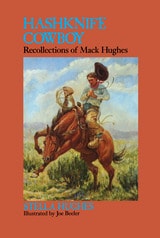
Hashknife Cowboy
Recollections of Mack HughesStella Hughes; Illustrated by Joe Beeler
University of Arizona Press, 1984
Stella Hughes, author of the best-selling Chuck Wagon Cookin' and a cowhand in her own right, has compiled from her husband's reminiscences an authentic look both at Arizona history and at cowboying as it really was. Illustrated by Joe Beeler, founding member of the Cowboy Artists of America.
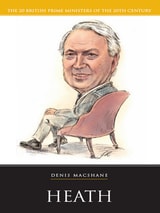
Heath
Denis MacShane
Haus Publishing, 2006
Heirlooms
storiesRachel Hall
BkMk Press, 2016
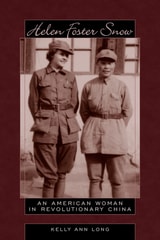
Helen Foster Snow
An American Woman in Revolutionary ChinaKelly Ann Long
University Press of Colorado, 2006
As Kelly Ann Long recounts in this engaging biography, Helen Foster Snow immersed herself in the social and political currents of a nation in turmoil. After marrying renowned journalist Edgar Snow, she developed her own writing talents and offered an important perspective on emerging events in China as that nation was wracked by Japanese invasion, the outbreak of World War II, and a continuing civil war. She supported the December Ninth Movement of 1935, broke boundaries to enter communist Yenan in 1937, and helped initiate the "gung ho" Chinese Industrial Cooperative movement.
Helen Foster Snow wrote about the people and events in China's remote communist territories during an important era. She relayed detailed portraits of female communist leaders and famous figures such as Mao Zedong and Zhu De, as well as common people struggling to survive in a period of increasing turmoil. Her informed, compassionate depictions built a bridge linking American interest to the welfare of the Chinese.
Long's account recovers the story of a controversial and important commentator on a critical period in U.S.-China relations and in Chinese history
Hell's Belles, Revised Edition
Prostitution, Vice, and Crime in Early Denver, With a Biography of Sam Howe, Frontier LawmanClark Secrest
University Press of Colorado, 2001
The popular veneer of Denver's present-day Market Street - its fancy bars, posh restaurants, and Coors Field - is stripped away to reveal the street's former incarnation: a mecca of loose morals entrenched in prostitution, liquor, and money. Hell's Belles examines the neglected topics of vice and crime in Denver and utilizes a unique and invaluable historic source - the scrapbooks of Detective Sam Howe.

Here I Stand
The Life and Legacy of John BeecherAngela J. Smith
University of Alabama Press, 2017
Biography of a forgotten poet who used his name and influence to speak up for those on the margins of society.
Few surnames resonate in American history more than Beecher. The family’s abolitionist ministers, educators, and writers are central figures in the historical narrative of the United States. The Beechers’ influence was greatest in the nineteenth century, but the family story continued—albeit with less public attention—with a descendant who grew up in Birmingham, Alabama, during the early twentieth century.
John Beecher (1904–1980) never had the public prominence of his famous ancestors, but as a poet, professor, sociologist, New Deal administrator, journalist, and civil rights activist, he spent his life fighting for the voiceless and oppressed with a distinct moral sensibility that reflected his self-identification as the twentieth-century torchbearer for his famous family. While John Beecher had many vocations in his lifetime, he always considered himself a poet and a teacher. Some critics have compared the populist elements of Beecher’s poetry to the work of Walt Whitman and Carl Sandburg, but his writing never gained a broad audience or critical acclaim during his lifetime.
In Here I Stand: The Life and Legacy of John Beecher, Angela J. Smith examines Beecher’s writing and activism and places them in the broader context of American culture at pivotal points in the twentieth century. Employing his extensive letters, articles, unpublished poetry and prose, and audio interviews in addition to his numerous published books, Smith uncovers a record of public concerns in American history ranging from the plight of workers in 1920s steel mills to sharecroppers’ struggles during the Depression to the civil rights movement of the 1960s.
Heshel's Kingdom
Dan Jacobson
Northwestern University Press, 1999
Historians on Hamilton
How a Blockbuster Musical Is Restaging America's PastRomano, Renee C
Rutgers University Press, 2018
Historians on Hamilton brings together a collection of top scholars to explain the Hamilton phenomenon and explore what it might mean for our understanding of America’s history. The contributors examine what the musical got right, what it got wrong, and why it matters. Does Hamilton’s hip-hop take on the Founding Fathers misrepresent our nation’s past, or does it offer a bold positive vision for our nation’s future? Can a musical so unabashedly contemporary and deliberately anachronistic still communicate historical truths about American culture and politics? And is Hamilton as revolutionary as its creators and many commentators claim?
Perfect for students, teachers, theatre fans, hip-hop heads, and history buffs alike, these short and lively essays examine why Hamilton became an Obama-era sensation and consider its continued relevance in the age of Trump. Whether you are a fan or a skeptic, you will come away from this collection with a new appreciation for the meaning and importance of the Hamilton phenomenon.
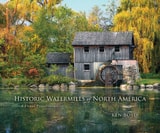
Historic Watermills of North America
A Visual PreservationKen Boyd
University of Alabama Press, 2021
112 full-color artistic photographs of watermills still standing on the North American landscape
The scenic beauty of the watermill is undeniable. The iconic waterwheel has inspired romantics for generations with their warmth and charm. Watermills were once ubiquitous landmarks along brooks, creeks, and rivers across North America. Today, only a scattering of the old watermills grace the countryside, but through these mills, and the turning of their wheels and the whirling of their stones, a small but spectacular part of history lives on.
Through stunningly beautiful images, Historic Watermills of North America: A Visual Preservation presents 112 watermills still standing on the North American landscape. With idealized full-color photographs, Ken Boyd nostalgically hearkens back to a time after European settlement when these structures were the very heart of the communities whose livelihoods they made possible. These mills turned the power of flowing water into mechanical energy to grind corn and wheat into meal and flour, saw timber, loom wool and cotton cloth, and more for the benefit of their operators and communities.
At one time vital to their surrounding regions, most of these surviving mills are in rural areas that have been passed over by modern development. Their designs are as individual as their makers, and their settings are as varied as the landscape. Some have been converted into homes or museums or are part of local tourist attractions. Others have been abandoned but give witness to the significance of their heydays, and others are still in use, doing the same work they have done for generations.
Boyd’s beautifully rendered photographs preserve these extant structures and represent a variety of watermills across the United States and Canada. Each mill photograph is accompanied by a description providing the name of the mill, its location, date of construction, and brief comments highlighting its most noteworthy features. Additional photographs and commentary in the afterword explore the inner workings of watermills.
Historical and Archaeological Perspectives on the Itzas of Petén, Guatemala
Prudence M. Rice
University Press of Colorado, 2018
Historical and Archaeological Perspectives on the Itzas of Petén, Guatemala is the first exhaustively detailed and thorough account of the Itzas—a Maya group that dominated much of the western lowland area of tropical forest, swamps, and grasslands in Petén, Guatemala. Examining archaeological and historical evidence, Prudence Rice and Don Rice present a theoretical perspective on the Itzas’ origins and an overview of the social, political, linguistic, and environmental history of the area; explain the Spanish view of the Itzas during the Conquest; and explore the material culture of the Itzas as it has been revealed in recent surveys and excavations.
The long but fragmented history of the Petén Itzas requires investigation across multiple periods and regions. Chapters in this six-part overview interweave varying data pertaining to this group—archaeological, artifactual, indigenous textual, Spanish historical—from multiple languages and academic fields, such as anthropology, archaeology, linguistics, ecology, and history. Part I introduces the lowland Itzas, northern and southern, with an emphasis on those of the central Petén lakes area. Part II discusses general Itza origins and identities in the Epiclassic period, while part III reviews Spanish perceptions and misconceptions of the Petén Itzas in their Contact-period writings. With these temporal anchors, parts IV and V present the archaeology and artifacts of the Petén Itzas, including pottery, architecture, and arrow points, from varied sites and excavations but primarily focusing on the island capital of Tayza/Nojpetén. Part VI summarizes key data and themes of the preceding chapters for a new understanding of the Petén Itzas.
A companion volume to The Kowoj—a similar treatment of the Petén Itzas’ regional neighbors—Historical and Archaeological Perspectives on the Itzas of Petén, Guatemala demonstrates the unique physical, cultural, and social framework that was home to the Petén Itza, along with their backstory in northern Yucatán. Archaeologists, historians, art historians, and geographers who specialize in the Maya and the Postclassic, Contact, and Colonial periods will find this book of particular interest.
Contributors: Mark Brenner, Leslie G. Cecil, Charles Andrew Hofling, Nathan J. Meissner, Timothy W. Pugh, Yuko Shiratori
Historical and Philosophical Issues in the Conservation of Cultural Heritage
Nicholas Price
J. Paul Getty Trust, The, 1996
The thirty major art historians and scholars represented raise questions such as when to restore, what to preserve, and how to maintain aesthetic character. Excerpts have been selected from the following books and essays: John Ruskin, The Seven Lamps of Architecture; Bernard Berenson, Aesthetics and History in the Visual Arts; Clive Bell, The Aesthetic Hypothesis; Cesare Brandi, Theory of Restoration; Kenneth Clark, Looking at Pictures; Erwin Panofsky, The History of Art as a Humanistic Discipline; E. H. Gombrich, Art and Illusion; Marie Cl. Berducou, The Conservation of Archaeology; and Paul Philippot, Restoration from the Perspective of the Social Sciences. The fully illustrated book also contains an annotated bibliography and an index.

Historical and Philosophical Perspectives of Science
Roger H. Stuewer, Editor
University of Minnesota Press, 1970
Historical and Philosophical Perspectives of Science was first published in 1970. Minnesota Archive Editions uses digital technology to make long-unavailable books once again accessible, and are published unaltered from the original University of Minnesota Press editions.
The series of essays published in this book, which is Volume V of the Minnesota Studies in the Philosophy of Science, are (with the exception of two essays) based on papers presented or discussed at a conference devoted to exploring the relationships between the history and the philosophy of science, held at the University of Minnesota in the fall of 1969. In a forward Peter Caws notes that the conference grew out of the deliberations of subcommittee of the U.S. National Committee for the International Union of History and Philosophy of Science.
The contributors are Herbert Feigl, Ernan McMullin, Wesley C. Salmon, Peter Archinstein, Arnold Thackray, Mary Hesse, Edward Rosen, Paul K. Feyerabend, Erwin N. Hiebert, Gerd Buchdahl, Roger H. Stuewer, Howard Stein, and Kenneth F. Schaffner. Some of the papers draw philosophical conclusions from examples in the history of science; others point out the significance of philosophical insights for a study of the history of science; still others explore special aspects of the history or philosophy of science.

History and Modern Media
A Personal JourneyJohn Mraz
Vanderbilt University Press, 2021
The book interweaves an autobiographical narrative with concrete research. Mraz describes the resistance he encountered in US academia to this new way of showing and describing the past in films and photographs, as well as some illuminating experiences as a visiting professor at several US universities. More importantly, he reflects on what it has meant to move to Mexico and become a Mexican. Mexico is home to a thriving school of photohistorians perhaps unequaled in the world. Some were trained in art history, and a few continue to pursue that discipline. However, the great majority work from the discipline known as "photohistory" which focuses on vernacular photographs made outside of artistic intentions.
A central premise of the book is that knowing the cultures of the past and of the other is crucial in societies dominated by short-term and parochial thinking, and that today's hyper-audiovisuality requires historians to use modern media to offer their knowledge as alternatives to the "perpetual present" in which we live.
Hitler's Tyranny
A History in Ten ChaptersRalf Georg Reuth
Haus Publishing, 2022
Hitler’s tyranny is still difficult to understand today. In this book, Ralf Georg Reuth examines ten aspects of this catastrophe. Among other things, he asks: Was anti-Semitism more pronounced in Germany than elsewhere? Was Versailles really responsible for Hitler’s rise and why did the Germans follow a racial fanatic like him? How did his war differ from all others before it? The disturbing answers provide an overall picture that shows Hitler was not the consequence of the depths of German history, but the result of chance, deception, and seduction.
This thought-provoking new study takes aim at several of the norms of Hitler scholarship from the past forty years. Reuth interrogates and challenges a range of orthodox views on such topics as how mainstream politicians facilitated Hitler’s rise to power, the Führer’s infamous pact with Stalin, and the complicity of ordinary Germans in his genocidal tyranny. Eschewing a conventional chronological approach in favor of a forensic analysis of Hitler’s mainsprings of action both as chancellor and military commander, Reuth portrays Hitler as the apotheosis of what he argues is a specifically German strain of militarism and imperialism, shifting the focus firmly back to the mindset and modus operandi of Hitler himself. The portrait that emerges is one of a murderous fantasist and political opportunist driven by an all-embracing ideology of racial superiority. Reuth’s account courts controversy on a number of points and offers a fascinating counterpoint to much recent scholarship.
Hitler, My Father
A Novel of World War Two, Hitler's Unknown Lover, and Son.Rodney Merten
Parkhurst Brothers, Inc., 2017
An adoring young woman encounters Adolph Hitler when her youth group sings for him. He demands her company in private, and she becomes pregnant, bearing his child but never being contacted by Hitler again. The plot follows her life as an outcast believed to be lying about the child’s parentage, and the life of her son told through her correspondence, diary entries, and from the point of view of a researcher who writes a generation later. Based on facts and documented history, author Ron Merten tells this tale with just enough creativity to make the story fascinating.
Holy Week
A Novel of the Warsaw Ghetto UprisingJerzy Andrzejewski
Ohio University Press, 2006
At the height of the Nazi extermination campaign in the Warsaw Ghetto, a young Jewish woman, Irena, seeks the protection of her former lover, a young architect, Jan Malecki. By taking her in, he puts his own life and the safety of his family at risk. Over a four-day period, Tuesday through Friday of Holy Week 1943, as Irena becomes increasingly traumatized by her situation, Malecki questions his decision to shelter Irena in the apartment where Malecki, his pregnant wife, and his younger brother reside. Added to his dilemma is the broader context of Poles’ attitudes toward the “Jewish question” and the plight of the Jews locked in the ghetto during the final moments of its existence.
Few fictional works dealing with the war have been written so close in time to the events that inspired them. No other Polish novel treats the range of Polish attitudes toward the Jews with such unflinching honesty.
Jerzy Andrzejewski’s Holy Week (Wielki Tydzien, 1945), one of the significant literary works to be published immediately following the Second World War, now appears in English for the first time.
This translation of Andrzejewski’s Holy Week began as a group project in an advanced Polish language course at the University of Pittsburgh. Class members Daniel M. Pennell, Anna M. Poukish, and Matthew J. Russin contributed to the translation; the instructor, Oscar E. Swan, was responsible for the overall accuracy and stylistic unity of the translation as well as for the biographical and critical notes and essays.
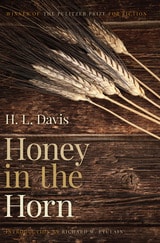
Honey in the Horn
H.L. Davis
Oregon State University Press, 2015
Clay Calvert, an orphan, works as a hand on a sheep ranch until he stumbles into trouble and is forced to flee. Journeying throughout the state, from the lush coastal forests, to the Columbia Gorge, to the golden wheat fields east of the Cascades, he encounters a cast of characters as rich and diverse as the land, including a native Tunne boy and a beautiful girl named Luce.
Originally published in 1935, Honey in the Horn reveals as much about the prevailing attitudes and beliefs of H. L. Davis’ lifetime as it does about the earlier era in which it is set. It transcends the limitations of its time through the sheer power and beauty of Davis’ prose. Full of humor and humanity, Davis’s first novel displays a vast knowledge of Pacific Northwest history, lore, and landscape.
An essential book for all serious readers of Northwest literature, this classic coming-of-age novel has been called the “Huckleberry Finn of the West.” It is the only Oregon book that has ever won a Pulitzer Prize for fiction. With a new introduction by Richard W. Etulain, this important work from one of Oregon’s premier authors is once again available for a new generation to enjoy.
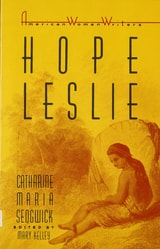
Hope Leslie
Or, Early Times in the MassachusettsSedgwick, Catherine M
Rutgers University Press, 1987
Hope Leslie (1827), set in the seventeenth-century New England, is a novel that forced readers to confront the consequences of the Puritans’ subjugation and displacement of the indigenous Indian population at a time when contemporaries were demanding still more land from the Cherokees, the Chickasaws, and the Choctaws.
"This handsome reprint ... makes available after many decades the New Englander's tale of seventeeth-century Puritans, and their relations with the indigenous Indian population." -- Nineteeth-Century Literature
" A splendidly conceived edition of Sedwick's historical romance. Highly recommended." --Choice
"Develop(s) the connections between patriarchal authority within the Puritan state and its policy of dispossessing and exterminating Indians. The different heritage it envisions explicitly link white women and Indians and elaborates a communal concept of liberty at odds with the individualistic concept which predominated in American culture." -- Legacy
House of Houses
Pat Mora
University of Arizona Press, 1997

How to Quiet a Vampire
A SotieBorislav Pekic
Northwestern University Press, 2005
Delving far deeper than mere intellect, however, Borislav Pekic was himself a frequent political agitator and occasional prisoner, and he drew on his first hand knowledge of police methods and life under totalitarianism to paint a chilling portrait of a supposedly free-thinking intellectual acting in the service of repression. At the same time he questions whether Rutkowski's ideology puts him outside the philosophical tradition he so admires—or if the line separating European thought from totalitarianism is not as clear as we like to think.

How to Shoot the Longbow
A Guide from Historical and Applied SourcesHugh D. H. Soar
Westholme Publishing, 2015
“Soar’s book [The Crooked Stick] is indispensible.”—Bernard Cornwell, New York Times bestselling author
Relying on more than fifty years’ experience in archery, historian Hugh D. H. Soar reflects on how the longbow was drawn and shot across the centuries through examining the design of the bow and early literature about the bow, combined with his and his colleagues’ applied knowledge using replica bows. No complete medieval longbow has survived, but those found aboard the Tudor warship Mary Rose provide the best archaeological evidence to the possible construction of the medieval bow. Contemporary treatises written about the proper manner of shooting the bow, together with the resurgence in interest and construction of replica bows beginning in the late sixteenth century that form part of the author’s collection provide the basis for this work. How to Shoot the Longbow: A Guide from Historical and Applied Sources is a fascinating and practical look at the use of a legendary invention.
Human Goodness
Tuan, Yi-Fu
University of Wisconsin Press, 2008

Human Goodness
Yi-Fu Tuan
University of Wisconsin Press, 2008
In his many best-selling books, Yi-Fu Tuan seizes big, metaphysical issues and considers them in uniquely accessible ways. Human Goodness is evidence of this talent and is both as simple, and as epic, as it sounds.
Genuinely good people and their actions, Tuan contends, are far from boring, naive, and trite; they are complex, varied, and enormously exciting. In a refreshing antidote to skeptical times, he writes of ordinary human courtesies, as simple as busing your dishes after eating, that make society functional and livable. And he writes of extraordinary courage and inventiveness under the weight of adversity and evil. He considers the impact of communal goodness over time, and his sketches of six very different individuals—Confucius, Socrates, Wolfgang Amadeus Mozart, John Keats, Dr. Albert Schweitzer, and Simone Weil—confirm that there are human lives that can encourage and lead us to our better selves.