Results by title
28164 books match the query 'History' and 906 start with h
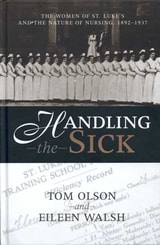
HANDLING THE SICK
Women of St Luke’s and the Nature of Nursing, 1892–1937Tom Olson and Eileen Walsh
The Ohio State University Press, 2004
HAWTHORNE AND THE REAL
BICENTENNIAL ESSAYSMILLICENT BELL
The Ohio State University Press, 2005
Contributors:
- Millicent Bell
- Nina Baym
- Michael T. Gilmore
- Leland S. Person
- David Leverenz
- Larry J. Reynolds
- Lawrence Buell
- Rita K. Gollin
- John Carlos Row
- Brenda Wineapple

HISTORY IN URBAN PLACES
THE HISTORIC DISTRICTS OF THE UNITED STADAVID HAMER
The Ohio State University Press, 1998

HISTORY OF ILLINOIS
FROM ITS COMMENCEMENT AS A STATE IN 1818Thomas Ford
University of Illinois Press, 1995
studies of Illinois during the Jackson period. His account is balanced
and critical while at the same time recognizing the value of Ford's book."
-- Robert W. Johannsen, J. G. Randall Distinguished Professor of History,
University of Illinois at Urbana-Champaign
Both cynical and self-serving, Illinois's seventh governor Thomas Ford
also possessed an unrivaled sensitivity to the dynamics of frontier life.
He reveals these and other qualities in his classic A History of Illinois,
which covers the state's first thirty years.
Ford writes with candor of the lengthy "Hancock County difficulties"
and the ouster of Mormons from the state. His treatment of the Black Hawk
War and his writings on the slavery controversy in the state, the murder
of Elijah Lovejoy, and the larger issues of violence and vigilantism help
show why this volume has been called the outstanding early survey of Illinois
history. This reissue of Ford's book includes an introduction by Rodney
O. Davis and a publication history by Terence Tanner.

HIV Exceptionalism
Development through Disease in Sierra LeoneAdia Benton
University of Minnesota Press, 2015
WINNER, 2017 RACHEL CARSON PRIZE, SOCIETY FOR THE SOCIAL STUDIES OF SCIENCE
In 2002, Sierra Leone emerged from a decadelong civil war. Seeking international attention and development aid, its government faced a dilemma. Though devastated by conflict, Sierra Leone had a low prevalence of HIV. However, like most African countries, it stood to benefit from a large influx of foreign funds specifically targeted at HIV/AIDS prevention and care.
What Adia Benton chronicles in this ethnographically rich and often moving book is how one war-ravaged nation reoriented itself as a country suffering from HIV at the expense of other, more pressing health concerns. During her fieldwork in the capital, Freetown, a city of one million people, at least thirty NGOs administered internationally funded programs that included HIV/AIDS prevention and care. Benton probes why HIV exceptionalism—the idea that HIV is an exceptional disease requiring an exceptional response—continues to guide approaches to the epidemic worldwide and especially in Africa, even in low-prevalence settings.
In the fourth decade since the emergence of HIV/AIDS, many today are questioning whether the effort and money spent on this health crisis has in fact helped or exacerbated the problem. HIV Exceptionalism does this and more, asking, what are the unanticipated consequences that HIV/AIDS development programs engender?
HOPOS
The Journal of the International Society for the History of Philosophy of Science, volume 11 number 2 (Fall 2021)The University of Chicago Press
University of Chicago Press Journals, 2021
HOPOS
The Journal of the International Society for the History of Philosophy of Science, volume 12 number 1 (Spring 2022)The University of Chicago Press
University of Chicago Press Journals, 2022
HOPOS
The Journal of the International Society for the History of Philosophy of Science, volume 12 number 2 (Fall 2022)The University of Chicago Press
University of Chicago Press Journals, 2022
HOPOS
The Journal of the International Society for the History of Philosophy of Science, volume 13 number 1 (Spring 2023)The University of Chicago Press
University of Chicago Press Journals, 2023
HOPOS
The Journal of the International Society for the History of Philosophy of Science, volume 13 number 2 (Fall 2023)The University of Chicago Press
University of Chicago Press Journals, 2023
HOPOS
The Journal of the International Society for the History of Philosophy of Science, volume 14 number 1 (Spring 2024)The University of Chicago Press
University of Chicago Press Journals, 2024
HOPOS
The Journal of the International Society for the History of Philosophy of Science, volume 14 number 2 (Fall 2024)The University of Chicago Press
University of Chicago Press Journals, 2024
HOPOS
The Journal of the International Society for the History of Philosophy of Science, volume 15 number 1 (Spring 2025)The University of Chicago Press
University of Chicago Press Journals, 2025
HOPOS
The Journal of the International Society for the History of Philosophy of Science, volume 15 number 2 (Fall 2025)The University of Chicago Press
University of Chicago Press Journals, 2025
HOPOS
The Journal of the International Society for the History of Philosophy of Science, volume 16 number 1 (Spring 2026)The University of Chicago Press
University of Chicago Press Journals, 2026
HOPOS
The Journal of the International Society for the History of Philosophy of Science, volume 16 number 2 (Fall 2026)The University of Chicago Press
University of Chicago Press Journals, 2026
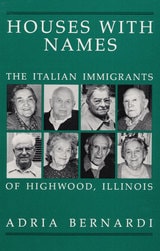
HOUSES WITH NAMES
"THE ITALIAN IMMIGRANTS OF HIGHWOOD, ILLAdria Bernardi
University of Illinois Press, 1990

HPSCHD
Inside John Cage and Lejaren A. Hiller Jr.'s Radical Multimedia CollaborationTiffany Funk
University of Illinois Press, 2027
Tiffany Funk explores how HPSCHD’s use of early computer art helped change ideas about sound, chance, and authorship. The event was less a concert than a performative system built through programming, labor, and shared decision-making. Computer art of the era required physical labor and collaboration. The impact of everything from punch cards to magnetic tape shaped the work while revealing the human effort involved. Throughout, Funk reveals that HPSCHD still offers valuable lessons about machines as collaborators rather than tools; the politics of technology; and the tension between the excitement and fears of automation.
An in-depth look at an avant-garde landmark, HPSCHD takes readers inside a legendary merger of music with computer art and its ongoing relevance in today’s digital world.
HST
Edited by Steve Neal. Foreword by Clifton Truman Daniel
Southern Illinois University Press, 2003
Believing that Americans should understand their leadership, Harry Truman was the first American president to authorize an oral history of his life and times. In that vein, almost forty years ago, the Truman Library in the president’s native Independence, Missouri, began the daunting task of compiling the words of Truman’s contemporaries, including his senior aides, foreign policy and military advisors, political strategists, and close friends. Longtime Chicago journalist Steve Neal has edited twenty of these remarkable interviews for HST: Memories of the Truman Years.
Candid and insightful, the recollections include those of statesmen Dean Acheson and Averell Harriman; soldiers Omar Bradley and Lucius Clay; Truman’s best friend Thomas Evans; associates Clark Clifford and Matt Connelly; 1948 Republican vice-presidential nominee Earl Warren; artist Thomas Hart Benton; West German leader Konrad Adnauer; former New Dealers Sam Rosenman and James Rowe; journalist Richard L. Strout; and many others.
An honest portrait of Truman emerges from the twenty firsthand accounts of those who knew him best. HST: Memories of the Truman Years spans Truman’s rise to the presidency and his responses to the challenges of World War II, the Soviet blockade of Berlin, the rebuilding of postwar Europe, the 1948 campaign, his controversial firing of General Douglas MacArthur, and his courageous leadership on civil rights.
“The goal of these histories,” explains Truman’s grandson, Clifton Truman Daniel, in the foreword, “in keeping with Grandpa’s stated desire that the [Truman Library] be about his presidency, not a monument to him, was to preserve forever the perspective of those who had shared his life and times and, in many cases, helped him shape the world.”
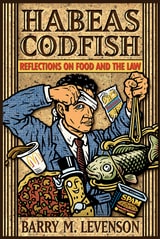
Habeas Codfish
Reflections on Food and the LawBarry M. Levenson
University of Wisconsin Press, 2001
From the McDonald’s hot coffee case to the cattle ranchers’ beef with Oprah Winfrey, from the old English "Assize of Bread" to current nutrition labeling laws, what we eat and how we eat are shaped as much by legal regulations as by personal taste. Barry M. Levenson, the curator of the world-famous (really!) Mount Horeb Mustard Museum and a self-proclaimed "recovering lawyer," offers in Habeas Codfish an entertaining and expert overview of the frustrating, frightening, and funny intersections of food and the law.
Discover how Mr. Peanut shaped the law of trademark infringement for the entire food industry. Consider the plight of the restaurant owner besmirched by a journalist’s negative review. Find out how traditional Jewish laws of kashrut ran afoul of the First Amendment. Prison meals, butter vs. margarine, definitions of organic food, undercover ABC reporters at the Food Lion, the Massachusetts Supreme Court case that saved fish chowder, even recipes—it’s all in here, so tuck in!
Habitations of Modernity
Essays in the Wake of Subaltern StudiesDipesh Chakrabarty
University of Chicago Press, 2002
Chakrabarty pursues these issues in a series of closely linked essays, ranging from a history of the influential Indian series Subaltern Studies to examinations of specific cultural practices in modern India, such as the use of khadi—Gandhian style of dress—by male politicians and the politics of civic consciousness in public spaces. He concludes with considerations of the ethical dilemmas that arise when one writes on behalf of social justice projects.

Habits of Compassion
Irish Catholic Nuns and the Origins of New York's Welfare System, 1830-1920Maureen Fitzgerald
University of Illinois Press, 2006
The Irish-Catholic Sisters accomplished tremendously successful work in founding charitable organizations in New York City from the Irish famine through the early twentieth century. Maureen Fitzgerald argues that their championing of the rights of the poor—especially poor women—resulted in an explosion of state-supported services and programs.
Parting from Protestant belief in meager and means-tested aid, Irish Catholic nuns argued for an approach based on compassion for the poor. Fitzgerald positions the nuns' activism as resistance to Protestantism's cultural hegemony. As she shows, Roman Catholic nuns offered strong and unequivocal moral leadership in condemning those who punished the poor for their poverty and unmarried women for sexual transgression. Fitzgerald also delves into the nuns' own communities, from the class-based hierarchies within the convents to the political power they wielded within the city. That power, amplified by an alliance with the local Irish Catholic political machine, allowed the women to expand public charities in the city on an unprecedented scale.
Habitual Offenders
A True Tale of Nuns, Prostitutes, and Murderers in Seventeenth-Century ItalyCraig A. Monson
University of Chicago Press, 2016
Drawing on over four thousand pages of primary sources, the intrepid Craig A. Monson reconstructs this fascinating history of crime and punishment in seventeenth-century Italy. Along the way, he explores Italy’s back streets and back stairs, giving us access to voices we rarely encounter in conventional histories: prostitutes and maidservants, mercenaries and bandits, along with other “dubious” figures negotiating the boundaries of polite society. Painstakingly researched and breathlessly told, Habitual Offenders will delight historians and true-crime fans alike.
Habsburg Encounters with Native America
Familiar StrangersJonathan Singerton
Central European University Press, 2025

Haciendas and Economic Development
Guadalajara, Mexico, at IndependenceBy Richard B. Lindley
University of Texas Press, 1983
Agriculture, commerce, and mining were the engines that drove New Spain, and past historians have treated these economic categories as sociological phenomena as well. For these historians, society in eighteenth-century New Spain was comprised, on the one hand, of creoles, feudalistic land barons who were natives of the New World, and, on the other, of peninsulars, progressive, urban merchants born on the Iberian peninsula. In their view, creole-peninsular resentment ultimately led to the wars for independence that took place in the American hemisphere in the early nineteenth century.
Richard B. Lindley’s study of Guadalajara’s wealthy citizens on the eve of independence contradicts this view, clearly demonstrating that landowners, merchants, creoles, and peninsulars, through intermarriage, formed large family enterprises with mixed agricultural, commercial, and mining interests. These family enterprises subdued potential conflicts of interest between Spaniards and Americans, making partners of potential competitors.
When the wars for national independence began in 1810, Spain’s ability to protect its colonies from outside influence was destroyed. The resultant influx of British trade goods and finance shook the structure of colonial society, as abundant British capital quickly reduced the capital shortage that had been the main reason for large-scale, diversified family businesses.
Elite family enterprises survived, but became less traditional and more specialized institutions. This transformation from traditional, personalized community relations to modern, anonymous corporations, with all that it implied for government and productivity, constitutes the real revolution that began in 1810.
Hacked Transmissions
Technology and Connective Activism in ItalyAlessandra Renzi
University of Minnesota Press, 2020
Mapping the transformation of media activism from the seventies to the present day
Hacked Transmissions is a pioneering exploration of how social movements change across cycles of struggle and alongside technology. Weaving a rich fabric of local and international social movements and media practices, politicized hacking, and independent cultural production, it takes as its entry point a multiyear ethnography of Telestreet, a network of pirate television channels in Italy that combined emerging technologies with the medium of television to challenge the media monopoly of tycoon-turned-prime minister Silvio Berlusconi.
Street televisions in Italy represented a unique experiment in combining old and new media to forge grassroots alliances, fight social isolation, and build more resilient communities. Alessandra Renzi digs for the roots of Telestreet in movements of the 1970s and the global activism of the 1990s to trace its transformations in the present work of one of the network’s more active nodes, insu^tv, in Naples. In so doing, she offers a comprehensive account of transnational media activism, with particular attention to the relations among groups and projects, their modes of social reproduction, the contexts giving rise to them, and the technology they adopt—from zines and radios to social media. Hacked Transmissions is also a study in method, providing examples of co-research between activist researchers and social movements, and a theoretical framework that captures the complexities of grassroots politics and the agency of technology.
Providing a rare and timely glimpse into a key activist/media project of the twenty-first century, Hacked Transmissions marks a vital contribution to debates in a range of fields, including media and communication studies, anthropology, science and technology studies, social movements studies, sociology, and cultural theory.
Hacking the Iron Curtain
A Media Archaeology of the Russian InternetNatalia Konradova
University of Wisconsin Press, 2026
Media archaeologist Natalia Konradova examines the history of the internet in Russia and its predecessor state, cutting through layers of technological history and dusting off conceptual artifacts of the past. Inspired by the fundamental question of how Soviets imagined future technologies, she investigates experiments with telepathy alongside the (then equally improbable) dream of a global, digitally connected computer network. Since the story of the Russian internet is inextricably wound up with Soviet society and the history of the Cold War, Hacking the Iron Curtain is as much a cultural and political history as it is a technological one—a history that illustrates how collective dreams can challenge geopolitical ambitions and inspire world-changing technologies.
Haeckel's Embryos
Images, Evolution, and FraudNick Hopwood
University of Chicago Press, 2015
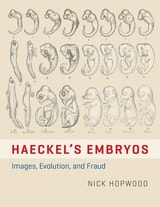
In Haeckel’s Embryos, Nick Hopwood tells this extraordinary story in full for the first time. He tracks the drawings and the charges against them from their genesis in the nineteenth century to their continuing involvement in innovation in the present day, and from Germany to Britain and the United States. Emphasizing the changes worked by circulation and copying, interpretation and debate, Hopwood uses the case to explore how pictures succeed and fail, gain acceptance and spark controversy. Along the way, he reveals how embryonic development was made a process that we can see, compare, and discuss, and how copying—usually dismissed as unoriginal—can be creative, contested, and consequential.
With a wealth of expertly contextualized illustrations, Haeckel’s Embryos recaptures the shocking novelty of pictures that enthralled schoolchildren and outraged priests, and highlights the remarkable ways these images kept on shaping knowledge as they aged.

Hagar's Vocation
L. James Long
Catholic University of America Press, 2015
Hagia Sophia, 1850-1950
Holy Wisdom Modern MonumentRobert S. Nelson
University of Chicago Press, 2004
Built from 532 to 537 as the Cathedral of Constantinople, Hagia Sophia was little studied and seldom recognized as a great monument of world art until the nineteenth century, and Nelson examines the causes and consequences of the building's newly elevated status during that time. He chronicles the grand dome's modern history through a vibrant cast of characters—emperors, sultans, critics, poets, archaeologists, architects, philanthropists, and religious congregations—some of whom spent years studying it, others never visiting the building. But as Nelson shows, they all had a hand in the recreation of Hagia Sophia as a modern architectural icon. By many means and for its own purposes, the West has conceptually transformed Hagia Sophia into the international symbol that it is today.
While other books have covered the architectural history of the structure, this is the first study to address its status as a modern monument. With his narrative of the building's rebirth, Nelson captures its importance for the diverse communities that shape and find meaning in Hagia Sophia. His book will resonate with cultural, architectural, and art historians as well as with those seeking to acquaint themselves with the modern life of an inspired and inspiring building.
Hagiography in Marguerite de Navarre’s Heptaméron
Saints and Debates in Renaissance FranceLeanna Bridge Rezvani
University of Delaware Press, 2026
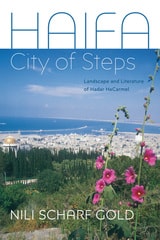
Haifa
City of StepsNili Scharf Gold
Brandeis University Press, 2017
Haiku History
The American Saga Three Lines at a TimeBy H.W. Brands
University of Texas Press, 2020
For the past nine years, acclaimed historian H. W. Brands has been tweeting the history of the United States. But this has been no ordinary version of the American tale. Instead, Brands gives his 5,000-plus followers a regular dose of history and poetry combined: his tweets are in the form of haiku.
Haiku History presents a selection of these smart, shrewd, and always informative short poems. “Shivers and specters / Flit over souls in Salem / As nineteen are hanged; describes the Salem witch trials, and “In angry war paint / Men board three Indiamen / And toss the cargo” depicts the Boston Tea Party. “Then an anarchist / Makes one of the war heroes / The next president” recalls the assassination of William McKinley and the accession of Teddy Roosevelt to the presidency, while “Second invasion: / Iraq, where Saddam is still / In troubling control” returns us to the invasion of Iraq in 2003. As he travels from the thirteen colonies to the 2016 election, Brands brings to life the wars, economic crises, social upheavals, and other events that have shaped our nation. A history book like no other, Haiku History injects both fun and poetry into the story of America—three lines at a time.
Haim Nahum
A Sephardic Chief Rabbi in Politics, 1892-1923Esther Benbassa
University of Alabama Press, 1995
A collection of rare writings and correspondence by a rabbi and diplomat active at the end of the Ottoman Empire
Rabbi, diplomat, linguist, fixer of delicate problems, Haim Nahum moved through the last years of the Ottoman world and the birth of the modern Middle East with uncommon dexterity. He left behind a rich trove of letters and writing, the best of which are collected in this volume. For contemporary readers, his story feels surprisingly current. He inhabited an age crowded with competing identities, clashing nationalisms, and endless political improvisations. In other words, he would feel perfectly at home today.
The most intriguing feature of Nahum is not that he occupied important positions, but that he seemed constitutionally incapable of belonging to only one world. Equally at ease among statesmen, clerics, scholars, and bureaucrats, he functioned as a human connecting flight between cultures. In this fascinating biography first edited and published in French in 1990, Esther Benbassa captures this cosmopolitan figure without embalming him in reverence, allowing readers to encounter a subtle, resourceful, and occasionally elusive man whose métier was negotiation and whose natural habitat was complexity.
This book will delight readers of Ottoman history, Jewish history, Middle Eastern affairs, diplomatic history, biography, religious studies, and Mediterranean culture. It will also appeal to polyglots, antiquarians, devotees of vanished empires, and anyone attracted to those liminal figures who stand at the crossroads of civilizations, translating not merely languages but entire ways of seeing the world.
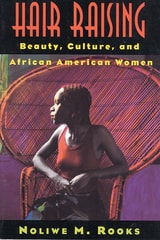
Hair Raising
Beauty, Culture, and African American WomenRooks, Noliwe M
Rutgers University Press, 1996
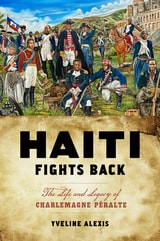
Haiti Fights Back
The Life and Legacy of Charlemagne PéralteYveline Alexis
Rutgers University Press, 2021
Haiti Fights Back: The Life and Legacy of Charlemagne Péralte is the first US scholarly examination of the politician and caco leader (guerrilla fighter) who fought against the US military occupation of Haiti. The occupation lasted close to two decades, from 1915-1934. Alexis argues for the importance of documenting resistance while exploring the occupation’s mechanics and its imperialism. She takes us to Haiti, exploring the sites of what she labels as resistance zones, including Péralte’s hometown of Hinche and the nation’s large port areas--Port-au-Prince and Cap-Haïtien. Alexis offers a new reading of U.S. military archival sources that record Haitian protests as banditry. Haiti Fights Back illuminates how Péralte launched a political movement, and meticulously captures how Haitian women and men resisted occupation through silence, military battles, and writings. She locates and assembles rare, multilingual primary sources from traditional repositories, living archives (oral stories), and artistic representations in Haiti and the United States. The interdisciplinary work draws on legislation, cacos’ letters, newspapers, and murals, offering a unique examination of Péralte’s life (1885-1919) and the significance of his legacy through the twenty-first century. Haiti Fights Back offers a new approach to the study of the U.S. invasion of the Americas by chronicling how Caribbean people fought back.
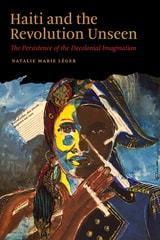
Haiti and the Revolution Unseen
The Persistence of the Decolonial ImaginationNatalie Marie Léger
Vanderbilt University Press, 2025
Léger writes against a Haiti- and Haitians-less idea of the Revolution. She asks scholars and artists of the Revolution to know Haitians as Ginens (African Haitians) and Haiti as Ayiti Ginen (Africa Haiti). This form of knowing demands a decolonial understanding of the Haitian Revolution and a reevaluation of its stories as told by influential twentieth-century Caribbean writers. The story she tells showcases the immense political impact of the African Haitian revolutionist’s philosophies of freedom in Saint Domingue and Haiti thereafter; and she argues that the absence of these philosophies in Caribbean classics of the Revolution demands consideration of why these classics continue to shape how the Revolution and Haiti are discussed in Caribbean Studies, Black Studies, Postcolonial Studies and Haitian Studies. More pressingly, Léger calls on artists and scholars of the Revolution to be mindful of how Haiti and Haitians are figured in narratives of the Revolution. The immense space Haiti holds in Caribbean imaginings of freedom and revolution makes mediating it, its Revolution, and peoples through a prejudiced gaze that serves the West hugely problematic, since a denigrated Haiti yields stunted visions of the Caribbean’s future. These conditions require attention to the pervasive presence of colonial paradigms for being in classic literatures of the Revolution and the way they undermine the generative manner Caribbean writers have used Haiti to think through their past, present, and future.
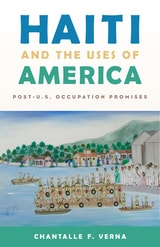
Haiti and the Uses of America
Post-U.S. Occupation PromisesVerna, Chantalle F.
Rutgers University Press, 2017
In the years following the U.S. occupation of Haiti (1915-1934), Haitian politicians and professionals with a cosmopolitan outlook shaped a new era in Haiti-U.S. diplomacy. Their efforts, Verna shows, helped favorable ideas about the United States, once held by a small segment of Haitian society, circulate more widely. In this way, Haitians contributed to and capitalized upon the spread of internationalism in the Americas and the larger world.
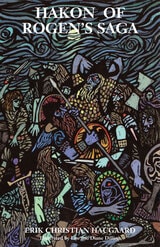
Hakon of Rogen's Saga
Erik Christian Haugaard
University of Minnesota Press, 2013
An American Library Association Notable Book and his first book for children, Erik Christian Haugaard’s Hakon of Rogen’s Saga is a remarkable novel that perfectly catches the mood of a harsh but heroic people. Set at the end of the Viking period, it tells of a young boy, Hakon, from the island of Rogen who, after his chieftain father is murdered, undertakes to reclaim his birthright from his treacherous uncle. The illustrations by renowned artists Leo and Diane Dillon make this captivating story come alive.

Half Humankind
Contexts and Texts of the Controversy about Women in England, 1540-1640Katherine Usher Henderson and Barbara F. McManus
University of Illinois Press, 1985
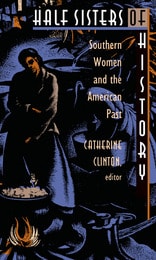
Half Sisters of History
Southern Women and the American PastCatherine Clinton
Duke University Press, 1994
This collection of essays by pioneering scholars surveys the roots and development of southern women’s history and examines the roles of white women and women of color across the boundaries of class and social status from the founding of the nation to the present. Authors including Anne Firor Scott, Elizabeth Fox-Genovese, Jacquelyn Dowd Hall, and Nell Irwin Painter, among others, analyze women’s participation in prewar slavery, their representation in popular fiction, and their involvement in social movements. In no way restricted to views of the plantation South, other essays examine the role of women during the American Revolution, the social status of Native American women, the involvement of Appalachian women in labor struggles, and the significance of women in the battle for civil rights. Because of their indelible impact on gender relations, issues of class, race, and sexuality figure centrally in these analyses.
Half Sisters of History will be important not only to women’s historians, but also to southern historians and women’s studies scholars. It will prove invaluable to anyone in search of a full understanding of the history of women, the South, or the nation itself.
Contributors. Catherine Clinton, Sara Evans, Elizabeth Fox-Genovese, Jacquelyn Dowd Hall, Jacqueline Jones, Suzanne D. Lebsock, Nell Irwin Painter, Theda Perdue, Anne Firor Scott, Deborah Gray White
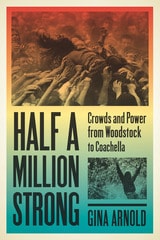
Half a Million Strong
Crowds and Power from Woodstock to CoachellaGina Arnold
University of Iowa Press, 2018
From baby boomers to millennials, attending a big music festival has basically become a cultural rite of passage in America. In Half a Million Strong, music writer and scholar Gina Arnold explores the history of large music festivals in America and examines their impact on American culture. Studying literature, films, journalism, and other archival detritus of the countercultural era, Arnold looks closely at a number of large and well-known festivals, including the Newport Folk Festival, Woodstock, Altamont, Wattstax, the New Orleans Jazz and Heritage Festival, Hardly Strictly Bluegrass, and others to map their cultural significance in the American experience. She finds that—far from being the utopian and communal spaces of spiritual regeneration that they claim for themselves— these large music festivals serve mostly to display the free market to consumers in its very best light.
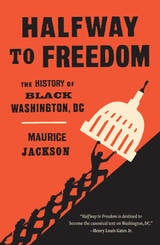
Halfway to Freedom
The History of Black Washington, DCMaurice Jackson. Foreword by Lonnie G. Bunch III.
Duke University Press, 2026
For more than two hundred years, the history and culture of the District of Columbia have been in great part shaped by its Black residents. Several Black men were elected to political positions citywide only a handful of years after the end of the Civil War, and while the years after Reconstruction saw the region plagued with segregation and racial violence, the capital’s Black population continued to grow at all economic levels. Washington became the first major US city with a majority Black population in 1957, a status it held for almost seventy years as gentrification has led to the decline of Black political and economic power in DC in the twenty-first century.
Halfway to Freedom is a social, political, intellectual, and cultural history of African Americans in Washington, DC; it explores the role that race, gender, color, class, and power have played in the city and its relationship with the federal government. Maurice Jackson explores the material conditions that shaped life for African Americans, free and enslaved, from the earliest moments of the District’s history to more contemporary times of organization and activism. Through an array of archival materials, especially firsthand accounts of Black residents in the area, Jackson critiques how and why DC exists as a haven within the Black American imaginary given the realities of conflict its Black residents have faced and continue to face today. In doing so, he highlights and honors the gains they have earned through the concerted struggles of labor organizations, women’s movements, sports, music, art, legal activism, and more.
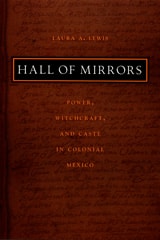
Hall of Mirrors
Power, Witchcraft, and Caste in Colonial MexicoLaura A. Lewis
Duke University Press, 2003
Using judicial records from a variety of colonial courts, Lewis highlights the ethnographic details of legal proceedings as she demonstrates how Indians, in particular, came to be the masters of witchcraft, a domain of power that drew on gendered and hegemonic caste distinctions to complicate the colonial hierarchy. She also reveals the ways in which blacks, mulattoes, and mestizos mediated between Spaniards and Indians, alternatively reinforcing Spanish authority and challenging it through alliances with Indians. Bringing to life colonial subjects as they testified about their experiences, Hall of Mirrors discloses a series of contradictions that complicate easy distinctions between subalterns and elites, resistance and power.
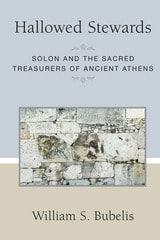
Hallowed Stewards
Solon and the Sacred Treasurers of Ancient AthensWilliam S. Bubelis
University of Michigan Press, 2016
Hallowed Stewards closely examines those magistracies that were central to Athenian religious efforts, and which are best described as “sacred treasurers.” Given the extensive but fragmentary evidence available to us, which consists mainly of inscriptions but includes such texts as the ps.-Aristotelian Constitution of the Athenians, no catalog-like approach to these offices could properly encompass their details, much less their wider significance. By situating the sacred treasurers within a broader religious and historical framework, Hallowed Stewards not only provides an incisive portrait of the treasurers themselves but also elucidates how sacred property and public finance alike developed in ancient Athens.

Hamas
A Beginner's GuideKhaled Hroub
Pluto Press, 2010
This beginner's guide to Hamas has been fully revised and updated. It now covers all the major events since the January 2006 elections, including the conflict with Fatah and Israel's brutal offensive in Gaza at the end of 2008.
Explaining the reasons for Hamas's popularity, leading Al-Jazeera journalist and Cambridge academic Khaled Hroub provides the key facts that are so often missing from conventional news reports. It's a one-stop guide that gives a clear overview of Hamas's history, key beliefs, and its political agenda.
This unique book provides a refreshing perspective that gets to the heart of Hamas.
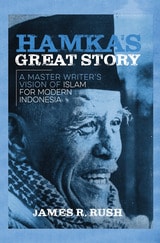
Hamka’s Great Story
A Master Writer’s Vision of Islam for Modern IndonesiaJames R. Rush
University of Wisconsin Press, 2016
Hamka (Haji Abdul Malik Karim Amrullah) was born when Indonesia was still a Dutch colony and came of age as the nation itself was emerging through tumultuous periods of Japanese occupation, revolution, and early independence. He became a prominent author and controversial public figure. In his lifetime of prodigious writing, Hamka advanced Islam as a liberating, enlightened, and hopeful body of beliefs around which the new nation could form and prosper. He embraced science, human agency, social justice, and democracy, arguing that these modern concepts comported with Islam’s true teachings. Hamka unfolded this big idea—his Great Story—decade by decade in a vast outpouring of writing that included novels and poems and chatty newspaper columns, biographies, memoirs, and histories, and lengthy studies of theology including a thirty-volume commentary on the Holy Qur’an. In introducing this influential figure and his ideas to a wider audience, this sweeping biography also illustrates a profound global process: how public debates about religion are shaping national societies in the postcolonial world.
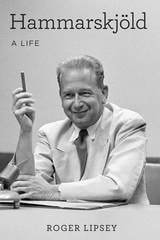
Hammarskjöld
A LifeRoger Lipsey
University of Michigan Press, 2015
After his mysterious death, Dag Hammarskjöld was described by John F. Kennedy as the "greatest statesman of our century." Second secretary-general of the United Nations (1953 - 61), he is the only person to have been awarded the Nobel Peace Prize posthumously. Through extensive research in little explored archives and personal correspondence, Roger Lipsey has produced the definitive biography of Dag Hammarskjöld. Hammarskjöld: A Life provides vivid new insights into the life and mind of a truly great individual. Hammarskjöld the statesman and Hammarskjöld the author of the classic spiritual journal Markings meet in this new biography - and the reader will meet them both in these pages. A towering mid-twentieth-century figure, Hammarskjöld speaks directly to our time.

Han
People of the RiverCraig Mishler
University of Alaska Press, 2004
The history of the upper Yukon valley from the earliest Western contact with the Han in the 1840s has been one of continuous change. As a result of the gold rush, the Han suddenly became homeless in their own homeland. This book tells the story of that displacement and of current efforts by the Han to reclaim their lands and restore a vibrant way of life. In-depth profiles of Chief Isaac, Chief Charley, and others illustrate the critical importance of traditional leadership in stressful times.
Mishler and Simeone have carefully researched and compiled new information from historic records, adding their own, firsthand field observations and oral interviews with Elders during the 1970s, 1980s, and 1990s. They present detailed historical data on the fur trade, missionization, and the gold rush, as well as an analysis of Han social structure, settlement patterns, religion, subsistence, and expressive culture. The final chapter illustrates contemporary life in Eagle Village with two vivid ethnographic snapshots- a Christmas eve dance in 1972 and a long summer day in 1997. Appendices include a methodological essay, a historic chronology, rules for Han card games, and genealogies for many Han families. As a model of innovative ethnographic and ethnohistorical work, Han, People of the River makes an important contribution to anthropological and indigenous studies literature. As a vivid and deeply thoughtful depiction of the past, present, and future of the Han, it is meant for all Alaskans and everyone who cares about Alaska history and Alaska Native peoples.

Handbook of Latin American Studies, Vol. 73
Social SciencesKatherine D. McCann, Humanities Editor; Tracy North, Social Sciences Editor
University of Texas Press, 2019
"The one source that sets reference collections on Latin American studies apart from all other geographic areas of the world. . . . The Handbook has provided scholars interested in Latin America with a bibliographical source of a quality unavailable to scholars in most other branches of area studies." —Latin American Research Review
Beginning with Number 41 (1979), the University of Texas Press became the publisher of the most comprehensive annual bibliography in the field. Compiled by the Hispanic Division of the Library of Congress and annotated by a corps of more than 140 specialists in various disciplines, the Handbook alternates from year to year between social sciences and humanities.
The Handbook annotates works on Mexico, Central America, the Caribbean and the Guianas, Spanish South America, and Brazil, as well as materials covering Latin America as a whole. Most of the subsections are preceded by introductory essays that serve as biannual evaluations of the literature and research under way in specialized areas.