Results by title
86 books match the query 'Home' and 16 start with h
Hollow and Home
A History of Self and PlaceE. Fred Carlisle
West Virginia University Press, 2017
Carlisle incorporates perspectives from writers like Edward S. Casey, Christian Norberg-Schulz, Yi-Fu Tuan, and Witold Rybczynski, but he applies theory with a light touch. Placing this literature in dialog with personal experience, he concentrates on two places that profoundly influenced him and enabled him to overcome a lifelong sense of always leaving his pasts behind. The first is Clover Hollow in Appalachian Virginia, where the author lived for ten years among fifth-, sixth-, and seventh-generation residents. The people and places there enabled him to value his own past and primary places in a new way. The story then turns to Carlisle’s life growing up in Delaware, Ohio. He describes in rich detail the ways the town shaped him in both enabling and disabling ways. In the end, after years of moving from place to place, Carlisle’s experience in Appalachia helped him rediscover his hometown—both the Old Delaware, where he grew up, and the New Delaware, a larger, thriving small city—as his true home.
The themes of the book transcend specific localities and speak to the relationship of self and place everywhere.

Home Bodies
Tactile Experience in Domestic SpaceJames Krasner
The Ohio State University Press, 2010
Home Fronts
Domesticity and Its Critics in the Antebellum United StatesLora Romero
Duke University Press, 1997
Romero remaps the literary landscape of the last century by looking at the operations of domesticity on the frontier as well as within the middle-class home and by reconsidering such crucial (if sometimes unexpected) sites for the workings of domesticity as social reform movements, African-American activism, and homosocial high culture. In the process, she indicts theories of the nineteenth century based on binarisms and rigidity while challenging models of power and resistance based on the idea that "culture" has the capacity to either free or enslave. Through readings of James Fenimore Cooper, Catherine Beecher, Harriet Beecher Stowe, Maria Stewart, and Nathaniel Hawthorne, Romero shows how the politics of culture reside in local formulations rather than in essential and ineluctable political structures.

Home and Away
The Rise and Fall of Professional Football on the Banks of the Ohio, 1919–1934Carl M. Becker
Ohio University Press, 1998
Home and Away
The Rise and Fall of Professional Football on the Banks of the Ohio, 1919–1934Carl M. Becker
Ohio University Press, 1998
Home and Beyond
Generative Phenomenology after HusserlAnthony J. Steinbock
Northwestern University Press, 1995
Home and Harem
Nation, Gender, Empire and the Cultures of TravelInderpal Grewal
Duke University Press, 1996
In her look at England, Grewal draws on nineteenth-century aesthetics, landscape art, and debates about women’s suffrage and working-class education to show how all social classes, not only the privileged, were educated and influenced by imperialist travel narratives. By examining diverse forms of Indian travel to the West and its colonies and focusing on forms of modernity offered by colonial notions of travel, she explores how Indian men and women adopted and appropriated aspects of European travel discourse, particularly the set of oppositions between self and other, East and West, home and abroad.
Rather than being simply comparative, Home and Harem is a transnational cultural study of the interaction of ideas between two cultures. Addressing theoretical and methodological developments across a wide range of fields, this highly interdisciplinary work will interest scholars in the fields of postcolonial and cultural studies, feminist studies, English literature, South Asian studies, and comparative literature.
Home and Hegemony
Domestic Service and Identity Politics in South and Southeast AsiaKathleen M. Adams and Sara Dickey, Editors
University of Michigan Press, 2000
This pathbreaking collection builds on recent examinations of identity in the postcolonial states of South and Southeast Asia by investigating the ways in which domestic workers and their employers come to know and depict one another and themselves through their interactions inside and outside of the home. This setting provides a particularly apt arena for examining the daily negotiations of power and hegemony.
Contributors to the volume, all anthropologists, provide rich ethnographic analyses that avoid a narrow focus on either workers or employers. Rather, they examine systems of power through specific topics that range from the notion of "nurture for sale" to the roles of morality and humor in the negotiation of hierarchy and the dilemmas faced by foreign employers who find themselves in life-and-death dependence on their servants.
With its provocative theoretical and ethnographic contributions to current debates, this collection will be of interest to scholars in Asian studies, women's studies, anthropology, sociology, and cultural studies.
Kathleen M. Adams is Associate Professor of Anthropology, Loyola University of Chicago. Sara Dickey is Associate Professor of Anthropology, Bowdoin College.
Home and Work
Negotiating Boundaries through Everyday LifeChristena E. Nippert-Eng
University of Chicago Press, 1996
Arguing that relationships between the two realms range from those that are highly "integrating" to those that are highly "segmenting," Nippert-Eng examines the ways people sculpt the boundaries between home and work. With remarkable sensitivity to the symbolic value of objects and actions, Nippert-Eng explores the meaning of clothing, wallets, lunches and vacations, and the places and ways in which we engage our family, friends, and co-workers. Commuting habits are also revealing, showing how we make the transition between home and work selves though ritualized behavior like hellos and goodbyes, the consumption of food, the way we dress, our choices of routes to and from work, and our listening, working, and sleeping habits during these journeys.
The ways each of us manages time, space, and people not only reflect but reinforce lives that are more "integrating" or "segmenting" at any given time. In clarifying what we take for granted, this book will leave you thinking in different ways about your life and work.
Home in the Dark
Selected StoriesJayanta Dey
Seagull Books, 2025
Home in the Dark peels back the polished surface of middle-class life to expose the shadows lurking underneath: violence, betrayal, and the unsettling truths we refuse to see. In these fifteen gripping stories, Jayanta Dey weaves a world where desperation takes strange forms: a woman on the brink of suicide finds an unlikely savior in a rat, a stolen clock carries the weight of communal hatred, and a writer–publisher duo rides the highs of literary success—until their lucrative business in pornography turns against them.
Set in Calcutta and its suburbs, these tales decipher the moral and psychological conflicts simmering beneath genteel facades, where people will do anything to survive. With elements of the macabre and the psychological, Home in the Dark delivers sharp twists that unsettle as much as they illuminate. Translated from Bengali by Sayari Debnath, this collection brings a new and daring voice to readers, offering a rare glimpse into the dark undercurrents of contemporary urban life in India.
Home of the Braves
The Battle for Baseball in MilwaukeePatrick W. Steele
University of Wisconsin Press, 2020
It seemed the dawn of a new dynasty. Impassioned fans wore their hearts on their sleeves. Yet in October 1964 team owners made a shocking announcement: the Braves were moving to Atlanta.
In the decades since, many have tried to understand why the Braves left Milwaukee. Fans blamed greedy owners and the lure of Coca Cola cash. Team management claimed they weren't getting enough local support. Patrick Steele delves deeply into all facets of the story, looking at the changing business of baseball in the 1960s, the interactions of the team owners with the government officials who controlled County Stadium, the surging success of the Green Bay Packers, and much more, to understand how the "Milwaukee Miracle" went south.

Home on the Double Bayou
Memories of an East Texas RanchBy Ralph Semmes Jackson
University of Texas Press, 1961
Once again, through a boy’s eyes, Ralph Jackson sees a winter sky darkened with geese and ducks, a kitchen stove glowing with cheerful warmth, Aunt May strolling in her flower garden, moonlight filtering through treetops to cast patches of white light on a sandy woodland road.
Again he catches odors once so familiar: of a mysterious attic, of burning salt grass in late summer, of mountain streams with their fresh green smell, of dark-roast coffee and of slab bacon sizzling in the pan.
He hears again a panther’s scream from the darkness surrounding a campfire, the scampering of mice across the barnloft floor, the sigh of a felled pine tree changing to a crashing roar as it meets the ground, the sounds of a meal in preparation, the hum of a mosquito swarm rising from the marshes.
He remembers the taste of barbecued goat, the sweet sharpness of peppermint candy, the flavor of gumdrops from the country store—where, as showcase neighbors of cigars and chewing tobacco, they acquired a faint tobacco taste.
And he feels again the welcome shock of frigid spring water on a hot perspiring body, the pleasant sensation of sand between his toes, the breathtaking exhilaration of swinging on a sapling top.
The joy of childhood on an East Texas ranch is the subject of this book: exciting events like the arrival of the first norther of the season, swimming with alligators, hogkilling, building tree houses, roundup, hunting and fishing, calf-riding, fording strange streams. Interspersed among these episodes are others of darker mood: a smallpox epidemic, the burning of the ranch house, wolves attacking the cattle.
Jackson’s characters come alive. Scenes are vivid; moods are various and enveloping. The author has told the delightful story of his boyhood from a highly personal yet universal perspective, and in doing so he has presented a picture of a region of the state previously largely neglected in Texas literature.
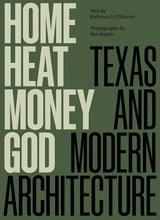
Home, Heat, Money, God
Texas and Modern ArchitectureText by Kathryn E. O’Rourke, Photographs by Ben Koush
University of Texas Press, 2024
Thematically focused analysis of modern architecture throughout Texas with gorgeous photographs illustrating works by famous and lesser-known architects.
In the mid-twentieth century, dramatic social and political change coincided with the ascendance and evolution of architectural modernism in Texas. Between the 1930s and 1980s, a state known for cowboys and cotton fields rapidly urbanized and became a hub of global trade and a heavyweight in national politics. Relentless ambition and a strong sense of place combined to make Texans particularly receptive to modern architecture’s implication of newness, forward-looking attitude, and capacity to reinterpret historical forms in novel ways. As money and people poured in, architects and their clients used modern buildings to define themselves and the state.
Illustrated with stunning photographs by architect Ben Koush, Home, Heat, Money, God analyzes buildings in big cities and small towns by world-famous architects, Texas titans, and lesser-known designers. Architectural historian Kathryn O’Rourke describes the forces that influenced architects as they addressed basic needs—such as staying cool in a warming climate and living in up-to-date housing—and responded to a culture driven by potent religiosity, by the countervailing pressures of pluralism and homogenization, and by the myth of Texan exceptionalism.
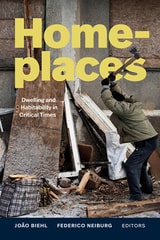
Homeplaces
Dwelling and Habitability in Critical TimesJoão Biehl and Federico Neiburg, editors
Duke University Press, 2026
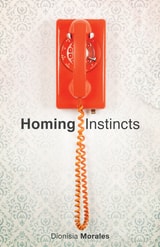
Homing Instincts
Dionisia Morales
Oregon State University Press, 2018
Although Morales migrated from one North American coast to another, the questions she raises are relevant to migrations of any scale and place, whether across town or around the world. What does it mean to be a newcomer? Who has the right to claim a sense of place? What is gained or lost when we try to fit in? In a world where people are migrating more than ever for social, economic, personal, and political reasons, these questions take on a new urgency.
A wife and mother as well as a professional writer and editor, Morales writes with grace and resolve about a broad range of topics, including pregnancy, people watching, rock climbing, and bee colony collapse. She channels a spirit of adventure and adaptability while acknowledging how certain habits and mindsets are indelibly ingrained and are—like it or not—forever part of where, what, and who we call home.
As issues of migration and social integration play out in national and international politics, Morales provides a personal lens through which readers can appreciate that at one time or another we have all been in the process of arriving. Homing Instincts is a remarkable debut from a gifted prose stylist. It will be warmly received by lovers of the essay form and anyone who has sought, or still seeks, a place to call home.
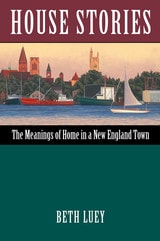
House Stories
The Meanings of Home in a New England TownBeth Luey
University of Massachusetts Press, 2017
Historic houses adorned with plaques populate New England like nowhere else in the country. These plaques note the construction year and original owner of the house, but they tell nothing about the rich lives of the people who lived there. In House Stories, Beth Luey takes readers on a virtual walking tour of several historic houses in Fairhaven, Massachusetts, a small New England coastal town, inviting us in to learn each house's secrets.
Through letters and diaries, church and business records, newspaper accounts, legal documents, and the recollections of neighbors who knew them, Luey introduces the diverse cast of historical characters who lived in these houses at various times from 1800 to the 2000s, including a Japanese castaway and his rescuer, a self-made millionaire, a seagoing adventurer, a religious pioneer, and an entrepreneurial immigrant. All of the houses are still standing and all but a lighthouse are still called home. In House Stories, Luey asks readers to join her as she considers the multiple meanings of “home” for these people and their families.