Results by title
11 books match the query 'Surface'
Beneath the Surface
A Transnational History of Skin LightenersLynn M. Thomas
Duke University Press, 2020
Beneath the Surface
Understanding Nature in the Mullica Valley EstuaryKenneth W. Able
Rutgers University Press, 2020
The Mullica Valley estuary and its watershed, formed over the last 10,000 years, are among the cleanest estuaries along the east coast of the United States. This 365,000-acre ecosystem benefits from a combination of protected watershed, low human population density, and general lack of extensive development. In Beneath the Surface, marine scientist Ken Able helps the reader penetrate the surface and gain insights into the kinds of habitats, animals, and plants that live there. Readers will gain a better understanding of the importance of these shallow waters; how the amount of salt in the water determines where animals and plants are found in estuaries; the day-night, seasonal, and annual variation in their occurrence; and how change is occurring as the result of climate variation. Throughout the book are insightful sidebars telling intimate stories of where various animals came from and where they are going as they travel through the estuary on their way to and from other portions of the east coast. Beneath the Surface emphasizes the kinds and importance of the animals and plants that live beneath the surface of this unique ecosystem.
Earth and Mars
A ReflectionStephen E. Strom and Bradford A. Smith
University of Arizona Press, 2015
Earth and Mars is a fusion of art and science, a blend of images and essays celebrating the successful creation of our life-sustaining planet and the beauty and mystery of Mars. Through images of terrestrial landscapes and photographs selected from recent NASA and European Space Agency missions to Mars, Earth and Mars reveals the profound beauty resulting from the action of volcanism, wind, and water. The accompanying text provides a context for appreciating the role of these elemental forces in shaping the surfaces of each planet, as well as the divergent evolutionary paths that led to an Earth that is teeming with life, and Mars that is seemingly lifeless.
Earth and Mars inspires reflection on the extraordinarily delicate balance of forces that has resulted in our good fortune: to be alive and sentient on a bountiful blue world.
Foliage Penetration Radar
Detection and characterisation of objects under treesMark E. Davis
The Institution of Engineering and Technology, 2011
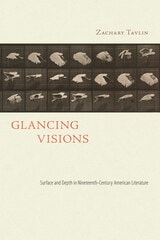
Glancing Visions
Surface and Depth in Nineteenth-Century American LiteratureZachary Tavlin
University of Alabama Press, 2023
How the “glance” rather than the “gaze” in nineteenth-century literature and art anticipates the turn to modernism
The sweeping vantages that typify American landscape painting from the nineteenth century by Thomas Cole and other members of the Hudson River School are often interpreted for their geopolitical connotations, as visual attempts to tame the wild, alleviating fears of a savage frontier through views that subdue the landscape to the eye. But many literary figures of the era display a purposeful disdain for the “possessive gaze,” signaling a preference for subtle glances, often informed by early photography, Impressionism, new techniques in portraiture, and, soon after, the dawn of cinema. The visual subjectivities and contingencies introduced by these media made room for a visual counternarrative, one informed by a mode of seeing that moves fast and lightly across the surface of things.
Tavlin probes Nathaniel Hawthorne’s theory of the imagination at a turning point in the history of photography, when momentary glances take on new narrative potentials. The poetry of Frances Ellen Watkins Harper toggles between gazes and glances, unsettling two competing forms of racialized seeing as they pertain to nineteenth-century Black life and racial hierarchies—the sentimental gaze and the slave trader’s glance—highlighting the life-and-death stakes of looking and looking away. Emily Dickinson’s syntactical oddities and her lifelong process of stitching and unstitching the poems that constitute her corpus all derive from a commitment to immanence associated with animal perception. Tavlin investigates, as well, Henry James’s vexed relationship to painterly Impressionism and William Carlos Williams’s imagist poetics as a response to early cinema’s use of the cut as the basis for a new visual grammar.
Each of these literary artists—via their own distinctive sensibilities and the artistic or technological counterparts that informed them—refuse the authoritative, all-possessive gaze in favor of the glance, a mode of seeing, thinking, and being that made way for the twentieth century’s twist on modernity. Glancing Visions will be of interest to scholars and teachers of American literature and literary history, visual culture, visual theory, aesthetic philosophy, and phenomenology.
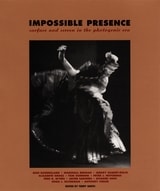
Impossible Presence
Surface and Screen in the Photogenic EraEdited by Terry Smith
University of Chicago Press, 2001
Framed by Terry Smith's introduction, the essays focus on two kinds of strangeness involved in experiencing visual images in the modern era. The first, explored in the book's first half, involves the appearance of oddities or phantasmagoria in early photographs and cinema. The second type of strangeness involves art from marginalized groups and indigenous peoples, and the communicative formations that result from the trafficking of images between people from vastly different cultures. With a stellar list of contributors, Impossible Presence offers a wide-ranging look at the fate of the visual image in modernity, modern art, and popular culture.
Contributors:
Jean Baudrillard
Marshall Berman
Jeremy Gilbert-Rolfe
Elizabeth Grosz
Tom Gunning
Peter Hutchings
Fred R. Myers
Javier Sanjines
Richard Shiff
Hugh J. Silverman
Terry Smith
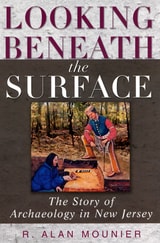
Looking Beneath the Surface
The Story of Archaeology in New JerseyMounier, R. Alan
Rutgers University Press, 2002
For more than ten thousand years, humans have lived in New Jersey. From Summit to Cape May, from Trenton to the Jersey Shore, the state is a treasure trove of archaeological artifacts, revealing much about those who occupied the region prior to European settlement. As a rule, only the most durable of human creations¾items of stone and pottery¾survive the ravages of time. To complicate matters, the onslaught of our own culture and the indiscriminate looting of sites by greedy collectors have further diminished the cultural materials left behind. The task of the archaeologist is to gather and interpret these scraps for the benefit of science and the public. But digging up relics is a trivial pursuit if the only outcome is a collection of artifacts, however attractive or valuable they may be. Understanding what those relics mean in human terms is crucial.
In Looking beneath the Surface, R. Alan Mounier looks at the human past of New Jersey. With particular focus on the ancient past and native cultures, the author tells the story of archaeology in the state as it has unfolded, and as it continues to unfold. New investigations and discoveries continually change our views and interpretations of the past. In jargon-free language, Mounier provides an in-depth introduction offering information to understand general archaeological practices as well as research in New Jersey. Subsequent chapters describe artifact types, archaeological settlements, and burial practices in detail. He concludes with vignettes of twenty-one archaeological investigations throughout the state to illustrate the variability of sites and the accomplishments of dedicated archaeologists, both professional and amateur.
Surface
Matters of Aesthetics, Materiality, and MediaGiuliana Bruno
University of Chicago Press, 2014
Arguing that materiality is not a question of the materials themselves but rather the substance of material relations, Bruno investigates the space of those relations, examining how they appear on the surface of different media—on film and video screens, in gallery installations, or on the skins of buildings and people. The object of visual studies, she contends, goes well beyond the image and engages the surface as a place of contact between people and art objects. As Bruno threads through these surface encounters, she unveils the fabrics of the visual—the textural qualities of works of art, whether manifested on canvas, wall, or screen. Illuminating the modern surface condition, she notes how façades are becoming virtual screens and the art of projection is reinvented on gallery walls. She traverses the light spaces of artists Robert Irwin, James Turrell, Tacita Dean, and Anthony McCall; touches on the textured surfaces of Isaac Julien’s and Wong Kar-wai’s filmic screens; and travels across the surface materiality in the architectural practices of Diller Scofidio + Renfro and Herzog & de Meuron to the art of Doris Salcedo and Rachel Whiteread, where the surface tension of media becomes concrete. In performing these critical operations on the surface, she articulates it as a site in which different forms of mediation, memory, and transformation can take place.
Surveying object relations across art, architecture, fashion, design, film, and new media, Surface is a magisterial account of contemporary visual culture.
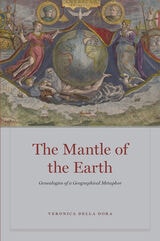
The Mantle of the Earth
Genealogies of a Geographical MetaphorVeronica della Dora
University of Chicago Press, 2021
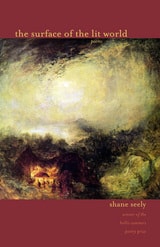
The Surface of the Lit World
PoemsShane Seely
Ohio University Press, 2015
In The Surface of the Lit World, Shane Seely draws on a wide range of sources—from personal memory to biblical narrative—to explore the stories that we tell ourselves about ourselves, the ways in which we make meaning of our lives. Seely delves into the ways in which family and environment shape us. Poems ranging from terse, meditative lyrics to more direct narratives examine the relationship between what lies visible on the lit surface and what lies just beneath.
In addition to first-person autobiographical narratives, there are ekphrastic poems; poems that explore narratives from mythology and religion; and poems based on news reports, radio stories, and audio recordings. Regardless of the approach, the central questions are the same: How do we sense the world we live in? What do the institutions to which we turn for meaning—family, religion, art, literature, science—offer us, and in what ways do they fail us? The answers may depend on where we dare to look.
The Surface
POEMSLaura Mullen
University of Illinois Press, 1991