Results by title
69 books match the query 'Indiana' and 4 start with h
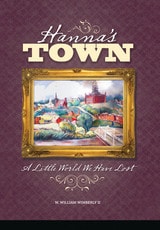
Hanna's Town
A Little World We Have LostW. William Wimberly II
Indiana Historical Society Press, 2010
In late autumn 1902 a macabre scene unfolded at the original burial ground of Wabash, which had been called both the Old Cemetery and Hanna's Cemetery. The task at hand was the disinterment of four bodies. The newest of the four graves held whatever might be left of the corpse of Colonel Hugh Hanna who, more than any other single citizen, was the founding father and civic icon of the prosperous and picturesque community. This book tells the story of a town that rose from the wilderness, one with a bustling economy, a sense of community, civic pride, broad economic connections, architectural achievements, and various other cultural pretensions.
[more]
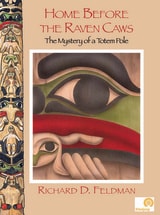
Home Before the Raven Caws
Richard Feldman
Indiana Historical Society Press, 2012
In 1903 Alaska governor John Brady collected fifteen old totem poles for preservation at Stika National Historical Park, creating one of the most famous collections of totem poles in the world. One pole became separated, and its fate remained a mystery for nearly ninety years. This revised edition of Home before the Raven Caws unravels the mystery of that missing pole from the Brady collection. The old Alaskan pole found its way to Indiana over a hundred years ago. A new version of the pole stands today at the Eiteljorg Museum of American Indians and Western Art in Indianapolis. The first portion of the book serves as a general primer of the history and cultural significance, identification, carving, and raising of totem poles.
[more]
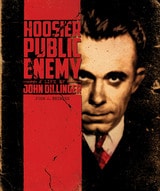
Hoosier Public Enemy
A Life of John DillingerJohn Beineke
Indiana Historical Society Press, 2014
During the bleak days of the Great Depression, news of economic hardship often took a backseat to articles on the exploits of an outlaw from Indiana—John Dillinger. For a period of fourteen months during 1933 and 1934 Dillinger became the most famous bandit in American history, and no criminal since has matched him for his celebrity and notoriety.
Dillinger won public attention not only for his robberies, but his many escapes from the law. The escapes he made from jails or “tight spots,” when it seemed law officials had him cornered, became the stuff of legends. While the public would never admit that they wanted the “bad guy” to win, many could not help but root for the man who appeared to be an underdog.
Although his crime wave took place in the last century, the name Dillinger has never left the public imagination
[more]
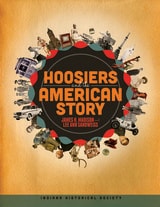
Hoosiers and the American Story
James H. Madison and Lee Ann Sandweiss
Indiana Historical Society Press, 2014
A supplemental textbook for middle and high school students, Hoosiers and the American Story provides intimate views of individuals and places in Indiana set within themes from American history. During the frontier days when Americans battled with and exiled native peoples from the East, Indiana was on the leading edge of America’s westward expansion. As waves of immigrants swept across the Appalachians and eastern waterways, Indiana became established as both a crossroads and as a vital part of Middle America. Indiana’s stories illuminate the history of American agriculture, wars, industrialization, ethnic conflicts, technological improvements, political battles, transportation networks, economic shifts, social welfare initiatives, and more. In so doing, they elucidate large national issues so that students can relate personally to the ideas and events that comprise American history. At the same time, the stories shed light on what it means to be a Hoosier, today and in the past.
[more]