Results by title
123 books match the query 'Internet' and 2 start with h
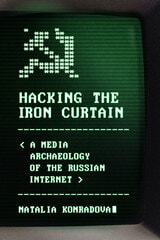
Hacking the Iron Curtain
A Media Archaeology of the Russian InternetNatalia Konradova
University of Wisconsin Press, 2026
Media archaeologist Natalia Konradova examines the history of the internet in Russia and its predecessor state, cutting through layers of technological history and dusting off conceptual artifacts of the past. Inspired by the fundamental question of how Soviets imagined future technologies, she investigates experiments with telepathy alongside the (then equally improbable) dream of a global, digitally connected computer network. Since the story of the Russian internet is inextricably wound up with Soviet society and the history of the Cold War, Hacking the Iron Curtain is as much a cultural and political history as it is a technological one—a history that illustrates how collective dreams can challenge geopolitical ambitions and inspire world-changing technologies.

How to Think about Information
Dan Schiller
University of Illinois Press, 2006
It is common wisdom that the U.S. economy has adapted to losses in its manufacturing base because of the booming information sector, with high-paying jobs for everything from wireless networks to video games. We are told we live in the Information Age, in which communications networks and media and information services drive the larger economy. While the Information Age may have looked sunny in the beginning, as it has developed it looks increasingly ominous: its economy and benefits grow more and more centralized--and in the United States, it has become less and less subject to democratic oversight.
Corporations around the world have identified the value of information and are now seeking to control its production, transmission, and consumption. In How to Think about Information, Dan Schiller explores the ways information has been increasingly commodified as a result and how it both resembles and differs from other commodities. Through a linked series of theoretical, historical, and contemporary studies, Schiller reveals this commodification as both dynamic and expansionary, but also deeply conflicted and uncertain. He examines the transformative political and economic changes occurring throughout the informational realm and analyzes key dimensions of the process, including the buildup of new technological platforms, the growth of a transnationalizing culture industry, and the role played by China as it reinserts itself into an informationalized capitalism.