Results by title
122 books match the query 'Journalists' and 7 start with h
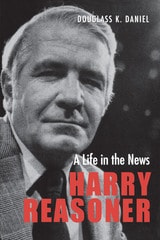
Harry Reasoner
A Life in the NewsBy Douglass K. Daniel
University of Texas Press, 2007
Harry Reasoner was one of the most trusted and well-liked journalists of the golden age of network television news. Whether anchoring the evening newscast on CBS in the 1960s or on ABC in the 1970s, providing in-depth reporting on 60 Minutes, or hosting numerous special programs covering civil rights struggles, the Vietnam War, and Watergate, Reasoner had "that almost mystical quality it seems to take for good television reporting, exuding this atmosphere of truth and believability," in the words of Walter Cronkite. Yet his reassuring manner and urbane, often witty, on-air persona masked a man who was far more complex and contradictory. Though gifted with the intelligence and drive to rise to the top of his profession, Reasoner was regarded by many colleagues as lazy and self-indulgent, a man who never achieved his full potential despite his many accomplishments.
Harry Reasoner: A Life in the News covers the entire sweep of this enigmatic journalist's life and career. Douglass K. Daniel opens with Reasoner's Depression-era Midwestern upbringing and follows him through his early work in newspapers and radio before he joined CBS in 1956. Focusing on Reasoner's thirty-five-year tenure in television news, Daniel presents fascinating, behind-the-scenes accounts of Reasoner's key role in founding the top-rated newsmagazine 60 Minutes. He also explores Reasoner's highly publicized move to ABC in 1970, where he anchored the nightly newscast, first with Howard K. Smith and later with Barbara Walters—a disastrous pairing from which Reasoner's career never fully recovered.
Based on scores of interviews and unpublished letters, memos, and other primary sources, this first biography of the man once rated second in credibility only to Walter Cronkite illuminates an entire era in broadcast journalism, as well as many of the unique personalities, from Andy Rooney to Mike Wallace, who made that era distinctive.
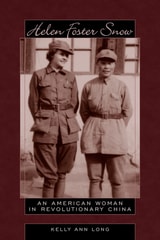
Helen Foster Snow
An American Woman in Revolutionary ChinaKelly Ann Long
University Press of Colorado, 2006
As Kelly Ann Long recounts in this engaging biography, Helen Foster Snow immersed herself in the social and political currents of a nation in turmoil. After marrying renowned journalist Edgar Snow, she developed her own writing talents and offered an important perspective on emerging events in China as that nation was wracked by Japanese invasion, the outbreak of World War II, and a continuing civil war. She supported the December Ninth Movement of 1935, broke boundaries to enter communist Yenan in 1937, and helped initiate the "gung ho" Chinese Industrial Cooperative movement.
Helen Foster Snow wrote about the people and events in China's remote communist territories during an important era. She relayed detailed portraits of female communist leaders and famous figures such as Mao Zedong and Zhu De, as well as common people struggling to survive in a period of increasing turmoil. Her informed, compassionate depictions built a bridge linking American interest to the welfare of the Chinese.
Long's account recovers the story of a controversial and important commentator on a critical period in U.S.-China relations and in Chinese history
Hell's Not Far Off
Bruce Crawford and the Appalachian LeftJosh Howard
West Virginia University Press, 2024
A biography of Bruce Crawford, a southwest Virginia journalist-writer of the radical tradition and one of the first to interpret Appalachian labor history.
Hell’s Not Far Off is a grounded, politically engaged study of the Appalachian journalist and political critic Bruce Crawford, a scourge of coal and railway interests. Crawford fought injustices wherever he saw them at major risk to his own life and became an early interpreter of Appalachian labor history.
His writings and actions from the 1920s to the 1960s helped shape southwest Virginia and West Virginia. Through Crawford’s Weekly, a newspaper active from 1920 to 1935, Crawford challenged the Ku Klux Klan, lynch mobs, and the private police forces of coal barons. The wounds received for these efforts were the closing of his paper and a bullet to his leg during a Harlan County strike in the 1930s. In his work after journalism, he led the West Virginia branch of the Federal Writers’ Project during the political standoff over the contents of the state’s official guidebook.
In Hell’s Not Far Off, Josh Howard resurrects strands of a radical tradition centered especially on matters of labor, environment, and race, drawing attention to that tradition’s ongoing salience: “Present-day Appalachia’s fights were [Crawford’s], and his fights are still ours.”
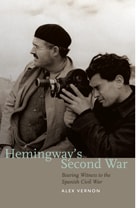
Hemingway’s Second War
Bearing Witness to the Spanish Civil WarAlex Vernon
University of Iowa Press, 2011
In 1937 and 1938, Ernest Hemingway made four trips to Spain to cover its civil war for the North American News Alliance wire service and to help create the pro-Republican documentary film The Spanish Earth. Hemingway’s Second War is the first book-length scholarly work devoted to this subject.
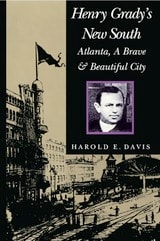
Henry Grady's New South
Atlanta, a Brave and Beautiful CityHarold E. Davis
University of Alabama Press, 1990
Reassessing the man, the movement, and the making of modern Atlanta.
The popular image of Henry W. Grady is that of a champion of the postbellum South, a region that would forgive the North for defeating it and would mobilize its own many resources for hones business and agricultural competition. Biographies and collections of Grady’s essays and speeches that appeared shortly after his death enhanced this image, and for a half-century, Grady was considered the personification of the New South Movement, a movement which promised industrialization for the South, an improved Southern agriculture, and justice and opportunity for black Southerners. As managing editor of the Atlanta Constitution, he espoused the New South throughout the nation and was in demand as a speaker for audiences in New York and Boston.
Through extensive research, focusing on the decade of the 1880s in Georgia, Davis demonstrates that although Grady said all the right things to show that he wished to industrialize the South and that he was committed to the improvement of agriculture and fairness in racial matters, in fact he spent most of his efforts on behalf of Atlanta. His major interest was in making a difference for that city, leaving the rest of the South to enjoy whatever Atlanta could not garner for itself.
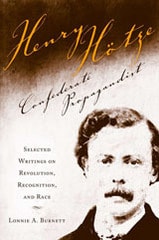
Henry Hotze, Confederate Propagandist
Selected Writings on Revolution, Recognition, and RaceLonnie A. Burnett
University of Alabama Press, 2008
Among the arguments Hotze employed were adaptations of the scientific racism of the period, which attempted to establish a rational basis for assumptions of racial difference. After the collapse of the Confederacy in 1865, Hötze remained in Europe, where he became an active partisan and promoter of the ideas of Arthur de Gobineau (1816–1882) whose work Essai sur L’inégalité des Races Humaines was a founding document in racism’s struggle for intellectual respectability.
This work consists of a biographical essay on Hotze; his contributions to Mobile newspapers during his military service in 1861; his correspondence with Confederate officials during his service in London; articles he published in London to influence British and European opinion; and his correspondence with, and published work in support of, Gobineau.
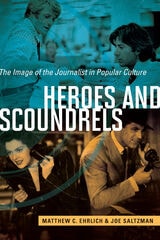
Heroes and Scoundrels
The Image of the Journalist in Popular CultureMatthew C. Ehrlich and Joe Saltzman
University of Illinois Press, 2015
Drawing on portrayals of journalists in television, film, radio, novels, comics, plays, and other media, Matthew C. Ehrlich and Joe Saltzman survey how popular media has depicted the profession across time. Their creative use of media artifacts provides thought-provoking forays into such fundamental issues as how pop culture mythologizes and demythologizes key events in journalism history and how it confronts issues of race, gender, and sexual orientation on the job.
From Network to The Wire, from Lois Lane to Mikael Blomkvist, Heroes and Scoundrels reveals how portrayals of journalism's relationship to history, professionalism, power, image, and war influence our thinking and the very practice of democracy.