Results by title
486 books match the query 'LGBTQ+' and 14 start with h
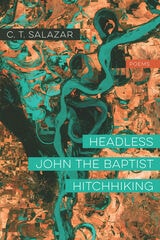
Headless John the Baptist Hitchhiking
PoemsC. T. Salazar
Acre Books, 2022
In C. T. Salazar’s striking debut poetry collection, the speaker is situated in the tradition of Southern literature but reimagines its terrain with an eye on the South’s historic and ongoing violence. His restless relationship with religion (“a child told me there was a god / and because he was smiling, I believed him”) eventually includes a reclamation of the language of belief in the name of desire. “I felt myself become gospel in your hands,” the speaker tells his beloved. And, as the title poem asserts, a headless body “leaves more room for salvation.”
Though Salazar’s South is not a tender place, the book is a petition for tenderness, revealing in both place and people the possibilities for mercy, vulnerability, and wonder. The lyric I, as it creates an archive of experience, is not distanced from the poems’ subjects or settings, but deeply enmeshed in a tangled world. In poems with lush diction, ranging from a sonnet crown to those that explore the full field of the page, Headless John the Baptist Hitchhiking seeks—and finds—where the divine resides: “Praise our hollow-bell bodies still ringing.”
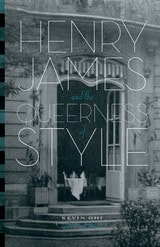
Henry James and the Queerness of Style
Kevin Ohi
University of Minnesota Press, 2010
For Ohi, there are many elements in the style that make James’s writing queer. But if there is a thematic marker, Ohi shows through his careful engagements with these texts, it is belatedness. The recurrent concern with belatedness, Ohi explains, should be understood not psychologically but stylistically, not as confessing the sad predicament of being out of sync with one’s life but as revealing the consequences of style’s refashioning of experience. Belatedness marks life’s encounter with style, and it describes an experience not of deprivation but of the rich potentiality of the literary work that James calls “freedom.” In Ohi’s reading, belatedness is the indicator not of sublimation or repression, nor of authorial self-sacrifice, but of the potentiality of the literary—and hence of the queerness of style.
Presenting original readings of a series of late Jamesian texts, the book also represents an exciting possibility for queer theory and literary studies in the future: a renewed attention to literary form and a new sounding—energized by literary questions of style and form—of the theoretical implications of queerness.

Here Is a Game We Could Play
A NovelJenny Bitner
Acre Books, 2021
In each fantasy, her lover takes a different form, ranging from a prison guard in a world where metaphor is forbidden, to a more-than-brotherly Hansel from the Grimms’ fairy tale, to a tentacled mind-reading space alien. All share a desire for a deep intimacy that eludes Claudia, even as she forms new real-life relationships and reconsiders her sexual identity—building a rapport with an elderly volunteer at the library, striking up a friendship with a wily temp at her dead-end job, and embarking on a passionate affair with Rose, the town’s new librarian. When paranoia threatens to ruin her relationship with Rose, Claudia is forced not only to combat her anxiety but to face the unresolved trauma in her past—the disappearance of her father on a night she has long repressed.
Funny, dark, inventive, and moving, Here Is a Game We Could Play is an original debut novel recalling the work of Aimee Bender, Angela Carter, Rebecca Brown, and Margaret Atwood.
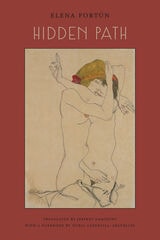
Hidden Path
Elena Fortún
Swan Isle Press, 2020
Best known in Spain as a writer of children’s literature, Elena Fortún left this manuscript unpublished at the time of her death in 1952, as its semi-autobiographical content risked provoking homophobic backlash under the dictatorship of Francisco Franco. The first Spanish edition appeared in 2016 and was hailed as Fortún’s adult masterpiece, a previously unknown complement to her children’s saga Celia and Her World. This edition, with Jeffrey Zamostny’s sensitive and nuanced translation, marks the novel’s first time appearing in any language aside from Spanish; it is also the first of Fortún’s works to appear in English. With an insightful foreword by scholar Nuria Capdevila-Argüelles, this volume will be an influential contribution to women’s studies, LGBT histories, and Spanish literature and culture.
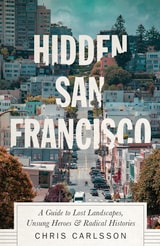
Hidden San Francisco
A Guide to Lost Landscapes, Unsung Heroes and Radical HistoriesChris Carlsson
Pluto Press, 2020
Hidden San Francisco is a guidebook like no other. It’s a radical, alternative guidebook and history of San Francisco, complete with maps detailing walking and bike routes around the city.
San Francisco is an iconic and symbolic city. But only when you look beyond the picture-postcards of the Golden Gate Bridge and the quaint cable cars do you realize that the city's most interesting stories are not the Summer of Love, the Beats or even the latest gold rush in Silicon Valley.
Carlsson delves into the Bay Area's long prehistory, examining the region's geography and the lives of its inhabitants before the 1849 Gold Rush changed everything, setting in motion the clash between capital and labor that shaped the modern city. Structured around the four major themes of ecology, labor, transit and dissent, Chris Carlsson’s book peels back the layers of San Francisco's history to reveal a storied past: behind old walls and gleaming glass facades lurk former industries, secret music and poetry venues, forgotten terrorist bombings, and much more.
From the perspective of the students and secretaries, hippies and beatniks, longshoremen and waitresses, Hidden San Francisco uncovers dozens of overlooked, forgotten and buried histories that pulse through the streets and hills even today, inviting the reader to see themselves in the middle of the ongoing, everyday process of making history together.
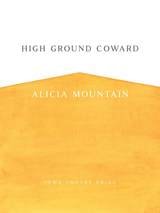
High Ground Coward
Alicia Mountain
University of Iowa Press, 2018
Alicia Mountain’s urgent and astonishing debut collection maps a new queer landscape through terrain alive and sensual, defiant and inviting. With a voice that beckons while it howls, Mountain nimbly traverses lyric, confessional, and narrative modes, leaving groundbreaking tracks for us to follow. High Ground Coward offers fists full of soil, leftovers for breakfast, road trip as ritual, twins of lovers and twins of ourselves. This world blooms with hunger-inducing detail, its speakers asking us to consider what it will take to satisfy our own appetites while simultaneously trying to nourish one another. “Ferocious, even the softest part,” Mountain shows us “a way to fall in love with wanting,” leaving us “ravenous, but gradually.”
Bearing witness to identity formation in solitude and communion, High Ground Coward is an almanac of emotional and relational seasons. Mountain’s speakers question the meaning of inheritance, illness, violence, mythology, and family architecture. Whether Mountain is at work revealing the divinity of doubt, the entanglement of devotion, or the dominion that place holds over us, High Ground Coward heralds a thrilling poetic debut.
From “Scavenger”
We three eat food and are in love. This is the easy way to say
there are stores beneath the floor.
Potatoes and shallots,
hard-necked garlic streaked purple,
jars beside jars, themselves
each staving globes of suction.
Preservation, a guardian hunger.
In the evening I whisper to the boiled beet,
like a naked organ in my flushed hand:
You are ground blood,
you are new born,
you have never been nothing—
thawfruit seedflower greenstart rootbulb
handpull shedscrub mouthsweet
and again.
Hogg
A NovelSamuel R. Delany
University of Alabama Press, 2004
A fearless descent into the darkest corners of human desire and violence.
First written thirty-five years ago and completed days before the Stonewall riots in New York, award-winning author Samuel R. Delany’s Hogg is one of America’s most famous “unpublishable” novels. It recounts three days in 1969 in the life of truck driver and rapist-for-hire, Franklin Hargus. Narrated by his young accomplice, Delaney’s novel portrays an exploration of erotic depravity, a capacious landscape of sexuality that transgresses social and erotic boundaries.
While testing readers’ tolerance, what transfigures the novel into a work of literature is Delany’s refusal, faced with moral anxieties and revulsion, to mutilate or disown his creation. Hogg’s characters wear recognizable human faces, possessing intense loyalty, perverse admiration, and a kind of integrity. Hargus fascinates. He is the embodiment of what society can turn people into, the decaying condition of the human soul.
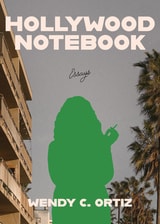
Hollywood Notebook
EssaysWendy C. Ortiz
Northwestern University Press, 2025
A daylight traipse through early-aughts Los Angeles, Hollywood Notebook encapsulates the powerful feelings and hopeful futures of twentysomething Wendy C. Ortiz. In this boundary-defying sister memoir to Bruja, Ortiz navigates internal maps as she traverses external palm-treed streets, moving through her youthful twenties and into the pensiveness of her thirties. Peering at what lies ahead while dipping her toes into the past, Ortiz shows us that there is no place like Hollywood to unearth the joys of success and the blows of mistakes—both realized and denied. An innovative and bold examination of the daytime roaming mind, Hollywood Notebook is a cartography of love, loss, and transformation in the face of a brilliant psyche in a vibrant city.
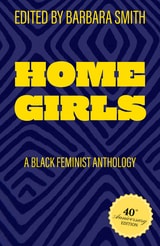
Home Girls, 40th Anniversary Edition
A Black Feminist AnthologyBarbara Smith
Rutgers University Press, 2024
Contributors: Tania Abdulahad, Donna Allegra, Barbara A. Banks, Becky Birtha, Cenen, Cheryl Clarke, Michelle Cliff, Michelle T. Clinton, Willi (Willie) M. Coleman, Toi Derricotte, Alexis De Veaux, Jewelle L. Gomez, Akasha (Gloria) Hull, Patricia Spears Jones, June Jordan, Audre Lorde, Raymina Y. Mays, Deidre McCalla, Chirlane McCray, Pat Parker, Linda C. Powell, Bernice Johnson Reagon, Spring Redd, Gwendolyn Rogers, Kate Rushin, Ann Allen Shockley, Barbara Smith, Beverly Smith, Shirley O. Steele, Luisah Teish, Jameelah Waheed, Alice Walker, and Renita J. Weems.
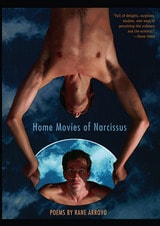
Home Movies of Narcissus
Rane Arroyo
University of Arizona Press, 2002
Using sophisticated language to inspect life from barrio childhood to cosmopolitan manhood, Arroyo explores themes of gay strength and alienation, linked to his experiences as both a Puerto Rican and an intellectual. Through a variety of approaches, he examines a major recurrent Latino paradox: the need to write about Latino issues while being criticized for being too self-centered.
Sometimes reserved, sometimes passionate, Arroyo writes with humor and a remarkable quickness of association, moving with a grace that makes seamless use of speech ranging from the formal to the vernacular. Taking in love and sexuality, world literature and history, and the exile's heritage of a shifting geography of identity, he invokes remarkable imagery with language that is economical, fresh, and mischievous. Some of Arroyo's poems take an autobiographical approach and show how poets have both the luxury and necessity of speaking for those in their lives.
Others create personas that take in the American experience from a variety of viewpoints—including gays, who are often marginalized by the larger Latino community. "The Ponce de León Poems" pit the poet against a ghost who seeks to direct his writing, while a final section, "The Black Moon Poems," deals with the many sleepless nights that Arroyo has spent struggling with questions over the worth of his art and whether he has betrayed those he loves by writing-or not writing-about them. "In his home movies," he writes, "Narcissus is both the seen and the seer." As Arroyo's insightful words demonstrate, the writer must come to value his own image but not fall in love with it, for it will change, age, and, if he is fortunate, finally grow wise. As readers will discover in Home Movies of Narcissus, Rane Arroyo has seen past the mirror and charted a new territory of self-discovery.
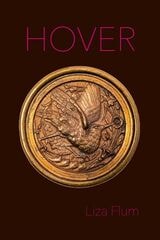
Hover
Liza Flum
Omnidawn, 2025
Liza Flum’s Hover focuses on queer polyamorous families, considering the ways people in radical family structures are both highly visible and erased. From hummingbirds to stars, historical records, and cemetery monuments, Flum searches for images to represent lives and loves like her own and to find lasting traces of queer and chosen family. In the poetic lexicon of Hover, hummingbirds become emblems of ungraspable survival and vitality, while records on paper and in stone afford enduring, though limited, representations.
The book explores sexuality, love, reproductive choice, and infertility in sonnets and expansive prose meditations. Linked stanzas, which act as little rooms, suggest the intermingling of bedrooms, doctor’s offices, and hospital rooms. The many forms in this collection claim space, both on the page and in poetic discourse, to make the intimate outwardly visible.
How to Kill a Goat and Other Monsters
Saúl Hernández
University of Wisconsin Press, 2024
These pages are infused with comfort, with desire, with heartache. Never absent is love, family. Hernández—hyperaware of American society’s dismissal or hatred of people who look like him—writes with a refreshing confidence, a sure knowledge of who he is and where he comes from. Transcending any particular experience, this volume will continue to resonate with multiple readings.
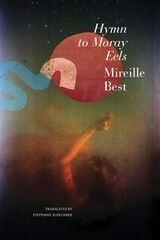
Hymn to Moray Eels
Mireille Best
Seagull Books, 2025
Within the cloistered world of a 1950s French sanatorium, sixteen-year-old Mila is learning more than just how to recover; she’s learning how to want. Stranded among a cast of unruly girls, she navigates longing and the quiet defiance of being a young lesbian in a world that prefers silence. There’s Marie, full of teasing bravado; the two Nicoles, who always weep; and Josette, who fills the air with accordion melodies. Then there’s Paule, a striking staff member whose attention is intoxicating—until it isn’t. Just as Mila begins to believe in the possibility of something real, Paule turns toward another, leaving Mila caught between jealousy and the aching pull of first love.
Originally published in 1985, Hymn to Moray Eels is a rare and brilliant gem of queer literature, balancing wry humor with aching tenderness. Mireille Best’s unsentimental prose captures the bittersweet contradictions of adolescence, creating a coming-of-age novel that is both deeply personal and strikingly universal.
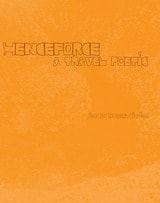
henceforce
A Travel PoeticKamden Ishmael Hilliard
Omnidawn, 2019