Results by title
58 books match the query 'Loss' and 2 start with h
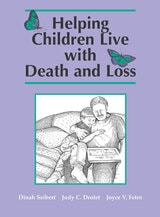
Helping Children Live With Death and Loss
Dinah Seibert, Judy C. Drolet, and Joyce V. Fetro. Illustrations by Christine I. Stetter
Southern Illinois University Press, 2003
Helping Children Live with Death and Loss is a practical guide for parents, caregivers, teachers, clergy, funeral directors, and other adults who may interact with young children between the ages of two and ten. Utilizing a developmental approach that is critical for understanding the unique characteristics and needs among children under ten, the volume is enhanced by an accessible style and format, numerous illustrations, and the positive attitude that make it possible for any reader to comprehend and apply the concepts when discussing death and loss with young children.
The scope of concepts ranges from adult self-assessment to knowledge of children’s developmental stages in learning. Building on that foundation, the book provides four basic content areas for teaching, supplies sample questions and answers, and suggests strategies for teaching general death education as well as strategies for responding to a current death or loss. The resource concludes with print and internet sources for adults and children. Helping Children Live with Death and Loss also aids adults and children in improving their communication and coping skills, which are critical for managing loss and preparing for a healthier future.
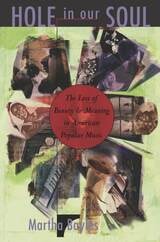
Hole in Our Soul
The Loss of Beauty and Meaning in American Popular MusicMartha Bayles
University of Chicago Press, 1996
Bayles defends the tough, affirmative spirit of Afro-American music against the strain of artistic modernism she calls 'perverse.' She describes how perverse modernism was grafted onto popular music in the late 1960s, and argues that the result has been a cult of brutality and obscenity that is profoundly anti-musical.
Unlike other recent critics of popular music, Bayles does not blame the problem on commerce. She argues that culture shapes the market and not the other way around. Finding censorship of popular music "both a practical and a constitutional impossibility," Bayles insists that "an informed shift in public tastes may be our only hope of reversing the current malignant mood."