Results by title
164 books match the query 'Medical care' and 10 start with h

Healing by Heart
Clinical and Ethical Case Stories of Hmong Families and Western ProvidersKathleen A. Culhane-Pera
Vanderbilt University Press, 2003
Ranging in age from young infants to older adults, the patients in the stories present a wide range of health problems. The clinicians are from family practice, internal medicine, pediatrics, emergency medicine, surgery, obstetrics-gynecology, psychiatry/psychology, and hospice.
Each of the fourteen case stories is accompanied by discussion questions as well as two or three commentaries. The commentaries--written by patients, family members, shaman, Western clinicians (including Hmong physicians, nurses, and social workers), medical anthropologists, health care ethicists, social workers, psychologists, and clergy--are rich in personal reflections on cross-cultural health care experiences. Readers are rewarded with a combination of perspectives, including those of Hmong authors who have not previously published in English and scholars with years of professional experience working with the Hmong in Laos, Thailand, and the United States.
The editors offer a model for delivering culturally responsive health care with special attention to matters of cross-cultural health care ethics. The model identifies questions health care providers can focus on as they seek to understand the health-related moral commitments and practices prevalent in the cultural groups they serve, ethical questions that arise frequently and with great poignancy in cross-cultural health care relationships, and points to consider when a patient's treatment wish challenges the provider's professional integrity.
By sharing stories of suffering, confusion, and success, Healing by Heart couples an accessible method of learning about others with concrete recommendations about how to enhance cross-cultural health care relationships.

Health Care Issues in the United States and Japan
Edited by David A. Wise and Naohiro Yashiro
University of Chicago Press, 2006
Recent data show wide disparity between Japan and the United States in the effectiveness of their health care systems. Japan spends close to the lowest percentage of its gross domestic product on health care among OECD countries, the United States spends the highest, yet life expectancies in Japan are among the world’s longest. Clearly, a great deal can be learned from a comprehensive comparative analysis of health care issues in these two countries.
In Health Care Issues in the United States and Japan, contributors explore the structural characteristics of the health care systems in both nations, the economic incentives underlying the systems, and how they operate in practice. Japan’s system, they show, is characterized by generous insurance schemes, a lack of gatekeepers, and fee-for-service mechanisms. The United States’ structure, on the other hand, is distinguished by for-profit hospitals, privatized health insurance, and managed care. But despite its relative success, an aging population and a general shift from infectious diseases to more chronic maladies are forcing the Japanese to consider a model more closely resembling that of the United States.
In an age when rising health care costs and aging populations are motivating reforms throughout the world, this timely study will prove invaluable.
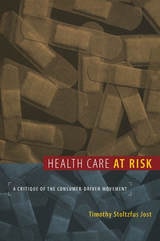
Health Care at Risk
A Critique of the Consumer-Driven MovementTimothy Stoltzfus Jost
Duke University Press, 2007
In this concise, straightforward analysis, Jost challenges the historical and theoretical assumptions on which the consumer-driven health care movement is based and reexamines the empirical evidence that it claims as support. He traces the histories of both private health insurance in the United States and the CDHC movement. The idea animating the drive for consumer-driven health care is that the fundamental problem with the American health care system is what economists call “moral hazard,” the risk that consumers overuse services for which they do not bear the cost. Jost reveals moral hazard as an inadequate explanation of the complex problems plaguing the American health care system, and he points to troubling legal and ethical issues raised by CDHC. He describes how other countries have achieved universal access to high-quality health care at lower cost, without relying extensively on cost sharing, and he concludes with a proposal for how the United States might do the same, incorporating aspects of CDHC while recognizing its limitations.
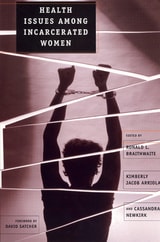
Health Issues Among Incarcerated Women
Edited by Ronald L. Braithwaite, Kimberly Jacob Arriola, and Cassandra Newkirk
Rutgers University Press, 2006
The female inmate population in the United States has exploded in the past two decades, increasing nearly six-fold. The U.S. correctional system, however, has not expanded its health care to provide for this growing population of women. This comprehensive reader addresses the physical and mental needs of women inmates and suggests that they cannot be properly treated unless their lifestyles before, during, and after incarceration are considered.
This book abounds with statistics that outline the unique needs of the female inmate population. For instance, a significant proportion of female inmates suffer physical and sexual violence before serving time. Incarcerated teenagers are more likely than others from their age group to have engaged in behaviors that increased their risk for contracting sexually transmitted diseases like HIV. Because African American women are more likely than their counterparts to encounter prison time, their needs warrant specific attention.
Bringing together twenty original essays, this volume will be invaluable for lobbyists and policy makers as well as for graduate students and faculty in the fields of criminal justice and public health.

Health Work with the Poor
A Practical GuideKiefer, Christie W
Rutgers University Press, 2000
Christie Kiefer vividly brings home the meaning of poverty in peoples’ lives as he examines both their access to—and their lack of—health care.
Aimed at both students and professionals in the field, this book argues that individuals serving the poor have the means and obligation to address the root causes of ill health of the poor, not just the symptoms. These causes, Kiefer argues, are overwhelmingly social and political. In a ringing indictment of the factors that perpetuate poverty, he declares that the work of healing at its best must include advocacy.
Health Work with the Poor offers to both health workers and activists a wealth of practical information. Kiefer’s trenchant analysis of the factors that help cause and perpetuate poverty offers students the needed intellectual framework not only to accomplish short-term change but also to strive toward long-term social advocacy. Each chapter ends with a set of discussion questions—a real boon for instructors. Appendices on Internet resources for the study of poverty and on a proposed program detailing how to teach health workers in a way that promotes social awareness make this book a valuable resource for courses on poverty and health. It will also be an indispensable manual for all those who work with the poor.
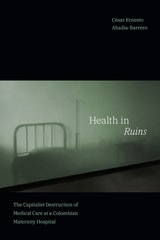
Health in Ruins
The Capitalist Destruction of Medical Care at a Colombian Maternity HospitalCésar Ernesto Abadía-Barrero
Duke University Press, 2022

Health in a Fragile State
Science, Sorcery, and Spirit in the Lower CongoJohn M. Janzen
University of Wisconsin Press, 2019
Janzen explores the manner in which power and information, including science, are legitimized in the preservation and improvement of health. Institutional validity and knowledge empower citizens and health practitioners to gain the upper hand over the region's principal diseases, including malaria, tuberculosis, typhoid, and HIV/AIDS.

Healthy Markets?
The New Competition in Medical CareMark A. Peterson, ed.
Duke University Press, 1999
With original contributions from leading social science health policy analysts, this volume addresses the full context of health system change. Believing that the analysis of health care change is too important to be left to economists alone, Mark A. Peterson has collected a mulitdisciplinary group of experts who revisit the contentious debate over the market approaches to health care and consider the disparate effects of these approaches on cost, quality, and coverage of both managed care and Medicaid and Medicare. While market enthusiasts applaud the enhanced efficiency, reduced excess capacity, and abatement of the decades-long health care cost explosion, a backlash has emerged among many providers and the public against the perceived excesses of the market: diminished access to care, commercialization of the physician-patient relationship, and exacerbated inequality. Contributors assess these varied responses while examining the impact that market-based applications are likely to have for future health policy making, the significance of the U.S. experience for policy makers abroad, and the lessons that these changes might provide for thinking sensibly about the future of our health care system.
This volume will be useful for public policy analysts, economists, social scientists, health care providers and administrators, and others interested in the future—and in understanding the past—of American health care.
Contributors. Gary S. Belkin, Lawrence D. Brown, Robert G. Evans, Martin Gaynor, Paul B. Ginsburg, Marsha Gold, Theodore R. Marmor, Cathie Jo Martin, Jonathan B. Oberlander, Mark V. Pauly, Mark A. Peterson, Thomas Rice, Deborah A. Stone, William B. Vogt, Kenneth E. Thorpe

Home before Morning
The Story of an Army Nurse in VietnamLynda Van Devanter
University of Massachusetts Press, 2001
Lynda Van Devanter was the girl next door, the cheerleader who went to Catholic schools, enjoyed sports, and got along well with her four sisters and parents. After high school she attended nursing school and then did something that would shatter her secure world for the rest of her life: in 1969, she joined the army and was shipped to Vietnam. When she arrived in Vietnam her idealistic view of the war vanished quickly. She worked long and arduous hours in cramped, ill-equipped, understaffed operating rooms. She saw friends die. Witnessing a war close-up, operating on soldiers and civilians whose injuries were catastrophic, she found the very foundations of her thinking changing daily.
After one traumatic year, she came home, a Vietnam veteran. Coming home was nearly as devastating as the time she spent in Asia. Nothing was the same -- including Lynda herself. Viewed by many as a murderer instead of a healer, she felt isolated and angry. The anger turned to depression; like many other Vietnam veterans she suffered from delayed stress syndrome. Working in hospitals brought back chilling scenes of hopelessly wounded soldiers. A marriage ended in divorce. The war that was fought physically halfway around the world had become a personal, internal battle.
Home before Morning is the story of a woman whose courage, stamina, and personal history make this a compelling autobiography. It is also the saga of others who went to war to aid the wounded and came back wounded -- physically and emotionally -- themselves. And, it is the true story of one person's triumphs: her understanding of, and coming to terms with, her destiny.

Hot Spot
A Doctor's Diary From the PandemicDr. Alex Jahangir
Vanderbilt University Press, 2022
What followed was a year of unprecedented challenge and scrutiny. Jahangir, who immigrated to the US from Iran at age six, grew up in Nashville. He thought he knew the city well. But the pandemic laid bare ethnic, racial, and cultural tensions that daily threatened to derail what should have been a collective effort to keep residents healthy and safe.
Hot Spot is Jahangir's narrative of the first year of COVID, derived from his op notes (the journal-like entries surgeons often keep following operations) and expanded to include his personal reflections and a glimpse into the inner sanctums of city and state governance in crisis.