Results by title
273 books match the query 'Memoir' and 8 start with h
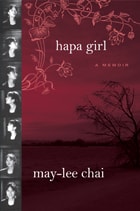
Hapa Girl
A MemoirMay-lee Chai
Temple University Press, 2008
In the mid-1960s, Winberg Chai, a young academic and the son of Chinese immigrants, married an Irish-American artist. In Hapa Girl ("hapa" is Hawaiian for "mixed") their daughter tells the story of this loving family as they moved from Southern California to New York to a South Dakota farm by the 1980s. In their new Midwestern home, the family finds itself the object of unwelcome attention, which swiftly escalates to violence. The Chais are suddenly socially isolated and barely able to cope with the tension that arises from daily incidents of racial animosity, including random acts of cruelty.
May-lee Chai's memoir ends in China, where she arrives just in time to witness a riot and demonstrations. Here she realizes that the rural Americans' "fears of change, of economic uncertainty, of racial anxiety, of the unknowable future compared to the known past were the same as China's. And I realized finally that it had not been my fault."
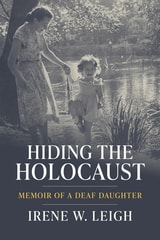
Hiding the Holocaust
Memoir of a Deaf DaughterIrene W. Leigh
Gallaudet University Press, 2026
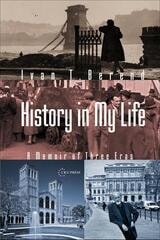
History in My Life
A Memoir of Three ErasIvan T. Berend is Distinguished Research Professor at the History Department of the University of California Los Angeles.
Central European University Press, 2009
Ivan T. Berend is Distinguished Professor at the University of California Los Angeles, Director of the European Studies Program. He was one of the masterminds of regime change in Hungary. He made a career in Hungary as a university professor, Rector of the University of Economics (1973–79), and President of the Hungarian Academy of Sciences (1985–90). He was President of the International Committee of Historical Sciences (1995–2000), and Vice-President of the International Economic History Association (1986–1994). His research interests are the complex economic, social, ideological, and cultural history of Central and Eastern Europe in the 19th–20th century; economic modernization; problems of European backwardness; transition from state socialism to capitalism. He published and 26 books and more than 120 studies.
Before he became a professor at UCLA, Ivan Berend had survived five regime changes and two revolutions in Hungary, had been in prison and German concentration camp in 1944–45.
His memoir offers an interesting case study, a subjective addition to the “objective” historical works on Central and Eastern European state socialism. It describes the hard choices of intellectuals in a dictatorial state: 1. remain in isolation, concentrate on scholarly works, and exclude politics in your personal life; 2. be in opposition, criticize and unveil the regime, accept discrimination and exclusion; 3. remain within the establishment and work for reforming the country using legal possibilities to criticize the regime and to achieve changes from within.
Berend’s book raises basic historical questions and debates, compares East European and American higher education systems, and presents an eyewitness’ insights on life in the United States.
House Hold
A Memoir of PlaceAnn Peters
University of Wisconsin Press, 2013
More than a memoir of remembered landscapes, House Hold is also an expansive contemplation of America, a meditation on place and property, and an exploration of how literature shapes our thinking about the places we live. A gifted prose stylist, Peters seamlessly combines her love of buildings with her love of books. She wanders through the rooms of her past but also through what Henry James called “the house of fiction,” interweaving personal narrative with musings on James, Willa Cather, William Dean Howells, Paule Marshall, William Maxwell, and others. Peters reflects on the romance of pastoral retreat, the hazards of nostalgia, America’s history of expansion and land ownership, and the conflicted desires to put down roots and to hit the road. Throughout House Hold, she asks how places make us who we are.
Huerfano
A Memoir of Life in the CountercultureRoberta M. Price
University of Massachusetts Press, 2004
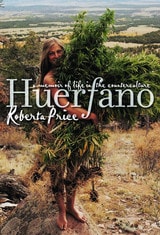
In the late 1960s, new age communes began springing up in the American Southwest with names like Drop City, New Buffalo, Lama Foundation, Morning Star, Reality Construction Company, and the Hog Farm. In the summer of 1969, Roberta Price, a recent college graduate, secured a grant to visit these communities and photograph them. When she and her lover David arrived at Libre in the Huerfano Valley of southern Colorado, they were so taken with what they found that they wanted to participate instead of observe. The following spring they married, dropped out of graduate school in upstate New York, packed their belongings into a 1947 Chrysler Windsor Coupe, and moved to Libre, leaving family and academia behind.
Huerfano is Price's captivating memoir of the seven years she spent in the Huerfano ("Orphan") Valley when it was a petri dish of countercultural experiments. She and David joined with fellow baby boomers in learning to mix cement, strip logs, weave rugs, tan leather, grow marijuana, build houses, fix cars, give birth, and make cheese, beer, and furniture as well as poetry, art, music, and love. They built a house around a boulder high on a ridge overlooking the valley and made ends meet by growing their own food, selling homemade goods, and hiring themselves out as day laborers. Over time their collective ranks swelled to more than three hundred, only to diminish again as, for many participants, the dream of a life of unbridled possibility gradually yielded to the hard realities of a life of voluntary poverty.
Price tells her story with a clear, distinctive voice, documenting her experiences with photos as well as words. Placing her story in the larger context of the times, she describes her participation in the antiwar movement, the advent of the women's movement, and her encounters with such icons as Ken Kesey, Gary Snyder, Abbie Hoffman, Stewart Brand, Allen Ginsberg, and Baba Ram Dass.
At once comic, poignant, and above all honest, Huerfano recaptures the sense of affirmation and experimentation that fueled the counterculture without lapsing into nostalgic sentimentality on the one hand or cynicism on the other.
Hungry Hill
A MemoirCarole O'Malley Gaunt
University of Massachusetts Press, 2007
On a sweltering June night in 1959, Betty O'Malley died from lymphatic cancer, leaving behind an alcoholic husband and eight shell-shocked children—seven sons and one daughter, ranging in age from two to fifteen years. The daughter, Carole, was thirteen at the time. In this poignant memoir, she recalls in vivid detail the chaotic course of her family life over the next four years.
The setting for the story is Hungry Hill, an Irish-Catholic working-class neighborhood in Springfield, Massachusetts. The author recounts her sad and turbulent story with remarkable clarity, humor, and insight, punctuating the narrative with occasional fictional scenes that allow the adult Carole to comment on her teenage experiences and to probe the impact of her mother's death and her father's alcoholism.
Hungry Hill
A MemoirCarole O'Malley Gaunt
University of Massachusetts Press, 2007
On a sweltering June night in 1959, Betty O'Malley died from lymphatic cancer, leaving behind an alcoholic husband and eight shell-shocked children—seven sons and one daughter, ranging in age from two to fifteen years. The daughter, Carole, was thirteen at the time. In this poignant memoir, she recalls in vivid detail the chaotic course of her family life over the next four years.
The setting for the story is Hungry Hill, an Irish-Catholic working-class neighborhood in Springfield, Massachusetts. The author recounts her sad and turbulent story with remarkable clarity, humor, and insight, punctuating the narrative with occasional fictional scenes that allow the adult Carole to comment on her teenage experiences and to probe the impact of her mother's death and her father's alcoholism.
Hutchins' University
A Memoir of the University of Chicago, 1929-1950William H. McNeill
University of Chicago Press, 1991
Hutchins' scathing opposition to the departmentalization of learning and his resounding call for reforms in general education sparked controversy and fueled debate on campus and off. It became a struggle for the heart and soul of higher education—and McNeill, as a student and then as an instructor, was a participant. His account of the university's history is laced with personal reminiscences, encounters with influential fellow scholars such as Richard McKeon, R. S. Crane, and David Daiches, and details drawn from Hutchins' papers and other archives.
McNeill sketches the interplay of personalities with changing circumstances of the Depression, war, and postwar eras. But his central concern is with the institutional life of the University, showing how student behavior, staff and faculty activity and even the Hyde Park neighborhood all revolved around the charismatic figure of Robert Maynard Hutchins—shaped by him and in reaction against him.
Successive transformations of the College, and the tribulations of the ideal of general or liberal education are central to much of the story; but the memoir also explores how the University was affected by such events as Red scares, the remarkably successful Round Table radio broadcasts, the
abolition of big time football, and the inauguration of the nuclear age under the west stands of Stagg Field in 1942.
In short, Hutchins' University sketches an extraordinarily vibrant period for the University of Chicago
and for American higher education. It will revive old controversies among veterans from those times, and may provoke others to reflect anew about the proper role of higher education in American society.