Results by title
98 books match the query 'Migrations' and 3 start with h

Hong Kong Movers and Stayers
Narratives of Family MigrationJanet W. Salaff, Siu-lun Wong, and Arent Greve
University of Illinois Press, 2010
Half a million Hong Kong residents fled their homeland during the thirteen years before Hong Kong's reversion to China in 1997. Nearly half of those returned within the next several years. Filled with detailed, first-hand stories of nine Hong Kong families over nearly two decades, Hong Kong Movers and Stayers is a multifaceted yet intimate look at the forces behind Hong Kong families' successful, and failed, efforts at migration and settlement.
Defining migration as a process, not a single act of leaving, Hong Kong Movers and Stayers provides an antidote to ethnocentric and simplistic theories by uncovering migration stories as they relate to social structures and social capital. The authors meld survey analysis, personal biography, and sociology and compare multiple families in order to give voice to the interplay of gender, age, and diverse family roles as motivating factors in migration.
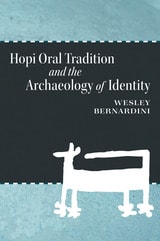
Hopi Oral Tradition and the Archaeology of Identity
Wesley Bernardini
University of Arizona Press, 2005
Wesley Bernardini now draws on an unconventional source, Hopi traditional knowledge, to show how hypotheses that are developed from oral tradition can stimulate new and productive ways to think about the archaeological record. Focusing on insights that oral tradition has to offer about general processes of prehistoric migration and identity formation, he describes how each Hopi clan acquired its particular identity from the experiences it accumulated on its unique migration pathway. This pattern of “serial migration” by small social groups often saw the formation of villages by clans that briefly came together and then moved off again independently, producing considerable social diversity both within and among villages.
Using Anderson Mesa and Homol’ovi as case studies, Bernardini presents architectural and demographic data suggesting that the fourteenth century occupation of these regions was characterized by population flux and diversity consistent with the serial migration model. He offers an analysis of rock art motifs—focusing on those used as clan symbols—to evaluate the diversity of group identities, then presents a compositional analysis of Jeddito Yellow Ware pottery to evaluate the diversity of these groups’ eventual migration destinations.
Evidence supporting serial migration greatly complicates existing notions of links between ancient and modern social groups, with important implications for the implementation of the Native American Graves Protection and Repatriation Act. Bernardini’s work clearly demonstrates that studies of cultural affiliation must take into account the fluid nature of population movements and identity in the prehistoric landscape. It takes a decisive step toward better understanding the major demographic change that occurred on the Colorado Plateau from 1275 to 1400 and presents a strategy for improving the reconstruction of cultural identity in the past.
Human Dispersal, Human Evolution, and the Sea
The Palaeolithic Seafaring DebateJohn F. Cherry
University Press of Colorado, 2025
Exploring the data in detail, the authors here show how a complex series of interrelated problems has tended to be treated in reductionist or overly simplistic terms. Cherry and Leppard elucidate this complexity by bringing to bear perspectives from archaeology, ecology, and evolutionary biology. They demonstrate not only that a series of unique circumstances—evolutionary, behavioral, environmental, and economic—conspired to drive mass, ubiquitous global colonization over the last ten millennia; but also that earlier, sparser data provide real insight into key social and behavioral thresholds, even if there is little evidence to support the “oceans as highways” model for species other than our own.
A major intervention in this important debate, Human Dispersal, Human Evolution, and the Sea explains the deep significance of the problem and the profound implications for history, archaeology, and biological anthropology.