491 books match the query 'Moral and ethical aspects' and 19 start with h
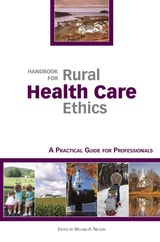
cover of Handbook for Rural Health Care Ethics: A Practical Guide for Professionals

Handbook for Rural Health Care Ethics

A Practical Guide for Professionals

Edited by William A. Nelson

Dartmouth College Press, 2010
The rural community presents not only distinct health care delivery challenges but also ethical problems for clinicians and administrators of small, rural health care facilities. Health care delivered in a rural context—in closely knit, tightly interdependent small community settings—poses unique ethical considerations for clinical practitioners. For example, a provider in a resource-poor rural setting may be faced with treating a family member, friend, business associate, or neighbor, since the role separation between clinician and patient that predominates in the urban setting is less likely to occur in a small town. Because of the unique rural context, the solutions that health care providers develop to resolve complex ethics dilemmas may differ from solutions reached in urban areas. The Handbook for Rural Health Care Ethics is designed to be a useful resource for clinicians and administrators in rural settings. It draws on the available research and real-life examples to paint a picture of challenging, yet all-too-familiar ethics conflicts while offering strategies for a proactive, preventive approach to ethical issues.
[more]
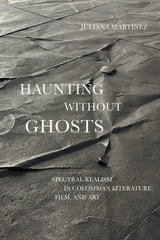
cover of Haunting Without Ghosts: Spectral Realism in Colombian Literature, Film, and Art

Haunting Without Ghosts

Spectral Realism in Colombian Literature, Film, and Art

By Juliana Martínez

University of Texas Press, 2020

Winner, William M. LeoGrande Prize, Center for Latin American and Latino Studies at American University, 2022

For half a century, cultural production in Colombia has labored under the weight of magical realism—above all, the works of Gabriel García Márquez—where ghosts told stories about the country’s violent past and warned against a similarly gruesome future.

Decades later, the story of violence in Colombia is no less horrific, but the critical resources of magical realism are depleted. In their wake comes "spectral realism." Juliana Martínez argues that recent Colombian novelists, filmmakers, and artists—from Evelio Rosero and William Vega to Beatriz González and Erika Diettes—share a formal and thematic concern with the spectral but shift the focus from what the ghost is toward what the specter does. These works do not speak of ghosts. Instead, they use the specter to destabilize reality by challenging the authority of human vision and historical chronology.

By introducing the spectral into their work, these artists decommodify well-worn modes of representing violence and create a critical space from which to seek justice for the dead and disappeared. A Colombia-based study, Haunting without Ghosts brings powerful insight to the politics and ethics of spectral aesthetics, relevant for a variety of sociohistorical contexts.

[more]
cover of Having People, Having Heart: Charity, Sustainable Development, and Problems of Dependence in Central Uganda

Having People, Having Heart

Charity, Sustainable Development, and Problems of Dependence in Central Uganda

China Scherz

University of Chicago Press, 2014

Believing that charity inadvertently legitimates social inequality and fosters dependence, many international development organizations have increasingly sought to replace material aid with efforts to build self-reliance and local institutions. But in some cultures—like those in rural Uganda, where Having People, Having Heart takes place—people see this shift not as an effort toward empowerment but as a suspect refusal to redistribute wealth. Exploring this conflict, China Scherz balances the negative assessments of charity that have led to this shift with the viewpoints of those who actually receive aid.
           
Through detailed studies of two different orphan support organizations in Uganda, Scherz shows how many Ugandans view material forms of Catholic charity as deeply intertwined with their own ethics of care and exchange. With a detailed examination of this overlooked relationship in hand, she reassesses the generally assumed paradox of material aid as both promising independence and preventing it. The result is a sophisticated demonstration of the powerful role that anthropological concepts of exchange, value, personhood, and religion play in the politics of international aid and development.
[more]
cover of Hearts And Minds: The Controversy Over Laboratory Animals

Hearts And Minds

The Controversy Over Laboratory Animals

Julian Groves

Temple University Press, 1996

[more]
cover of Hegel on Political Identity: Patriotism, Nationality, Cosmopolitanism

Hegel on Political Identity

Patriotism, Nationality, Cosmopolitanism

Lydia L. Moland

Northwestern University Press, 2012
In Hegel on Political Identity, Lydia Moland provocatively draws on Hegel's political philosophy to engage sometimes contentious contemporary issues such as patriotism, national identity, and cosmopolitanism. Moland argues that patriotism for Hegel indicates an attitude toward the state, whereas national identity is a response to culture. The two combine, Hegel claims, to enable citizens to develop concrete freedom. Moland argues that Hegel's account of political identity extends to his notorious theory of world history; she also proposes that his resistance to cosmopolitanism be reassessed in response to our globalized world. By focusing on Hegel's depiction of political identity as a central part of modern life, Moland shows the potential of Hegel's philosophy to address issues that lie at the heart of ethical and political philosophy.
[more]
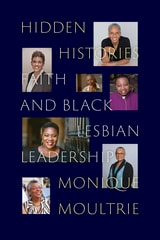
cover of Hidden Histories: Faith and Black Lesbian Leadership

Hidden Histories

Faith and Black Lesbian Leadership

Monique Moultrie

Duke University Press, 2023
In Hidden Histories, Monique Moultrie collects oral histories of Black lesbian religious leaders in the United States to show how their authenticity, social justice awareness, spirituality, and collaborative leadership make them models of womanist ethical leadership. By examining their life histories, Moultrie frames queer storytelling as an ethical act of resistance to the racism, sexism, and heterosexism these women experience. She outlines these women’s collaborative, intergenerational, and leadership styles, and their concerns for the greater good and holistic well-being of humanity and the earth. She also demonstrates how their ethos of social justice activism extends beyond LGBTQ and racialized communities and provides other models of religious and community leadership. Addressing the invisibility of Black lesbian religious leaders in scholarship and public discourse, Moultrie revises modern understandings of how race, gender, and sexual identities interact with religious practice and organization in the twenty-first century.
[more]
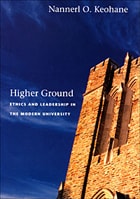
cover of Higher Ground: Ethics and Leadership in the Modern University

Higher Ground

Ethics and Leadership in the Modern University

Nannerl O. Keohane

Duke University Press, 2006

Nannerl O. Keohane is one of the most widely respected leaders in higher education. A political theorist who served as President of Wellesley College and Duke University, she has firsthand knowledge of the challenges facing modern universities: rising costs, the temptations of “corporatization,” consumerist students, nomadic faculty members, and a bewildering wave of new technologies. Her views on these issues and on the role and future of higher education are captured in Higher Ground, a collection of speeches and essays that she wrote over a twenty-year period.

Keohane regards colleges and universities as intergenerational partnerships in learning and discovery, whose compelling purposes include not only teaching and research but also service to society. Their mission is to equip students with a moral education, not simply preparation for a career or professional school.

But the modern era has presented universities and their leadership with unprecedented new challenges. Keohane worries about access to education in a world of rising costs and increasing economic inequality, and about threats to academic freedom and expressions of opinion on campus. She considers diversity as a key educational tool in our increasingly pluralistic campuses, ponders the impact of information technologies on the university’s core mission, and explores the challenges facing universities as they become more “global” institutions, serving far-flung constituencies while at the same time contributing to the cities and towns that are their institutional homes.

Reflecting on the role of contemporary university leaders, Keohane asserts that while they have many problems to grapple with, they will find creative ways of dealing with them, just as their predecessors have done.

[more]
cover of Holocaust Mothers and Daughters: Family, History, and Trauma

Holocaust Mothers and Daughters

Family, History, and Trauma

Federica K. Clementi

Brandeis University Press, 2013

In this brave and original work, Federica Clementi focuses on the mother-daughter bond as depicted in six works by women who experienced the Holocaust, sometimes with their mothers, sometimes not. The daughters’ memoirs, which record the “all-too-human” qualities of those who were persecuted and murdered by the Nazis, show that the Holocaust cannot be used to neatly segregate lives into the categories of before and after. Clementi’s discussions of differences in social status, along with the persistence of antisemitism and patriarchal structures, support this point strongly, demonstrating the tenacity of trauma—individual, familial, and collective—among Jews in twentieth-century Europe.
[more]
cover of How Holocausts Happen: The United States in Central America

How Holocausts Happen

The United States in Central America

Douglas V. Porpora

Temple University Press, 1992

"History repeats itself, but it never repeats itself exactly," observes Douglas Porpora in this powerful indictment of U.S. intervention in Central America. Comparing the general public’s reaction to the Holocaust in Nazi Germany with American public opinion of U.S. participation in the genocidal policies of Nicaraguan counter-revolutionary forces, and the governments of Guatemala and El Salvador among others, Porpora demonstrates that moral indifference to the suffering of others was the common response. With reference to Hannah Arendt’s thesis of the banality of evil, he develops the concept of a "Holocaust-like event" and examines how even a democratic society can be capable of something on the order of a Holocaust.

Unlike other accounts of the Holocaust and genocide, this book focuses on the citizenry served or ruled by genocidal governments rather than on the governments themselves. Porpora argues that moral indifference and lack of interest in critical reflection are key factors that enable Holocaust-like events to happen And he characterizes American society as being typically indifferent to the fate of other people, uninformed, and anti-intellectual.

Porpora cites numerous horrifying examples of U.S.-backed Latin American government actions against their own peasants, Indians, and dissident factions. He offers finally a theory of public moral indifference and argues that although such indifference is socially created by government, the media, churches, and other institutions, we, the public, must ultimately take responsibility for it. How Holocausts Happen is at once a scholarly examination of the nature of genocide and a stinging indictment of American society.

[more]
cover of How Is It Between Us?: Relational Ethics and Care for the World

How Is It Between Us?

Relational Ethics and Care for the World

Jarrett Zigon

HAU, 2024

A new theory of relational ethics that tackles contemporary issues.

In How Is It Between Us?, Jarrett Zigon puts anthropology and phenomenological hermeneutics in conversation to develop a new theory of relational ethics. This relational ethics takes place in the between, the interaction not just between people, but all existents. Importantly, this theory is utilized as a framework for considering some of today’s most pressing ethical concerns—for example, living in a condition of post-truth and worlds increasingly driven by algorithms and data extraction, various and competing calls for justice, and the ethical demands of the climate crisis. Written by one of the preeminent contributors to the anthropology of ethics, this is a ground-breaking book within that literature, developing a robust and systematic ethical theory to think through contemporary ethical problems.

[more]
cover of How to Make Art at the End of the World: A Manifesto for Research-Creation

How to Make Art at the End of the World

A Manifesto for Research-Creation

Natalie Loveless

Duke University Press, 2019
In recent years, the rise of research-creation—a scholarly activity that considers art practices as research methods in their own right—has emerged from the organic convergences of the arts and interdisciplinary humanities, and it has been fostered by universities wishing to enhance their public profiles. In How to Make Art at the End of the World Natalie Loveless draws on diverse perspectives—from feminist science studies to psychoanalytic theory, as well as her own experience advising undergraduate and graduate students—to argue for research-creation as both a means to produce innovative scholarship and a way to transform pedagogy and research within the contemporary neoliberal university. Championing experimental, artistically driven methods of teaching, researching, and publication, research-creation works to render daily life in the academy more pedagogically, politically, and affectively sustainable, as well as more responsive to issues of social and ecological justice.
[more]
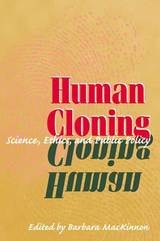
cover of Human Cloning: Science, Ethics, and Public Policy

Human Cloning

Science, Ethics, and Public Policy

Edited by Barbara MacKinnon

University of Illinois Press, 2000

Is human cloning a science fiction nightmare come true? Or is it a practical avenue toward beneficial new medical treatments and techniques?
 
In this concise volume, experts on all sides of the debate make arguments for why we should either pursue, regulate, or ban the cloning of human beings. From this collection, readers will gain a clearer picture of the history of cloning in agriculture and animal science, the various biological procedures that are encompassed by the term "cloning," the philosophical arguments in support of and opposed to cloning humans, and the considerations that should inform discussions about public policy matters related both the cloning research and to human cloning itself.
 
Balancing scientific detail with philosophical argument, Human Cloning succinctly outlines what cloning is and is not (e.g., cloning does not produce identical individuals), what has led to recent scientific developments, what is now possible, and what ethical dilemmas cloning presents. Opponents claim that cloning subverts human dignity, makes a mockery of spousal love, and poses serious safety hazards. Proponents cite a range of potential benefits, such as producing transplant tissue that is less likely to be rejected, extending current techniques of artificial insemination, and controlling genetic abnormalities to prevent birth defects.
 
Cloning itself is not new, but as the science of cloning continues to advance--and as human cloning thus inches closer to reality--we are compelled to consider its implications for society. Human Cloning is a lucid, substantive guide to this contentious and potentially revolutionary issue.
 
 
[more]
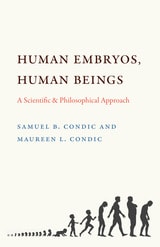
cover of Human Embryos, Human Beings: A Scientific and Philosophical Approach

Human Embryos, Human Beings

A Scientific and Philosophical Approach

Samuel B. Condic

Catholic University of America Press, 2018

The overall purpose of Human Embryos, Human Beings is to establish the ontological status of the human embryo, in light of the most recent biological evidence. The thesis of the book is that sound philosophical reasoning and the available scientific evidence support the claim that a human being is present from the moment of fertilization onward (the “immediate hominization” view) and does not support the contrary claim that a human being appears only after a time following fertilization (the “delayed hominization” view). Included in the scope of this argument is an examination of several long-standing philosophical arguments claiming that immediate hominization is false; a detailed examination of several arguments claiming that though immediate hominization is possible, both evidence and argument best support the delayed hominization view or some alternate view; and an examination of several cases where natural defect or scientific manipulation make determining the ontological status of the embryo more difficult. The book also includes a presentation of hylomorphism, as this is the philosophical viewpoint employed by the authors to analyze the question. Human Embryos, Human Beings is based on the premise that philosophical and scientific approaches are not in conflict, with the most comprehensive understanding of human embryos being achieved by application of a rigorous hylomorphic philosophy to the best available scientific data. Often, one finds either a thorough and well-reasoned philosophical account or a detailed scientific account. This book makes a welcome addition to the field by integrating both of these needed elements into a single text.
[more]
cover of Human Rights In Camera

Human Rights In Camera

Sharon Sliwinski

University of Chicago Press, 2011

From the fundamental rights proclaimed in the American and French declarations of independence to the 1948 Universal Declaration of Human Rights and Hannah Arendt’s furious critiques, the definition of what it means to be human has been hotly debated. But the history of human rights—and their abuses—is also a richly illustrated one. Following this picture trail, Human Rights In Camera takes an innovative approach by examining the visual images that have accompanied human rights struggles and the passionate responses people have had to them.

Sharon Sliwinski considers a series of historical events, including the 1755 Lisbon earthquake and the Holocaust, to illustrate that universal human rights have come to be imagined through aesthetic experience. The circulation of images of distant events, she argues, forms a virtual community between spectators and generates a sense of shared humanity. Joining a growing body of scholarship about the cultural forces at work in the construction of human rights, Human Rights In Camera is a novel take on this potent political ideal.
[more]
cover of Human Rights and the Care of the Self

Human Rights and the Care of the Self

Alexandre Lefebvre

Duke University Press, 2018
When we think of human rights we assume that they are meant to protect people from serious social, legal, and political abuses and to advance global justice. In Human Rights and the Care of the Self Alexandre Lefebvre turns this assumption on its head, showing how the value of human rights also lies in enabling ethical practices of self-transformation. Drawing on Foucault's notion of "care of the self," Lefebvre turns to some of the most celebrated authors and activists in the history of human rights–such as Mary Wollstonecraft, Henri Bergson, Eleanor Roosevelt, and Charles Malik–to discover a vision of human rights as a tool for individuals to work on, improve, and transform themselves for their own sake. This new perspective allows us to appreciate a crucial dimension of human rights, one that can help us to care for ourselves in light of pressing social and psychological problems, such as loneliness, fear, hatred, patriarchy, meaninglessness, boredom, and indignity.
[more]
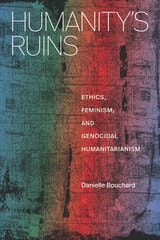
cover of Humanity's Ruins: Ethics, Feminism, and Genocidal Humanitarianism

Humanity's Ruins

Ethics, Feminism, and Genocidal Humanitarianism

Danielle Bouchard

Duke University Press, 2025

In Humanity’s Ruins, Danielle Bouchard examines how genocidal aspirations animate contemporary Western humanitarian projects and discourses. Drawing on anticolonial and antiracist feminist critique, Bouchard argues that humanitarianism has functioned in the Cold War and post-Cold War eras to perpetuate longer-lived, fundamentally racist conceptualizations of humanity’s defining characteristics. She examines the aesthetics of humanitarian texts, which are filled with figures of the wounded, dead, and disappeared—the atomic bomb victim whose only remainder is a shadow imprinted on concrete, the grievously injured Muslim woman, the vanished members of Amazonian “uncontacted” tribes, the dying African—to elucidate how the appearance of these figures reaffirms a genocidal view of humanity that aligns with the continuation of Western imperial warfare. Humanitarian discourses conceive of humanity as a community which, by definition, is under existential threat from some humans who are explicitly or implicitly understood as needing to be eliminated. Bouchard invokes “humanity’s ruins” to expose the genocidal fantasy of a human world in which such threat has been eliminated in the interest of supposedly ensuring humanity’s survival.
[more]
cover of Humans and Other Animals: Cross-Cultural Perspectives on Human-Animal Interactions

Humans and Other Animals

Cross-Cultural Perspectives on Human-Animal Interactions

Samantha Hurn

Pluto Press, 2012

Humans and Other Animals is about the myriad and evolving ways in which humans and animals interact, the divergent cultural constructions of humanity and animality found around the world, and individual experiences of other animals.

Samantha Hurn explores the work of anthropologists and scholars from related disciplines concerned with the growing field of anthrozoology. Case studies from a wide range of cultural contexts are discussed, and readers are invited to engage with a diverse range of human-animal interactions including blood sports (such as hunting, fishing and bull fighting), pet keeping and ‘petishism’, eco-tourism and wildlife conservation, working animals and animals as food. The idea of animal exploitation raised by the animal rights movements is considered, as well as the anthropological implications of changing attitudes towards animal personhood, and the rise of a posthumanist philosophy in the social sciences more generally.

Key debates surrounding these issues are raised and assessed and, in the process, readers are encouraged to consider their own attitudes towards other animals and, by extension, what it means to be human.

[more]
cover of Hunting and Fishing for Sport: Commerce, Controversy, Popular Culture

Hunting and Fishing for Sport

Commerce, Controversy, Popular Culture

Richard Hummel

University of Wisconsin Press, 1994

Why do humans continue to hunt and fish for sport, especially in the face of growing public opposition? Why are the social sciences so reluctant to investigate these popular human sporting recreations? How do the new technological advances in hunting and fishing equipment affect the sporting standards of "fair play?" How are hunting and fishing portrayed in the popular culture media of film and boys' adventure literature? These questions and more are answered by the author who takes the reader afield with him as he travels to various parts of three continents in order to experience first-hand what commercial hunting opportunities offer their customers.
[more]
cover of Hunting, Fishing, and Environmental Virtue: Reconnecting Sportsmanship and Conservation

Hunting, Fishing, and Environmental Virtue

Reconnecting Sportsmanship and Conservation

Charles J. List

Oregon State University Press, 2013

Do hunting and fishing lead to the development of environmental virtues? This question is at the heart of philosopher Charles List’s engaging study, which provides a defense of field sports when they are practiced and understood in an ethical manner. 

In his argument, List examines the connection between certain activities and the development of virtue in the classical sources, such as Aristotle and Plato. He then explores the work of Aldo Leopold, identifying three key environmental virtues that field sports instill in practitioners in the kind of conservation advocated by Leopold and others.  

After reviewing several powerful philosophical objections to his viewpoint, List considers the future of environmental sportsmanship. He suggests that, in order to incorporate a revived connection between field sports and environmental virtue, the practice of hunting and angling must undergo changes, including shifts that would impact hunter education, civic engagement, the role of firearms, our understanding of “game” animals, and alliances with other sorts of outdoor recreation. 

Hunting, Fishing, and Environmental Virtue
will appeal to academics interested in the ethical issues surrounding hunting and fishing, professionals in wildlife management, and hunters and anglers interested in conservation.
[more]