Results by title
226 books match the query 'New Jersey' and 5 start with h
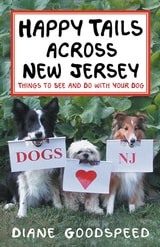
Happy Tails Across New Jersey
Things to See and Do with Your Dog in the Garden StateGoodspeed, Diane
Rutgers University Press, 2006
In this first-of-its-kind guidebook, Diane Goodspeed brings the encouraging news to pet lovers that their furry friends are welcome to many of New Jersey's beaches, trails, parks, swim holes, and even stores. Whether you are hiking in the Kittatinny Mountains, going for a run on the beach, or playing fetch along the Delaware River, you and your dog can explore New Jersey together. From transportation and equipment to basic obedience and fitness conditioning, this guide contains all the information you need to get your dog out the door for exciting adventures in every season.
Organized by county for easy reference, you will find information about county, state, and national parks that will welcome your canine companion. The book also functions as a convenient handbook for shops, covering everything from high-end pet stores and large chains to independently run dog bakeries. Goodspeed identifies training facilities, the most reputable and well-established dog trainers, as well as shelters, rescue centers, and every dog park across the state. Whether you are a long-time dog owner, or new to the canine scene, you will be surprised by how many dog-friendly events, including walk-a-thons, fairs, canine sporting competitions, town festivals, dog parades, and fundraising events for rescue groups occur annually throughout New Jersey.
Finally, with your leash in one hand and this indispensable and all-inclusive guide in the other, you can enjoy the exciting recreational opportunities available in the Garden State with your favorite four-legged friend.
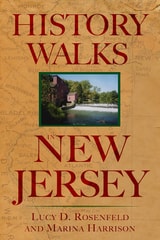
History Walks in New Jersey
Rosenfeld, Lucy D
Rutgers University Press, 2006
Whether you are an amateur historian, a weekend walker, or a teacher planning a class trip, this book will be an essential resource for ideas and information. Walks include the Kingston Loop, a long canal where George Washington, pen in hand, composed his post-Revolutionary War speech, "Farewell Orders to the Armies of the United States." Also included is a mountain walk that traces Native American Leni-Lenape history and one that wends its way into an old Moravian village in the town of Hope. A pirate cove, stops on the Underground Railroad, a Civil War cemetery, and the sites of duels, mines, canals, architectural innovations, estates and resorts, centuries-old agricultural and fishing settlements, and the Hindenburg crash are all here.
Each walk includes directions, information on tours, a brief history, and suggestions for additional places to visit in the area. Whether a New Jersey native or a visitor to the Garden State, readers will enjoy going beyond the highways and suburban towns to learn about history while discovering the state's natural beauty.
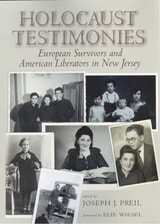
Holocaust Testimonies
European Survivors and American Liberators in New JerseyPreil, Joseph J
Rutgers University Press, 2001
A project of the Holocaust Resource Center of Kean University, New Jersey, this book is a reference tool for teaching the Holocaust, for Holocaust survivors and their families, and for the general reader. Drawing on the center’s central missions is to produce and preserve a series of oral-history videotapes based on the personal experiences of Holocaust survivors who reside in New Jersey. Joseph J. Preil brings together the most compelling testimonies of 153 Holocaust survivors as well as twenty concentration-camp liberators. Through these riveting accounts, the book traces the mass murder of the Jews across Europe in a geographical as well as chronological order. The testimonies in each chapter are grouped by the witnesses’ country or region of origin, preceded by a brief introduction of the history of events in a particular area. In the last part of the book, American soldiers recount their impressions of being present at the liberation of the camps.
“If you can imagine that the Jew to the German was like a cockroach. In the United States, if you step on a cockroach . . . it doesn’t mean anything to you. The same thing, exactly the same thing, the Jew was to the German—a cockroach. . . . One particular Shabbos (Sabbath), they shot twelve or thirteen people in my area. In other words, the German had the right, if he saw me, any Jew that he saw in the street, he could go over to you calmly, take out his revolver, and put it to your head, and shoot you down like a . . . roach. . . . It was a free-for-all.”—Testimony of Sol Einhorn, cited in Holocaust Testimonies: European Survivors and American Liberators in New Jersey
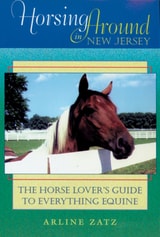
Horsing Around in New Jersey
The Horse Lover's Guide to Everything EquineZatz, Arline
Rutgers University Press, 2004
Arline Zatz has writtenthe first guidebook to everything equine in the Garden State: Horsing Around in New Jersey. This accessible, easy-to-use volume is essential reading for the novice who yearns to go horseback riding but doesn't know how or where to begin; for the experienced equestrian seeking new trails and campsites; for anyone wishing to attend an equestrian event; and for those seeking a job in the equestrian field, which already employs nearly 6,000 New Jerseyans. The industry generates more than 650 million dollars in annual revenue. Millions of people attend equine events in New Jersey each year. The U.S. Equestrian team makes its home there, and New Jersey's state animal is the horse.
Zatz tells readers--including those with disabilities--where they can take lessons, rent a horse, and prepare for riding. She includes safety and first aid tips. Horse history and breeds common to New Jersey are discussed, as are health concerns, including diseases, preventative medicine, and emergency care. The book showcases New Jersey's eighty-five equestrian trails and covers information on where to obtain riding permits and their accompanying rules and regulations. There is advice for both new horse owners and renters, including recommendations on tack and clothing, stable management, and horse adoption.
The book acquaints readers with year-round equine entertainment opportunities, and offers dozens of suggestions on where to watch or participate in sports on horseback. Zatz lists equine education programs for all ages, and outlines numerous employment opportunities within the equine industry. The book concludes with a glossary of common horse industry terminology, a listing of national equine associations and breed registries, equipment sources, and equine publications for further reading.
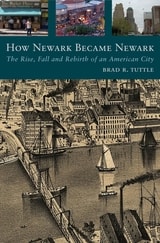
How Newark Became Newark
The Rise, Fall, and Rebirth of an American CityBrad R. Tuttle
Rutgers University Press, 2009
How Newark Became Newark is a fresh, unflinching popular history that spans the city's epic transformation from a tiny Puritan village into a manufacturing powerhouse, on to its desperate struggles in the twentieth century and beyond. After World War II, unrest mounted as the minority community was increasingly marginalized, leading to the wrenching civic disturbances of the 1960s. Though much of the city was crippled for years, How Newark Became Newark is also a story of survival and hope. Today, a real estate revival and growing population are signs that Newark is once again in ascendance.