Results by title
11 books match the query 'Divination'
A Commentary on Cicero, De Divinatione I
Celia E. Schultz
University of Michigan Press, 2014
A Commentary on Cicero, De Divinatione II
Andrew R. Dyck
University of Michigan Press, 2020
Celia Schultz’s earlier volume in this series presented the text and commentary for De Divinatione I. With Andrew Dyck’s companion volume on the second book of De Divinatione, students and teachers are well served with crucial texts from one of Rome’s most famous philosophers, as he considers important Roman practices and beliefs.
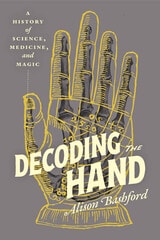
Decoding the Hand
A History of Science, Medicine, and MagicAlison Bashford
University of Chicago Press, 2025
“Delightful.”—Times Literary Supplement • “Intriguing.”—The Sydney Morning Herald • “Fascinating, well-illustrated.”—Nature • “Altogether surprising and hard to categorise.”—London Review of Books • “There are many stories to be told here, and Bashford tells them well.”—Literary Review
The astonishing history of palmistry and biometrics—from occult physicians to the very foundations of modern science and medicine.
Why did Isaac Newton read books on chiromancy, the occult science of hand reading that revealed the secrets of the soul? Why did Charles Darwin claim that the hand gave humans dominion over all other species? Why did psychoanalyst Charlotte Wolff climb into the primate cages of the London Zoo, taking hundreds of delicate palm prints? Why did Francis Galton, the father of fingerprinting, take palm prints too? And why did world-leading geneticists study the geometry of palm lines in their search for the secrets of chromosomal syndromes?
Decoding the Hand is an astounding history of magic, medicine, and science, of an enduring search for how our bodily surfaces might reveal an inner self—a soul, a character, an identity. From sixteenth-century occult physicians influenced by the Kabbalah to twentieth-century geneticists, and from criminologists to eugenicists, award-winning historian Alison Bashford takes us on a remarkable journey into the strange world of hand readers, revealing how signs on the hand—its shape, lines, marks, and patterns—have been elaborately decoded over the centuries. Sometimes learned, sometimes outrageously deceptive, sometimes earnest, and, more often than we ever expected, medically and scientifically trained, these palm readers of the past prove to be essential links in the human quest to peer into bodies, souls, minds, and selves. Not only for fortune-telling palmists were the future and the past, health, and character laid bare in the hand, but for other experts in bodies and minds as well: anatomists, psychiatrists, embryologists, primatologists, evolutionary biologists, geneticists, and more.
Drawing telling parallels between the divination promised by palmistry and the appeal to self-knowledge offered by modern genetic testing, Decoding the Hand also makes clear that palm-reading is far from a relic or simple charlatanism. Bashford’s sagacious history of human hands touching and connecting opens wide the essential human pursuit of what lies within and beyond.
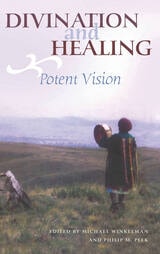
Divination and Healing
Potent VisionEdited by Michael Winkelman and Philip M. Peek
University of Arizona Press, 2004
Divination, Politics, and Ancient Near Eastern Empires
Alan Lenzi
SBL Press, 2014
Advance your understanding of divination’s role in supporting or undermining imperial aspirations in the ancient Near East
This collection examines the ways that divinatory texts in the Hebrew Bible and the ancient Near East undermined and upheld the empires in which the texts were composed, edited, and read. Nine essays and an introduction engage biblical scholarship on the Prophets, Assyriology, the Dead Sea Scrolls, and the critical study of Ancient Empires.
Features:
- Interdisciplinary approaches include propaganda studies
- Essays examine how biblical and other ancient Near Eastern texts were shaped by political and theological empires
- Index of ancient sources
Gendered Fortunes
Divination, Precarity, and Affect in Postsecular TurkeyZeynep K. Korkman
Duke University Press, 2023
Healing Dramas
Divination and Magic in Modern Puerto RicoBy Raquel Romberg
University of Texas Press, 2009
In this intimate ethnography, Raquel Romberg seeks to illuminate the performative significance of healing rituals and magic works, their embodied nature, and their effectiveness in transforming the states of participants by focusing on the visible, albeit mostly obscure, ways in which healing and magic rituals proceed. The questions posed by Romberg emerge directly from the particular pragmatics of Puerto Rican brujería (witch-healing), shaped by the eclecticism of its rituals, the heterogeneous character of its participants, and the heterodoxy of its moral economy.
What, if any, is the role of belief in magic and healing rituals? How do past discourses on possession enter into the performative experience of ritual in the here and now? Where does belief stop, and where do memories of the flesh begin? While these are questions that philosophers and anthropologists of religion ponder, they acquire a different meaning when asked from an ethnographic perspective.
Written in an evocative, empathetic style, with theoretical ruminations about performance, the senses, and imagination woven into stories that highlight the drama and humanity of consultations, this book is an important contribution to the cross-cultural understanding of our capacity to experience the transcendental in corporeal ways.
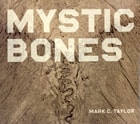
Mystic Bones
Mark C. Taylor
University of Chicago Press, 2007
The desert has long been a theme in Mark C. Taylor’s work, from his inquiries into the religious significance of Las Vegas to his writings on earthworks artist Michael Heizer. At once haunted by absence and loss, the desert, for Taylor, is a place of exile and wandering, of temptation and tribulation. Bones, in turn, speak to his abiding interest in remnants, ruins, ritual, and immanence. Taylor combines his fascination in the detritus of the desert and its philosophical significance with his work in photography in Mystic Bones.
A collection of remarkably elegant close-up images of weathered bones—remains of cattle, elk, and deer skeletons gathered from the desert of the American West—Mystic Bones pairs each photograph with a philosophical aphorism. These images are buttressed by a major essay, “Rubbings of Reality,” in which Taylor explores the use of bones in the religious rituals of native inhabitants of the Western desert and, more broadly, the appearance of bones in myth and religious reality.
Meditating on the way in which bones paradoxically embody both the personal and the impersonal—at one time they are our very substance, but eventually they become our last remnants, anonymous, memorializing oblivion—Taylor here suggests ways in which natural processes can be thought of as art, and bones as art objects. Bones, Taylor writes, “draw us elsewhere.” To follow their traces beyond the edge of the human is to wander into ageless times and open spaces where everything familiar becomes strange.
By revealing beauty hidden in the most unexpected places, these haunting images refigure death in a way that allows life to be seen anew. A bold new work from a respected philosopher of religion, Mystic Bones is Taylor’s his most personal statement of after-God theology.
The Last Word
Women, Death, and Divination in Inner ManiC. Nadia Seremetakis
University of Chicago Press, 1991
Truth in Motion
The Recursive Anthropology of Cuban DivinationMartin Holbraad
University of Chicago Press, 2012
Water Witching U.S.A.
Evon Z. Vogt and Ray Hyman
University of Chicago Press, 2000