A Commentary on Cicero, De Divinatione II
University of Michigan Press, 2020
Cloth: 978-0-472-07457-0 | Paper: 978-0-472-05457-2
Library of Congress Classification PA6296.D15 2020
Dewey Decimal Classification 202.3
Cloth: 978-0-472-07457-0 | Paper: 978-0-472-05457-2
Library of Congress Classification PA6296.D15 2020
Dewey Decimal Classification 202.3
ABOUT THIS BOOK | AUTHOR BIOGRAPHY | REVIEWS | TOC | REQUEST ACCESSIBLE FILE
ABOUT THIS BOOK
Andrew R. Dyck ranks among the top Latinists in Ciceronian studies. In this new volume, he offers the first commentary on Cicero’s De Divinatione II in nearly a century. This commentary aims to equip students and scholars of Latin with the kinds of historical and philosophical background and linguistic and stylistic information needed to understand and appreciate Cicero’s text on Roman religion and divination. Dyck situates Cicero’s text in the context of Roman religion in antiquity, and he traces the subsequent reception of the text. The introduction reviews recent interpretations of De Divinatione. Dyck rejects the view that has recently been widespread in Anglophone studies that De Divinatione stages a debate between roughly equal opponents and without the emergence of a clear authorial point of view. Instead he argues that a careful reading shows that Cicero as author is invested in the argument, with the particular aim of countering superstition.
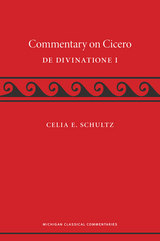
Celia Schultz’s earlier volume in this series presented the text and commentary for De Divinatione I. With Andrew Dyck’s companion volume on the second book of De Divinatione, students and teachers are well served with crucial texts from one of Rome’s most famous philosophers, as he considers important Roman practices and beliefs.
Celia Schultz’s earlier volume in this series presented the text and commentary for De Divinatione I. With Andrew Dyck’s companion volume on the second book of De Divinatione, students and teachers are well served with crucial texts from one of Rome’s most famous philosophers, as he considers important Roman practices and beliefs.
See other books on: Cicero | Cicero, Marcus Tullius | Commentary | Divination | Dyck, Andrew R.
See other titles from University of Michigan Press