
 A SCHOLARLY BOOK REPOSITORY
This is the first substantial commentary on Clouds since Dover’s 1968 edition. Intended for intermediate Greek students at undergraduate and graduate levels, the commentary pays careful attention to the basic characteristics of ancient Greek syntax, as well as to how Greek words are formed and can be analyzed. It offers robust staging notes, information about daily life in late 5th-century Athens, and constant reference to the rhetorical and dramatic strategies of the text. Full support is offered for those interested in the metrical structure of the songs, but in a way that allows instructors to leave such issues aside, should they choose to do so. The first and second appendices offer a basic means of entry into the rich but complex world of the comic fragments. An English-language bibliography is provided. The edition will interest professional classicists of all sorts seeking an accessible introduction to one of Aristophanes’ greatest plays, to philosophers concerned with Socrates and the sophistic movement, and to theater professionals who wish to stage the play.


The Caitanya Caritamrta is an early-seventeenth-century Bengali and Sanskrit biography of the great saint and Vaisnava leader Caitanya (1486–1533 CE) by the poet and scholar Krsnadasa, who has been given by Bengali tradition the title Kaviraja—“Prince of Poets.”
The text is of interest to theologians—Caitanya was, in Krsnadasa’s view, an androgyne of Krsna and Radha; philosophers—his theory was that aesthetic and religious experience are much the same in kind; historians of religion—the movement that Caitanya inspired has encompassed the great part of the eastern Indian subcontinent, and Krsnadasa has some interesting observations on his own times; and appreciators of literature—in Krsnadasa’s very long poem are embedded some lyric gems.
Parker begins by tracing the criticism of Dante commentaries from the nineteenth century to the present and then examines the tradition of commentary from the Middle Ages to the Renaissance. She shows how the civic, institutional, and social commitments of commentators shaped their response to the Comedy, and how commentators tried to use the poem as an authoritative source for various kinds of social legitimation. Parker discusses how different commentators dealt with a deeply political section of the poem: the damnation of Brutus and Cassius.
The scope and importance of Commentary and Ideology will command the attention of a broad group of scholars, including Italian specialists on Dante, late medievalists, students and professionals in early modern European literature, bibliographers, critical theorists, historians of literary criticism and theory, and cultural and intellectual historians.
In addition to the complete Greek text and commentary, this volume includes a substantial introduction to the playwright’s career and to the historical and political background of the play. It includes advice for students on grammar and syntax, meter, festivals and staging, as well as topical and literary references and allusions that will help guide students to a mature appreciation of the comedy’s humor, seriousness, and artistic quality. Priced and sized for classroom use, this is the first full commentary on Knights since 1901 and will be widely welcomed.
Celia Schultz’s earlier volume in this series presented the text and commentary for De Divinatione I. With Andrew Dyck’s companion volume on the second book of De Divinatione, students and teachers are well served with crucial texts from one of Rome’s most famous philosophers, as he considers important Roman practices and beliefs.
Surprisingly, de Legibus has been one of Cicero's most neglected works. Andrew R. Dyck's commentary is the first to appear on the complete work in well over one hundred years. Dyck provides a detailed interpretation and sets the essay into the context of the politics and philosophical thought of its time. While previous commentaries focused primarily on grammar and textual criticism, this one also seeks to relate Cicero's text to the political, philosophical, and religious trends of his day. The author identifies the influences on Cicero's thinking and analyzes the relation of this theoretical treatise to his other works. This commentary is based on a new text, worked out in consultations between the author and Jonathan Powell of Royal Holloway, London.
Andrew Dyck is Professor of Classics, University of California at Los Angeles.
Composed in haste shortly before Cicero's death, de Officiis has exercised enormous influence over the centuries. It is all the more surprising that Andrew R. Dyck's volume is the first detailed English commentary on the work written in this century. It deals with the problems of the Latin text (taking account of Michael Winterbottom's new edition), it delineates the work's structure and sometimes elusive train of thought, clarifies the underlying Greek and Latin concepts, and provides starting points for approaching the philosophical and historical problems that de Officiis raises.
A work of major importance for classicists, philosophers, and ancient historians, this Commentary will be an invaluable companion to all readers of Cicero's last philosophical work.
Andrew R. Dyck is Professor of Classics, University of California, Los Angeles.
Publication of this volume is supported by a grant from the National Endowment for the Humanities.

This volume is a companion to The Old English and Anglo-Latin Riddle Tradition. Its extensive notes and commentary on hundreds of Latin, Old English, and Old Norse–Icelandic riddles illuminate and clarify the multifaceted and interconnected nature of a broad, international tradition. Within this commentary, readers will encounter a deep reservoir of knowledge about riddles produced in both Latin and Old English during the Anglo-Saxon period, and the literatures with which they were in dialogue.
Riddles range from those by prominent authors like Aldhelm, Bede, Alcuin, and Boniface to those presented anonymously in collections such as the Exeter Book. All are fully discussed, with particular attention paid to manuscript traditions, subject matter, solutions, style, sources, parallels, and recommendations for further reading. Consideration is given to running themes throughout the collection, comparisons to other riddles and to other literature more broadly, and important linguistic observations and manuscript readings. The commentary also lists the manuscripts and earlier editions for each riddle, extensive catalogues of proposed solutions, and additional bibliographic references. Following the general discussion of each riddle there is detailed line-by-line annotation.
This authoritative commentary is the most comprehensive examination to date of the bilingual riddle tradition of Anglo-Saxon England and its links to the wider world.
This Critique is the only writing in which Kant weaves his thoughts on practical reason into a unified argument. Lewis White Beck offers a classic examination of this argument and expertly places it in the context of Kant's philosophy and of the moral philosophy of the eighteenth century.
Nigel of Canterbury, also known as Longchamp and Whiteacre, wrote toward the end of the so-called Twelfth-Century Renaissance. He was a Benedictine monk of Christ Church when Thomas Becket was martyred, and a star of Anglo-Latin literature while the Angevin kings held sway over a vast empire that encompassed not only the British Isles but also western France.
The Dumbarton Oaks Medieval Library volume features, alongside the Latin, the first-ever English translation of Nigel’s second-longest poem, Miracles of the Virgin. The Miracles is the oldest extant collection of versified miracles of Mary in Latin and indeed in any language. The seventeen narratives, telling a gamut of tales from diabolic pacts to pregnant abbesses, gave scope for Nigel to display skills as a storyteller and stylist, while recounting the miraculous mercy of the Virgin. This supplement offers an extensive commentary to facilitate appreciation of the Miracles as poetry by a medieval writer deeply imbued in the long tradition of Latin literature.
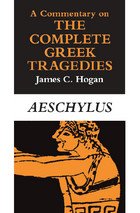
James C. Hogan provides a general introduction to Aeschylean theater and drama, followed by a line-by-line commentary on each of the seven plays. He places Aeschylus in the historical, cultural, and religious context of fifth-century Athens, showing how the action and metaphor of Aeschylean theater can be illuminated by information on Athenian law athletic contests, relations with neighboring states, beliefs about the underworld, and countless other details of Hellenic life. Hogan clarifies terms that might puzzle modern readers, such as place names and mythological references, and gives special attention to textual and linguistic issues: controversial questions of interpretation; difficult or significant Greek words; use of style, rhetoric, and commonplaces in Greek poetry; and Aeschylus's place in the poetic tradition of Homer, Hesiod, and the elegiac poets. Practical information on staging and production is also included, as are maps and illustrations, a bibliography, indexes, and extensive cross-references between the seven plays. Forthcoming volumes will cover the works of Sophocles and Euripides.
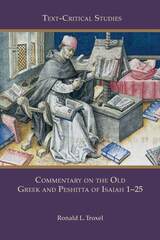
The first thorough commentary on the Old Greek and Peshitta of Isaiah
Ronald L. Troxel’s new textual commentary on Isaiah focuses on the book’s Greek and Syriac translations and seeks to recover, as much as possible, the Hebrew texts on which these early translations relied. Troxel treats the Greek and Syriac together in order to present a detailed analysis of their relationship, devoting particular attention to whether the Syriac was directly or indirectly influenced by the Greek. This comparison sheds light on both the shared and distinct approaches that the translators took in rendering lexemes, phrases, verses, and even passages. In addition Troxel presents observations about the literary structures the translators created that differ from those implicit in their source texts (as we understand them), to produce coherent discourse in the target language.
Features:
- Textual commentary on the life of the text of Isaiah 1–25
- Use of the Dead Sea Scrolls to shed light on particular issues
- Detailed comparison of the Masoretic Text, the Old Greek, and the Peshitta
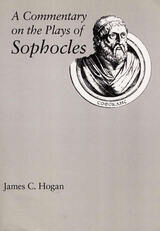
James C. Hogan introduces each play by highlighting specific and interpretive problems relevant to that play before turning to a line-by-line analysis. The line analysis is comprehensive, ranging from the meanings of words and phrases that pertain to a variety of Greek ideas and institutions to metaphor and imagery specific to each play as well as plots and borrowings from earlier poetry, styles, and characterizations.
Along with his examination of the seven extant plays of Sophocles in English translations, Hogan provides a general introduction to the theatre in Sophocles’ time, discussing staging, the conventions of the Greek theatre, the text of the plays, and mythology and religion.
Alexander Pushkin’s lyric poetry—much of it known to Russians by heart—is the cornerstone of the Russian literary tradition, yet until now there has been no detailed commentary of it in any language.
Michael Wachtel’s book, designed for those who can read Russian comfortably but not natively, provides the historical, biographical, and cultural context needed to appreciate the work of Russia’s greatest poet. Each entry begins with a concise summary highlighting the key information about the poem’s origin, subtexts, and poetic form (meter, stanzaic structure, and rhyme scheme). In line-by-line fashion, Wachtel then elucidates aspects most likely to challenge non-native readers: archaic language, colloquialisms, and unusual diction or syntax. Where relevant, he addresses political, religious, and folkloric issues.
Pushkin’s verse has attracted generations of brilliant interpreters. The purpose of this commentary is not to offer a new interpretation, but to give sufficient linguistic and cultural contextualization to make informed interpretation possible.
This book presents a complete reprint of Crutchfield and Zellner's pioneering study, together with a new introduction by the authors and four new papers by other scholars. These new studies cover the history of the Pacific halibut industry as well as the general and specific contributions of the original work—such as price-oriented conservation policy—to the fields of resource economics and management. The resulting volume integrates theory and practice in a clear, well-contextualized case study that will be important not just for environmental and resource economists, but also for leaders of industries dependent on any natural resource.
In his commentary, Fabian reconstructs his meeting with the healer Kahenga Mukonkwa Michel, in which the two discussed the ritual that Kahenga performed to protect Fabian’s home from burglary. Fabian reflects on the expectations and terminology that shape his description of Kahenga’s ritual and meditates on how ethnographic texts are made, considering the settings, the participants, the technologies, and the linguistic medium that influence the transcription and translation of a recording and thus fashion ethnographic knowledge. Turning more directly to Kahenga—as a practitioner, a person, and an ethnographic subject—and to the questions posed to him, Fabian reconsiders questions of ethnic identity, politics, and religion. While Fabian hopes that emerging anthropologists will share their fieldwork through virtual archives, he does not suggest that traditional ethnography will disappear. It will become part of a broader project facilitated by new media.
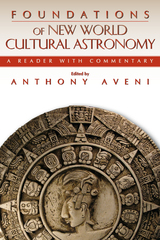
Cultural astronomy, first called archaeoastronomy, has evolved at ferocious speed since its genesis in the 1960s, with seminal essays and powerful rebuttals published in far-flung, specialized journals. Until now, only the most closely involved scholars could follow the intellectual fireworks. In Foundations of New World Cultural Astronomy, Anthony Aveni, one of cultural astronomy's founders and top scholars, offers a selection of the essays that built the field, from foundational works to contemporary scholarship.
Including four decades of research throughout the Americas by linguists, archaeologists, historians, ethnologists, astronomers, and engineers, this reader highlights the evolution of the field through thematic organization and point-counterpoint articles. Aveni - an award-winning author and former National Professor of the Year - serves up incisive commentary, background for the uninitiated, and suggested reading, questions, and essay topics. Students, readers, and scholars will relish this collection and its tour of a new field in which discoveries about ancient ways of looking at the skies cast light on our contemporary views.
Wu’s translation includes footnotes that incorporate both past and present scholarly commentary, and is accompanied by a prefatory introduction that situates Guiguzi in the sociopolitical and cultural realities of ancient China, and a glossary of rhetorical terms used in the treatise. Swearingen presents a comparative study suggesting the similarities and differences between emerging Greek and Chinese rhetorics during the same period, including the cultural contexts of warring states and emergent empires that surrounded each.
“Guiguzi,” China’s First Treatise on Rhetoric combines a new translation of a historically significant text with scholarly analysis and critical apparatus that will contribute to the emerging global understanding of Chinese rhetoric and communication.
Kainz provides an accessible entry into the complexities of Hegelian thought by asking a series of questions about such matters as the literary form of the Phenomenology, its "plot," its relation to the "system," its subject matter, the problem of objectivity, dialectical necessity, the concept of "experience," and the Hegelian concept of consciousness. Building of the work of previous commentators, and presenting the work of these commentators in a clear and unbiased manner, Kainz offers an analysis that will be helpful both to experienced Hegelian scholars and to those readers preparing to approach the large and bewildering territory of the Phenomenology for the first time.
Widely recognized as the single most important source for the history of the church in early medieval Ireland, the Hibernensis is also our best index for knowing what books were available in Ireland at the time of its compilation: it consists of excerpted material from the Bible, Church Fathers and doctors, hagiography, church histories, chronicles, wisdom texts, and insular normative material unattested elsewhere. This in addition to the staple sources of canonical collections, comprising the acta of church councils and papal letters. Altogether there are forty-two cited authors and 135 cited texts. But unlike previous canonical collections, the contents of the Hibernensis are not simply derivative: they have been modified and systematically organised, offering an important insight into the manner in which contemporary clerical scholars attempted to define, interpret, and codify law for the use of a growing Christian society.
A defining work of moral philosophy, Kant’s Groundwork for the Metaphysics of Morals has been influential to an extent far beyond what its modest length (roughly 75 pages) might suggest. It is also a famously difficult work, concerned with propounding universal principles rather than answering practical questions. As even professional philosophers will admit, first-time readers are not alone in finding some of its arguments perplexing.
Offering an introduction that is accessible to students and relevant to specialized scholars, Dieter Schönecker and Allen Wood make luminously clear the ways the Groundwork for the Metaphysics of Morals forms the basis of our modern moral outlook: that all human beings have equal dignity as ends in themselves; that every rational being is a self-governing agent whose morality freely derives from his or her own will; and that all rational beings constitute an ideal community, bound only by the moral laws they have agreed upon. Schönecker and Wood explain key Kantian concepts of duty, the good will, and moral worth, as well as the propositions Kant uses to derive his conception of the moral law. How the law relates to freedom, and the significance of the free will within Kant’s overall philosophy are rigorously interrogated. Where differing interpretations of Kant’s claims are possible, the authors provide alternative options, giving arguments for each. This critical introduction will help readers of the Groundwork gain an informed understanding of Kant’s challenging but central philosophical work.
Sur’s Ocean: Poems from the Early Tradition was published in 2015 as the fifth volume of the Murty Classical Library of India. That book contains Kenneth Bryant’s critical reconstructions of 433 poems of Surdas that circulated in the sixteenth century, when this great Hindi poet lived, and it includes facing-page, English verse translations by John Stratton Hawley. The name traditionally assigned to these poems is Sursagar, meaning Sur’s Ocean.
Into Sūr’s Ocean: Poetry, Context, and Commentary picks up many threads from that volume, and provides a substantial introduction to the poet, his medium, and his oeuvre; an overview of editions, including Bryant’s; an analysis of the challenges Hawley faced as translator; and poem-by-poem commentary. Each commentary is a brief, independent essay. This book offers a deep—and rewarding—dive into Sur’s Ocean.
In his introduction, Terras outlines the genesis, main ideas, and structural peculiarities of the novel as well as Dostoevsky’s political, philosophical, and aesthetic stance. The detailed commentary takes the reader through the novel, clarifying aspects of Russian life, the novel’s sociopolitical background, and a number of polemic issues. Terras identifies and explains hundreds of literary and biblical quotations and allusions. He discusses symbols, recurrent images, and structural stylistic patterns, including those lost in English translation.

"An almost archetypal example of unpretentious and honest scholarship."—Alejandro Enrique Planchart, Journal of the American Musicological Society
It is invaluable for transmitting the excellent readings of the repertory of the French Royal Chapel and a number of political motets of great musical and historical interest that reflect events at the French court and are unique to this collection.
Edward E. Lowinsky presents this anthology as part of a series containing critical editions of major sources of fifteenth- and sixteenth-century music in their entirety.
Menander’s Misoumenos, or The Hated Man, is one of his most popular plays to have survived from classical times. Dating to approximately 300 BCE, it tells the story of a mercenary soldier and the captive girl he acquires while on campaign in Cyprus. The play follows the soldier’s growing despair as the girl spurns his advances and slowly turns against him, culminating in his suicidal thoughts.
The play belongs to the ancient genre of New Comedy, of which Menander was the acknowledged master. This edition presents a significantly updated text and the fullest English language translation of the play to date. It aims to restore as much as possible of the action of Misoumenos, reconstructing the language, stagecraft, and theatrical dialogue of the original based on hypothesis and reconstruction. Some sections can be restored nearly in full, permitting access to brilliantly original theatrical dialogue which had been lost for over two millennia. Apart from meter and sophisticated idiom, the themes of love, despair, and sadness that Menander treats are utterly timeless.
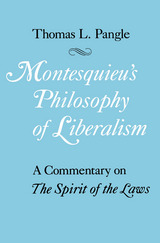

This volume of seven essays on the 1987 Nicaraguan constitution does not accept a priori the judgment that Latin American constitutions are as fragile as egg shells, easily broken and discarded if found to be inconvenient to the interests of the rulers. Rather, they are viewed as being central to understanding political life in contemporary Nicaragua.
The perspectives of the analysts and their conclusions are not consensual. They prohibit glib and facile general conclusions. Some find the constitution to be nothing more than a façade for arbitrary and capricious rule; others that the document reflects clear commitments to the democratic rule of law. Thus far the implementation of the constitution has resulted in the peaceful transition of power from the Sandinistas to the National Opposition Union.

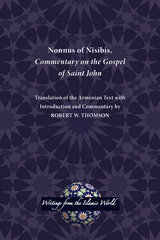
A new English translation of the first text translated from Arabic to Armenian for research and classroom use
Robert W. Thomson translates this ninth-century commentary defending the miaphysite theological position of the Armenian church against the chalcedonian position of the Greek Byzantine church. Nonnus’s exegesis of the gospel falls in the context of trends in Eastern Christian biblical exposition, primarily the Syrian tradition. Therefore, Thomson emphasizes the parallels in Syriac commentaries on the book of John, noting also earlier Greek writers whose works were influential in Syria. This book is essential reading for anyone interested in the Armenian church and church history.
Features:
- Introductory material on the text’s history, manuscript traditions, and theological importance
- Translation of the Armenian text and commentary
- Bibliography covering the Armenian, Greek, Syriac, and Arabic texts as well as secondary sources
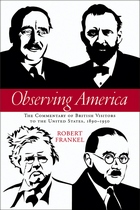
Robert Frankel examines the New World experiences of these commentators and the books they wrote about America. He also probes similar writings by other prominent observers from the British Isles, including Beatrice Webb, Rudyard Kipling, and George Bernard Shaw. The result is a book that offers keen insights into America’s national identity in a time of vast political and cultural change.
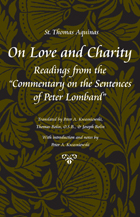
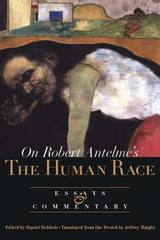
In this volume, the extraordinary nature and extent of Robert Antelme's accomplishment, and of the reverberations he set in motion in French life and literature, finds eloquent expression. The pieces Antelme wrote for journals—including essays on "principles put to the test," man as the "basis of right," and the question of revenge—appear here alongside appreciations of The Human Race by authors from Perec to Maurice Blanchot to Sarah Kofman. Also included are Antelme's personal recollections and interviews with, among others, Dionys Mascolo (who brought Antelme back from Dachau), Marguerite Duras (Antelme's wife, who tells of his return from Germany), and Mitterand.
Also available: Antelme's The Human Race
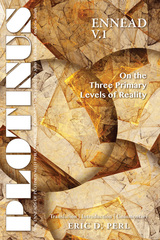
Ennead I.1 is a succinct and concentrated analysis of key themes in Plotinus' psychology and ethics. It focuses on the soul-body relation, discussing various Platonic, Aristotelian, and Stoic views before arguing that there is only a soul-trace in the body (forming with the body a “compound”), while the reasoning soul itself is impassive and flawless. The soul-trace hypothesis is used to account for human emotions, beliefs, and perceptions, and human fallibility in general. Its problematic relation to our rational powers, as well as the question of moral responsibility, are explored. Plotinus develops his original and characteristic concept of the self or “we,” which is so called because it is investigated as something common to all humans (rather than a private individual self), and because it is multiple, referring to the reasoning soul or to the “living thing” composed of soul-trace and body. Plotinus explores the relation between the “we” and consciousness, and also its relation to the higher metaphysical entities, the Good, and Intellect.
How was the universe created, and what is our place within it? These are the questions at the heart of Plotinus’ Against the Gnostics. For the Gnostics, the universe came into being as a result of the soul’s fall from intelligible reality—it is the evil outcome of a botched creation. Plotinus challenges this, and insists that the soul’s creation of the world is the necessary consequence of its contemplation of the ideal forms. While the Gnostics claim to despise the visible universe, Plotinus argues that such contempt displays their ignorance of the higher realities of which the cosmos is a beautiful image.
Against the Gnostics is a polemical text. It aims to show the superiority of Plotinus’ philosophy over that of his Gnostic rivals, and poses unique challenges: Plotinus nowhere identifies his opponents by name, he does not set out their doctrines in any great detail, and his arguments are frequently elliptical. The detailed commentary provides a guide through these difficulties, making Plotinus’ meandering train of thought in this important treatise accessible to the reader.
The introduction offers an overview of ancient demonologies, starting with Homer and the Presocratics, and is followed by an in-depth examination of Plato, the Stoics, Plotinus, and later Neoplatonic developments. As such the book presents Plotinus’ specific rationalizing response to the idea of a guardian spirit in the context of ancient philosophical demonologies.
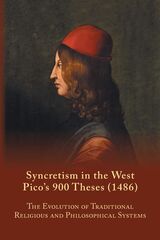
This is the 2016 paperback printing of the 2008 edition of the popular text, translation, and commentary by S. A. Farmer. (The 2008 edition was a revised edition of the 1998 original publication).
Published by ACMRS (Arizona Center for Medieval and Renaissance Studies) in Tempe, Arizona as part of the MRTS (Medieval and Renaissance Texts and Studies) Series, this book -- previously available only in hardcover and otherwise out-of-print since 2014 -- is now available in its entirety in paperback format.
READERS
Browse our collection.
PUBLISHERS
See BiblioVault's publisher services.
STUDENT SERVICES
Files for college accessibility offices.
RECENTLY PUBLISHED


UChicago Accessibility Resources
home | accessibility | search | about | contact us
BiblioVault ® 2001 - 2024
The University of Chicago Press