Results by title
3258 books match the query 'Performing Arts' and 90 start with h
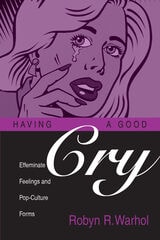
HAVING A GOOD CRY
Effeminate Feelings and Pop-Culture FormsRobyn R. Warhol
The Ohio State University Press, 2003
Robyn R. Warhol’s goal is to investigate the effects of readers’ emotional responses to formulaic fiction of the nineteenth and twentieth centuries on gendered subjectivity. She argues that modern literary and cultural studies have ignored nonsexual affectivity in their inquiries. The book elaborates on Warhol’s theory of affect and then focuses on sentimental stories, marriage plots, serialized novels, and soap operas as distinct genres producing specific feelings among fans.
Popular narrative forms use formulas to bring up familiar patterns of feelings in the audiences who love them. This book looks at the patterns of feelings that some nineteenth- and twentieth-century popular genres evoke, and asks how those patterns are related to gender. Soap operas and sentimentalism are generally derided as “effeminate” forms because their emotional range is seen as hyperfeminine. Having a Good Cry presents a celebration of effeminate feelings and works toward promoting more flexible, less pejorative concepts of gender. Using a psychophysiological rather than a psychoanalytic approach to reading and emotion, Warhol seeks to make readers more conscious of what is happening to the gendered body when we read.
HK Phil 50+
Jimmy Shiu
Hong Kong University Press, 2025
A symphony of history: celebrating fifty years of the Hong Kong Philharmonic Orchestra.
In the 1970s, as Hong Kong’s economy began to soar, the public started to place greater emphasis on cultural and artistic pursuits. The Hong Kong Philharmonic Orchestra (HK Phil) became a professional ensemble in 1974, providing high-quality musical entertainment for the public while also promoting classical music and nurturing the next generation of young musicians.
Upon obtaining his master’s degree in the late 1980s, author Jimmy Shiu joined the orchestra as audience development manager from 1988 to 1994, working alongside the ensemble to cultivate Hong Kong’s musical landscape. On the orchestra’s golden jubilee, Shiu offers a warm narrative that reflects on fifty significant moments both on and off stage.
The HK Phil is celebrated as one of Asia’s premier classical orchestras. During its forty-four-week season, the orchestra performs over 150 concerts in the Chinese mainland, Hong Kong, and other international cities, reaching more than 200,000 audience members. In 2019, the HK Phil became the first Asian winner of the “Orchestra of the Year” award by the renowned British magazine Gramophone. While its history dates to the establishment of the Sino-British Orchestra in 1947, the HK Phil was officially registered in 1957 and became a professional orchestra in 1974. The 2023/24 season marked its fiftieth professional season.
Hal Hartley
Mark L. Berrettini
University of Illinois Press, 2011
Han Heroes and Yamato Warriors
Competing Masculinities in Chinese and Japanese War CinemaAmanda Weiss
Hong Kong University Press, 2023
Taking the “tidal wave” of memory in the late twentieth and early twenty-first century as its starting point, this monograph explores the collective memory of World War II in East Asia (1937–1945) through film. Weiss argues that Chinese, Japanese, and American remembrance of World War II is intertwined in what she terms a “memory loop,” the transnational mediation and remediation of war narratives. Gender is central to this process, as the changing representation of male soldiers, political leaders, and patriarchal father figures within these narratives reveals Japanese and Chinese challenges to each other and to the perceived “foundational” American narrative of the war. This process continues to intensify due to the globally visible nature of the memory loop, which drives this cycle of transmission, translation, and reassessment.
This volume is the first to bring together a collection of Chinese and Japanese war films that have received little attention in English-language literature. It also produces new readings of popular war memory in East Asia by revealing the gendered dimensions of collective remembrance in these films.
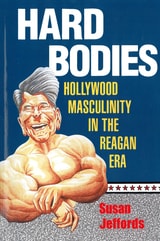
Hard Bodies
Hollywood Masculinity in the Reagan EraSusan Jeffords
Rutgers University Press, 1993
Hard Bodies is about Ronald Reagan, Robert Bly, "America," Rambo, Dirty Harry, national identity, and individual manhood. By linking blockbuster Hollywood films of the 1980s to Ronald Reagan and his image, Susan Jeffords explores the links between masculinity and U.S. identity and how their images changed during that decade. Her book powerfully defines a distinctly ideological period in the renegotiation of masculinity in the post-Vietnam era. As Jeffords perceptively notes, Reagan was most effective at constructing and promoting his own image. His election in 1980 and his landslide re-election in 1984 offered politicians and the film industry some insight into "what audiences want to see." Audiences--and constituencies--were looking for characters who stood up for individualism, liberty, anti-governmentalism, militarism, and who embodied a kind of mythic heroism. The administration in Washington and Hollywood filmmakers sensed and tried to fill that need. Jeffords describes how movies meshed inextricably with Reagan's life as he cast himself as a hero and influenced the country to believe the same script. Invoking Clint Eastwood in his speeches and treating scenes from movies as if they were real, Reagan played on his image in order to link popular and national narratives. Hollywood returned the compliment.
Through her illuminating and detailed analyses of both the Reagan presidency and many blockbuster movies, Jeffords provides a scenario within which the successes of the New Right and the Reagan presidency can begin to be understood: she both encourages an understanding of how this complicity functioned and provides a framework within which to respond to the New Right's methods and arguments. Rambo, Lethal Weapon, Die Hard, Robocop, Back to the Future, Star Wars, the Indiana Jones series, Mississippi Burning, Rain Man, Batman, and Unforgiven are among the films she discusses. In her closing chapter, she suggests the direction that masculinity is taking in the 1990s.
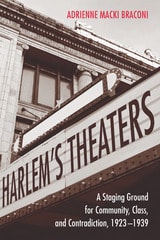
Harlem's Theaters
A Staging Ground for Community, Class, and Contradiction, 1923-1939Adrienne Macki Braconi
Northwestern University Press, 2015
Honorable Mention, 2016 Errol Hill Book Award for Outstanding Scholarship in African American Theater, Drama and/or Performance
Based on a vast amount of archival research, Adrienne Macki Braconi’s illuminating study of three important community-based theaters in Harlem shows how their work was essential to the formation of a public identity for African Americans and the articulation of their goals, laying the groundwork for the emergence of the Civil Rights movement. Macki Braconi uses textual analysis, performance reconstruction, and audience reception to examine the complex dynamics of productions by the Krigwa Players, the Harlem Experimental Theatre, and the Negro Theatre of the Federal Theatre Project. Even as these theaters demonstrated the extraordinary power of activist art, they also revealed its limits. The stage was a site in which ideological and class differences played out, theater being both a force for change and a collision of contradictory agendas. Macki Braconi’s book alters our understanding of the Harlem Renaissance, the roots of the Civil Rights movement, and the history of community theater in America.
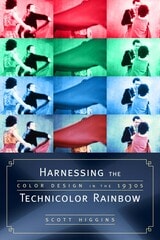
Harnessing the Technicolor Rainbow
Color Design in the 1930sBy Scott Higgins
University of Texas Press, 2007
Like Dorothy waking up over the rainbow in the Land of Oz, Hollywood discovered a vivid new world of color in the 1930s. The introduction of three-color Technicolor technology in 1932 gave filmmakers a powerful tool with which to guide viewers' attention, punctuate turning points, and express emotional subtext. Although many producers and filmmakers initially resisted the use of color, Technicolor designers, led by the legendary Natalie Kalmus, developed an aesthetic that complemented the classical Hollywood filmmaking style while still offering innovative novelty. By the end of the 1930s, color in film was thoroughly harnessed to narrative, and it became elegantly expressive without threatening the coherence of the film's imaginary world.
Harnessing the Technicolor Rainbow is the first scholarly history of Technicolor aesthetics and technology, as well as a thoroughgoing analysis of how color works in film. Scott Higgins draws on extensive primary research and close analysis of well-known movies, including Becky Sharp, A Star Is Born, Adventures of Robin Hood, and Gone with the Wind, to show how the Technicolor films of the 1930s forged enduring conventions for handling color in popular cinema. He argues that filmmakers and designers rapidly worked through a series of stylistic modes based on the demonstration, restraint, and integration of color—and shows how the color conventions developed in the 1930s have continued to influence filmmaking to the present day. Higgins also formulates a new vocabulary and a method of analysis for capturing the often-elusive functions and effects of color that, in turn, open new avenues for the study of film form and lay a foundation for new work on color in cinema.
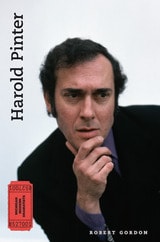
Harold Pinter
The Theatre of PowerRobert Gordon
University of Michigan Press, 2013
The latest volume in the Michigan Modern Dramatists series offers an authoritative but accessible look at Harold Pinter, one of the greatest and most influential postwar British playwrights and author of classic works such as The Birthday Party and The Homecoming. Pinter was awarded the Nobel Prize for Literature in 2005 for his remarkable body of work and plays that "uncover the precipice under everyday prattle and force entry into oppression's closed rooms."
Harold Pinter: The Theatre of Power focuses on the playwright's continuously innovative experiments in theatrical form while tracing the recurrence of a consistent set of ethical and epistemological concerns. Exploring important plays from across this prolific writer’s career, author Robert Gordon argues that the motivating force in almost all of Pinter's drama is the ceaseless desire for power, represented in his work as a compulsive drive to achieve or maintain dominance—whether it be the struggle to defend one's own territory from intruders, the father's battle with his sons to assert his patriarchal position in the family, the manipulation of erotic feelings in the gender warfare that motivates sexual relationships, the abuse of brute force by dictatorships and democracies, or simply the masculine obsession to dominate. Gordon demonstrates the adventurousness of Pinter's experimentation with form while at the same time exposing the ethical, epistemological, and aesthetic preoccupations that have persisted with remarkable consistency throughout his career.
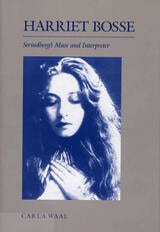
Harriet Bosse
Strindberg's Muse and InterpreterCarla Waal
Southern Illinois University Press, 1990
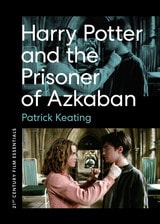
Harry Potter and the Prisoner of Azkaban
By Patrick Keating
University of Texas Press, 2021
An essential work of twenty-first-century cinema, Alfonso Cuarón’s 2004 film Harry Potter and the Prisoner of Azkaban is an elegant exemplar of contemporary cinematic trends, including serial storytelling, the rise of the fantasy genre, digital filmmaking, and collaborative authorship. With craft, wonder, and wit, the film captures the most engaging elements of the novel while artfully translating its literary point of view into cinematic terms that expand on the world established in the book series and previous films.
In this book, Patrick Keating examines how Cuarón and his collaborators employ cinematography, production design, music, performance, costume, dialogue, and more to create the richly textured world of Harry Potter—a world filtered principally through Harry’s perspective, characterized by gaps, uncertainties, and surprises. Rather than upholding the vision of a single auteur, Keating celebrates Cuarón’s direction as a collaborative achievement that resulted in a family blockbuster layered with thematic insights.
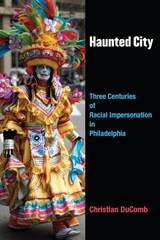
Haunted City
Three Centuries of Racial Impersonation in PhiladelphiaChristian DuComb
University of Michigan Press, 2017
Mummers have long worn blackface makeup during winter holiday celebrations in Europe and North America; in Philadelphia, mummers’ blackface persisted from the colonial period well into the twentieth century. The first annual Mummers Parade, a publicly sanctioned procession from the working-class neighborhoods of South Philadelphia to the city center, occurred in 1901. Despite a ban on blackface in the Mummers Parade after civil rights protests in 1963–64, other forms of racial and ethnic impersonation in the parade have continued to flourish unchecked. Haunted City combines detailed historical research with the author’s own experiences performing in the Mummers Parade to create a lively and richly illustrated narrative. Through its interdisciplinary approach, Haunted City addresses not only theater history and performance studies but also folklore, American studies, critical race theory, and art history. It also offers a fresh take on the historiography of the antebellum minstrel show.

Haunted Homes
Dahlia Schweitzer
Rutgers University Press, 2021
Watch a video of the author discussing the topic Haunted Homes (https://youtu.be/_irTEfvtZfQ).
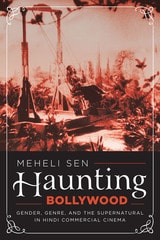
Haunting Bollywood
Gender, Genre, and the Supernatural in Hindi Commercial CinemaBy Meheli Sen
University of Texas Press, 2017
Haunting Bollywood is a pioneering, interdisciplinary inquiry into the supernatural in Hindi cinema that draws from literary criticism, postcolonial studies, queer theory, history, and cultural studies. Hindi commercial cinema has been invested in the supernatural since its earliest days, but only a small segment of these films have been adequately explored in scholarly work; this book addresses this gap by focusing on some of Hindi cinema’s least explored genres.
From Gothic ghost films of the 1950s to snake films of the 1970s and 1980s to today’s globally influenced zombie and vampire films, Meheli Sen delves into what the supernatural is and the varied modalities through which it raises questions of film form, history, modernity, and gender in South Asian public cultures. Arguing that the supernatural is dispersed among multiple genres and constantly in conversation with global cinematic forms, she demonstrates that it is an especially malleable impulse that routinely pushes Hindi film into new formal and stylistic territories. Sen also argues that gender is a particularly accommodating stage on which the supernatural rehearses its most basic compulsions; thus, the interface between gender and genre provides an exceptionally productive lens into Hindi cinema’s negotiation of the modern and the global. Haunting Bollywood reveals that the supernatural’s unruly energies continually resist containment, even as they partake of and sometimes subvert Hindi cinema’s most enduring pleasures, from songs and stars to myth and melodrama.
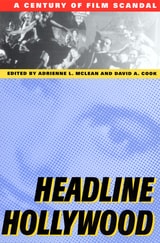
Headline Hollywood
A Century of Film ScandalMcLean, Adrienne L
Rutgers University Press, 2001
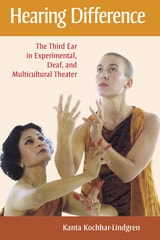
Hearing Difference
The Third Ear in Experimental, Deaf, and Multicultural TheaterKanta Kochhar-Lindgren
Gallaudet University Press, 2006
Kochhar-Lindgren then charts a genealogy of the theater of the third ear from the mid-1800s to the 1960s in examples ranging from Denis Diderot, the Symbolists, the Dadaists, Antonin Artaud, and others. She also analyzes the work of playwright Robert Wilson, the National Theatre of the Deaf, and Asian American director Ping Chong. She shows how the model of the third ear can address not only deaf performance but also multicultural performance, by analyzing the Seattle dance troupe Ragamala’s 2001 production of Transposed Heads, which melded classical South Indian use of mudras, or hand gestures, and ASL signing.
The shift in attention limned in Hearing Difference leads to a different understanding of the body, intersubjectivity, communication, and cross-cultural relations, confirming it as a critically important contribution to contemporary Deaf studies.
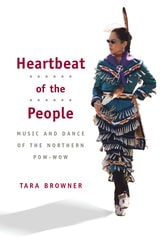
Heartbeat of the People
Music and Dance of the Northern Pow-wowTara Browner
University of Illinois Press, 2002
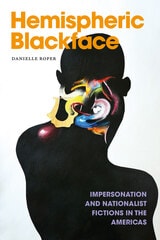
Hemispheric Blackface
Impersonation and Nationalist Fictions in the AmericasDanielle Roper
Duke University Press, 2025

Hemispheric Waves
Havana's Avant-Garde Theatre, 1965-2000Eric Mayer-García
University of Iowa Press, 2027
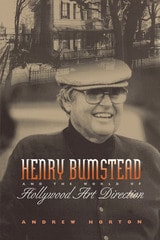
Henry Bumstead and the World of Hollywood Art Direction
By Andrew Horton
University of Texas Press, 2003
From a hotel in Marrakech in The Man Who Knew Too Much, to small-town Alabama in To Kill a Mockingbird, to Mission Control in Space Cowboys, creating a fictional, yet wholly believable world in which to film a movie has been the passion and life's work of Henry Bumstead, one of Hollywood's most celebrated production designers. In a career that has spanned nearly seventy years, Bumstead has worked on more than one hundred movies and television films. His many honors include Academy Awards for Art Direction for To Kill a Mockingbird and The Sting, as well as nominations for Vertigo and The Unforgiven.
This popularly written and extensively illustrated book tells the intertwining stories of Henry Bumstead's career and the evolution of Hollywood art direction. Andrew Horton combines his analysis of Bumstead's design work with wide-ranging interviews in which Bumstead talks about working with top directors, including Alfred Hitchcock, George Roy Hill, Robert Mulligan, and Clint Eastwood, as well as such stars as Paul Newman, Robert Redford, Doris Day, Jimmy Stewart, Sidney Poitier, Bill Cosby, Jerry Lewis, and James Cagney. Numerous production drawings, storyboards, and film stills illustrate how Bumstead's designs translated to film. This portrait of Bumstead's career underscores an art director's crucial role in shaping the look of a film and also tracks the changes in production design from the studio era through location shooting to today's use of high-tech special effects.
Her Stories
Daytime Soap Opera and US Television HistoryElana Levine
Duke University Press, 2020
Here for the Hearing
Analyzing the Music in Musical TheaterMichael Buchler and Gregory J. Decker, Editors
University of Michigan Press, 2023
Winner of the Society for Music Theory's Outstanding Multi-Author Collection Award
This book offers a series of essays that show the integrated role that musical structure (including harmony, melody, rhythm, meter, form, and musical association) plays in making sense of what transpires onstage in musicals. Written by a group of music analysts who care deeply about musical theater, this collection provides new understanding of how musicals are put together, how composers and lyricists structure words and music to complement one another, and how music helps us understand the human relationships and historical and social contexts. Using a wide range of musical examples, representing the history of musical theater from the 1920s to the present day, the book explores how music interacts with dramatic elements within individual shows and other pieces within and outside of the genre. These essays invite readers to consider issues that are fundamental both to our understanding of musical theater and to the multiple ways we engage with music.
Heroes In Hard Times
Neal King
Temple University Press, 1999
King studies how, in the cop action genre, working-class police officers weigh in on such topics as racial justice, homosexuality, misogyny, unemployment, worker resistance, affirmative action, drug use, poverty, divorce, and the use of violence to deal with social problems. Facing their enemies with wisecracks and firepower, these men prove themselves at once complicitous in a system of violence and corruption and worthy to "blow away," with neither hesitation nor remorse, their -- society's -- menacing threats. The central male figures in these stories are heroes in their fight against criminals, but, as individuals, they fell undervalued by women, unappreciated by their bosses, and out of place in a society where fat cats and liberals have all the power. Such "hard times," King's study reveals, position them to simultaneously long for, disdain, and heroically -- if violently -- stake their frustrated claim to white male privilege.
Discussing such topics as white male guilt and the rage of the oppressed and examining such films as Lethal Weapon, Die Hard, and Silence of the Lambs, King's book notes the socially-charged roles given to American culture's fictional police heroes. The last artisan in a culture that has become increasingly corporate and bureaucratized, the movie cop is the last 'real man' in a world that has emasculated men and the last non-conforming patriot in a world that pays more attention to rules than what is morally right.
A book that shows how modern mythology makes sense of rampant corruption (and provides entertainment in its punishment), Heroes in Hard Times will educate and provoke those interested in American popular culture, film, and gender studies.
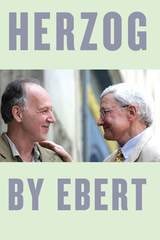
Herzog by Ebert
Roger Ebert
University of Chicago Press, 2017
Herzog by Ebert is a comprehensive collection of Ebert’s writings about the legendary director, featuring all of his reviews of individual films, as well as longer essays he wrote for his Great Movies series. The book also brings together other essays, letters, and interviews, including a letter Ebert wrote Herzog upon learning of the dedication to him of “Encounters at the End of the World;” a multifaceted profile written at the 1982 Cannes Film Festival; and an interview with Herzog at Facet’s Multimedia in 1979 that has previously been available only in a difficult-to-obtain pamphlet. Herzog himself contributes a foreword in which he discusses his relationship with Ebert.
Brimming with insights from both filmmaker and film critic, Herzog by Ebert will be essential for fans of either of their prolific bodies of work.
Hey Presto!
Swift and the QuacksHugh Ormsby-Lennon
University of Delaware Press, 2011
Published by University of Delaware Press. Distributed worldwide by Rutgers University Press.
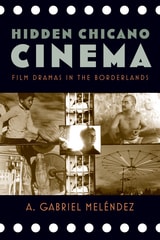
Hidden Chicano Cinema
Film Dramas in the BorderlandsMeléndez, A. Gabriel
Rutgers University Press, 2013
The book highlights “film moments” in this region’s history including the “filmic turn” ushered in by Chicano/a filmmakers who created new ways to represent their community and region. A. Gabriel Meléndez narrates the drama, intrigue, and politics of these moments and accounts for the specific cinematic practices and the sociocultural detail that explains how the camera itself brought filmmakers and their subjects to unexpected encounters on and off the screen. Such films as Adventures in Kit Carson Land, The Rattlesnake, and Red Sky at Morning, among others, provide examples of movies that have both educated and misinformed us about a place that remains a “distant locale” in the mind of most film audiences.
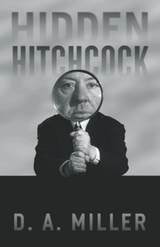
Hidden Hitchcock
D. A. Miller
University of Chicago Press, 2016
Focusing on three films—Strangers on a Train, Rope, and The Wrong Man—Miller shows how Hitchcock anticipates, even demands a “Too-Close Viewer.” Dwelling within us all and vigilant even when everything appears to be in good order, this Too-Close Viewer attempts to see more than the director points out, to expand the space of the film and the duration of the viewing experience. And, thanks to Hidden Hitchcock, that obsessive attention is rewarded. In Hitchcock’s visual puns, his so-called continuity errors, and his hidden appearances (not to be confused with his cameos), Miller finds wellsprings of enigma.
Hidden Hitchcock is a revelatory work that not only shows how little we know this best known of filmmakers, but also how near such too-close viewing comes to cinephilic madness.
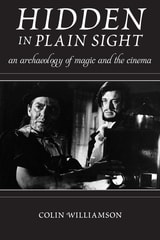
Hidden in Plain Sight
An Archaeology of Magic and the CinemaWilliamson, Colin
Rutgers University Press, 2015
To answer these questions, Colin Williamson situates film within a long tradition of magical practices that combine art and science, involve deception and discovery, and evoke two forms of wonder—both awe at the illusion displayed and curiosity about how it was performed. He thus considers how, even as they mystify audiences, cinematic illusions also inspire them to learn more about the technologies and techniques behind moving images. Tracing the overlaps between the worlds of magic and filmmaking, Hidden in Plain Sight examines how professional illusionists and their tricks have been represented onscreen, while also considering stage magicians who have stepped behind the camera, from Georges Méliès to Ricky Jay.
Williamson offers an insightful, wide-ranging investigation of how the cinema has functioned as a “device of wonder” for more than a century, while also exploring how several key filmmakers, from Orson Welles to Christopher Nolan and Martin Scorsese, employ the rhetoric of magic. Examining pre-cinematic visual culture, animation, nonfiction film, and the digital trickery of today’s CGI spectacles, Hidden in Plain Sight provides an eye-opening look at the powerful ways that magic has shaped our modes of perception and our experiences of the cinema.
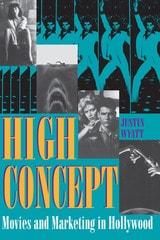
High Concept
Movies and Marketing in HollywoodBy Justin Wyatt
University of Texas Press, 1994
Steven Spielberg once said, "I like ideas, especially movie ideas, that you can hold in your hand. If a person can tell me the idea in twenty-five words or less, it's going to make a pretty good movie." Spielberg's comment embodies the essence of the high concept film, which can be condensed into one simple sentence that inspires marketing campaigns, lures audiences, and separates success from failure at the box office.
This pioneering study explores the development and dominance of the high concept movie within commercial Hollywood filmmaking since the late 1970s. Justin Wyatt describes how box office success, always important in Hollywood, became paramount in the era in which major film studios passed into the hands of media conglomerates concerned more with the economics of filmmaking than aesthetics. In particular, he shows how high concept films became fully integrated with their marketing, so that a single phrase ("Just when you thought it was safe to go back in the water...") could sell the movie to studio executives and provide copy for massive advertising campaigns; a single image or a theme song could instantly remind potential audience members of the movie, and tie-in merchandise could generate millions of dollars in additional income.
High Contrast
Race and Gender in Contemporary Hollywood FilmsSharon Willis
Duke University Press, 1997
Capturing the political complexity of these films, Willis argues that race, gender, and sexuality, as they are figured in the fantasy of popular film, do not function separately, but rather inform and determine each other’s meaning. She demonstrates how collective anxieties regarding social difference are mapped onto big budget movies like the Die Hard and Lethal Weapon series, Basic Instinct, Fatal Attraction, Thelma and Louise, Terminator 2, and others. Analyzing the artistic styles of directors Lynch, Tarantino, and Lee, in such films as Wild at Heart, Pulp Fiction, and Do the Right Thing, she investigates how these interactions of difference are linked to the production of specific authorial styles, and how race functions for each of these directors, particularly in relation to gender identity, erotics, and fantasy.
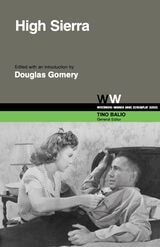
High Sierra
Edited, with an introduction by Douglas Gomery; Tino T. Balio, Series Editor
University of Wisconsin Press, 1979
High Sierra (1941) is a highly successful Warner Brothers gangster film of special interest to film scholars, and aficionados. It represented a turning point in the nature of gangster film of the 1930s. It was the film that launched Humphrey Bogart to stardom.And it is representative of the concerted efforts of the very b est of Warners' talent of the era. In a period of serious reassessment of the American film, this revised shooting script, never before published, provides valuable primary data for that reassessment.
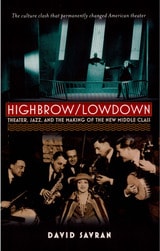
Highbrow/Lowdown
Theater, Jazz, and the Making of the New Middle ClassDavid Savran
University of Michigan Press, 2010
Historians on Hamilton
How a Blockbuster Musical Is Restaging America's PastRomano, Renee C
Rutgers University Press, 2018
Historians on Hamilton brings together a collection of top scholars to explain the Hamilton phenomenon and explore what it might mean for our understanding of America’s history. The contributors examine what the musical got right, what it got wrong, and why it matters. Does Hamilton’s hip-hop take on the Founding Fathers misrepresent our nation’s past, or does it offer a bold positive vision for our nation’s future? Can a musical so unabashedly contemporary and deliberately anachronistic still communicate historical truths about American culture and politics? And is Hamilton as revolutionary as its creators and many commentators claim?
Perfect for students, teachers, theatre fans, hip-hop heads, and history buffs alike, these short and lively essays examine why Hamilton became an Obama-era sensation and consider its continued relevance in the age of Trump. Whether you are a fan or a skeptic, you will come away from this collection with a new appreciation for the meaning and importance of the Hamilton phenomenon.
History Films, Women, and Freud's Uncanny
By Susan E. Linville
University of Texas Press, 2004
History films were a highly popular genre in the 1990s, as Hollywood looked back at significant and troubling episodes from World War II, the Cold War era, and the techno-war in the Persian Gulf. As filmmakers attempted to confront and manage intractable elements of the American past, such as the trauma of war and the legacy of racism, Susan Linville argues that a surprising casualty occurred—the erasure of relevant facets of contemporary women's history.
In this book, Linville offers a sustained critique of the history film and its reduction of women to figures of ambivalence or absence. Historicizing and adapting Freud's concept of the uncanny and its relationship to the maternal body as the first home, she offers theoretically sophisticated readings of the films Midnight Clear, Saving Private Ryan, The Thin Red Line, Nixon, Courage Under Fire, Lone Star, and Limbo. She also demonstrates that the uncanny is not only a source of anxiety but also potentially a progressive force for eroding nostalgic ideals of nation and gender. Linville concludes with a close reading of a recent 9/11 documentary, showing how the patterns and motifs of 1990s history films informed it and what that means for our future.
History by Hollywood, Second Edition
Robert Brent Toplin
University of Illinois Press, 2010
This newly updated edition of History by Hollywood explores the question of what happens to history when Hollywood filmmakers get their hands on it. With a fresh look at recent films and television productions such as Titanic, Pearl Harbor, The Patriot, and John Adams, Robert Brent Toplin examines how filmmakers have interpreted American history through their movies. Toplin discusses how writers, producers, and directors become involved in making historical films, what influences their interpretations of the past, and the responses they make to the controversies their works excite. With a realistic appreciation of the challenges filmmakers face, he effectively measures the strengths and weaknesses of Hollywood's presentation of history in the films Mississippi Burning, JFK, Sergeant York, Missing, Bonnie and Clyde, Patton, All the President's Men, and Norma Rae.
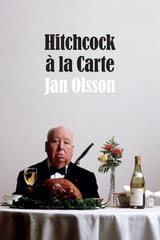
Hitchcock à la Carte
Jan Olsson
Duke University Press, 2015
Hitchcock's People, Places, and Things
John Bruns
Northwestern University Press, 2019
This book offers new readings of well-known Hitchcock films, including The Lodger, Shadow of a Doubt, Psycho, The Birds, and Marnie, as well as insights into lesser-discussed films such as I Confess and Family Plot. Additional close readings of the original theatrical trailer for Psycho and a Hitchcock-directed episode of Alfred Hitchcock Presents expand the Hitchcock landscape beyond conventional critical borders. In tracing the network of relations in Hitchcock’s work, Bruns brings new Hitchcockian tropes to light. For students, scholars, and serious fans, the author promises a thrilling critical navigation of the Hitchcock landscape, with frequent “mental shake-ups” that Hitchcock promised his audience.
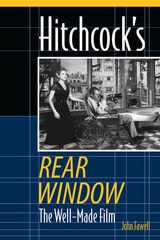
Hitchcock's Rear Window
The Well-Made FilmJohn Fawell
Southern Illinois University Press, 2004
In the process of providing the most extensive analysis of Alfred Hitchcock’s Rear Window to date, John Fawell also dismantles many myths and clichés about Hitchcock, particularly in regard to his attitude toward women.
Although Rear Window masquerades quite successfully as a piece of light entertainment, Fawell demonstrates just how complex the film really is. It is a film in which Hitchcock, the consummate virtuoso, was in full command of his technique. One of Hitchcock’s favorite films, Rear Window offered the ideal venue for the great director to fully use the tricks and ideas he acquired over his previous three decades of filmmaking. Yet technique alone did not make this classic film great; one of Hitchcock’s most personal films, Rear Window is characterized by great depth of feeling. It offers glimpses of a sensibility at odds with the image Hitchcock created for himself—that of the grand ghoul of cinema who mocks his audience with a slick and sadistic style.
Though Hitchcock is often labeled a misanthrope and misogynist, Fawell finds evidence in Rear Window of a sympathy for the loneliness that leads to voyeurism and crime, as well as an empathy for the film’s women. Fawell emphasizesa more feeling, humane spirit than either Hitchcock’s critics have granted him or Hitchcock himself admitted to, and does so in a manner of interest to film scholars and general readers alike.
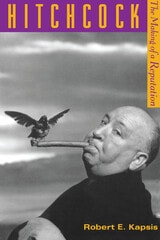
Hitchcock
The Making of a ReputationRobert E. Kapsis
University of Chicago Press, 1992
Through a close examination of Hitchcock's personal papers, scripts, production notes, publicity files, correspondence, and hundreds of British and American reviews, Robert Kapsis here traces Hitchcock's changing critical fortunes. Vertigo, for instance, was considered a flawed film when first released; today it is viewed by many as the signal achievement of a great director. According to Kapsis, this dramatic change occurred because the making of the Hitchcock legend was not solely dependent on the quality of his films. Rather, his elevation to artist was caused by a successful blending of self-promotion, sponsorship by prominent members of the film community, and, most important, changes in critical theory which for the first time allowed for the idea of director as auteur.
Kapsis also examines the careers of several other filmmakers who, like Hitchcock, have managed to cross the line that separates craftsman from artist, and shows how Hitchcock's legacy and reputation shed light on the way contemporary reputations are made. In a chapter about Brian De Palma, the most reknowned thriller director since Hitchcock, Kapsis explores how Hitchcock's legacy has affected contemporary work in—and criticism of—the thriller genre.
Filled with fascinating anecdotes and intriguing excerpts, and augmented by interviews with Hitchcock's associates, this thoroughly documented and engagingly written book will appeal to scholars and film enthusiasts alike.
"Required reading for Hitchcock scholars...scrupulously researched, invaluable material for those who continue to ask: what made the master tick?"—Anthony Perkins
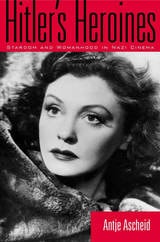
Hitler's Heroines
Stardom & Womanhood In Nazi CinemaAntje Ascheid
Temple University Press, 2003
Hitting the Right Notes
Film Directors and Composers in HarmonyLester D. Friedman
Rutgers University Press, 2027
Hitting the Right Notes: Film Directors and Composers in Harmony is a unique, multi-disciplinary volume co-authored by scholars from both media studies and music theory. The book features a chronological and systematic approach that concentrates on analyzing representative scenes from a broad spectrum of mainstream movies as exemplars. With a distinctive focus on versatile analytical tools from film studies, music cognition, and music theory, each chapter supplies background on the time period, director, composer, and their working relationship, then a close reading incorporates both visual analysis and musical elements beyond pitch and harmony. Robust yet accessible, Hitting the Right Notes highlights up-to-date ways of understanding film music, directly demonstrates their application across eras and genres, and displays the artistic magic directors and composers create together. It is essential reading for those interested in film and music.
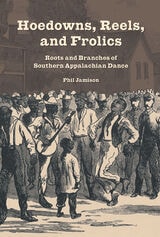
Hoedowns, Reels, and Frolics
Roots and Branches of Southern Appalachian DancePhil Jamison
University of Illinois Press, 2015
These distinctive folk dances, Jamison argues, are not the unaltered jigs and reels brought by early British settlers, but hybrids that developed over time by adopting and incorporating elements from other popular forms. He traces the forms from their European, African American, and Native American roots to the modern day. On the way he explores the powerful influence of black culture, showing how practices such as calling dances as well as specific kinds of steps combined with white European forms to create distinctly "American" dances.
From cakewalks to clogging, and from the Shoo-fly Swing to the Virginia Reel, Hoedowns, Reels, and Frolics reinterprets an essential aspect of Appalachian culture.
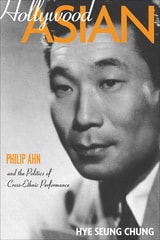
Hollywood Asian
Philip Ahn and the Politics of Cross-Ethnic PerformanceHye Seung Chung
Temple University Press, 2006
Hollywood Bloodshed
Violence in 1980s American CinemaJames Kendrick
Southern Illinois University Press, 2009
In Hollywood Bloodshed, James Kendrick presents a fascinating look into the political and ideological instabilities of the 1980s as studied through the lens of cinema violence.
Kendrick uses in-depth case studies to reveal how dramatic changes in the film industry and its treatment of cinematic bloodshed during the Reagan era reflected shifting social tides as Hollywood struggled to find a balance between the lucrative necessity of screen violence and the rising surge of conservatism.
As public opinion shifted toward the right and increasing emphasis was placed on issues such as higher military spending, family values, and “money culture,” film executives were faced with an epic dilemma: the violent aspects of cinema that had been the studios’ bread and butter were now almost universally rejected by mainstream audiences. Far from eliminating screen bloodshed altogether, studios found new ways of packaging violence that would allow them to continue to attract audiences without risking public outcry, ushering in a period of major transition in the film industry. Studios began to shy away from the revolutionary directors of the 1970s—many of whom had risen to fame through ideologically challenging films characterized by a more disturbing brand of violence—while simultaneously clearing the way for a new era in film. The 1980s would see the ascent of entertainment conglomerates and powerful producers and the meteoric rise of the blockbuster—a film with no less violence than its earlier counterparts, but with action-oriented thrills rather than more troubling images of brutality.
Kendrick analyzes these and other radical cinematic changes born of the conservative social climate of the 1980s, including the disavowal of horror films in the effort to present a more acceptable public image; the creation of the PG-13 rating to designate the gray area of movie violence between PG and R ratings; and the complexity of marketing the violence of war movies for audience pleasure. The result is a riveting study of an often overlooked, yet nevertheless fascinating time in cinema history. While many volumes have focused on the violent films of the New American Cinema directors of the 1970s or the rise of icons such as Woo, Tarantino, and Rodriguez in the 1990s, Kendrick’s Hollywood Bloodshed bridges a major gap in film studies.This comprehensive volume offers much-needed perspective on a decade that altered the history of Hollywood—and American culture—forever.
Hollywood Diplomacy
Film Regulation, Foreign Relations, and East Asian RepresentationsHye Seung Chung
Rutgers University Press, 2020
Hollywood Exile, or How I Learned to Love the Blacklist
By Bernard Gordon
University of Texas Press, 2000
The Hollywood blacklist, which began in the late 1940s and ran well into the 1960s, ended or curtailed the careers of hundreds of people accused of having ties to the Communist Party. Bernard Gordon was one of them. In this highly readable memoir, he tells a engrossing insider's story of what it was like to be blacklisted and how he and others continued to work uncredited behind the scenes, writing and producing many box office hits of the era.
Gordon describes how the blacklist cut short his screenwriting career in Hollywood and forced him to work in Europe. Ironically, though, his is a success story that includes the films El Cid, 55 Days at Peking, The Thin Red Line, Krakatoa East of Java, Day of the Triffids, Earth vs. the Flying Saucers, Horror Express, and many others. He recounts the making of many movies for which he was the writer and/or producer, with wonderful anecdotes about stars such as Charlton Heston, David Niven, Sophia Loren, Ava Gardner, and James Mason; directors Nicholas Ray, Frank Capra, and Anthony Mann; and the producer-studio head team of Philip Yordan and Samuel Bronston.
Hollywood Exiles in Europe
The Blacklist and Cold War Film CulturePrime, Rebecca
Rutgers University Press, 2014
Rebecca Prime documents the untold story of the American directors, screenwriters, and actors who exiled themselves to Europe as a result of the Hollywood blacklist. During the 1950s and 1960s, these Hollywood émigrés directed, wrote, or starred in almost one hundred European productions, their contributions ranging from crime film masterpieces like Du rififi chez les hommes (1955, Jules Dassin, director) to international blockbusters like The Bridge on the RiverKwai (1957, Carl Foreman and Michael Wilson, screenwriters) and acclaimed art films like The Servant (1963, Joseph Losey, director).
At once a lively portrait of a lesser-known American “lost generation” and an examination of an important transitional moment in European cinema, the book offers a compelling argument for the significance of the blacklisted émigrés to our understanding of postwar American and European cinema and Cold War relations. Prime provides detailed accounts of the production and reception of their European films that clarify the ambivalence with which Hollywood was regarded within postwar European culture. Drawing upon extensive archival research, including previously classified material, Hollywood Exiles in Europe suggests the need to rethink our understanding of the Hollywood blacklist as a purely domestic phenomenon. By shedding new light on European cinema’s changing relationship with Hollywood, the book illuminates the postwar shift from national to transnational cinema.
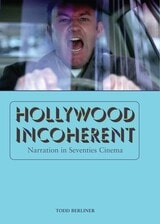
Hollywood Incoherent
Narration in Seventies CinemaBy Todd Berliner
University of Texas Press, 2010
In the 1970s, Hollywood experienced a creative surge, opening a new era in American cinema with films that challenged traditional modes of storytelling. Inspired by European and Asian art cinema as well as Hollywood's own history of narrative ingenuity, directors such as Martin Scorsese, Robert Altman, William Friedkin, Stanley Kubrick, Woody Allen, and Francis Ford Coppola undermined the harmony of traditional Hollywood cinema and created some of the best movies ever to come out of the American film industry. Critics have previously viewed these films as a response to the cultural and political upheavals of the 1970s, but until now no one has explored how the period's inventive narrative design represents one of the great artistic accomplishments of American cinema.
In Hollywood Incoherent, Todd Berliner offers the first thorough analysis of the narrative and stylistic innovations of seventies cinema and its influence on contemporary American filmmaking. He examines not just formally eccentric films—Nashville; Taxi Driver; A Clockwork Orange; The Godfather, Part II; and the films of John Cassavetes—but also mainstream commercial films, including The Exorcist, The Godfather, The French Connection, Willy Wonka and the Chocolate Factory, Dog Day Afternoon, Chinatown, The Bad News Bears, Patton, All the President's Men, Annie Hall, and many others. With persuasive revisionist analyses, Berliner demonstrates the centrality of this period to the history of Hollywood's formal development, showing how seventies films represent the key turning point between the storytelling modes of the studio era and those of modern American cinema.

Hollywood Independents
The Postwar Talent TakeoverDenise Mann
University of Minnesota Press, 2008
Hollywood Independents explores the crucial period from 1948 to 1962 when independent film producers first became key components of the modern corporate entertainment industry. Denise Mann examines the impact of the radically changed filmmaking climate—the decline of the studios, the rise of television, and the rise of potent talent agencies like MCA—on a group of prominent talent-turned-producers including Burt Lancaster, Joseph Mankiewicz, Elia Kazan, and Billy Wilder.
In order to show how these newly independent filmmakers negotiated through an increasingly fraught, reactionary creative atmosphere, Mann analyzes the reflexive portraits of their altered working conditions in such films as A Face in the Crowd, Sweet Smell of Success, and Will Success Spoil Rock Hunter? These artists, she shows, took on the corporate middle-managers at television networks and talent agencies as a way of challenging the status quo without risking censorship or blacklisting.
This period saw the evolution of film production from the studio-governed system to one of entrepreneurs. Out of this new arrangement, which encouraged greater creative freedom, emerged a nascent form of independent art cinema that sowed the seeds of the Hollywood Renaissance that followed.
Denise Mann is associate professor of film, TV and digital media at UCLA. She is coeditor of Private Screenings: Television and the Female Consumer (Minnesota, 1992).
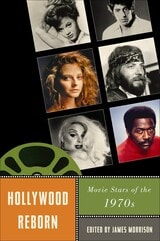
Hollywood Reborn
Movie Stars of the 1970sMorrison, James
Rutgers University Press, 2010
Hollywood Reborn examines this question, with contributors focusing on many of the era's key figures — noteworthy actors such as Jane Fonda, Al Pacino, Faye Dunaway, and Warren Beatty, and unexpected artists, among them Donald Sutherland, Shelley Winters, and Divine. Each essay offers new perspectives through the lens of an important star, illuminating in the process some of the most fascinating and provocative films of the decade.
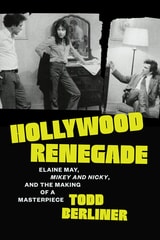
Hollywood Renegade
Elaine May, Mikey and Nicky, and the Making of a MasterpieceTodd Berliner
University of Texas Press, 2026
Examines the career and unorthodox filmmaking practices of director Elaine May, whose Mikey and Nicky, over a span of fifty years, transformed from a fiasco to a masterpiece of seventies cinema.
Elaine May’s Mikey and Nicky stands out in the history of Hollywood. After a troubled production, massive cost overruns, and lawsuits between May and the studio, the film received scathing reviews and failed at the box office. But the very qualities that initially alienated viewers and reviewers led later generations to regard the film as an overlooked masterpiece.
Written and directed by the period’s only female New Hollywood filmmaker, Mikey and Nicky has not received the attention given to other unconventional films of the 1970s. But May worked for years to give each moment of the movie multiple areas of interest. She made every character, even peripheral ones, nuanced and memorable. And she designed every scene, even minor ones, as a performance event. Her lead actors, Peter Falk and John Cassavetes, thrived under her unorthodox directing style, earning acclaim even from reviewers who hated the movie. Decades in the making—years of scriptwriting, a shoot that spanned ten months, and three years spent editing—Mikey and Nicky shows us what Hollywood cinema can accomplish when talented filmmakers challenge Hollywood’s limited notion of professionalism, rejecting the harsh time pressures of commercial filmmaking in order to get the most out of every scene.