Results by title
572 books match the query 'Photography' and 18 start with h

H. H. Bennett, Photographer
His American LandscapeSara Rath
University of Wisconsin Press, 2010
"My energies for near a lifetime have been used almost entirely to win such prominence as I could in outdoor photography."—H. H. Bennett
Henry Hamilton Bennett (1843–1908) became a celebrated photographer in the half-century following the American Civil War. Bennett is admired for his superb depictions of dramatic landscapes of the Dells of the Wisconsin River and also for his many technical innovations in photography, including a stop-action shutter and a revolving solar printing house that is now housed at the Smithsonian Institution. With his instantaneous shutter, he gained recognition for his striking images of moving subjects, such as lumber raftsmen shooting the river rapids and his son Ashley leaping in midair from a bluff to the craggy pillar of Stand Rock. Less well-known are Bennett’s splendid urban photographs of nineteenth-century Chicago, Milwaukee, and St. Paul.
This engaging biography of H. H. Bennett tells his life story, illustrated throughout with his remarkable photographs, some of them rarely viewed before. It draws on the photographer’s own letters and journals, along with other family documents, to portray the sweep of his career and personal life. An important figure in the history of photography, he also contributed to the growth of American tourism: his nationally distributed stereoscopic views of Dells rock formations and his portraits of local Ho-Chunk Indians played a significant role in creating the Wisconsin Dells as the popular tourist destination it is today. Despite personal challenges—a crippling Civil War injury, the death of his first wife, and continual financial worries—Bennett produced an extensive portfolio that captures the midwestern culture of his time. He accepted commissions in the 1890s to document Chicago’s modern skyscrapers, grand residences of Milwaukee’s entrepreneurs and sailing ships in its harbor, enormous scenic panoramas along the routes of Wisconsin railroads, and sparkling ice palaces lit by fireworks at the St. Paul Winter Carnival.
Finalist, Midwest Regional Interest, Midwest Book Awards
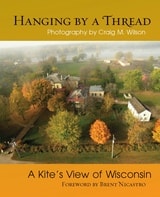
Hanging by a Thread
A Kite’s View of WisconsinCraig M. Wilson
University of Wisconsin Press, 2011
This full-color book of photographs records Wisconsin from an unusual viewpoint: a camera suspended from a kite and controlled by photographer Craig M. Wilson from the ground. Taken from fifty to a few hundred feet in the air, Wilson’s photos capture natural and man-made views that wouldn’t otherwise be possible. The result is a vibrant collection that captures Wisconsin in all its shifting beauty in landscapes and cityscapes, festivals, Door County’s lighthouses, Milwaukee’s neighborhoods, and the crowd at a Badger football game. Captions are provided in English, Spanish, German, and Mandarin Chinese.
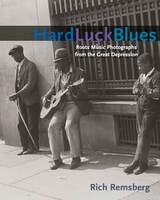
Hard Luck Blues
Roots Music Photographs from the Great DepressionRich Remsberg
University of Illinois Press, 2010
Showcasing American music and music making during the Great Depression, Hard Luck Blues presents more than two hundred photographs created by the New Deal's Farm Security Administration photography program. With an appreciation for the amateur and the local, FSA photographers depicted a range of musicians sharing the regular music of everyday life, from informal songs in migrant work camps, farmers' homes, barn dances, and on street corners to organized performances at church revivals, dance halls, and community festivals. Captured across the nation from the northeast to the southwest, the images document the last generation of musicians who learned to play without the influence of recorded sound, as well as some of the pioneers of Chicago's R & B scene and the first years of amplified instruments. The best visual representation of American roots music performance during the Depression era, Hard Luck Blues features photographs by Jack Delano, Dorothea Lange, Russell Lee, Arthur Rothstein, Ben Shahn, Marion Post Wolcott, and others.
Photographer and image researcher Rich Remsberg breathes life into the images by providing contextual details about the persons and events captured, in some cases drawing on interviews with the photographers' subjects. Also included are a foreword by author Nicholas Dawidoff and an afterword by music historian Henry Sapoznik.
Published in association with the Library of Congress.

Harker's Barns
Visions of an American IconMichael Harker
University of Iowa Press, 2003
Michael Harker drove past old barns on gravel roads and blacktop highways for years. He generally dismissed them as obsolete outbuildings until November 1993, when he felt compelled to photograph a windmill in Clutier, Iowa. This single photograph launched him on a seven-and-a-half-year mission to document Iowa's barns and all they represent. The result is Harker's Barns: Visions of an American Icon.
Each of the seventy-five black-and-white images featured in Harker's Barns beautifully and heartbreakingly captures the glory and ultimate demise of one of rural America's most enduring icons. From square to round, wood to brick, Dutch to Swedish, occupied or abandoned, the barns documented in this stunning collection are a testament to a passing way of life that was once the lifeblood of Iowa and the Midwest.
Complementing Harker's photographs are vignettes by poet and writer Jim Heynen. Both whimsical and endearing, each vignette treats barns as organic and intelligent entities, reflecting the living history that can be found inside each rural structure.
Iowa's barns are disappearing and with them a way of life; Harker's Barns brilliantly documents their heritage for future generations. As Jim Heynen says, “A good photograph can maintain an old barn through blizzards and hail storms and tornadoes. It is the best support beam and wood preservative an old barn can have.”
Harker's One-Room Schoolhouses
Visions of an Iowa IconPaul Theobald
University of Iowa Press, 2008
Michael Harker’s goal is to record Iowa’s historically significant architecture before it disappears forever. From Coon Center School no. 5 in Albert City to Pleasant Valley School in Kalona, North River School in Winterset to Douglas Center School in Sioux Rapids, and Iowa’s first school to Grant Wood’s first school, he has achieved this goal on a grand scale in Harker’s One-Room Schoolhouses.
Educational historian Paul Theobald tells the story of the rise and fall of Iowa’s one-room schools, whose numbers fell from close to 15,000 in 1918 to only 1,100 in 1960, all of which had ceased to function as schools by 1980. Moving from the state-wide story to the personal, he introduces us to George Coleman, son of a local farmer and school board director, who kept a sparse diary between December 1869 and June 1870. Young George’s words reveal the intimate way in which one-room schools interacted with the local community, including the local economic scene. Theobald ends by suggesting that these one-room relics of the past may again prove useful.

Harlem
The Unmaking of a GhettoCamilo José Vergara
University of Chicago Press, 2013
Photographer Camilo José Vergara has been chronicling the neighborhood for forty-three years, and Harlem: The Unmaking of a Ghetto is an unprecedented record of urban change. Vergara began his documentation of Harlem in the tradition of such masters as Helen Levitt and Aaron Siskind, and he later turned his focus on the neighborhood’s urban fabric, both the buildings that compose it and the life and culture embedded in them. By repeatedly returning to the same locations over the course of decades, Vergara is able to show us a community that is constantly changing—some areas declining, as longtime businesses give way to empty storefronts, graffiti, and garbage, while other areas gentrify, with corporate chain stores coming in to compete with the mom-and-pops. He also captures the ever-present street life of this densely populated neighborhood, from stoop gatherings to graffiti murals memorializing dead rappers to impersonators honoring Michael Jackson in front of the Apollo, as well as the growth of tourism and racial integration.
Woven throughout the images is Vergara’s own account of his project and his experience of living and working in Harlem. Taken together, his unforgettable words and images tell the story of how Harlem and its residents navigated the segregation, dereliction and slow recovery of the closing years of the twentieth century and the boom and racial integration of the twenty-first century. A deeply personal investigation, Harlem will take its place with the best portrayals of urban life.

Harold!
Photographs from the Harold Washington YearsPhotographs by Antonio Dickey and Marc PoKempner, text by Salim Muwakkil
Northwestern University Press, 2007
Antonio Dickey and Marc PoKempner were there with Washington throughout 1982-87, Dickey as his campaign and personal photographer and PoKempner on assignment for the New York Times, People, and Time, capturing the force of his personality and the inspiration he brought to Chicago. Their photographs have become the definitive documentation of the Harold years and were featured in the Chicago Historical Society’s 2003–2004 exhibit “Harold Washington: The Man and the Movement.” They were there for his underdog rise, his win, his first term, and his untimely death just seven months into his second term. The year 2007 marks the twentieth anniversary of Washington’s death, and this loving tribute in words and pictures will keep his message alive for future generations.
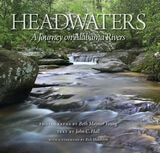
Headwaters
A Journey on Alabama RiversJohn C. Hall and Beth Maynor Young
University of Alabama Press, 2009
A breathtaking portrait of Alabama rivers.
From their primal seepages in the Appalachian highlands or along the broad Chunnenuggee Hills, Alabama’s rivers carve through the rocky uplands and down the Fall Line rapids, then ease across the coastal plain to their eventual confluence with the Gulf of Mexico.
Beth Maynor Young’s 155 full-color photographs constitute art through a lens; the colors, the light, and the angles all converge for a tender praise of her subject. Her stunning visuals are supported by tantalizing captions and introductory text from John C. Hall, a master field trip leader. Together, they tell a proud story of the native beauty and complexity of these Alabama watercourses that shepherd fully 20% of the nation’s fresh water to sea.
The intimate close-up of verdant mosses or pebbled beaches pulls one into their space just as surely as does a sweeping scene of a watershed valley or a sparkling sunset over water. We all become eager listeners and observers on this guided “paddle to the Gulf,” drinking in the peace, delight, and beauty offered by the experience. At the end, we know we won’t be the same as before beginning the journey.
In addition to being a celebration of their richness, Headwaters serves as a call to greater stewardship of these riverine resources. Conservation sidebars describe the current efforts in this direction and encourage further study and protection. This book tells us, in glorious color and instructive word, why we’ll always treasure these wonderful rivers.

Healing Las Vegas
The Las Vegas Community Healing Garden in response to the 1 October tragedyMcAleer
University of Nevada Press, 2019
The story of the garden unfolds through photographs and the words of survivors, first responders, family members, medical professionals, counselors, and members of the community. In only a matter of days, volunteers and local businesses transformed a vacant downtown lot into a serene urban oasis. Families and friends of those lost in the tragedy soon adopted each of the fifty-eight trees planted in honor of their loved ones, and visitors left behind colorful mementos, including painted rocks, photographs, and ornaments, as well as words of encouragement, love, loss, and strength.
In the aftermath of 1 October, an often misunderstood city revealed its soul under the most heartbreaking of circumstances. The inspirational voices and stories from a community touched by tragedy provide comfort and encouragement. And the organic response to the unthinkable is a testament to how one community came together at its darkest hour, chose hope over despair, unity over hate.

Hidden Ocean Forests
An Undersea Journey to Uncover a Fascinating World of KelpRoss Frylinck and Faine Loubser
University of Chicago Press, 2027
Stunning underwater photography of the world’s great marine kelp forests and the wildlife they shelter.
Kelp forests, which thrive in cold, nutrient-rich waters, are found along the coasts of every continent except Antarctica. These underwater realms are stunningly beautiful and host entire ecosystems, providing food, shelter, and breeding grounds for an abundance of marine life.
With transcendent photography and compelling accounts from freedivers and storytellers Ross Frylinck and Faine Loubser, this book offers a captivating glimpse into these ocean forests. Dive beneath the midnight sun in the Arctic Circle and watch the northern lights dance over the waters of Shetland, Scotland. In Aotearoa New Zealand, swim with playful sea lions off Rakiura Stewart Island. In South Africa’s Cape Peninsula, cross paths with dusky dolphins, whales, and sharks. Meet an austral sea wolf in the icy Strait of Magellan and learn from kelp harvesters on remote islands in Japan.
Hidden Ocean Forests documents kelp forests around the world, showcasing their rich biodiversity and long-lasting impacts on human culture. These remarkable images and enchanting essays reveal the hidden beauty, significance, and fragility of these submerged wonderlands.

Hippolyte Bayard and the Invention of Photography
Karen Hellman
J. Paul Getty Trust, The, 2024
Hippolyte Bayard (1801–1887) is often characterized as an underdog in the early history of photography. From the outset, his contribution to the invention of the medium was eclipsed by others such as Louis-Jacques-Mandé Daguerre (1787–1851) and William Henry Fox Talbot (1800–1877). However, Bayard had an undeniable role in the birth of photography and its subsequent evolution into a form of art. He was a pioneer in artistic style, innovator in terms of practice, and teacher of the next generation of photographers.
Alongside an exploration of Bayard’s decades-long career and lasting impact, this volume presents—for the first time in print—some of the earliest photographs in existence. An album containing nearly 200 images, 145 of those by or attributed to Bayard, is among the Getty Museum’s rarest and most treasured photographic holdings. Few prints have ever been seen in person due to the extreme light sensitivity of Bayard’s experimental processes, making this an essential reference for scholars and enthusiasts of the very beginning of photography.
This volume is published to accompany an exhibition on view at the J. Paul Getty Museum at the Getty Center from April 9 to July 7, 2024.
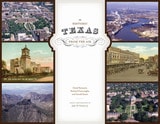
Historic Texas from the Air
By David Buisseret, Richard Francaviglia, Gerald Saxon, and Jack Graves
University of Texas Press, 2009
The extremely varied geography of Texas, ranging from lush piney woods to arid, mountainous deserts, has played a major role in the settlement and development of the state. To gain full perspective on the influence of the land on the people of Texas, you really have to take to the air—and the authors of Historic Texas from the Air have done just that. In this beautiful book, dramatic aerial photography provides a complete panorama of seventy-three historic sites from around the state, showing them in extensive geographic context and revealing details unavailable to a ground-based observer.
Each site in Historic Texas from the Air appears in a full-page color photograph, accompanied by a concise description of the site's history and importance. Contemporary and historical photographs, vintage postcard images, and maps offer further visual information about the sites. The book opens with images of significant natural landforms, such as the Chisos Mountains and the Big Thicket, then shows the development of Texas history through Indian spiritual sites (including Caddo Mounds and Enchanted Rock), relics from the French and Spanish occupation (such as the wreck of the Belle and the Alamo), Anglo forts and methods of communication (including Fort Davis and Salado's Stagecoach Inn), nineteenth-century settlements and industries (such as Granbury's courthouse square and Kreische Brewery in La Grange), and significant twentieth-century locales, (including Spindletop, the LBJ Ranch, and the Dallas–Fort Worth International Airport).
For anyone seeking a visual, vital overview of Texas history, Historic Texas from the Air is the perfect place to begin.
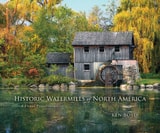
Historic Watermills of North America
A Visual PreservationKen Boyd
University of Alabama Press, 2021
112 full-color artistic photographs of watermills still standing on the North American landscape
The scenic beauty of the watermill is undeniable. The iconic waterwheel has inspired romantics for generations with their warmth and charm. Watermills were once ubiquitous landmarks along brooks, creeks, and rivers across North America. Today, only a scattering of the old watermills grace the countryside, but through these mills, and the turning of their wheels and the whirling of their stones, a small but spectacular part of history lives on.
Through stunningly beautiful images, Historic Watermills of North America: A Visual Preservation presents 112 watermills still standing on the North American landscape. With idealized full-color photographs, Ken Boyd nostalgically hearkens back to a time after European settlement when these structures were the very heart of the communities whose livelihoods they made possible. These mills turned the power of flowing water into mechanical energy to grind corn and wheat into meal and flour, saw timber, loom wool and cotton cloth, and more for the benefit of their operators and communities.
At one time vital to their surrounding regions, most of these surviving mills are in rural areas that have been passed over by modern development. Their designs are as individual as their makers, and their settings are as varied as the landscape. Some have been converted into homes or museums or are part of local tourist attractions. Others have been abandoned but give witness to the significance of their heydays, and others are still in use, doing the same work they have done for generations.
Boyd’s beautifully rendered photographs preserve these extant structures and represent a variety of watermills across the United States and Canada. Each mill photograph is accompanied by a description providing the name of the mill, its location, date of construction, and brief comments highlighting its most noteworthy features. Additional photographs and commentary in the afterword explore the inner workings of watermills.

History and Modern Media
A Personal JourneyJohn Mraz
Vanderbilt University Press, 2021
The book interweaves an autobiographical narrative with concrete research. Mraz describes the resistance he encountered in US academia to this new way of showing and describing the past in films and photographs, as well as some illuminating experiences as a visiting professor at several US universities. More importantly, he reflects on what it has meant to move to Mexico and become a Mexican. Mexico is home to a thriving school of photohistorians perhaps unequaled in the world. Some were trained in art history, and a few continue to pursue that discipline. However, the great majority work from the discipline known as "photohistory" which focuses on vernacular photographs made outside of artistic intentions.
A central premise of the book is that knowing the cultures of the past and of the other is crucial in societies dominated by short-term and parochial thinking, and that today's hyper-audiovisuality requires historians to use modern media to offer their knowledge as alternatives to the "perpetual present" in which we live.
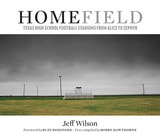
Home Field
Texas High School Football Stadiums from Alice to ZephyrPhotographs by Jeff Wilson
University of Texas Press, 2010
"The promise of an empty football field is an irresistible force for those who understand and revere the game," Jeff Wilson observes. Drawn by the sense of possibility and nostalgia inherent in every stadium, Wilson traveled the state of Texas to photograph high school stadiums for a photo essay that appeared in Texas Monthly in August 2005. The magazine's readers responded with an outpouring of enthusiasm, and Wilson's photo essay was nominated for a prestigious National Magazine Award.
In Home Field, Wilson creates a unique photo portrait of nearly eighty Texas high school football stadiums, ranging from the bright lights, artificial turf, and seating for thousands at Southlake Carroll to the lone set of bleachers under the wide open sky in Veribest. Shot from the fifty-yard line facing the home stands, these photographs invite us to view each stadium from the same vantage point and experience it as an evocative place that holds a community's collective memories. Accompanying the photographs are reminiscences about the fields from players, coaches, team physicians, athletic directors, sportswriters and announcers, school superintendents, principals and teachers, band directors, maintenance workers, booster club parents, students, and fans. Their stories—whether funny, nostalgic, or poignant—reveal just how important high school football is to Texans and how it creates an unforgettable sense of community and camaraderie.
Sure to bring back memories as soon as you open the book, Home Field captures what football is supposed to be—"simple and pure, like a perfect spiral arcing gracefully across the sky."
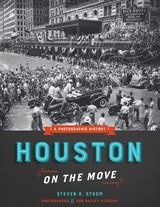
Houston on the Move
A Photographic HistoryBy Steven R. Strom, Photographs by Bob Bailey Studios
University of Texas Press, 2016
Houston completely transformed itself during the twentieth century, burgeoning from a regional hub into a world-class international powerhouse. This remarkable metamorphosis is captured in the Bob Bailey Studios Photographic Archive, an unparalleled visual record of Houston life from the 1930s to the early 1990s. Founded by the commercial photographer Bob Bailey in 1929, the Bailey Studios produced more than 500,000 photographs and fifty-two 16 mm films, making its archive the largest and most comprehensive collection of images ever taken in and around Houston. The Bob Bailey Studios Archive is now owned by the Dolph Briscoe Center for American History at the University of Texas at Austin.
Houston on the Move presents over two hundred of the Bailey archive’s most memorable and important photographs with extended captions that detail the photos’ subjects and the reasons for their significance. These images, most never before published, document everything from key events in Houston’s modern history—World War II; the Texas City Disaster; the building of the Astrodome; and the development of the Ship Channel, Medical Center, and Johnson Space Center—to nostalgic scenes of daily life. Bob Bailey’s expertly composed photographs reveal a great city in the making: a downtown striving to be the best, biggest, and tallest; birthday parties, snow days, celebrations, and rodeos; opulent department stores; Hollywood stars and political leaders; rapid industrial and commercial growth; and the inexorable march of the suburbs. An irresistible “remember that?” book for long-time Houstonians, Houston on the Move will also be an essential reference for historians, photographers, designers, and city planners.
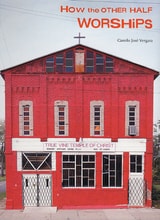
How the Other Half Worships
Camilo José Vergara
Rutgers University Press, 2005
Domestically and abroad, America is known as the richest country in the world. It is hard not to be impressed by the standard of living in the nation’s most affluent suburban and urban neighborhoods. Yet, scattered amid stretches that abound in wealth, the country is home to neighborhoods rife with violence, poverty, segregation, and decay. Within these blighted urban landscapes, however, there is at least one notable example of plenty: churches. They do not always appear as traditional houses of worship, but often emerge from the retrofitted shells of former storefronts, garages, factories, warehouses, domestic dwellings, and public institutions. Regardless of the façade, churches populate America’s poorest neighborhoods.
Bringing together more than 300 richly textured color photographs and a series of candid interviews with pastors, church officials, and congregation members, this extraordinary book explores the conditions, beliefs, and practices that shape the churches and the lives of the nation’s urban poor. Over a period of thirty years, sociologist and photographer Camilo José Vergara repeatedly visited these places of worship and the eclectic mix of buildings that house them. In twenty-one cities located in ten states across the country, photographic sequences coupled with insightful narrative show how ordinary structures assume, modify, and shed a religious character, how traditional churches—if they fail to adapt to new congregations—are demolished, and how new churches are designed and built from the ground up.
Vergara pays special attention to the objects, texts, and imagery that religious leaders make use of to create environments that inspire devotion. Pastors of developing congregations often arrive as crusaders, with missions that cannot be served by traditional religious iconography, and with budgets that force them to use inexpensive materials. In some cases, pastors bring objects of worship from their home towns in places such as Mexico, Puerto Rico, Africa, and the West Indies. Despite the idiosyncratic features and folk decoration that distinguish ghetto churches from one another, however, Vergara shows that, for the most part, they are driven by similar religious agendas. They tend to preach about resilience, avoid involving themselves in national and international events, and consider their truths to be absolute and eternal.
A powerful, poignant, and visually arresting portrait, How the Other Half Worships stands as a stark witness to how churches are being rebuilt in the dilapidated streets of America’s cities and how religion is being reinvented by the nation’s poor.

Human Rights In Camera
Sharon Sliwinski
University of Chicago Press, 2011
From the fundamental rights proclaimed in the American and French declarations of independence to the 1948 Universal Declaration of Human Rights and Hannah Arendt’s furious critiques, the definition of what it means to be human has been hotly debated. But the history of human rights—and their abuses—is also a richly illustrated one. Following this picture trail, Human Rights In Camera takes an innovative approach by examining the visual images that have accompanied human rights struggles and the passionate responses people have had to them.