Results by title
81 books match the query 'Publishing' and 5 start with h

Handbook Of Academic Writing For Librarians
Assoc of College & Research Libraries, 2013
Handbook of Academic Writing for Librarians
Christopher Hollister
Assoc of College & Research Libraries, 2014
This primary reference tool for the library and information science (LIS) community supports those who either desire or are required to publish in the professional literature. LIS students at the masters and doctoral levels can also benefit from this comprehensive volume.
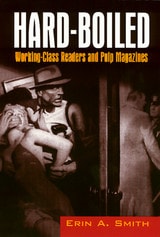
Hard-Boiled
Erin A. Smith
Temple University Press, 2000
Relying on pulp magazine advertising, the memoirs of writers and publishers, Depression-era studies of adult reading habits, social and labor history, Smith offers an innovative account of how these popular stories were generated and read. She shows that although the work of pulp fiction authors like Dashiell Hammett, Raymond Chandler, and Erle Stanley Gardner have become “classics” of popular culture, the hard-boiled genre was dominated by hack writers paid by the word, not self-styled artists. Pulp magazine editors and writers emphasized a gritty realism in the new genre. Unlike the highly rational and respectable British protagonists (Miss Marple and Hercule Poirot, for instance), tough-talking American private eyes relied as much on their fists as their brains as they made their way through tangled plotlines.
Casting working-class readers of pulp fiction as “poachers,” Smith argues that they understood these stories as parables about Taylorism, work, and manhood; as guides to navigating consumer culture; as sites for managing anxieties about working women. Engaged in re-creating white, male privilege for the modern, heterosocial world, pulp detective fiction shaped readers into consumers by selling them what they wanted to hear – stories about manly artisan-heroes who resisted encroaching commodity culture and the female consumers who came with it. Commenting on the genre’s staying power, Smith considers contemporary detective fiction by women, minority, and gay and lesbian writers.
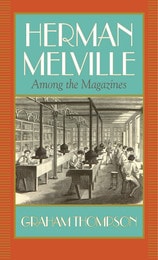
Herman Melville
Among the MagazinesGraham Thompson
University of Massachusetts Press, 2018
What I feel most moved to write, that is banned,—it will not pay. Yet, altogether, write the other way I cannot. Herman Melville wrote these words as he struggled to survive as a failing novelist. Between 1853 and 1856, he did write “the other way,” working exclusively for magazines. He earned more money from his stories than from the combined sales of his most well known novels, Moby-Dick, Pierre, and The Confidence-Man.
In Herman Melville Graham Thompson examines the author's magazine work in its original publication context, including stories that became classics, such as “Bartelby, the Scrivener” and “Benito Cereno,” alongside lesser-known work. Using a concept he calls “embedded authorship,” Thompson explores what it meant to be a magazine writer in the 1850s and discovers a new Melville enmeshed with forgotten materials, editors, writers, and literary traditions. He reveals how Melville responded to the practical demands of magazine writing with dazzling displays of innovation that reinvented magazine traditions and helped create the modern short story.
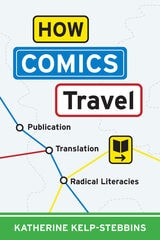
How Comics Travel
Publication, Translation, Radical LiteraciesKatherine Kelp-Stebbins
The Ohio State University Press, 2022
Honorable Mention, 2023 CSS Charles Hatfield Book Prize
In How Comics Travel: Publication, Translation, Radical Literacies, Katherine Kelp-Stebbins challenges the clichéd understanding of comics as a “universal” language, circulating without regard for cultures or borders. Instead, she develops a new methodology of reading for difference. Kelp-Stebbins’s anticolonial, feminist, and antiracist analytical framework engages with comics as sites of struggle over representation in a diverse world. Through comparative case studies of Metro, Tintin, Persepolis, and more, she explores the ways in which graphic narratives locate and dislocate readers in every phase of a transnational comic’s life cycle according to distinct visual, linguistic, and print cultures. How Comics Travel disengages from the constrictive pressures of nationalism and imperialism, both in comics studies and world literature studies more broadly, to offer a new vision of how comics depict and enact the world as a transcultural space.