Results by title
862 books match the query 'Social History' and 28 start with h

Halfway to Freedom
The History of Black Washington, DCMaurice Jackson. Foreword by Lonnie G. Bunch III.
Duke University Press, 2026
For more than two hundred years, the history and culture of the District of Columbia have been in great part shaped by its Black residents. Several Black men were elected to political positions citywide only a handful of years after the end of the Civil War, and while the years after Reconstruction saw the region plagued with segregation and racial violence, the capital’s Black population continued to grow at all economic levels. Washington became the first major US city with a majority Black population in 1957, a status it held for almost seventy years as gentrification has led to the decline of Black political and economic power in DC in the twenty-first century.
Halfway to Freedom is a social, political, intellectual, and cultural history of African Americans in Washington, DC; it explores the role that race, gender, color, class, and power have played in the city and its relationship with the federal government. Maurice Jackson explores the material conditions that shaped life for African Americans, free and enslaved, from the earliest moments of the District’s history to more contemporary times of organization and activism. Through an array of archival materials, especially firsthand accounts of Black residents in the area, Jackson critiques how and why DC exists as a haven within the Black American imaginary given the realities of conflict its Black residents have faced and continue to face today. In doing so, he highlights and honors the gains they have earned through the concerted struggles of labor organizations, women’s movements, sports, music, art, legal activism, and more.

Hanna's Town
A Little World We Have LostW. William Wimberly II
Indiana Historical Society Press, 2010

Harambee City
The Congress of Racial Equality in Cleveland and the Rise of Black Power PopulismNishani Frazier
University of Arkansas Press, 2017
BLACK POWER!
It was a phrase that consumed the American imagination in the 1960s and 70s and inspired a new agenda for black freedom. Dynamic and transformational, the black power movement embodied more than media stereotypes of gun-toting, dashiki-wearing black radicals; the movement opened new paths to equality through political and economic empowerment.
In Harambee City, Nishani Frazier chronicles the rise and fall of black power within the Congress of Racial Equality (CORE) by exploring the powerful influence of the Cleveland CORE chapter. Frazier explores the ways that black Clevelanders began to espouse black power ideals including black institution building, self-help, and self-defense. These ideals challenged CORE’s philosophy of interracial brotherhood and nonviolent direct action, spawning ideological ambiguities in the Cleveland chapter. Later, as Cleveland CORE members rose to national prominence in the organization, they advocated an open embrace of black power and encouraged national CORE to develop a notion of black community uplift that emphasized economic populism over political engagement. Not surprisingly, these new empowerment strategies found acceptance in Cleveland.
By providing an understanding of the tensions between black power and the mainstream civil rights movement as they manifested themselves as both local and national forces, Harambee City sheds new light on how CORE became one of the most dynamic civil rights organizations in the black power era.

Health, Hygiene and Eugenics in Southeastern Europe to 1945
Christian Promitzer
Central European University Press, 2011

Here and Everywhere Else
Small-Town Maine and the WorldAndrew Witmer
University of Massachusetts Press, 2022
Winner of the 2023 New England Society Book Award in the Historical Nonfiction category
Winner of an Award of Excellence, American Association for State and Local History (AASLH)
In 1822, settlers pushed north from Massachusetts and other parts of New England into Monson, Maine. On land taken from the Penobscot people, they established prosperous farms and businesses. Focusing on the microhistory of this village, Andrew Witmer reveals the sometimes surprising ways that this small New England town engaged with the wider world across the nineteenth and twentieth centuries. Townspeople fought and died in distant wars, transformed the economy and landscape with quarries and mills, and used railroads, highways, print, and new technologies to forge connections with the rest of the nation.
Here and Everywhere Else starts with Monson’s incorporation in the early nineteenth century, when central Maine was considered the northern frontier and over 90 percent of Americans still lived in rural areas; it ends with present-day attempts to revive this declining Maine town into an artists’ colony. Engagingly written, with colorful portraits of local characters and landmarks, this study illustrates how the residents of this remote place have remade their town by integrating (and resisting) external influences.

Heroes of Their Own Lives
The Politics and History of Family Violence--Boston, 1880-1960Linda Gordon
University of Illinois Press, 2002
Powerful and moving, Heroes of Their Own Lives offers an honest understanding of a persistent problem and a realistic view of the difficulties in stopping it.

Hidden San Francisco
A Guide to Lost Landscapes, Unsung Heroes and Radical HistoriesChris Carlsson
Pluto Press, 2020
Hidden San Francisco is a guidebook like no other. It’s a radical, alternative guidebook and history of San Francisco, complete with maps detailing walking and bike routes around the city.
San Francisco is an iconic and symbolic city. But only when you look beyond the picture-postcards of the Golden Gate Bridge and the quaint cable cars do you realize that the city's most interesting stories are not the Summer of Love, the Beats or even the latest gold rush in Silicon Valley.
Carlsson delves into the Bay Area's long prehistory, examining the region's geography and the lives of its inhabitants before the 1849 Gold Rush changed everything, setting in motion the clash between capital and labor that shaped the modern city. Structured around the four major themes of ecology, labor, transit and dissent, Chris Carlsson’s book peels back the layers of San Francisco's history to reveal a storied past: behind old walls and gleaming glass facades lurk former industries, secret music and poetry venues, forgotten terrorist bombings, and much more.
From the perspective of the students and secretaries, hippies and beatniks, longshoremen and waitresses, Hidden San Francisco uncovers dozens of overlooked, forgotten and buried histories that pulse through the streets and hills even today, inviting the reader to see themselves in the middle of the ongoing, everyday process of making history together.

High Mountains Rising
Appalachia in Time and PlaceEdited by Richard A. Straw and H. Tyler Blethen
University of Illinois Press, 2004
The first half of the fourteen essays deal with historical issues including Native Americans, pioneer settlement, slavery, the Civil War and Reconstruction, industrialization, the Great Depression, migration, and finally, modernization. The remaining essays take a more cultural focus, addressing stereotypes, music, folklife, language, literature, and religion.
Bringing together many of the most prestigious scholars in Appalachian studies, this volume has been designed for general and classroom use, and includes suggestions for further reading.

Hipbillies
Deep Revolution in the Arkansas OzarksJared M. Phillips
University of Arkansas Press, 2019

History Repeating Itself
The Republication of Children's Historical Literature and the Christian RightGregory M. Pfitzer
University of Massachusetts Press, 2014
Recently publishers on the Christian Right have been reprinting nineteenth-century children's history books and marketing them to parents as “anchor texts” for homeschool instruction. Why, Gregory M. Pfitzer asks, would books written more than 150 years ago be presumed suitable for educating twenty-first-century children? The answer, he proposes, is that promoters of these recycled works believe that history as a discipline took a wrong turn in the early twentieth century, when progressive educators introduced social studies methodologies into public school history classrooms, foisting upon unsuspecting and vulnerable children ideologically distorted history books.
In History Repeating Itself, Pfitzer tests these assertions by scrutinizing and contextualizing the original nineteenth-century texts on which these republications are based. He focuses on how the writers borrowed from one another to produce works that were similar in many ways yet differed markedly in terms of pedagogical strategy and philosophy of history. Pfitzer demonstrates that far from being non-ideological, these works were rooted in intense contemporary debates over changing conceptions of childhood.
Pfitzer argues that the repurposing of antiquated texts reveals a misplaced resistance to the idea of a contested past. He also raises essential philosophical questions about how and why curricular decisions are shaped by the “past we choose to remember” on behalf of our children.

History and Hope in the Heart of Dixie
Scholarship, Activism, and Wayne Flynt in the Modern SouthEdited by Gordon E. Harvey, Richard D. Starnes and Glenn Feldman
University of Alabama Press, 2006
Exploring the history, challenges, and promise of a changing South through the legacy of Wayne Flynt.
This collection of essays on the social and political history of the modern South consider the region’s poor, racial mores and race relations, economic opportunity, Protestant activism, political coalitions and interest groups, social justice, and progressive reform. History and Hope in the Heart of Dixie illuminates the dual role of historian and public advocate in modern America. In a time when the nation’s eyes have been focused by Hurricanes Katrina and Rita onto the vulnerability and dire condition of poor people in the South, the applicability of research, teaching, and activism for this voiceless element seems all the more relevant.
Responding to the example of Wayne Flynt, whose fierce devotion to his state of Alabama and its region has not blinded his recognition of the inequities and despair that define southern life for so many, the scholars assembled in this work present contributions to the themes Flynt so passionately explored in his own work.Two seasoned observers of southern history and culture—John Shelton Reed and Dan T. Carter—offer assessments of Flynt’s influence on the history profession as a whole and on the region of the South in particular.

History and the Social Web
A Collection of EssaysAugust C. Krey
University of Minnesota Press, 1955
History and the Social Web was first published in 1955. Minnesota Archive Editions uses digital technology to make long-unavailable books once again accessible, and are published unaltered from the original University of Minnesota Press editions.
In this volume of twelve essays a distinguished historian demonstrates that the roots and branches of history form a continuous social web, that the events and societies of pasts eras and modern times form a complex and interlocking pattern when seen as a whole, and that a knowledge of history has a profound application to the problems and pleasures of the present. The volume includes the well-known essay, "A City That Art Built," which has long been out of print. The first group of essays is devoted to aspects of medieval and renaissance history, and those in the second section point up the continuity of the thread of world history. The essays on law, education, and medicine which form a part of the first section will be of particular interest to members of these professions.
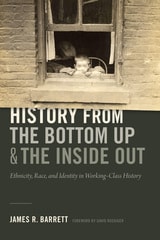
History from the Bottom Up and the Inside Out
Ethnicity, Race, and Identity in Working-Class HistoryJames R. Barrett
Duke University Press, 2017

History of Humanities, volume 10 number 1 (Spring 2025)
The University of Chicago Press
University of Chicago Press Journals, 2025
History of Humanities, volume 10 number 2 (Fall 2025)
The University of Chicago Press
University of Chicago Press Journals, 2025
History of Humanities, volume 11 number 1 (Spring 2026)
The University of Chicago Press
University of Chicago Press Journals, 2026
History of Humanities, volume 6 number 2 (Fall 2021)
The University of Chicago Press
University of Chicago Press Journals, 2021

History of Humanities, volume 7 number 1 (Spring 2022)
The University of Chicago Press
University of Chicago Press Journals, 2022
History of Humanities, volume 7 number 2 (Fall 2022)
The University of Chicago Press
University of Chicago Press Journals, 2022
History of Humanities, volume 8 number 1 (Spring 2023)
The University of Chicago Press
University of Chicago Press Journals, 2023

History of Humanities, volume 9 number 1 (Spring 2024)
The University of Chicago Press
University of Chicago Press Journals, 2024

History of Humanities, volume 9 number 2 (Fall 2024)
The University of Chicago Press
University of Chicago Press Journals, 2024
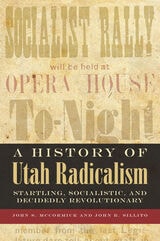
History of Utah Radicalism
Startling, Socialistic, and Decidedly RevolutionaryJohn S. McCormick and John R. Sillito
Utah State University Press, 2023
Utah, now one of the most conservative states, has a long tradition of left-wing radicalism. Early Mormon settlers set a precedent with the United Order and other experiments with a socialistic economy. The tradition continued into the more recent past with New Left, anti-apartheid, and other radicals. Throughout, Utah radicalism usually reflected national and international developments. Recounting its long history, McCormick and Sillito focus especially on the Socialist Party of America, which reached a peak of political influence in the first two decades of the twentieth century—in Utah and across the nation.
At least 115 Socialists in over two dozen Utah towns and cities were elected to office in that period, and on seven occasions they controlled governments of five different municipalities. This is a little-known story worth a closer look. Histories of Socialism in the United States have tended to forsake attention to specific, local cases and situations in favor of broader overviews of the movement. By looking closely at Utah's experience, this book helps unravel how American Socialism briefly flowered before rapidly withering in the early twentieth century. It also broadens the conventional understanding of Utah history.
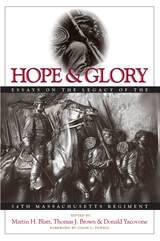
Hope and Glory
Essays on the Legacy of the 54th Massachusetts RegimentMartin H. Blatt
University of Massachusetts Press, 2009
The monument by Augustus Saint-Gaudens to Robert Gould Shaw and the 54th Massachusetts Regiment, located on Boston Common, stands at a symbolic crossroads of American history. A reminder of the nation's ongoing struggle over race, it captures the Civil War's higher purpose—the end of slavery—and memorializes those black soldiers and white officers who made common cause in the service of freedom. The monument and the saga of the 54 th Massachusetts remain powerful touchstones, inspiring enduring meditations such as Robert Lowell's poem “For the Union Dead” and the popular film Glory.
This volume brings together the best scholarship on the history of the 54th, the formation of collective memory and identity, and the ways Americans have responded to the story of the regiment and the Saint-Gaudens monument. Contributors use the historical record and popular remembrance of the 54th as a lens for examining race and community in the United States. The essays range in time from the mid-nineteenth century to the present and encompass history, literature, art, music, and popular culture.
In addition to the editors and Colin Powell, who writes about the memory and example of the 54th in his own career, contributors include Stephen Belyea, David W. Blight, Thomas Cripps, Kathryn Greenthal, James Oliver Horton, Edwin S. Redkey, Marilyn Richardson, Kirk Savage, James Smethurst, Cathy Stanton, Helen Vendler, Denise Von Glahn, and Joan Waugh.

How They Lived
The Everyday Lives of Hungarian Jews, 1867–1940András Koerner
Central European University Press, 2015

Humans in Shackles
An Atlantic History of SlaveryAna Lucia Araujo
University of Chicago Press, 2024
During the era of the Atlantic slave trade, more than twelve million enslaved Africans were forcibly transported to the Americas in cramped, inhumane conditions. Many of them died on the way, and those who survived had to endure further suffering in the violent conditions that met them onshore. Covering more than three hundred years, Humans in Shackles grapples with this history by foregrounding the lived experience of enslaved people in tracing the long, complex history of slavery in the Americas.
Based on twenty years of research, this book not only serves as a comprehensive history; it also expands that history by providing a truly transnational account that emphasizes the central role of Brazil in the Atlantic slave trade. Additionally, it is deeply informed by African history and shows how African practices and traditions survived and persisted in the Americas among communities of enslaved people. Drawing on primary sources including travel accounts, pamphlets, newspaper articles, slave narratives, and visual sources such as artworks and artifacts, Araujo illuminates the social, cultural, and religious lives of enslaved people working in plantations and urban areas, building families and cultivating affective ties, congregating and re-creating their cultures, and organizing rebellions.
Humans in Shackles puts the lived experiences of enslaved peoples at the center of the story and investigates the heavy impact these atrocities have had on the current wealth disparity of the Americas and rampant anti-Black racism.
Hungarian Culture and Politics in the Habsburg Monarchy 1711-1848
Gábor Vermes
Central European University Press, 2014

Hungarians and Europe in the Early Middle Ages
An Introduction to Early Hungarian HistoryAndrás Róna-Tas
Central European University Press, 1999