Results by title
501 books match the query 'South' and 14 start with h
Habitations of Modernity
Essays in the Wake of Subaltern StudiesDipesh Chakrabarty
University of Chicago Press, 2002
Chakrabarty pursues these issues in a series of closely linked essays, ranging from a history of the influential Indian series Subaltern Studies to examinations of specific cultural practices in modern India, such as the use of khadi—Gandhian style of dress—by male politicians and the politics of civic consciousness in public spaces. He concludes with considerations of the ethical dilemmas that arise when one writes on behalf of social justice projects.

Headwaters
A Journey on Alabama RiversJohn C. Hall and Beth Maynor Young
University of Alabama Press, 2009
A breathtaking portrait of Alabama rivers.
From their primal seepages in the Appalachian highlands or along the broad Chunnenuggee Hills, Alabama’s rivers carve through the rocky uplands and down the Fall Line rapids, then ease across the coastal plain to their eventual confluence with the Gulf of Mexico.
Beth Maynor Young’s 155 full-color photographs constitute art through a lens; the colors, the light, and the angles all converge for a tender praise of her subject. Her stunning visuals are supported by tantalizing captions and introductory text from John C. Hall, a master field trip leader. Together, they tell a proud story of the native beauty and complexity of these Alabama watercourses that shepherd fully 20% of the nation’s fresh water to sea.
The intimate close-up of verdant mosses or pebbled beaches pulls one into their space just as surely as does a sweeping scene of a watershed valley or a sparkling sunset over water. We all become eager listeners and observers on this guided “paddle to the Gulf,” drinking in the peace, delight, and beauty offered by the experience. At the end, we know we won’t be the same as before beginning the journey.
In addition to being a celebration of their richness, Headwaters serves as a call to greater stewardship of these riverine resources. Conservation sidebars describe the current efforts in this direction and encourage further study and protection. This book tells us, in glorious color and instructive word, why we’ll always treasure these wonderful rivers.
Healing Traditions
African Medicine, Cultural Exchange, and Competition in South Africa, 1820–1948Karen E. Flint
Ohio University Press, 2008
In August 2004, South Africa officially sought to legally recognize the practice of traditional healers. Largely in response to the HIV/AIDS pandemic, and limited both by the number of practitioners and by patients’ access to treatment, biomedical practitioners looked toward the country’s traditional healers as important agents in the development of medical education and treatment. This collaboration has not been easy. The two medical cultures embrace different ideas about the body and the origin of illness, but they do share a history of commercial and ideological competition and different relations to state power. Healing Traditions: African Medicine, Cultural Exchange, and Competition in South Africa, 1820–1948 provides a long-overdue historical perspective to these interactions and an understanding that is vital for the development of medical strategies to effectively deal with South Africa’s healthcare challenges.
Between 1820 and 1948 traditional healers in Natal, South Africa, transformed themselves from politically powerful men and women who challenged colonial rule and law into successful entrepreneurs who competed for turf and patients with white biomedical doctors and pharmacists. To understand what is “traditional” about traditional medicine, Flint argues that we must consider the cultural actors and processes not commonly associated with African therapeutics: white biomedical practitioners, Indian healers, and the implementing of white rule.
Carefully crafted, well written, and powerfully argued, Flint’s analysis of the ways that indigenous medical knowledge and therapeutic practices were forged, contested, and transformed over two centuries is highly illuminating, as is her demonstration that many “traditional” practices changed over time. Her discussion of African and Indian medical encounters opens up a whole new way of thinking about the social basis of health and healing in South Africa. This important book will be core reading for classes and future scholarship on health and healing in Africa.
Here to Stay
Uncovering South Asian American HistoryGeetika Rudra
Rutgers University Press, 2022
In Here to Stay, Geetika Rudra, a second-generation Indian immigrant and American history buff, takes readers on a journey across the country to unearth the little-known histories of earlier generations of South Asian Americans. She visits storied sites such as Oregon’s “Hindoo Alley,” home to many lumber workers at the turn of the century, and Angel Island, California’s immigration hub. She also introduces readers to such inspiring figures as Bhagat Singh Thind, an immigrant who had enlisted in the U.S. Army to serve his adopted country in World War I, but who was later denied citizenship and took his case all the way to the U.S. Supreme Court. In turns both serious and joyful, this book vividly reveals how South Asians have always been a vital part of the American tapestry.
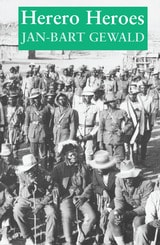
Herero Heroes
A Socio-Political History of the Herero of Namibia, 1890–1923Jan-Bart Gewald
Ohio University Press, 1998
The Herero-German war led to the destruction of Herero society. Yet Herero society reemerged, reorganizing itself around the structures and beliefs of the German colonial army and Rhenish missionary activity.
This book describes the manner in which the Herero of Namibia struggled to maintain control over their own freedom in the face of advancing German colonialism. Taking advantage of the South AFrican invasion in of Namibia in World War One the Herero established themselves in areas of their own choosing. The effective reoccupation of land by the Herero forced the new colonial state, anxious to maintain peace and cut costs, to come to terms with the existence of Herero society.
The study ends in 1923 when the death and funeral of Samuel Maherero — first paramount of the Herero and then resistance leader — was the catalyst that brought the disparate groups of Herero together to establish a single unitary Herero identity.
Hidden Nature
Wild Southern CavesMichael Ray Taylor
Vanderbilt University Press, 2020
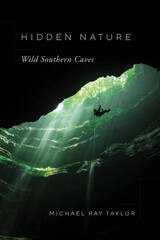
More than ten thousand known caves lie beneath the state of Tennessee according to the Tennessee Cave Survey, a nonprofit organization that catalogs and maps them. Thousands more riddle surrounding states. In Hidden Nature, Michael Ray Taylor tells the story of this vast underground wilderness. In addition to describing the sheer physical majesty of the region’s wild caverns and the concurrent joys and dangers of exploring them, he examines their rich natural history and scientific import, their relationship to clean water and a healthy surface environment, and their uncertain future.
As a longtime caver and the author of three popular books related to caving—Cave Passages, Dark Life, and Caves—Taylor enjoys (for a journalist) unusual access to this secretive world. He is personally acquainted with many of the region’s most accomplished cave explorers and scientists, and they in turn are familiar with his popular writing on caves in books; in magazines such as Audubon, Outside, and Sports Illustrated; and on websites such as those of the Discovery Channel and the PBS science series Nova.
Hidden Nature is structured as a comprehensive work of well-researched fact that reads like a personal narrative of the author’s long attraction to these caves and the people who dare enter their hidden chambers.

Hidden Nature
Wild Southern CavesMichael Ray Taylor
Vanderbilt University Press, 2020
More than ten thousand known caves lie beneath the state of Tennessee according to the Tennessee Cave Survey, a nonprofit organization that catalogs and maps them. Thousands more riddle surrounding states. In Hidden Nature, Michael Ray Taylor tells the story of this vast underground wilderness. In addition to describing the sheer physical majesty of the region’s wild caverns and the concurrent joys and dangers of exploring them, he examines their rich natural history and scientific import, their relationship to clean water and a healthy surface environment, and their uncertain future.
As a longtime caver and the author of three popular books related to caving—Cave Passages, Dark Life, and Caves—Taylor enjoys (for a journalist) unusual access to this secretive world. He is personally acquainted with many of the region’s most accomplished cave explorers and scientists, and they in turn are familiar with his popular writing on caves in books; in magazines such as Audubon, Outside, and Sports Illustrated; and on websites such as those of the Discovery Channel and the PBS science series Nova.
Hidden Nature is structured as a comprehensive work of well-researched fact that reads like a personal narrative of the author’s long attraction to these caves and the people who dare enter their hidden chambers.
Hindutva as Political Monotheism
Anustup Basu
Duke University Press, 2020
History From South Africa
Alternative Visions and PracticesJoshua Brown
Temple University Press, 1991
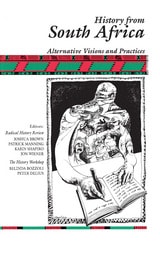
More starkly than any other contemporary social conflict, the crisis in South Africa highlights the complexities and conflicts in race, gender, class, and nation. These original articles, most of which were written by South African authors, are from a special issue of the Radical History Review, published in Spring 1990, that mapped the development of interpretations of the South African past that depart radically from the official history. The articles range from the politics of black movements in the nineteenth and twentieth centuries to studies of film, television, and theater as reflections of modern social conflict.
History from South Africa is presented in two main sections: discussions of the historiography of South Africa from the viewpoint of those rewriting it with a radical outlook; and investigations into popular history and popular culture—the production and reception of history in the public realm. In addition, two photo essays dramatize this history visually; maps and a chronology complete the presentation. The book provides a fresh look at major issues in South African social and labor history and popular culture, and focuses on the role of historians in creating and interacting with a popular movement of resistance and social change.
History after Apartheid
Visual Culture and Public Memory in a Democratic South AfricaAnnie E. Coombes
Duke University Press, 2003
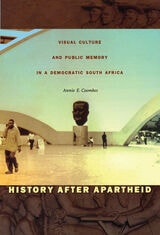
History after Apartheid explores the dilemmas posed by a wide range of visual and material culture including key South African heritage sites. How prominent should Nelson Mandela and the African National Congress be in the museum at the infamous political prison on Robben Island? How should the postapartheid government deal with the Voortrekker Monument mythologizing the Boer Trek of 1838? Coombes highlights the contradictory investment in these sites among competing constituencies and the tensions involved in the rush to produce new histories for the “new” South Africa.
She reveals how artists and museum officials struggled to adequately represent painful and difficult histories ignored or disavowed under apartheid, including slavery, homelessness, and the attempted destruction of KhoiSan hunter-gatherers. Describing how contemporary South African artists address historical memory and the ambiguities uncovered by the Truth and Reconciliation Commission, Coombes illuminates a body of work dedicated to the struggle to simultaneously remember the past and move forward into the future.

Hope And Dignity
Older Black Women of the SouthEmily Wilson
Temple University Press, 1992
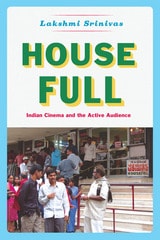
House Full
Indian Cinema and the Active AudienceLakshmi Srinivas
University of Chicago Press, 2016
With House Full, Lakshmi Srinivas takes readers deep into the moviegoing experience in India, showing us what it’s actually like to line up for a hot ticket and see a movie in a jam-packed theater with more than a thousand seats. Building her account on countless trips to the cinema and hundreds of hours of conversation with film audiences, fans, and industry insiders, Srinivas brings the moviegoing experience to life, revealing a kind of audience that, far from passively consuming the images on the screen, is actively engaged with them. People talk, shout, whistle, cheer; others sing along, mimic, or dance; at times audiences even bring some of the ritual practices of Hindu worship into the cinema, propitiating the stars onscreen with incense and camphor. The picture Srinivas paints of Indian filmgoing is immersive, fascinating, and deeply empathetic, giving us an unprecedented understanding of the audience’s lived experience—an aspect of Indian film studies that has been largely overlooked.

House, but No Garden
Apartment Living in Bombay's Suburbs, 1898-1964Nikhil Rao
University of Minnesota Press, 2013
Between the well-documented development of colonial Bombay and sprawling contemporary Mumbai, a profound shift in the city’s fabric occurred: the emergence of the first suburbs and their distinctive pattern of apartment living. In House, but No Garden Nikhil Rao considers this phenomenon and its significance for South Asian urban life. It is the first book to explore an organization of the middle-class neighborhood that became ubiquitous in the mid-twentieth-century city and that has spread throughout the subcontinent.
Rao examines how the challenge of converting lands from agrarian to urban use created new relations between the state, landholders, and other residents of the city. At the level of dwellings, apartment living in self-contained flats represented a novel form of urban life, one that expressed a compromise between the caste and class identities of suburban residents who are upper caste but belong to the lower-middle or middle class. Living in such a built environment, under the often conflicting imperatives of maintaining the exclusivity of caste and subcaste while assembling residential groupings large enough to be economically viable, led suburban residents to combine caste with class, type of work, and residence to forge new metacaste practices of community identity.
As it links the colonial and postcolonial city—both visually and analytically—Rao’s work traces the appearance of new spatial and cultural configurations in the middle decades of the twentieth century in Bombay. In doing so, it expands our understanding of how built environments and urban identities are constitutive of one another.
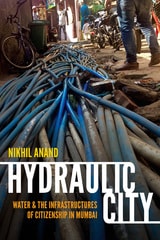
Hydraulic City
Water and the Infrastructures of Citizenship in MumbaiNikhil Anand
Duke University Press, 2017