Results by title
73 books match the query 'Style' and 4 start with h
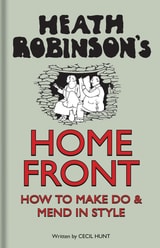
Heath Robinson's Home Front
How to Make Do and Mend in StyleW. Heath Robinson and Cecil Hunt
Bodleian Library Publishing, 2016
Heath Robinson was a household name in Britain, and millions of readers around the world continue to thoroughly enjoy his cartoons today. A classic military-themed compendium, Heath Robinson’s Home Front will be a favorite with fans of the cartoonist’s complicated, fanciful contraptions.
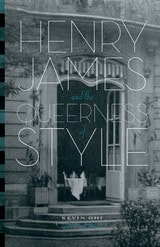
Henry James and the Queerness of Style
Kevin Ohi
University of Minnesota Press, 2010
For Ohi, there are many elements in the style that make James’s writing queer. But if there is a thematic marker, Ohi shows through his careful engagements with these texts, it is belatedness. The recurrent concern with belatedness, Ohi explains, should be understood not psychologically but stylistically, not as confessing the sad predicament of being out of sync with one’s life but as revealing the consequences of style’s refashioning of experience. Belatedness marks life’s encounter with style, and it describes an experience not of deprivation but of the rich potentiality of the literary work that James calls “freedom.” In Ohi’s reading, belatedness is the indicator not of sublimation or repression, nor of authorial self-sacrifice, but of the potentiality of the literary—and hence of the queerness of style.
Presenting original readings of a series of late Jamesian texts, the book also represents an exciting possibility for queer theory and literary studies in the future: a renewed attention to literary form and a new sounding—energized by literary questions of style and form—of the theoretical implications of queerness.
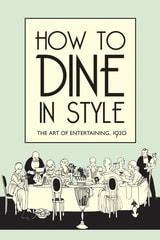
How to Dine in Style
The Art of Entertaining, 1920J. Rey
Bodleian Library Publishing, 2013
By turns a collection of practical advice and a catalog of eccentricities, The Whole Art of Dining, republished by the Bodleian Library as How to Dine in Style, contained everything the would-be socialite needed to know in order to elevate food to high art, from tricks for putting together a proper French menu or throwing a garden party to practical tips on serving wines in the correct order and at the right temperature. Throughout the book are stories of astonishing excess, such as the search for ever-more-elaborate themes and venues, and the more daring of the book’s devotees might have been tempted to emulate efforts like those of the intrepid hostess whose mountaineering-themed dinner party had guests rappel to the rooftop of her Chicago home or American millionaire George A. Kessler, whose infamous “Gondola Party” flooded— for the first and only time—the central courtyard of the Savoy.
A captivating glimpse into the golden age of fine dining, this book will be consumed with interest by discerning diners and fans of the Roaring Twenties—and it may even inspire readers to try their hand at throwing a stylish soiree of their own.
How to Write Well
50 Pointers on Process, Usage, and StyleBryan A. Garner
University of Chicago Press, 2027
Stop worshipping Strunk and White. Start writing well, with 50 tips and techniques from language expert Bryan A. Garner.
For decades, people looking for a concise guide to English-language writing turned to The Elements of Style by William Strunk Jr. and E. B. White. That slim book has been used by everyone from high school and college students to professionals seeking quick advice on usage, grammar, and form. But The Elements of Style hasn’t been updated in more than a quarter century, and it no longer reflects the way good writers work or what they most need to know, especially in the age of generative AI.
How to Write Well: 50 Pointers on Process, Usage, and Style is the modern, evidence-based alternative. Leading language and writing expert Bryan A. Gamer distills a lifetime of teaching and research into 50 compact pointers for modern writers seeking to produce clear, accurate, and lively prose. You’ll learn how strong writers think, how they turn ideas into blueprints, and how they draft, revise, and tighten with ruthless selectivity. You’ll also encounter lucid guidance on grammar and punctuation that corrects Strunk & White’s famous blunders, including shaky treatment of passive voice and a fixation on trivia over substance.
How to Write Well presents a start-to-finish method: mindset, habits, process, and the concrete techniques that produce clean, forceful writing. Unlike The Elements of Style, this book doesn’t pretend your draft magically appears on the page. It shows you how to generate ideas, structure them, and build a repeatable process for everything you write—from emails and memos to articles, briefs, and books. And while emphasizing the mind and the voice of the writer, it also offers advice on working intelligently with AI while keeping full editorial control.
If you’re serious about writing, Garner’s How to Write Well is the indispensable style book you need now.