Results by title
177 books match the query 'Themes, motives' and 6 start with h
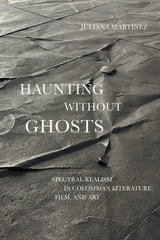
Haunting Without Ghosts
Spectral Realism in Colombian Literature, Film, and ArtBy Juliana Martínez
University of Texas Press, 2020
Winner, William M. LeoGrande Prize, Center for Latin American and Latino Studies at American University, 2022
For half a century, cultural production in Colombia has labored under the weight of magical realism—above all, the works of Gabriel García Márquez—where ghosts told stories about the country’s violent past and warned against a similarly gruesome future.
Decades later, the story of violence in Colombia is no less horrific, but the critical resources of magical realism are depleted. In their wake comes "spectral realism." Juliana Martínez argues that recent Colombian novelists, filmmakers, and artists—from Evelio Rosero and William Vega to Beatriz González and Erika Diettes—share a formal and thematic concern with the spectral but shift the focus from what the ghost is toward what the specter does. These works do not speak of ghosts. Instead, they use the specter to destabilize reality by challenging the authority of human vision and historical chronology.
By introducing the spectral into their work, these artists decommodify well-worn modes of representing violence and create a critical space from which to seek justice for the dead and disappeared. A Colombia-based study, Haunting without Ghosts brings powerful insight to the politics and ethics of spectral aesthetics, relevant for a variety of sociohistorical contexts.
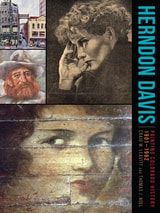
Herndon Davis
Painting Colorado History, 1901–1962Craig Leavitt
University Press of Colorado, 2016
Herndon Davis, an artist and journalist, dedicated his life to depicting the major landmarks and personalities of Colorado in watercolor, oil, and pen and pencil. Best known for the Face on the Barroom Floor, the portrait of an alluring woman on the floor of the Teller House Hotel barroom in Central City, Colorado, Davis was a prolific artist whose murals, sketches, and portraits can be found all over the state, from the Sage Room of the Oxford Hotel on Seventeenth Street to the Denver Press Club poker room. Despite his numerous contributions, his work was never showcased or exhibited in the traditional manner.
In this biography and first-ever collection featuring most of his life’s work, authors Craig Leavitt and Thomas J. Noel provide a detailed look into Davis’s life and career and include a catalog of almost 200 of his paintings and drawings from Colorado and around the country. They also put his work into the broader context of the time through comparison with such contemporary Colorado artists as Muriel Sibell Wolle, Allen Tupper True, Charles Waldo Love, and Juan Menchaca.
Published to coincide with the Denver Public Library’s 2016 exhibition—the only public display of Davis’s work to date—and bringing deserved attention to this overlooked figure, Herndon Davis: Painting Colorado History, 1901-1962 is an important contribution to Colorado’s cultural history.
This book and the accompanying exhibit are sponsored by the Western History/Genealogy Department at the Denver Public Library.
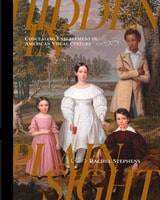
Hidden in Plain Sight
Concealing Enslavement in American Visual CultureRachel Stephens
University of Arkansas Press, 2023
In Hidden in Plain Sight: Concealing Enslavement in American Visual Culture, Rachel Stephens addresses an enormous body of material by tracing themes of concealment and silence through paintings, photographs, and ephemera, connecting long overlooked artworks with both the abolitionist materials to which they were responding and archival research across a range of southern historical narratives.
Stephens begins her fascinating study with an examination of the ways that slavery was visually idealized and defended in antebellum art. She then explores the tyranny—especially that depicted in art—enacted by supporters of enslavement, introduces a range of ways that artwork depicting slavery was tangibly concealed, considers photographs of enslaved female caretakers with the white children they reared, and investigates a printmaker’s confidential work in support of the Confederacy. Finally, she delves into an especially pernicious group of proslavery artists in Richmond, Virginia.
Reading visual culture as a key element of the antebellum battle over slavery, Hidden in Plain Sight complicates the existing narratives of American art and history.
History and Legend
Ideas and Images in the Ming Historical NovelsShelley Hsueh-lun Chang
University of Michigan Press, 1990
This combination of influences in the historical novels was especially significant during the Ming dynasty because of the rise of both urban culture of great refinement and diversity and a popularizing vernacular designed to promote learning among all people. These two exuberant movements came together in the historical novel to propagate the difficult and complex Official Histories of the governing elite, as well as to adapt unofficial histories and fictitious narratives, thus opening the way to the influence of the common people in literature.
This book is the first study of the novels from a historical standpoint. Combining traditional historical research with new source material of the historical novels and with analytical strategies, Chang creates a three-dimensional picture of the “historical world” of the Ming people. Chang compares issues of the dynastic cycle and political legitimacy of a regime, human ambitions and immortality, ethics in the relations between historical personages and legendary heroes, ideals of government and grandiose imperial institutions, and supernatural power and the justice of history that emerged from the historical novels with those in the Official Histories and Confucian canon.
Hitchcock's People, Places, and Things
John Bruns
Northwestern University Press, 2019
This book offers new readings of well-known Hitchcock films, including The Lodger, Shadow of a Doubt, Psycho, The Birds, and Marnie, as well as insights into lesser-discussed films such as I Confess and Family Plot. Additional close readings of the original theatrical trailer for Psycho and a Hitchcock-directed episode of Alfred Hitchcock Presents expand the Hitchcock landscape beyond conventional critical borders. In tracing the network of relations in Hitchcock’s work, Bruns brings new Hitchcockian tropes to light. For students, scholars, and serious fans, the author promises a thrilling critical navigation of the Hitchcock landscape, with frequent “mental shake-ups” that Hitchcock promised his audience.
Hold It Against Me
Difficulty and Emotion in Contemporary ArtJennifer Doyle
Duke University Press, 2013
Doyle explores ideologies of emotion and how emotion circulates in and around art. Throughout, she gives readers welcoming points of entry into artworks that they may at first find off-putting or confrontational. Doyle offers new insight into how the discourse of controversy serves to shut down discussion about this side of contemporary art practice, and counters with a critical language that allows the reader to accept emotional intensity in order to learn from it.