527 books match the query 'Translations into English' and 17 start with h
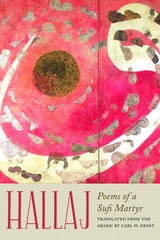
cover of Hallaj: Poems of a Sufi Martyr

Hallaj

Poems of a Sufi Martyr

Translated from the Arabic by Carl W. Ernst

Northwestern University Press, 2018

Winner of the Global Humanities Translation Prize

Hallaj is the first authoritative translation of the Arabic poetry of Husayn ibn Mansur al-Hallaj, an early Sufi mystic. Despite his execution in Baghdad in 922 and the subsequent suppression of his work, Hallaj left an enduring literary and spiritual legacy that continues to inspire readers around the world. In Hallaj, Carl W. Ernst offers a definitive collection of 117 of Hallaj’s poems expertly translated for contemporary readers interested in Middle Eastern and Sufi poetry and spirituality.

Ernst’s fresh and direct translations reveal Hallaj’s wide range of themes and genres, from courtly love poems to metaphysical reflections on union with God. In a fascinating introduction, Ernst traces Hallaj’s dramatic story within classical Islamic civilization and early Arabic Sufi poetry. Setting himself apart by revealing Sufi secrets to the world, Hallaj was both celebrated and condemned for declaring: “I am the Truth.”

Expressing lyrics and ideas still heard in popular songs, the works of Hallaj remain vital and fresh even a thousand years after their composition. They reveal him as a master of spiritual poetry centuries before Rumi, who regarded Hallaj as a model. This unique collection makes it possible to appreciate the poems on their own, as part of the tragic legend of Hallaj, and as a formidable legacy of Middle Eastern culture.

The Global Humanities Translation Prize is awarded annually to a previously unpublished translation that strikes the delicate balance between scholarly rigor, aesthetic grace, and general readability, as judged by a rotating committee of Northwestern faculty, distinguished international scholars, writers, and public intellectuals. The Prize is organized by the Global Humanities Initiative, which is jointly supported by Northwestern University’s Buffett Institute for Global Studies and Kaplan Institute for the Humanities.
[more]
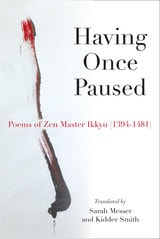
cover of Having Once Paused: Poems of Zen Master Ikkyu (1394-1481)

Having Once Paused

Poems of Zen Master Ikkyu (1394-1481)

Ikkyu Sojun

University of Michigan Press, 2015
The influence of Zen Master Ikkyū (1394-1481) permeates the full field of medieval Japanese aesthetics. Though best known as a poet, he was central to the shaping and reshaping of practices in calligraphy, Noh theater, tea ceremony, and rock gardening, all of which now define Japan’s sense of its cultural tradition. Ikkyū is unique in Zen for letting his love of all appearance occupy him until it destroys any possibility for safety or seclusion.  In his poetry, he turns the eye of enlightenment to all phenomena: politics, pine trees, hard meditation practice, sex, wine. A lifelong outsider to religious establishments, Ikkyū nonetheless accepted Imperial command to rebuild his home temple, Daitoku-ji, destroyed in the civil wars. He died before that project was complete.
 
The poems in this collection express the unborn bliss of Ikkyū’s realization and equally his devastation at the horrors of this world. They are peopled with ancient Chinese poets, cantankerous Japanese Zen Masters, contemporary warlords, and his lover Mori, a blind musician who lived with Ikkyū the last eleven years of his life. All of this is his Buddhism. His awakening outshines the small idols of reason, emotion, self, desire, doctrine, even of Buddhism itself.
[more]
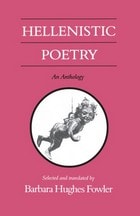
cover of Hellenistic Poetry: An Anthology

Hellenistic Poetry

An Anthology

Selected and translated by Barbara Hughes Fowler

University of Wisconsin Press, 1990

An accomplished poet and classical scholar, Barbara Hughes Fowler brings Hellenistic poetry to life for the contemporary reader.  Her selections engage us with the full range of Hellenistic poetic genres, styles, themes, and moods.  The anthology includes Fowler’s new translation of the entire Argonautica of Apollonius of Rhodes, and eight of Theocritus’ Idylls, including the beautiful, sensuous description of late summer in Idyll VII and the shrewdly comical description of two young matrons venturing into the noisy streets of Alexandria in Idyll XV.  There are translations of four hymns of Callimachus, as well as poems by Aratus, Bion, Herodas, Moschus, Pseudo-Moschus, and a substantial selection from the Greek Anthology.
    An ideal companion to her recently published book, The Hellenistic Aesthetic, Barbara Fowler’s Hellenistic Poetry is both a major contribution to classical studies and an invitation to all interested readers to discover the beauty and richness of Hellenistic poetry.
[more]
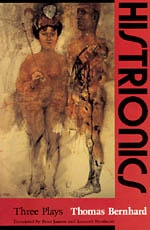
cover of Histrionics: Three Plays

Histrionics

Three Plays

Thomas Bernhard

University of Chicago Press, 1990
Although he is best known in the United States as a novelist, Austrian writer Thomas Bernhard has been hailed in Europe as one of the most significant and controversial of contemporary playwrights. George Steiner has predicted that the current era in German-language literature will be recognized as the "Bernhard period"; John Updike compares Bernhard with Kafka, Grass, Handke, and Weiss. His dark, absurdist plays can be likened to those of Beckett and Pinter, but their cultural and political concerns are distinctly Bernhard's. While Austria's recent political history lends particular credibility to Bernhard's satire, his criticisms are directed at the modern world generally; his plays grapple with questions of totalitarianism and the subjection of the individual and with notions of reality and appearance.
[more]
cover of Holy Terrors: Latin American Women Perform

Holy Terrors

Latin American Women Perform

Diana Taylor and Roselyn Costantino, eds.

Duke University Press, 2003

Holy Terrors presents exemplary original work by fourteen of Latin America’s foremost contemporary women theatre and performance artists. Many of the pieces—including one-act plays, manifestos, and lyrics—appear in English for the first time. From Griselda Gambaro, Argentina's most widely recognized playwright, to such renowned performers as Brazil's Denise Stoklos and Mexico’s Jesusa Rodríguez, these women are involved in some of Latin America's most important aesthetic and political movements. Of varied racial and ethnic backgrounds, they come from across Latin America—Argentina, Brazil, Mexico, Chile, Colombia, Puerto Rico, Peru, and Cuba. This volume is generously illustrated with over seventy images. A number of the performance pieces are complemented by essays providing context and analysis.

The performance pieces in Holy Terrors are powerful testimonies to the artists' political and personal struggles. These women confront patriarchy, racism, and repressive government regimes and challenge brutality and corruption through a variety of artistic genres. Several have formed theatre collectives—among them FOMMA (a Mayan women’s theatre company in Chiapas) and El Teatro de la máscara in Colombia. Some draw from cabaret and ‘frivolous’ theatre traditions to create intense and humorous performances that challenge church and state. Engaging in self-mutilation and abandoning traditional dress, others use their bodies as the platforms on which to stage their defiant critiques of injustice. Holy Terrors is a unique English-language presentation of some of Latin America's fiercest, most provocative art.

Contributors
Sabina Berman
Tania Bruguera
Petrona de la Cruz Cruz
Diamela Eltit
Griselda Gambaro
Astrid Hadad
Teresa Hernández
Rosa Luisa Márquez
Teresa Ralli
Diana Raznovich
Jesusa Rodríguez
Denise Stoklos
Katia Tirado
Ema Villanueva
[more]
cover of Homilies on Genesis and Exodus

Homilies on Genesis and Exodus

Catholic University of America Press, 1982
No description available
[more]
cover of Homilies on Genesis, 1–17

Homilies on Genesis, 1–17

Saint John Chrysostom

Catholic University of America Press, 1986
No description available
[more]
cover of Homilies on Isaiah

Homilies on Isaiah

Elizabeth Ann Dively Origen

Catholic University of America Press, 2021
Hans Urs von Balthasar places Origen of Alexandria “in rank . . . beside Augustine and Thomas” in “importance for the history of Christian thought,” explaining that his “brilliance” has captivated theologians throughout history (Spirit and Fire, 1984, 1). This brilliance shines forth in his nine extant homilies on Isaiah, in which he employs his theology of the Trinity and Christ to exhort his audience to play their crucial role in salvation history. Origen reads Isaiah’s vision of the Lord and two seraphim in Isaiah 6 allegorically as representing the Trinity, and this theme runs throughout the nine homilies. His representation of the seraphim as the Son and Holy Spirit around the throne of the Father brought early accusations that Origen was a proto-Arian subordinationist, followed by a pointed condemnation by Emperor Justinian in 553. These homilies, originally delivered between 245 and 248, are extant only in a fourth-century Latin translation. Though St. Jerome, likely because of these controversies, does not identify himself as the Latin translator, the evidence overwhelmingly points to his pen, and his reliability in conveying Origen’s authentic meaning is well documented. If one sets aside the questionable charges of subordinationism, these homilies, expounding on passages from Judges 6-10, come alive with Origen’s legacy of presenting Christ as the central figure of the soul’s ascent to God. Reading allegorically the two seraphim to be Jesus and the Holy Spirit around the Father’s throne, Origen draws a picture of the Trinity as a tightly knit whole in which the Son and the Holy Spirit eternally sing the Trisagion (“Holy, holy, holy”) to each other and the Father about the divine truths of God’s nature, allowing the part of their song that conveys the “middle things” of salvation history to be heard by creation. The “second seraph” is the Son, or Jesus, who descends holding a hot coal, or Scripture, from the altar of the throne, with which he cleanses Isaiah’s lips, or the believer’s soul. Origen employs his signature exegetical method of allegory and typology through the lens of the threefold meaning of Scripture to emphasize to his hearers that Christ is the deliverer, the content, and the reward of the healing Word. He repeatedly assures them that those who submit to Scripture will enter into salvation history’s cycle of cleansing from sin, growth in virtue, and ever-deepening knowledge of God. As a result, they will become like Christ and thus will be prepared to join the Trinity for all eternity at the heavenly wedding feast.
[more]
cover of Homilies on Jeremiah and 1 Kings 28

Homilies on Jeremiah and 1 Kings 28

Catholic University of America Press, 1998
Presented in this volume are the remains of twenty-two homilies and a collection of fragments delivered by Origen around A.D. 240. The original texts of the homilies on Jeremiah have not come down to us completely; two of the homilies survive only in a Latin translation of St. Jerome. The homily on I Kings 28, while not a part of the homilies on Jeremiah, deals with the Witch of Endor and has been added to this volume in virtue of its own inherent interest.
[more]
cover of Homilies on Joshua

Homilies on Joshua

Catholic University of America Press, 2002
No description available
[more]
cover of Homilies on Judges

Homilies on Judges

Catholic University of America Press, 2010
No description available
[more]
cover of Homilies on Leviticus, 1-16

Homilies on Leviticus, 1-16

Catholic University of America Press, 1990
No description available
[more]
cover of Homilies on Luke

Homilies on Luke

Catholic University of America Press, 1996
No description available
[more]
cover of Homilies on Psalms, 36-38

Homilies on Psalms, 36-38

Michael Origen

Catholic University of America Press, 2023
This volume provides the first English translation of the nine extant homilies on Psalms 36[37]–38[39] preached by Origen (d. 253/4) to his congregation at Caesarea as arranged and translated for Latin readers by his admirer, Rufinus of Aquileia (d. 411). These homilies are among the earliest extant examples of patristic preaching on the Psalter. The interpretation offered throughout these homilies, which is almost wholly moral, reflects Origen’s understanding of the “soul” of the scriptural text. These homilies provide a glimpse of Origen’s account of scriptural meaning, outlined in De principiis 4, in pastoral practice. In his preaching, Origen offers a vision of the Christian life as centered on the soul’s continuing conversion, growth, and progress, with particular reference to and within the context of the Church. The life of the believer is one of combat and struggle with powers opposed to Christ. It is Christ, as the divine Physician, who offers healing to the one who is wounded and ailing from sin, and it is Christ, as Wisdom and Word of God, who instructs and educates the believer in the life of the Spirit. These homilies reveal the substantial coherence of Origen’s thought, as expressed in the more speculative De principiis and as revealed in the more elaborate, nuptial theology found in his Commentary on the Canticle. This volume includes a robust introduction and complements the work of Joseph Trigg, whose translation from the original Greek of the cache of homilies discovered in Codex Monacensis 314 has recently appeared in this series.
[more]
cover of Horace's Odes and Epodes: Translated with an Introduction and Commentary

Horace's Odes and Epodes

Translated with an Introduction and Commentary

David Mulroy

University of Michigan Press, 1994
In his new book David Mulroy presents a translation of the Odes and Epodes of Horace, who was one of the Augustan regime’s best known and most talented poets. Intended for those with little knowledge of these works as well as for those with a more experienced ear, David Mulroy’s translations are accompanied by explanatory notes on the individual poems. Appendices are also provided that offer information on Suetonius’ biography of Horace, on ambiguity in Horace’s personal allusions, and on the theme of sadism in Horace’s writings.Teachers of Latin writers in translation will want to use this book to make Horace accessible to their students; scholars of Latin literature will find much of value in the notes and appendices as well as in the linguistically satisfying translations.
[more]
cover of Hunting Cockroaches and Other Plays

Hunting Cockroaches and Other Plays

Janusz Glowacki

Northwestern University Press, 1990
Janusz Glowacki's highly theatrical and often hilarious works concern the immigrant experience of the Eastern European in America, the struggles of the individual in a repressive state, and the manipulations of political and social power. The girls' reform school of Cinders, the Lower East Side tenement of Hunting Cockroaches, and the Norwegian court littered with bodies in Fortinbras Gets Drunk serve as backdrops for Glowacki's tragicomic explorations of the play within the play of contemporary existence.
[more]
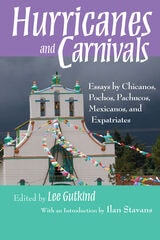
cover of Hurricanes and Carnivals: Essays by Chicanos, Pochos, Pachucos, Mexicanos, and Expatriates

Hurricanes and Carnivals

Essays by Chicanos, Pochos, Pachucos, Mexicanos, and Expatriates

Edited by Lee Gutkind, with an Introduction by Ilan Stavans

University of Arizona Press, 2007

“In Mexico,” writes Ilan Stavans in the introduction to this provocative new collection on Mexican culture and politics, “[the essay] is embraced as passionately as a sport.” While the American essay may be personal and confessional or erudite and academic, it is presumed to be truthful. By contrast, the Mexican essay pushes the boundaries between fact and fiction as writers seek to make their opinions heard—in literary journals, in newspapers, and even on cereal boxes. “What is real and what isn’t in a Mexican essay, only God knows,” concludes Stavans. In Hurricanes and Carnivals, Lee Gutkind, a pioneer in the teaching of creative nonfiction, brings together fifteen essays by Mexican, Mexican American, and Latin American writers that push the boundaries of style and form, showing that navigating “truth” is anything but clear-cut. Although creative nonfiction is widely thought to be an American art form, this collection proves otherwise. By blending fact and fiction, story and fantasy, history and mythology, these writers and others push the bounds of the essay to present a vision of Mexico rarely seen from this side of the border. Addressing topics that include immigration, politics, ecology, violence, family, and sexuality, they take literary license on a whirlwind adventure. C. M. Mayo shows us Mexico City as seen through the eyes of her pug, Picadou; Juan Villoro examines modern Mexico through the lens of demography; Homero Aridjis uses the plight of nesting sea turtles to document a slowly changing Mexican attitude toward natural resources; and Sam Quinones documents the decline of beauty-queen addiction in Mazatlán and tells us about the flower festivals where, according to lore, only two things matter: hurricanes and carnivals. For readers interested in a literary view of contemporary Mexico, as well as students of the creative nonfiction genre, this volume is essential
[more]