Results by title
90 books match the query 'Trees' and 3 start with h
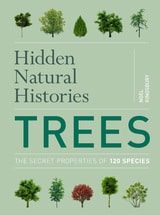
Hidden Natural Histories
TreesNoel Kingsbury
University of Chicago Press, 2015
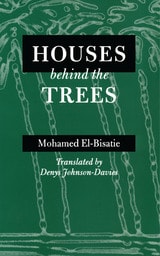
Houses behind the Trees
By Mohamed El-Bisatie
University of Texas Press, 1998
Set in a small village in the Egyptian Delta, El-Bisatie's finely tuned novella illustrates the social and sexual tensions in a community in which nothing is secret and where people's pasts haunt their present.
When Mussad catches the butcher's son Amer with his wife, the whole village knows and waits with bated breath for Mussad to exact his revenge. But something goes wrong. Mussad's ill-planned schemes are choked by an opaque veil of history—his wife's sexual past, the war-torn lives of their families, and the personal allegiances of his friends and enemies. The village women relive private desires and inner fears as the men take sides in the struggle, either to protect Amer from Mussad's wrath or to help Mussad track down and confront his nemesis.
In the words of Denys Johnson-Davies, "El-Bisatie is a writer's writer, which is to say a writer who makes no concession to the lazy reader. El-Bisatie stands back from his canvas and sketches his characters and events with a studied detachment. While there is drama in his stories it is never highlighted. The menace lurks almost unseen between the lines."
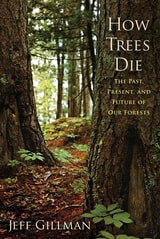
How Trees Die
The Past, Present, and Future of our ForestsJeff Gillman
Westholme Publishing, 2009
Trees have been essential to the success of human beings, providing food, shelter, warmth, transportation, and products (consider the paper you are holding). Trees are also necessary for a healthy atmosphere, literally connecting the earth with the sky. Once in wild abundance— the entire eastern North America was a gigantic forest—they have receded as we have clearcut the landscape in favor of building cities and farms, using up and abusing our forests in the process. Over the centuries, we have trained food trees, such as peach and apple trees, to produce more and better fruit at the expense of their lives. As Jeff Gillman, a specialist in the production and care of trees, explains in his acclaimed work, How Trees Die: The Past, Present, and Future of Our Forests, the death of a tree is as important to understanding our environment as how it lives. While not as readily apparent as other forms of domestication, our ancient and intimate relationship with trees has caused their lives to be inseparably entwined with ours. The environment we have created—what we put into the air and into the water, and how we change the land through farming, construction, irrigation, and highways—affects the world’s entire population of trees, while the lives of the trees under our direct care in farms, orchards, or along a city boulevard depend almost entirely on our actions. Taking the reader on a fascinating journey through time and place, the author explains how we kill trees, often for profit, but also unintentionally with kindness through overwatering or overmulching, and sometimes simply by our movements around the globe, carrying foreign insects or disease. No matter how a tree’s life ends, though, understanding the reason is essential to understanding the future of our environment.