Results by title
141 books match the query 'Turkey' and 7 start with h
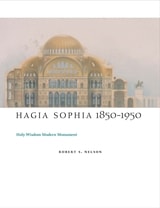
Hagia Sophia, 1850-1950
Holy Wisdom Modern MonumentRobert S. Nelson
University of Chicago Press, 2004
Built from 532 to 537 as the Cathedral of Constantinople, Hagia Sophia was little studied and seldom recognized as a great monument of world art until the nineteenth century, and Nelson examines the causes and consequences of the building's newly elevated status during that time. He chronicles the grand dome's modern history through a vibrant cast of characters—emperors, sultans, critics, poets, archaeologists, architects, philanthropists, and religious congregations—some of whom spent years studying it, others never visiting the building. But as Nelson shows, they all had a hand in the recreation of Hagia Sophia as a modern architectural icon. By many means and for its own purposes, the West has conceptually transformed Hagia Sophia into the international symbol that it is today.
While other books have covered the architectural history of the structure, this is the first study to address its status as a modern monument. With his narrative of the building's rebirth, Nelson captures its importance for the diverse communities that shape and find meaning in Hagia Sophia. His book will resonate with cultural, architectural, and art historians as well as with those seeking to acquaint themselves with the modern life of an inspired and inspiring building.
Haim Nahum
A Sephardic Chief Rabbi in Politics, 1892-1923Esther Benbassa
University of Alabama Press, 1995
A collection of rare writings and correspondence by a rabbi and diplomat active at the end of the Ottoman Empire
Rabbi, diplomat, linguist, fixer of delicate problems, Haim Nahum moved through the last years of the Ottoman world and the birth of the modern Middle East with uncommon dexterity. He left behind a rich trove of letters and writing, the best of which are collected in this volume. For contemporary readers, his story feels surprisingly current. He inhabited an age crowded with competing identities, clashing nationalisms, and endless political improvisations. In other words, he would feel perfectly at home today.
The most intriguing feature of Nahum is not that he occupied important positions, but that he seemed constitutionally incapable of belonging to only one world. Equally at ease among statesmen, clerics, scholars, and bureaucrats, he functioned as a human connecting flight between cultures. In this fascinating biography first edited and published in French in 1990, Esther Benbassa captures this cosmopolitan figure without embalming him in reverence, allowing readers to encounter a subtle, resourceful, and occasionally elusive man whose métier was negotiation and whose natural habitat was complexity.
This book will delight readers of Ottoman history, Jewish history, Middle Eastern affairs, diplomatic history, biography, religious studies, and Mediterranean culture. It will also appeal to polyglots, antiquarians, devotees of vanished empires, and anyone attracted to those liminal figures who stand at the crossroads of civilizations, translating not merely languages but entire ways of seeing the world.

Har Mar
StoriesHilal Isler
Northwestern University Press, 2026
Journeying through the emotional migrations of women living in the in-between
In Hilal Isler’s gripping debut story collection, Har Mar, women in the early twenty-first century navigate the complex spaces between countries, families, languages, and selves. Isler’s characters are all on the verge of something—success, rebellion, revelation—and they want to disappear as much as they want to be seen. Moving back and forth between Turkey and the United States, these stories trace migrations both physical and emotional: a nanny plots to flee the wealthy family she cares for in the Grand Bazaar of Istanbul; in Har Mar, a quiet mall tucked in the suburbs of Minneapolis, a bookseller escapes her grief in a complicated relationship with a wig retailer; an actress is hired by a famous American novelist to portray her at public events.
The women in Har Mar don’t always make sound decisions, and they’re not trying to be heroes. But they are reaching—imperfectly, but fiercely—for connection, truth, and home. With moving prose and a deep sense of longing, this collection explores what it means to grow up in the margins, to live in translation, and to build a life at the edge of belonging.
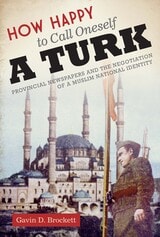
How Happy to Call Oneself a Turk
Provincial Newspapers and the Negotiation of a Muslim National IdentityBy Gavin D. Brockett
University of Texas Press, 2011
The modern nation-state of Turkey was established in 1923, but when and how did its citizens begin to identify themselves as Turks? Mustafa Kemal Atatürk, Turkey's founding president, is almost universally credited with creating a Turkish national identity through his revolutionary program to "secularize" the former heartland of the Ottoman Empire. Yet, despite Turkey's status as the lone secular state in the Muslim Middle East, religion remains a powerful force in Turkish society, and the country today is governed by a democratically elected political party with a distinctly religious (Islamist) orientation.
In this history, Gavin D. Brockett takes a fresh look at the formation of Turkish national identity, focusing on the relationship between Islam and nationalism and the process through which a "religious national identity" emerged. Challenging the orthodoxy that Atatürk and the political elite imposed a sense of national identity from the top down, Brockett examines the social and political debates in provincial newspapers from around the country. He shows that the unprecedented expansion of print media in Turkey between 1945 and 1954, which followed the end of strict, single-party authoritarian government, created a forum in which ordinary people could inject popular religious identities into the new Turkish nationalism. Brockett makes a convincing case that it was this fruitful negotiation between secular nationalism and Islam—rather than the imposition of secularism alone—that created the modern Turkish national identity.
How Informal Institutions Matter
Evidence from Turkish Social and Political SpheresZeki Sarigil
University of Michigan Press, 2023
In How Informal Institutions Matter, Zeki Sarigil examines the role of informal institutions in sociopolitical life and addresses the following questions: Why and how do informal institutions emerge? To ask this differently, why do agents still create or resort to informal institutions despite the presence of formal institutional rules and regulations? How do informal institutions matter? What roles do they play in sociopolitical life? How can we classify informal institutions? What novel types of informal institutions can we identify and explain? How do informal institutions interact with formal institutions? How do they shape formal institutional rules, mechanisms, and outcomes? Finally, how do existing informal institutions change? What factors might trigger informal institutional change? In order to answer these questions, Sarigil examines several empirical cases of informal institution as derived from various issue areas in the Turkish sociopolitical context (i.e., civil law, conflict resolution, minority rights, and local governance) and from multiple levels (i.e., national and local).
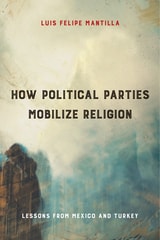
How Political Parties Mobilize Religion
Lessons from Mexico and TurkeyLuis Felipe Mantilla
Temple University Press, 2021
Political mobilization tends to take different forms in contemporary Catholic- and Sunni-majority countries. Luis Felipe Mantilla attributes this dynamic to changes taking place in religious communities and the political institutions that govern religious political engagement.
In How Political Parties Mobilize Religion, Mantillaevenhandedly traces the emergence and success of religious parties in Mexico and Turkey, two countries shaped by assertive secular regimes. In doing so, he demonstrates that religious parties are highly responsive to political institutions, such as electoral laws, as well as to the structure of broader religious communities.
Whereas in both countries, the electoral success of religious mobilizers was initially a boon for democracy, in Mexico it was marred by political mismanagement and became entangled with persistent corruption and escalating violence. In Turkey, the democratic credentials of religious mobilizers were profoundly eroded as the government became increasingly autocratic, concentrating power in very few hands and rolling back basic liberal rights.
Mantilla investigates the role religious mobilization plays in the evolution of electoral politics and democratic institutions, and to what extent their trajectories reflect broader trends in political Catholicism and Islam.
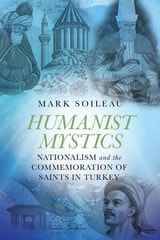
Humanist Mystics
Nationalism and the Commemoration of Saints in TurkeyMark Soileau
University of Utah Press, 2018
Humanist Mystics is the first book to examine Islam and secularism within Turkish nationalist ideology through the lens of commemorated saints. Soileau surveys Anatolian and Turkish religious and political history as the context for his closer attention to the lives and influence of these three Sufi saints. By comparing premodern hagiographic and scholarly representations with twentieth-century monographs, literary works, artistic media, and commemorative ceremonies, he shows how the saints have been transformed into humanist mystics and how this change has led to debates about their character and relevance.