Results by title
453 books match the query 'Wisconsin' and 14 start with h
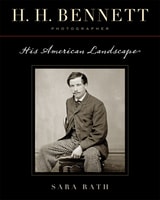
H. H. Bennett, Photographer
His American LandscapeSara Rath
University of Wisconsin Press, 2010
"My energies for near a lifetime have been used almost entirely to win such prominence as I could in outdoor photography."—H. H. Bennett
Henry Hamilton Bennett (1843–1908) became a celebrated photographer in the half-century following the American Civil War. Bennett is admired for his superb depictions of dramatic landscapes of the Dells of the Wisconsin River and also for his many technical innovations in photography, including a stop-action shutter and a revolving solar printing house that is now housed at the Smithsonian Institution. With his instantaneous shutter, he gained recognition for his striking images of moving subjects, such as lumber raftsmen shooting the river rapids and his son Ashley leaping in midair from a bluff to the craggy pillar of Stand Rock. Less well-known are Bennett’s splendid urban photographs of nineteenth-century Chicago, Milwaukee, and St. Paul.
This engaging biography of H. H. Bennett tells his life story, illustrated throughout with his remarkable photographs, some of them rarely viewed before. It draws on the photographer’s own letters and journals, along with other family documents, to portray the sweep of his career and personal life. An important figure in the history of photography, he also contributed to the growth of American tourism: his nationally distributed stereoscopic views of Dells rock formations and his portraits of local Ho-Chunk Indians played a significant role in creating the Wisconsin Dells as the popular tourist destination it is today. Despite personal challenges—a crippling Civil War injury, the death of his first wife, and continual financial worries—Bennett produced an extensive portfolio that captures the midwestern culture of his time. He accepted commissions in the 1890s to document Chicago’s modern skyscrapers, grand residences of Milwaukee’s entrepreneurs and sailing ships in its harbor, enormous scenic panoramas along the routes of Wisconsin railroads, and sparkling ice palaces lit by fireworks at the St. Paul Winter Carnival.
Finalist, Midwest Regional Interest, Midwest Book Awards
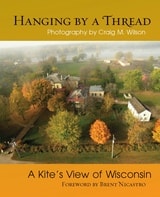
Hanging by a Thread
A Kite’s View of WisconsinCraig M. Wilson
University of Wisconsin Press, 2011
This full-color book of photographs records Wisconsin from an unusual viewpoint: a camera suspended from a kite and controlled by photographer Craig M. Wilson from the ground. Taken from fifty to a few hundred feet in the air, Wilson’s photos capture natural and man-made views that wouldn’t otherwise be possible. The result is a vibrant collection that captures Wisconsin in all its shifting beauty in landscapes and cityscapes, festivals, Door County’s lighthouses, Milwaukee’s neighborhoods, and the crowd at a Badger football game. Captions are provided in English, Spanish, German, and Mandarin Chinese.
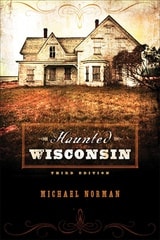
Haunted Wisconsin
Michael Norman
University of Wisconsin Press, 2011
Grab a cozy blanket, light a few flickering candles, and enjoy the unnerving tales of Haunted Wisconsin. Gathered from personal interviews with credible eyewitnesses, on-site explorations, historical archives, newspaper reports, and other sources, these scores of reports date from Wisconsin’s early settlement days to recent inexplicable events.
You’ll read about Wisconsin’s most famous haunted house, Summerwind; three Milwaukee men who encountered the beautiful ghost of National Avenue; a phantom basketball player; a spectral horse that signaled death in the pioneer era of the Wisconsin Dells; a poltergeist in St. Croix County who attracted a crowd of more than three hundred spectators; the Ridgeway Ghost who haunts the driftless valleys of southwestern Wisconsin; a swinging railroad lantern held by unseen hands; the Ghost Island of the Chippewa Flowage; and many others. Are ghosts real? That’s for you to decide!
Now available in a Third Edition with updates and several new accounts, Haunted Wisconsin remains a favorite collection of unexplained midwestern tales, enjoyed by readers of all ages.
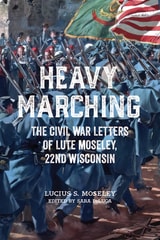
Heavy Marching
The Civil War Letters of Lute Moseley, 22nd WisconsinLucius S. Moseley, edited by Sara DeLuca
University of Wisconsin Press, 2023
From 1862 to 1865, Moseley fought in the Civil War as an infantry soldier in Wisconsin’s 22nd Volunteers. Briefly captured and interred in a Confederate POW Camp, he returned to action and participated in Sherman’s Atlanta campaign. He marched in the Washington, D.C., Grand Review before returning to the Beloit area, where he remained for the rest of his life.
Mosely wrote detailed missives to his family in Beloit about his wartime experiences, demonstrating a flair for describing both camp life and battles. Frank and forthright, he was remarkably articulate, insightful, and thoughtful, whether describing mundane activities or the nearly unfathomable death of President Lincoln. These 125 letters, never before made available to scholars or students of the war, became touchstones and sources of pride for the Moseley family—and provide a uniquely candid and vivid view of this tumultuous period in US history.
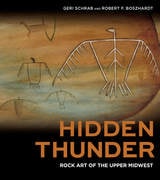
Hidden Thunder
Rock Art of the Upper MidwestGeri Schrab
Wisconsin Historical Society Press, 2016
In Hidden Thunder, renowned watercolor artist Geri Schrab and archaeologist Robert "Ernie" Boszhardt give readers an up-close-and-personal look at rock art. With an eye toward preservation, Schrab and Boszhardt take you with them as they research, document, and interpret at the ancient petroglyphs and pictographs made my Native Americans in past millennia. In addition to publicly accessible sites such as Wisconsin’s Roche-a-Cri State Park and Minnesota’s Jeffers Petroglyphs, Hidden Thunder covers the artistic treasures found at several remote and inaccessible rock art sites—revealing the ancient stories through words, full-color photographs, and artistic renditions.
Offering the duo perspectives of scientist and artist, Boszhardt shares the facts that archaeologists have been able to establish about these important artifacts of our early history, while Schrab offers the artist's experience, describing her emotional and creative response upon encountering and painting these sites. Viewpoints by members of the Menominee, Ho-Chunk, Ojibwe, and other Native nations offer additional insight on the historic and cultural significance of these sites. Together these myriad voices reveal layers of meaning and cultural context that emphasize why these fragile resources—often marred by human graffiti and mishandling or damage from the elements—need to be preserved.

Higher Ground
New Hope for the Working Poor and Their ChildrenGreg J. Duncan
Russell Sage Foundation, 2007

History Afield
Stories from the Golden Age of Wisconsin Sporting LifeRobert C Willging
Wisconsin Historical Society Press, 2011
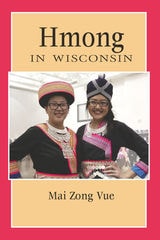
Hmong in Wisconsin
Mai Zong Vue
Wisconsin Historical Society Press, 2020
Many of these families found homes in Wisconsin, which now has the third largest Hmong population in the country, following California and Minnesota. As one of the most recent cultural groups to arrive in the Badger State, the Hmong have worked hard to establish a new life here, building support systems to preserve traditions and to help one another as they enrolled in schools, started businesses, and strived for independence.
Told with a mixture of scholarly research, interviews, and personal experience of the author, this latest addition to the popular People of Wisconsin series shares the Hmong’s varied stories of survival and hope as they have become an important part of Wisconsin communities.

Home of the Braves
The Battle for Baseball in MilwaukeePatrick W. Steele
University of Wisconsin Press, 2020
It seemed the dawn of a new dynasty. Impassioned fans wore their hearts on their sleeves. Yet in October 1964 team owners made a shocking announcement: the Braves were moving to Atlanta.
In the decades since, many have tried to understand why the Braves left Milwaukee. Fans blamed greedy owners and the lure of Coca Cola cash. Team management claimed they weren't getting enough local support. Patrick Steele delves deeply into all facets of the story, looking at the changing business of baseball in the 1960s, the interactions of the team owners with the government officials who controlled County Stadium, the surging success of the Green Bay Packers, and much more, to understand how the "Milwaukee Miracle" went south.

Hope is the Thing
Wisconsinites on Perseverance in a PandemicB. J. Hollars
Wisconsin Historical Society Press, 2021
As the one hundred essays and poems gathered here demonstrate, hope comes in many forms: a dad dance, a birth plan, an unblemished banana, a visit from a neighborhood dog, the revival of an old tradition, empathy. The contributors are racially, geographically, and culturally diverse, representing a rough cross section of Wisconsin voices, from truck driver to poet laureate, from middle school student to octogenarian, from small business owner to seasoned writer. The result is a book-length exploration of the depth and range of hope experienced in times of crisis, as well as an important record of what Wisconsinites were facing and feeling through these historic times.

How I Became a Human Being
A Disabled Man’s Quest for IndependenceMark O’Brien, with Gillian Kendall
University of Wisconsin Press, 2003
For the first time in paperback, How I Became a Human Being is O’Brien’s account of his struggles to lead an independent life despite a lifelong disability. In 1955 he contracted polio and became permanently paralyzed from the neck down. O’Brien describes growing up without the use of his limbs, his adolescence struggling with physical rehabilitation and suffering the bureaucracy of hospitals and institutions, and his adult life as an independent student and writer. Despite his physical limitations, O’Brien crafts a narrative that is as rich and vivid as the life he led.
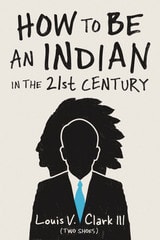
How to Be an Indian in the 21st Century
Louis V. Clark (Two Shoes)
Wisconsin Historical Society Press, 2017

How to Make a Life
A Tibetan Refugee Family and the Midwestern Woman They AdoptedMadeline Uraneck
Wisconsin Historical Society Press, 2018
When Madeline Uraneck said hello to the Tibetan woman cleaning her office cubicle, she never imagined the moment would change her life. After learning that Tenzin Kalsang had left her husband and four children behind in a Tibetan refugee settlement in India to try to forge a better life for them, Madeline took on the task of helping her apply for US visas. When the family reunited in their new Midwestern home, Madeline became swept up in their lives, from homework and soccer games to family dinners and shared holiday traditions. By reaching out, she found more than she bargained for—a family who welcomed her as their own and taught her more than she offered them.
An evocative blend of immersion journalism and memoir, How to Make a Life shares the immigration story of a Tibetan refugee family who crossed real and cultural bridges to make a life in Madison, Wisconsin, with the assistance of the Midwestern woman they befriended. From tales of escaping Tibet over the Himalayas, to striking a balance between old traditions with new, to bridging divides one friendly gesture at a time, readers will expand their understanding of family, culture, and belonging.
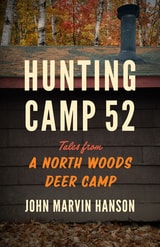
Hunting Camp 52
Tales from a North Woods Deer CampJohn Marvin Hanson
Wisconsin Historical Society Press, 2016
Meet the Jolly Boys—five men from northern Wisconsin who built a deer hunting shack in 1955 and established a tradition that has now lasted over six decades. Hunting Camp 52, affectionately known as Blue Heaven, is a place where every trail, rock, and ravine has its own nickname; every kill is recorded by hand on a window shade; every hunter happily croons along during evening songfests; and every rowdy poker game lasts late into the night. The outhouse is always cold, the porcupines are always a problem, and the vehicles are always getting stuck in the mud, but there’s nowhere else these men would rather be.
In Hunting Camp 52: Tales from a North Woods Deer Camp, John Marvin Hanson—the son of one of the original Jolly Boys—recounts the sidesplitting antics, the memorable hunts, and the profound camaraderie that has developed over almost sixty seasons at Blue Heaven. Hanson also includes more than twenty recipes for gourmet comfort foods prepared each year at camp, from pickled venison hearts to Norwegian meatballs to the treasured recipe for Reali Spaghetti. As the Jolly Boys age and younger generations take up the mantle of Blue Heaven, Hanson comes to appreciate that hunting camp is not about bagging a trophy buck as much as it is about spending time with the friends and family members who matter most.