Results by title
10 books match the query 'Battles'
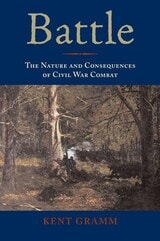
Battle
The Nature and Consequences of Civil War CombatEdited by Kent Gramm
University of Alabama Press, 2008
A critical, multidisciplinary examination of Civil War combat that interrogates the technological, medical, psychological, and cultural forces shaping battlefield experience and its enduring national legacy.
“In our youth, our hearts were touched with fire,” wrote Oliver Wendell Holmes of his generation’s Civil War days. Through the ages, war stories have gleamed with romantic glory, and American memories of the cataclysmic Civil War inspire pageantry and poetry even today.
The essays in Battle form a corrective to such celebratory histories by examining the lethal realities of Civil War combat—Enlightenment science applied to the creation of weapons that maimed and killed, which far outpaced advances in diet, sanitation, and medical treatment. The book reveals that behind the drums and trumpets, sashes and swords, the armies of the Union and Confederacy alike were haunted by fear, pain, and death.
The collection includes an introduction and afterword by editor Kent Gramm, who also contributes an essay titled “Numbers” that reveals the war in statistics. Paul Fussell contributes a powerful essay titled “The Culture of War.” D. Scott Hartwig examines the face of battle at Gettysburg. Bruce A. Evans discusses medical technology in “Wounds, Death, and Medical Care in the Civil War.” Eric T. Dean challenges the meanings and consequences of combat in “The Awful Shock and Rage of Battle.” The collection is rounded out by Alan T. Nolan’s masterful review of the national consequences of battle and the resultant myth of the Confederacy’s Lost Cause.
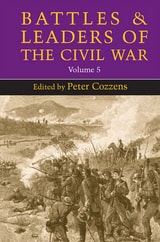
Battles and Leaders of the Civil War, Volume 5
Edited by Peter Cozzens
University of Illinois Press, 2001
Indispensable must-reads for all Civil War buffs and historians, bringing together little-known and never before gathered first-hand accounts, articles, maps, and illustrations
The first four volumes of Battles and Leaders of the Civil War, published in the late nineteenth century, became the best-selling and most frequently cited works ever published on the Civil War. Volume 5, assembled by the acclaimed military historian Peter Cozzens, carries on the tradition of its namesake, offering a dazzling new collection of fresh material written by military and civilian leaders, North and South, on a broad array of war-related topics. Featured articles include General Grant on the second battle of Bull Run, General Beauregard on the Shiloh campaign, General Sherman on the conference at City Point, Joshua Chamberlain on the Fredericksburg campaign, and many more. Also presented are dozens of maps and more than one hundred illustrations.
Battles and Leaders of the Civil War, Volume 6
Edited by Peter Cozzens
University of Illinois Press, 2001

Battles of the North Country
Wilderness Politics and Recreational Development in the Adirondack State Park, 1920-1980Jonathan D. Anzalone
University of Massachusetts Press, 2018
Through a series of case studies, historian Jonathan D. Anzalone highlights the role of public and private interests in the region and shows how partnerships frayed and realigned in the course of several key developments: the rise of camping in the 1920s and 1930s; the 1932 Lake Placid Olympics; the construction of a highway to the top of Whiteface Mountain; the postwar rise of downhill skiing; the completion of I-87 and the resulting demand for second homes; and the 1980 Lake Placid Olympics. Battles of the North Country reveals how class, economic self-interest, state power, and a wide range of environmental concerns have shaped modern politics in the Adirondacks and beyond.
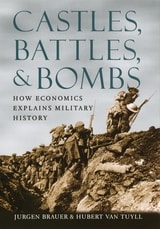
Castles, Battles, and Bombs
How Economics Explains Military HistoryJurgen Brauer and Hubert van Tuyll
University of Chicago Press, 2008
Castles, Battles, and Bombs reconsiders key episodes of military history from the point of view of economics—with dramatically insightful results. For example, when looked at as a question of sheer cost, the building of castles in the High Middle Ages seems almost inevitable: though stunningly expensive, a strong castle was far cheaper to maintain than a standing army. The authors also reexamine the strategic bombing of Germany in World War II and provide new insights into France’s decision to develop nuclear weapons. Drawing on these examples and more, Brauer and Van Tuyll suggest lessons for today’s military, from counterterrorist strategy and military manpower planning to the use of private military companies in Afghanistan and Iraq.
"In bringing economics into assessments of military history, [the authors] also bring illumination. . . . [The authors] turn their interdisciplinary lens on the mercenary arrangements of Renaissance Italy; the wars of Marlborough, Frederick the Great, and Napoleon; Grant's campaigns in the Civil War; and the strategic bombings of World War II. The results are invariably stimulating."—Martin Walker, Wilson Quarterly
"This study is serious, creative, important. As an economist I am happy to see economics so professionally applied to illuminate major decisions in the history of warfare."—Thomas C. Schelling, Winner of the 2005 Nobel Prize in Economics
Partisans, Guerillas, and Irregulars
Historical Archaeology of Asymmetric WarfareEdited by Steven D. Smith and Clarence R. Geier
University of Alabama Press, 2019
Essays that explore the growing field of conflict archaeology
Within the last twenty years, the archaeology of conflict has emerged as a valuable subdiscipline within anthropology, contributing greatly to our knowledge and understanding of human conflict on a global scale. Although archaeologists have clearly demonstrated their utility in the study of large-scale battles and sites of conventional warfare, such as camps and forts, conflicts involving asymmetric, guerilla, or irregular warfare are largely missing from the historical record.
Partisans, Guerillas, and Irregulars: Historical Archaeology of Asymmetric Warfare presents recent examples of how historical archaeology can contribute to a better understanding of asymmetric warfare. The volume introduces readers to this growing study and to its historic importance. Contributors illustrate how the wide range of traditional and new methods and techniques of historiography and archaeology can be applied to expose critical actions, sacrifices, and accomplishments of competing groups representing opposing philosophies and ways of life, which are otherwise lost in time.
The case studies offered cover significant events in American and world history, including the French and Indian War, the American Revolution, Indian wars in the Southeast and Southwest, the Civil War, Reconstruction, Prohibition, and World War II. All such examples used here took place at a local or regional level, and several were singular events within a much larger and more complex historic movement. While retained in local memory or tradition, and despite their potential importance, they are poorly, and incompletely addressed in the historic record. Furthermore, these conflicts took place between groups of significantly different cultural and military traditions and capabilities, most taking on a “David vs. Goliath” character, further shaping the definition of asymmetric warfare.
The Battles of Armageddon
Megiddo and the Jezreel Valley from the Bronze Age to the Nuclear AgeEric H. Cline
University of Michigan Press, 2002
> Best Popular Book on Archaeology
--Biblical Archaeology Society
Apocalypse. Judgment Day. The End Time. Armageddon. Students of the Bible know it as the place where the cataclysmic battle between the forces of good and the forces of evil will unfold. Many believe that this battle will take place in the very near future. But few know that Armageddon is a real place--one that has seen more fighting and bloodshed than any other spot on earth.
The name Armageddon is a corruption of the Hebrew phrase Har Megiddo, and it means "Mount of Megiddo." More than thirty bloody conflicts have been fought at the ancient site of Megiddo and adjacent areas of the Jezreel Valley during the past four thousand years. Egyptians, Israelites, Greeks, Muslims, Crusaders, Mongols, British, Germans, Arabs, and Israelis have all fought and died here. The names of the warring leaders reverberate throughout history: Thutmose III, Deborah, Gideon, Saul and Jonathan, Jezebel, Saladin, Napoleon, and Allenby, to name but the most famous. Throughout history Megiddo and the Jezreel Valley have been ground zero for battles that determined the very course of civilization. No wonder that the author of Revelation believed Armageddon, the penultimate battle between good and evil, would also take place here!
The Battles of Armageddon introduces readers to a rich cast of ancient and modern warriors, while bringing together for the first time the wide range of conflicts that have been fought at Megiddo and the Jezreel Valley from the Bronze Age to the Nuclear Age.
Eric H. Cline has participated in more than seventeen seasons of excavation and survey in Israel, Egypt, Jordan, Greece, and the United States. He is currently a Senior Staff Archaeologist at the ongoing excavations of Megiddo.
The Battles of Connecticut Farms and Springfield, 1780
Edward G. Lengel
Westholme Publishing, 2020
By the spring of 1780, American fortunes were at a low point. Charleston, South Carolina, fell to British forces on May 12. At Morristown, New Jersey, George Washington’s army struggled to recover from the worst winter of the entire war. The national economy failing, his troops short of supplies and on the verge of mutiny, Washington prepared for an all-out assault on British-occupied New York City with the support of approaching French naval and land forces under General Rochambeau. The planned attack was a gamble born of desperation. Washington felt he had to risk it, or face certain defeat. In New York City, German General Wilhelm von Knyphausen sensed opportunity. Commanding there in the absence of British General Henry Clinton, who was on his way back from Charleston, Knyphausen hoped that a quick strike into New Jersey could deliver a staggering blow to Washington’s weakened army. The June 7–8 Battle of Connecticut Farms, however, found American militia and Continentals—mostly soldiers of General William Maxwell’s New Jersey Brigade—to be shockingly stalwart. In a series of sharp engagements, fought hard on both sides, the Americans convinced Knyphausen to turn back. Clinton, fresh from his victory in the South, tried again on June 23 to end the war. His advance into New Jersey, intended to draw Washington into the open and perhaps capture Morristown, culminated in the Battle of Springfield. Once again, though, Washington’s hardened soldiers, led by men like Colonel Israel Angell, Colonel Elias Dayton, and Major “Light Horse Harry” Lee, fought Clinton’s forces to a standstill.
The Battles for Connecticut Farms and Springfield, 1780, by distinguished historian Edward G. Lengel, chronicles these two important battles that marked a turning of the tide in the Revolutionary War. Drawing on newly available primary sources, the author presents a fresh and engaging interpretation of these events, which exposed King George III’s declining military fortunes in North America even as they revealed the resilience of George Washington’s army.
The Small Battles Series: Military History as Local History
Mark Edward Lender and James Kirby Martin, Series Editors
Small Battles offers a fresh and important new perspective on the story of America’s early conflicts. It was the small battles, not the clash of major armies, that truly defined the fighting during the colonial wars, the American Revolution, the War of 1812, and the hostilities on the frontiers. This is dramatic military history as seen through the prism of local history—history with a depth of detail, a feeling for place, people, and the impact of battle and its consequences that the story of major battles often cannot convey. The Small Battles Series focuses on America’s military conflicts at their most intimate and revealing level.
The Battles of Fort Watson and Fort Motte, 1781
Steven D. Smith
Westholme Publishing, 2024
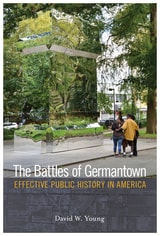
The Battles of Germantown
Effective Public History in AmericaDavid W. Young
Temple University Press, 2019
2020 Philip S. Klein Book Prize Winner, Pennsylvania Historical Association
Known as America’s most historic neighborhood, the Germantown section of Philadelphia (established in 1683) has distinguished itself by using public history initiatives to forge community. Progressive programs about ethnic history, postwar urban planning, and civil rights have helped make historic preservation and public history meaningful. The Battles of Germantown considers what these efforts can tell us about public history’s practice and purpose in the United States.
Author David Young, a neighborhood resident who worked at Germantown historic sites for decades, uses his practitioner’s perspective to give examples of what he calls “effective public history.” The Battles of Germantown shows how the region celebrated “Negro Achievement Week” in 1928 and, for example, how social history research proved that the neighborhood’s Johnson House was a station on the Underground Railroad. These encounters have useful implications for addressing questions of race, history, and memory, as well as issues of urban planning and economic revitalization.
Germantown’s historic sites use public history and provide leadership to motivate residents in an area challenged by job loss, population change, and institutional inertia. The Battles of Germantown illustrates how understanding and engaging with the past can benefit communities today.