Results by title
1441 books match the query 'World' and 33 start with h
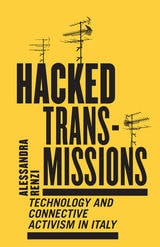
Hacked Transmissions
Technology and Connective Activism in ItalyAlessandra Renzi
University of Minnesota Press, 2020
Mapping the transformation of media activism from the seventies to the present day
Hacked Transmissions is a pioneering exploration of how social movements change across cycles of struggle and alongside technology. Weaving a rich fabric of local and international social movements and media practices, politicized hacking, and independent cultural production, it takes as its entry point a multiyear ethnography of Telestreet, a network of pirate television channels in Italy that combined emerging technologies with the medium of television to challenge the media monopoly of tycoon-turned-prime minister Silvio Berlusconi.
Street televisions in Italy represented a unique experiment in combining old and new media to forge grassroots alliances, fight social isolation, and build more resilient communities. Alessandra Renzi digs for the roots of Telestreet in movements of the 1970s and the global activism of the 1990s to trace its transformations in the present work of one of the network’s more active nodes, insu^tv, in Naples. In so doing, she offers a comprehensive account of transnational media activism, with particular attention to the relations among groups and projects, their modes of social reproduction, the contexts giving rise to them, and the technology they adopt—from zines and radios to social media. Hacked Transmissions is also a study in method, providing examples of co-research between activist researchers and social movements, and a theoretical framework that captures the complexities of grassroots politics and the agency of technology.
Providing a rare and timely glimpse into a key activist/media project of the twenty-first century, Hacked Transmissions marks a vital contribution to debates in a range of fields, including media and communication studies, anthropology, science and technology studies, social movements studies, sociology, and cultural theory.
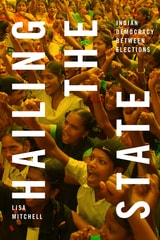
Hailing the State
Indian Democracy between ElectionsLisa Mitchell
Duke University Press, 2023
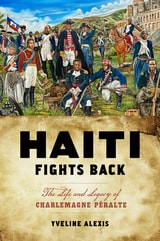
Haiti Fights Back
The Life and Legacy of Charlemagne PéralteYveline Alexis
Rutgers University Press, 2021
Haiti Fights Back: The Life and Legacy of Charlemagne Péralte is the first US scholarly examination of the politician and caco leader (guerrilla fighter) who fought against the US military occupation of Haiti. The occupation lasted close to two decades, from 1915-1934. Alexis argues for the importance of documenting resistance while exploring the occupation’s mechanics and its imperialism. She takes us to Haiti, exploring the sites of what she labels as resistance zones, including Péralte’s hometown of Hinche and the nation’s large port areas--Port-au-Prince and Cap-Haïtien. Alexis offers a new reading of U.S. military archival sources that record Haitian protests as banditry. Haiti Fights Back illuminates how Péralte launched a political movement, and meticulously captures how Haitian women and men resisted occupation through silence, military battles, and writings. She locates and assembles rare, multilingual primary sources from traditional repositories, living archives (oral stories), and artistic representations in Haiti and the United States. The interdisciplinary work draws on legislation, cacos’ letters, newspapers, and murals, offering a unique examination of Péralte’s life (1885-1919) and the significance of his legacy through the twenty-first century. Haiti Fights Back offers a new approach to the study of the U.S. invasion of the Americas by chronicling how Caribbean people fought back.
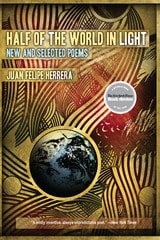
Half of the World in Light
New and Selected PoemsJuan Felipe Herrera
University of Arizona Press, 2008
For nearly four decades, Juan Felipe Herrera has documented his experience as a Chicano in the United States and Latin America through stunning, memorable poetry that is both personal and universal in its impact, themes, and approach. Often political, never fainthearted, his career has been marked by tremendous virtuosity and a unique sensibility for uncovering the unknown and the unexpected. Through a variety of stages and transformations, Herrera has evolved more than almost any other Chicano poet, always re-inventing himself into a more mature and seasoned voice.
Now, in this unprecedented collection, we encounter the trajectory of this highly innovative and original writer, bringing the full scope of his singular vision into view. Beginning with early material from A Certain Man, the volume moves through thirteen of Herrera’s collections into new, previously unpublished work. Serious scholars and readers alike will now have available to them a representative set of glimpses into his production as well as his origins and personal development. The ultimate value of bringing together such a collection, however, is that it will allow us to better understand and appreciate the complexity of what this major American poet is all about.
Hands Across the Sea?
U.S.-Japan Relations, 1961–1981Timothy P. Maga
Ohio University Press, 1997
In 1961, the U.S. economy and military remained unassailable in the eyes of the world. Within twenty years, America faced defeat in Vietnam and its economy had been shaken. Japan was now considered the great economic superpower, while the U.S. and Japan reversed roles as surplus and debtor nations. Hands across the Sea? examines this reversal of roles, determining how and why America and Japan became the post-World War II era’s most argumentative allies.
Through extensive research in a number of presidential libraries and author interviews with both American and Japanese policy-makers, Professor Maga finds a U.S.-Japan relationship forever troubled by cultural misunderstanding, America’s Cold War obsession, Japanese pride, and strangely conflicting goals in both trade and defense. Given the intensity of the arguments over some of these issues, it is remarkable that Washington and Tokyo continued a working dialogue during this critical time.
Hands across the Sea? represents the first in-depth study of the modern U.S.-Japan relationship. It especially discovers how serious the U.S.-Japan disagreements over trade, defense, the direction of the Cold War, nuclear policy, and the environment had become.
Whereas American observers of U.S.-Japan relations are quick to point out their fellow countrymen’s ignorance of other cultures and Japan’s brilliance in analyzing American policy and life, the evidence suggests otherwise. Steering far away from anyone’s political correctness, this book’s bottom line involves hard-hitting investigation and analysis.
Hawaii’s Past in a World of Pacific Islands
James M. Bayman
University Press of Colorado, 2013
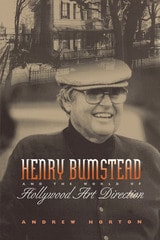
Henry Bumstead and the World of Hollywood Art Direction
By Andrew Horton
University of Texas Press, 2003
From a hotel in Marrakech in The Man Who Knew Too Much, to small-town Alabama in To Kill a Mockingbird, to Mission Control in Space Cowboys, creating a fictional, yet wholly believable world in which to film a movie has been the passion and life's work of Henry Bumstead, one of Hollywood's most celebrated production designers. In a career that has spanned nearly seventy years, Bumstead has worked on more than one hundred movies and television films. His many honors include Academy Awards for Art Direction for To Kill a Mockingbird and The Sting, as well as nominations for Vertigo and The Unforgiven.
This popularly written and extensively illustrated book tells the intertwining stories of Henry Bumstead's career and the evolution of Hollywood art direction. Andrew Horton combines his analysis of Bumstead's design work with wide-ranging interviews in which Bumstead talks about working with top directors, including Alfred Hitchcock, George Roy Hill, Robert Mulligan, and Clint Eastwood, as well as such stars as Paul Newman, Robert Redford, Doris Day, Jimmy Stewart, Sidney Poitier, Bill Cosby, Jerry Lewis, and James Cagney. Numerous production drawings, storyboards, and film stills illustrate how Bumstead's designs translated to film. This portrait of Bumstead's career underscores an art director's crucial role in shaping the look of a film and also tracks the changes in production design from the studio era through location shooting to today's use of high-tech special effects.
Here and Everywhere Else
Small-Town Maine and the WorldAndrew Witmer
University of Massachusetts Press, 2022
Winner of the 2023 New England Society Book Award in the Historical Nonfiction category
Winner of an Award of Excellence, American Association for State and Local History (AASLH)
In 1822, settlers pushed north from Massachusetts and other parts of New England into Monson, Maine. On land taken from the Penobscot people, they established prosperous farms and businesses. Focusing on the microhistory of this village, Andrew Witmer reveals the sometimes surprising ways that this small New England town engaged with the wider world across the nineteenth and twentieth centuries. Townspeople fought and died in distant wars, transformed the economy and landscape with quarries and mills, and used railroads, highways, print, and new technologies to forge connections with the rest of the nation.
Here and Everywhere Else starts with Monson’s incorporation in the early nineteenth century, when central Maine was considered the northern frontier and over 90 percent of Americans still lived in rural areas; it ends with present-day attempts to revive this declining Maine town into an artists’ colony. Engagingly written, with colorful portraits of local characters and landmarks, this study illustrates how the residents of this remote place have remade their town by integrating (and resisting) external influences.

Highway 61 Revisited
Bob Dylan’s Road from Minnesota to the WorldColleen J. Sheehy
University of Minnesota Press, 2009
New essays consider Dylan’s latest work, his Minnesota roots, and his global reach
The young man from Hibbing released Highway 61 Revisited in 1965, and the rest, as they say, is history. Or is it? From his roots in Hibbing, to his rise as a cultural icon in New York, to his prominence on the worldwide stage, Colleen J. Sheehy and Thomas Swiss bring together the most eminent Dylan scholars at work today—as well as people from such far-reaching fields as labor history, African American studies, and Japanese studies—to assess Dylan’s career, influences, and his global impact on music and culture.
The Dylan effect has extended far beyond the United States in recent decades, and the essays here analyze his contribution to the people and cultures of the United Kingdom, Italy, and Japan. With a special focus on his Minnesota roots, including Greil Marcus’s spectacular tour of Dylan’s hometown, authors also take into account his most recent work and Martin Scorsese’s documentary No Direction Home.The first cultural and historical geography of his dramatic rise, storied career, and unmatched iconic status, Highway 61 Revisited maps the terrain of Bob Dylan’s music in the world.Contributors: John Barner, U of Georgia; Daphne Brooks, Princeton U; Court Carney, Stephen F. Austin State U; Alessandro Carrera, U of Houston; Michael Cherlin, U of Minnesota; Marilyn J. Chiat; Susan Clayton; Mick Cochrane, Canisius College; Thomas Crow, New York U; Kevin J. H. Dettmar, Pomona College, Carbondale; Sumanth Gopinath, U of Minnesota; Charles Hughes; C. P. Lee, U of Salford, Manchester, England; Alex Lubet, U of Minnesota; Greil Marcus, U of California, Berkeley; Aldon Lynn Nielsen, Pennsylvania State U; Roberto Polito, The New School; Robert Reginio, Frostburg State U; Heather Stur, U of Southern Mississippi; Mikiko Tachi, Chiba U, Japan; Gayle Wald, George Washington U; Anne Waldman, Naropa U; David Yaffe, Syracuse U.
Hijab
Three Modern Iranian Seminarian PerspectivesLloyd Ridgeon
Gingko, 2021
Ḥijāb addresses the differences of opinion among seminarians on the hijab in the Islamic Republic of Iran, focusing on three representative thinkers: Murtaza Mutahhari who held veiling to be compulsory, Ahmad Qabil who argued for the desirability of the hijab, and Muhsin Kadivar who considers it neither necessary nor desirable. In the first chapter, the views of these three scholars are contextualized within the framework known as ‘new religious thinking’ among the seminarians. Comprehending the hermeneutics of this new religious thinking is key to appreciating how and why the younger generation of scholars have offered divergent judgements about the hijab. Following the first chapter, the book is divided into three parallel sections, each devoted to one of the three seminarians. These present a chronological approach, and each scholar’s position on the hijab is assessed with reference to historical specificity and their own general jurisprudential perspective. Extensive examples of the writings of the three scholars on the hijab are also provided.
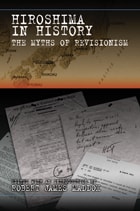
Hiroshima in History
The Myths of RevisionismEdited with an introduction by Robert James Maddox
University of Missouri Press, 2007
When President Harry Truman authorized the use of atomic weapons against Japan, he did so to end a bloody war that would have been bloodier still had the planned invasion of Japan proved necessary. Revisionists claim that Truman’s real interest was a power play with the Soviet Union and that the Japanese would have surrendered even earlier had the retention of their imperial system been assured. Truman wanted the war to continue, they insist, in order to show off America’s powerful new weapon.
This anthology exposes revisionist fallacies about Truman’s motives, the cost of an invasion, and the question of Japan’s surrender. Essays by prominent military and diplomatic historians reveal the hollowness of revisionist claims, exposing the degree to which these agenda-driven scholars have manipulated the historical record to support their contentions. They show that, although some Japanese businessmen and minor officials indicated a willingness to negotiate peace, no one in a governmental decision-making capacity even suggested surrender. And although casualty estimates for an invasion vary considerably, the more authoritative approximations point to the very bloodbath that Truman sought to avoid.
Volume editor Robert Maddox first examines the writings of revisionist Gar Alperovitz to expose the unscholarly methods Alperovitz employed to support his claims, then distinguished Japanese historian Sadao Asada reveals how difficult it was for his country’s peace faction to prevail even after the bombs had been dropped. Other contributors point to continuing Japanese military buildups, analyze the revisionists’ low casualty estimates for an invasion, reveal manipulations of the Strategic Bombing Survey of 1946, and show how even the exhibit commemorating the fiftieth anniversary of the bombing at the Smithsonian National Air and Space Museum hewed to the revisionist line. And a close reading of Tsuyoshi Hasegawa’s acclaimed Racing the Enemy exposes many grave discrepancies between that recent revisionist text and its sources.
The use of atomic bombs against Japan remains one of the most controversial issues in American history. Gathered in a single volume for the first time, these insightful readings take a major step toward settling that controversy by showing how insubstantial Hiroshima revisionism really is—and that sometimes history cannot proceed without decisive action, however regrettable.
Historicizing Fear
Ignorance, Vilification, and OtheringTravis D. Boyce
University Press of Colorado, 2019
Contributors ground their work in the theory of Othering—the reductive action of labeling a person as someone who belongs to a subordinate social category defined as the Other—in relation to historical events, demonstrating that fear of the Other is universal, timeless, and interconnected. Chapters address the music of neo-Nazi white power groups, fear perpetuated through the social construct of black masculinity in a racially hegemonic society, the terror and racial cleansing in early twentieth-century Arkansas, the fear of drug-addicted Vietnam War veterans, the creation of fear by the Tang Dynasty, and more.
Timely, provocative, and rigorously researched, Historicizing Fear shows how the Othering of members of different ethnic groups has been used to propagate fear and social tension, justify state violence, and prevent groups or individuals from gaining equality. Broadening the context of how fear of the Other can be used as a propaganda tool, this book will be of interest to scholars and students of history, anthropology, political science, popular culture, critical race issues, social justice, and ethnic studies, as well as the general reader concerned with the fearful framing prevalent in politics.
Contributors:
Quaylan Allen, Melanie Armstrong, Brecht De Smet, Kirsten Dyck, Adam C. Fong, Jeff Johnson, Łukasz Kamieński, Guy Lancaster, Henry Santos Metcalf, Julie M. Powell, Jelle Versieren
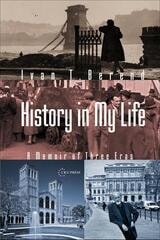
History in My Life
A Memoir of Three ErasIvan T. Berend is Distinguished Research Professor at the History Department of the University of California Los Angeles.
Central European University Press, 2009
Ivan T. Berend is Distinguished Professor at the University of California Los Angeles, Director of the European Studies Program. He was one of the masterminds of regime change in Hungary. He made a career in Hungary as a university professor, Rector of the University of Economics (1973–79), and President of the Hungarian Academy of Sciences (1985–90). He was President of the International Committee of Historical Sciences (1995–2000), and Vice-President of the International Economic History Association (1986–1994). His research interests are the complex economic, social, ideological, and cultural history of Central and Eastern Europe in the 19th–20th century; economic modernization; problems of European backwardness; transition from state socialism to capitalism. He published and 26 books and more than 120 studies.
Before he became a professor at UCLA, Ivan Berend had survived five regime changes and two revolutions in Hungary, had been in prison and German concentration camp in 1944–45.
His memoir offers an interesting case study, a subjective addition to the “objective” historical works on Central and Eastern European state socialism. It describes the hard choices of intellectuals in a dictatorial state: 1. remain in isolation, concentrate on scholarly works, and exclude politics in your personal life; 2. be in opposition, criticize and unveil the regime, accept discrimination and exclusion; 3. remain within the establishment and work for reforming the country using legal possibilities to criticize the regime and to achieve changes from within.
Berend’s book raises basic historical questions and debates, compares East European and American higher education systems, and presents an eyewitness’ insights on life in the United States.
History of Western Civilization
A HandbookWilliam H. McNeill
University of Chicago Press, 1986
With this book, renowned historian William H. McNeil provides a brilliant narrative chronology of the development of Western civilization, representing its sociopolitical as well as cultural aspects. Sweeping in its coverage but careful in its attention to detail, and up to date with the latest scholarship History of Western Civlization is the perfect introduction to the subject for general readers and students alike.
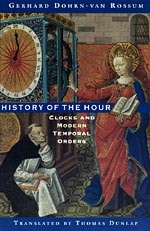
History of the Hour
Clocks and Modern Temporal OrdersGerhard Dohrn-van Rossum
University of Chicago Press, 1996
"In tracing the evolution of time consciousness with scholarship and skill . . . Dohrn-van Rossum evokes the many ways that the small moments of life have come to be reckoned with the passage of time."—Dava Sobel, Civilization
"Dohrn-van Rossum paints a highly nuanced picture of time's conquest of modern life."—Steven Lagerfeld, Wilson Quarterly
"This book is definitive in showing the clock's pervasive influence over European society."—Virginia Quarterly Review
"[A] delightful, excellently translated history."—Choice
"Dohrn-van Rossum has produced a persuasive and brilliantly documented new understanding of how modern time-consciousness arose."—Owen Gingerich, Nature
Hollywood Diplomacy
Film Regulation, Foreign Relations, and East Asian RepresentationsHye Seung Chung
Rutgers University Press, 2020
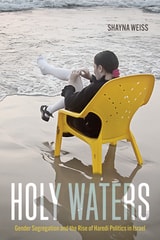
Holy Waters
Gender Segregation and the Rise of Haredi Politics in IsraelShayna Weiss
Rutgers University Press, 2027
Examining the politics of pools and beaches, Holy Waters reveals a surprising history about Haredi Jews and Israel. By looking at the battles to establish gender segregating swimming in Israel, which required a partnership between the Israeli government and its Haredi population to reshape public space, the book argues that the establishment of Israel created a new Haredi pragmatic politics. Unlike some Ultra-Orthodox Jews, who rejected the Jewish state entirely, these radical moderates worked with the state to make it feel more Jewish, and to improve life for its Haredi population, without embracing Zionist ideology. Holy Waters examines three cases: a failure to prevent mixed swimming in Jerusalem, the successful establishment of a separate beach in Tel Aviv, and the mixed results of a Diaspora awareness campaign. Connecting historical controversies to today’s debates of gender segregation, the book demonstrates how these radical moderates still influence Israel today.
This book is published with the support of the Jordan Schnitzer First Book Publication Award, administered by the Association for Jewish Studies.
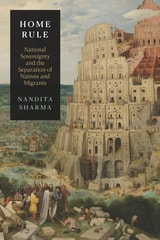
Home Rule
National Sovereignty and the Separation of Natives and MigrantsNandita Sharma
Duke University Press, 2020
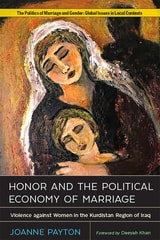
Honor and the Political Economy of Marriage
Violence against Women in the Kurdistan Region of IraqJoanne Payton
Rutgers University Press, 2020
Honor and the Political Economy of Marriage provides a description of ‘honor’-based violence that focuses upon the structure of the family rather than the perpetrator’s culture. The author, Joanne Payton, argues that within societies primarily organized by familial and marital connections, women’s ‘honor’ is a form of symbolic capital within a ‘political economy’ in which marriage organizes intergroup connections.
Drawing on statistical analysis of original data contextualized with historical and anthropological readings, Payton explores forms of marriage and their relationship to ‘honor’, sketching changing norms around the familial control of women from agrarian/pastoral roots to the contemporary era.
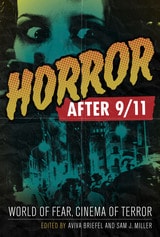
Horror after 9/11
World of Fear, Cinema of TerrorEdited by Aviva Briefel and Sam J. Miller
University of Texas Press, 2011
Horror films have exploded in popularity since the tragic events of September 11, 2001, many of them breaking box-office records and generating broad public discourse. These films have attracted A-list talent and earned award nods, while at the same time becoming darker, more disturbing, and increasingly apocalyptic. Why has horror suddenly become more popular, and what does this say about us? What do specific horror films and trends convey about American society in the wake of events so horrific that many pundits initially predicted the death of the genre? How could American audiences, after tasting real horror, want to consume images of violence on screen?
Horror after 9/11 represents the first major exploration of the horror genre through the lens of 9/11 and the subsequent transformation of American and global society. Films discussed include the Twilight saga; the Saw series; Hostel; Cloverfield; 28 Days Later; remakes of The Texas Chainsaw Massacre, Dawn of the Dead, and The Hills Have Eyes; and many more. The contributors analyze recent trends in the horror genre, including the rise of 'torture porn,' the big-budget remakes of classic horror films, the reinvention of traditional monsters such as vampires and zombies, and a new awareness of visual technologies as sites of horror in themselves. The essays examine the allegorical role that the horror film has held in the last ten years, and the ways that it has been translating and reinterpreting the discourses and images of terror into its own cinematic language.
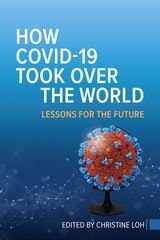
How COVID-19 Took Over the World
Lessons for the FutureEdited by Christine Loh
Hong Kong University Press, 2023
The pandemic left disorder and crises in its wake everywhere it struck. Drawing on disciplines including public health, politics, and socioeconomics, this book tracks the spread of COVID-19 to weave a coherent picture that explains how scientists learned about the virus, how authorities reacted around the world, and how different societies coped.
Written by a leading team of public health, policy, and economics experts, How COVID-19 Took Over the World provides an in-depth analysis of various countries’ responses to the pandemic, as well as suggestions to increase the capability to fight future pandemics. The first part of the book provides an overview of global governance and international cooperation, the economic and social consequences of the outbreak, and breakthroughs in mathematical modeling and COVID-19 vaccines. The second part of the book examines and compares specific countries and regions through the lens of good governance, social contract, and political trust.
How COVID-19 Took Over the World is essential for anyone seeking to learn from the impact of COVID-19, particularly professionals and policymakers, as well as those with a general interest in governance and pandemics.

How Corrupt Is Britain?
Edited by David Whyte
Pluto Press, 2015
David Whyte brings together a wide range of leading commentators and campaigners, offering a series of troubling answers. Unflinchingly facing the corruption in British public life, they show that it is no longer tenable to assume that corruption is something that happens elsewhere; corrupt practices are revealed across a wide range of venerated institutions, from local government to big business. These powerful, punchy essays aim to shine a light on the corruption fundamentally embedded in UK politics, police, and finance.

How Informal Institutions Matter
Evidence from Turkish Social and Political SpheresZeki Sarigil
University of Michigan Press, 2023
In How Informal Institutions Matter, Zeki Sarigil examines the role of informal institutions in sociopolitical life and addresses the following questions: Why and how do informal institutions emerge? To ask this differently, why do agents still create or resort to informal institutions despite the presence of formal institutional rules and regulations? How do informal institutions matter? What roles do they play in sociopolitical life? How can we classify informal institutions? What novel types of informal institutions can we identify and explain? How do informal institutions interact with formal institutions? How do they shape formal institutional rules, mechanisms, and outcomes? Finally, how do existing informal institutions change? What factors might trigger informal institutional change? In order to answer these questions, Sarigil examines several empirical cases of informal institution as derived from various issue areas in the Turkish sociopolitical context (i.e., civil law, conflict resolution, minority rights, and local governance) and from multiple levels (i.e., national and local).
How Is It Between Us?
Relational Ethics and Care for the WorldJarrett Zigon
HAU, 2024
In How Is It Between Us?, Jarrett Zigon puts anthropology and phenomenological hermeneutics in conversation to develop a new theory of relational ethics. This relational ethics takes place in the between, the interaction not just between people, but all existents. Importantly, this theory is utilized as a framework for considering some of today’s most pressing ethical concerns—for example, living in a condition of post-truth and worlds increasingly driven by algorithms and data extraction, various and competing calls for justice, and the ethical demands of the climate crisis. Written by one of the preeminent contributors to the anthropology of ethics, this is a ground-breaking book within that literature, developing a robust and systematic ethical theory to think through contemporary ethical problems.

How Monkeys See the World
Inside the Mind of Another SpeciesDorothy L. Cheney and Robert M. Seyfarth
University of Chicago Press, 1990
"This reviewer had to be restrained from stopping people in the street to urge them to read it: They would learn something of the way science is done, something about how monkeys see their world, and something about themselves, the mental models they inhabit."—Roger Lewin, Washington Post Book World
"A fascinating intellectual odyssey and a superb summary of where science stands."—Geoffrey Cowley, Newsweek
"A once-in-the-history-of-science enterprise."—Duane M. Rumbaugh, Quarterly Review of Biology

How Oceans Become
Histories and Futures of the High Seas and Deep OceansThomas Brandt, Knut Ove Eliassen, Mats Ingulstad, Gard Paulsen
University of Chicago Press, 0
An anthology grounded in the idea that oceans are human realities, shaped by human interests, interactions, and technologies.
Historically and geographically diverse, oceans exist in the plural. Oceans become oceans through how they are represented, what resources they are deemed to hold, and the regulatory governance to which they are subjected. These are the three key components of “ocean making” this volume employs to shed light on the complex issues facing ocean governance today.
The anthology reaches back to the oceans of the early modern European expansion and up to the current concerns of anthropogenic changes and resource depletion. Chapters address activities and regulatory concerns regarding maritime transport, fisheries, deep-sea mining, wave energy, and whaling, and span from the southern oceans around Antarctica to the current shedding of the icy mantle of the Arctic Ocean. By drawing together scholars from a wide range of disciplines—including history, comparative literature, media studies, political science, law, and anthropology—How Oceans Become opens a multi-layered, interdisciplinary approach to studying the oceans’ entanglements with human cultures and societies.
How Women Win Presidential Elections in Latin America
Catherine Reyes-Housholder
Temple University Press, 2026
Between 1990 and 2020, women candidates won only 6% of the world’s presidential races. How Women Win Presidential Elections in Latin America explains the factors, strategies, and perceptions that help (or hinder) women to democratically access their country’s highest political office. Catherine Reyes-Housholder introduces a theory of gendered incentives and perceived potential to reveal why a political party would break with tradition and nominate a woman. She also shows how citizens respond when women candidates are running in incumbent parties or competing to displace those in power.
Drawing on comparative research on the presidency and gender, How Women Win Presidential Elections in Latin America examines the successful campaigns of Michelle Bachelet in Chile and Dilma Rousseff in Brazil, as well as why Blanca Ovelar lost her presidential race in Paraguay. Reyes-Housholder’s findings indicate that voter sexism is not a major factor; however, women do not triumph in these elections in the same ways that men do. Rather, the central unknown factor behind women’s victories is how they become candidates of major parties—and gender profoundly influences who parties nominate.
How Women Win Presidential Elections in Latin America is a valuable investigation of women and executive politics.
How to Make Art at the End of the World
A Manifesto for Research-CreationNatalie Loveless
Duke University Press, 2019
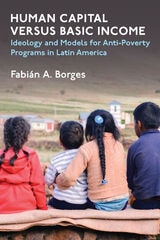
Human Capital versus Basic Income
Ideology and Models for Anti-Poverty Programs in Latin AmericaFabián A. Borges
University of Michigan Press, 2022
There were two distinct models of CCTs: a “human capital” model based on means-tested targeting and strict enforcement of program conditions, exemplified by the program launched by Mexico’s right, and a more universalistic “basic income” model with more permissive enforcement of conditionality, exemplified by Brazil’s program under Lula. These two models then spread across the region. Whereas right and center governments, with assistance from international financial institutions, enacted CCTs based on the human capital model, the left, with assistance from Brazil, enacted CCTs based on the basic income model.
The existence of two distinct types of CCTs and their relation to ideology is supported by quantitative analyses covering the entire region and in-depth case studies based on field research in three countries. Left-wing governments operate CCTs that cover more people and spend more on those programs than their center or right-wing counterparts. Beyond coverage, a subsequent analysis of the 10 national programs adopted after Lula’s embrace of CCTs confirms that program design—evaluated in terms of scope of the target population, strictness of conditionality enforcement, and stipend structure—is shaped by government ideology. This finding is then fleshed out through case studies of the political processes that culminated in the adoption of basic income CCTs by left-wing governments in Argentina and Bolivia and a human capital CCT by a centrist president in Costa Rica.
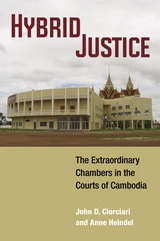
Hybrid Justice
The Extraordinary Chambers in the Courts of CambodiaJohn D. Ciorciari and Anne Heindel
University of Michigan Press, 2014
Since 2006, the United Nations and Cambodian Government have participated in the Extraordinary Chambers in the Courts of Cambodia, a hybrid tribunal created to try key Khmer Rouge officials for crimes of the Pol Pot era. In Hybrid Justice, John D. Ciorciari and Anne Heindel examine the contentious politics behind the tribunal’s creation, its flawed legal and institutional design, and the frequent politicized impasses that have undermined its ability to deliver credible and efficient justice and leave a positive legacy. They also draw lessons and principles for future hybrid and international courts and proceedings.

Hybrid Justice
The Extraordinary Chambers in the Courts of CambodiaJohn D. Ciorciari and Anne Heindel
University of Michigan Press, 2023
Since 2006, the United Nations and Cambodian Government have participated in the Extraordinary Chambers in the Courts of Cambodia, a hybrid tribunal created to try key Khmer Rouge officials for crimes of the Pol Pot era. In Hybrid Justice, John D. Ciorciari and Anne Heindel examine the contentious politics behind the tribunal’s creation, its flawed legal and institutional design, and the frequent politicized impasses that have undermined its ability to deliver credible and efficient justice and leave a positive legacy. They also draw lessons and principles for future hybrid and international courts and proceedings.
Hyecho's Journey
The World of BuddhismDonald S. Lopez Jr.
University of Chicago Press, 2017
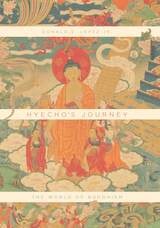
With Hyecho’s Journey, eminent scholar of Buddhism Donald S. Lopez Jr. re-creates Hyecho’s trek. Using the surviving fragments of Hyecho’s travel memoir, along with numerous other textual and visual sources, Lopez imagines the thriving Buddhist world the monk explored. Along the way, Lopez introduces key elements of Buddhism, including its basic doctrines, monastic institutions, works of art, and the many stories that have inspired Buddhist pilgrimage. Through the eyes of one remarkable Korean monk, we discover a vibrant tradition flourishing across a vast stretch of Asia. Hyecho’s Journey is simultaneously a rediscovery of a forgotten pilgrim, an accessible primer on Buddhist history and doctrine, and a gripping, beautifully illustrated account of travel in a world long lost.
Hyperobjects
Philosophy and Ecology after the End of the WorldTimothy Morton
University of Minnesota Press, 2013
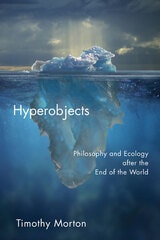
Having set global warming in irreversible motion, we are facing the possibility of ecological catastrophe. But the environmental emergency is also a crisis for our philosophical habits of thought, confronting us with a problem that seems to defy not only our control but also our understanding. Global warming is perhaps the most dramatic example of what Timothy Morton calls “hyperobjects”—entities of such vast temporal and spatial dimensions that they defeat traditional ideas about what a thing is in the first place. In this book, Morton explains what hyperobjects are and their impact on how we think, how we coexist with one another and with nonhumans, and how we experience our politics, ethics, and art.
Moving fluidly between philosophy, science, literature, visual and conceptual art, and popular culture, the book argues that hyperobjects show that the end of the world has already occurred in the sense that concepts such as world, nature, and even environment are no longer a meaningful horizon against which human events take place. Instead of inhabiting a world, we find ourselves inside a number of hyperobjects, such as climate, nuclear weapons, evolution, or relativity. Such objects put unbearable strains on our normal ways of reasoning.
Insisting that we have to reinvent how we think to even begin to comprehend the world we now live in, Hyperobjects takes the first steps, outlining a genuinely postmodern ecological approach to thought and action.