Results by title
353 books match the query 'World War II' and 11 start with h
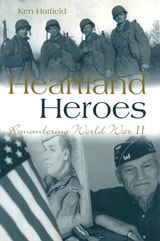
Heartland Heroes
Remembering World War IIKen Hatfield
University of Missouri Press, 2003
"War is about patriotism, about sacrifice, about conquering fear. And perhaps most of all, it's about the guy in the foxhole next to you, taking care of each other, protecting each other, loving each other; a camaraderie so intense only men who have been in combat can ever know what it's like. Yes, most of all, war is about love."
Heartland Heroes is a collection of remarkable stories from ordinary men and women who lived through extraordinary times. They resided in places like Lee’s Summit, Independence, and Kansas City, yet their experiences were very much like those of World War II veterans everywhere. Some were marines, nurses, or fighter pilots, others were simply civilians who lived through the war under the martial law imposed on the Hawaiian Islands after the attack on Pearl Harbor.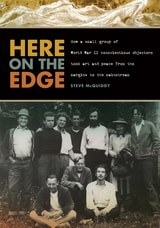
Here on the Edge
How a Small Group of World War II Conscientious Objectors Took Art and Peace from the Margins to the MainstreamSteve McQuiddy
Oregon State University Press, 2013
They worked six days a week—planting trees, crushing rock, building roads, and fighting forest fires—in exchange for only room and board. At night, they published books under the imprint of the Untide Press. They produced plays, art, and music—all during their limited non-work hours, with little money and few resources. This influential group included poet William Everson, later known as Brother Antoninus, “the Beat Friar”; violinist Broadus Erle, founder of the New Music Quartet; fine arts printer Adrian Wilson; Kermit Sheets, co-founder of San Francisco’s Interplayers theater group; architect Kemper Nomland, Jr.; and internationally renowned sculptor Clayton James.
After the war, camp members went on to participate in the San Francisco Poetry Renaissance of the 1950s, which heavily influenced the Beat Generation of Jack Kerouac, Allen Ginsberg, and Gary Snyder—who in turn inspired Ken Kesey and his Merry Pranksters, leading the way to the 1960s upheavals epitomized by San Francisco’s Summer of Love.
As camp members engaged in creative acts, they were plowing ground for the next generation, when a new set of young people, facing a war of their own in Vietnam, would populate the massive peace movements of the 1960s.
Twenty years in the making and packed with original research, Here on the Edge is the definitive history of the Fine Arts Group at Waldport, documenting how their actions resonated far beyond the borders of the camp. It will appeal to readers interested in peace studies, World War II history, influences on the 1960s generation, and in the rich social and cultural history of the West Coast.
Hiroshima in History
The Myths of RevisionismEdited with an introduction by Robert James Maddox
University of Missouri Press, 2007
When President Harry Truman authorized the use of atomic weapons against Japan, he did so to end a bloody war that would have been bloodier still had the planned invasion of Japan proved necessary. Revisionists claim that Truman’s real interest was a power play with the Soviet Union and that the Japanese would have surrendered even earlier had the retention of their imperial system been assured. Truman wanted the war to continue, they insist, in order to show off America’s powerful new weapon.
This anthology exposes revisionist fallacies about Truman’s motives, the cost of an invasion, and the question of Japan’s surrender. Essays by prominent military and diplomatic historians reveal the hollowness of revisionist claims, exposing the degree to which these agenda-driven scholars have manipulated the historical record to support their contentions. They show that, although some Japanese businessmen and minor officials indicated a willingness to negotiate peace, no one in a governmental decision-making capacity even suggested surrender. And although casualty estimates for an invasion vary considerably, the more authoritative approximations point to the very bloodbath that Truman sought to avoid.
Volume editor Robert Maddox first examines the writings of revisionist Gar Alperovitz to expose the unscholarly methods Alperovitz employed to support his claims, then distinguished Japanese historian Sadao Asada reveals how difficult it was for his country’s peace faction to prevail even after the bombs had been dropped. Other contributors point to continuing Japanese military buildups, analyze the revisionists’ low casualty estimates for an invasion, reveal manipulations of the Strategic Bombing Survey of 1946, and show how even the exhibit commemorating the fiftieth anniversary of the bombing at the Smithsonian National Air and Space Museum hewed to the revisionist line. And a close reading of Tsuyoshi Hasegawa’s acclaimed Racing the Enemy exposes many grave discrepancies between that recent revisionist text and its sources.
The use of atomic bombs against Japan remains one of the most controversial issues in American history. Gathered in a single volume for the first time, these insightful readings take a major step toward settling that controversy by showing how insubstantial Hiroshima revisionism really is—and that sometimes history cannot proceed without decisive action, however regrettable.

Hitler and His Generals
The Hidden Crisis, January-June 1938Harold C. Deutsch
University of Minnesota Press, 1974
Hitler and His Generals was first published in 1974. Minnesota Archive Editions uses digital technology to make long-unavailable books once again accessible, and are published unaltered from the original University of Minnesota Press editions.
The author, who told the story of second of four conspiratorial rounds in his earlier book The Conspiracy against Hitler in the Twilight War,describes here the situations and events leading up to the first round of conspiracy. The present volume deals with the virtual coup d'etat by which Hitler sought to establish ascendancy over the Wehrmacht early in 1938.
The account focuses on sensational events centering about Hitler's successful efforts to oust Field Marshal Werner von Blomberg, the War Minister, and Colonel General Baron von Fritsch, the Army commander in chief, in order to consolidate control of the military in his own hands. Using as an excuse Blomberg's marriage to a woman with a discreditable past, he forced Blomberg's resignation. He accomplished Fritsch's resignation through charges of homosexuality which were trumped up by Himmler, Heydrich, and Goering. He then appointed Colonel General Walther von Brauchitsch, who was under personal obligation to him, as commander in chief. Through these moves, as Dr. Deutsch shows, Hitler closed the door to all means other than conspiracy for the active Opposition movement to express itself against his aggressive policies. The story of the first round of conspiracy will be the subject of another book by Professor Deutsch, to be published later.
Hitler's Geographies
The Spatialities of the Third ReichEdited by Paolo Giaccaria and Claudio Minca
University of Chicago Press, 2016
With Hitler’s Geographies, editors Paolo Giaccaria and Claudio Minca examine the variety of ways in which spatial theory evolved and was translated into real-world action under the Third Reich. They have gathered an outstanding collection by leading scholars, presenting key concepts and figures as well exploring the undeniable link between biopolitical power and spatial expansion and exclusion.
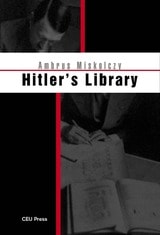
Hitler's Library
Ambrus Miskolczy
Central European University Press, 2003
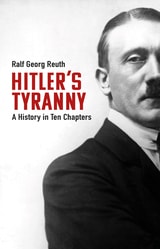
Hitler's Tyranny
A History in Ten ChaptersRalf Georg Reuth
Haus Publishing, 2022
Hitler’s tyranny is still difficult to understand today. In this book, Ralf Georg Reuth examines ten aspects of this catastrophe. Among other things, he asks: Was anti-Semitism more pronounced in Germany than elsewhere? Was Versailles really responsible for Hitler’s rise and why did the Germans follow a racial fanatic like him? How did his war differ from all others before it? The disturbing answers provide an overall picture that shows Hitler was not the consequence of the depths of German history, but the result of chance, deception, and seduction.
This thought-provoking new study takes aim at several of the norms of Hitler scholarship from the past forty years. Reuth interrogates and challenges a range of orthodox views on such topics as how mainstream politicians facilitated Hitler’s rise to power, the Führer’s infamous pact with Stalin, and the complicity of ordinary Germans in his genocidal tyranny. Eschewing a conventional chronological approach in favor of a forensic analysis of Hitler’s mainsprings of action both as chancellor and military commander, Reuth portrays Hitler as the apotheosis of what he argues is a specifically German strain of militarism and imperialism, shifting the focus firmly back to the mindset and modus operandi of Hitler himself. The portrait that emerges is one of a murderous fantasist and political opportunist driven by an all-embracing ideology of racial superiority. Reuth’s account courts controversy on a number of points and offers a fascinating counterpoint to much recent scholarship.
Holocaust
An American UnderstandingLipstadt, Deborah E
Rutgers University Press, 2016
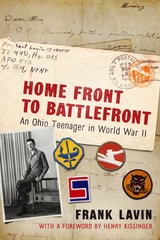
Home Front to Battlefront
An Ohio Teenager in World War IIFrank Lavin
Ohio University Press, 2016
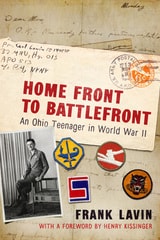
Carl Lavin was a high school senior when Pearl Harbor was attacked. The Canton, Ohio, native was eighteen when he enlisted, a decision that would take him with the US Army from training across the United States and Britain to combat with the 84th Infantry Division in the Battle of the Bulge. Home Front to Battlefront is the tale of a foot soldier who finds himself thrust into a world where he and his unit grapple with the horrors of combat, the idiocies of bureaucracy, and the oddities of life back home—all in the same day. The book is based on Carl’s personal letters, his recollections and those of the people he served beside, official military history, private papers, and more.
Home Front to Battlefront contributes the rich details of one soldier’s experience to the broader literature on World War II. Lavin’s adventures, in turn disarming and sobering, will appeal to general readers, veterans, educators, and students of the war. As a history, the book offers insight into the wartime career of a Jewish Ohioan in the military, from enlistment to training through overseas deployment. As a biography, it reflects the emotions and the role of the individual in a total war effort that is all too often thought of as a machine war in which human soldiers were merely interchangeable cogs.
Home Front to Battlefront
An Ohio Teenager in World War IIFrank Lavin
Ohio University Press, 2001
Carl Lavin was a high school senior when Pearl Harbor was attacked. The Canton, Ohio, native was eighteen when he enlisted, a decision that would take him with the US Army from training across the United States and Britain to combat with the 84th Infantry Division in the Battle of the Bulge. Home Front to Battlefront is the tale of a foot soldier who finds himself thrust into a world where he and his unit grapple with the horrors of combat, the idiocies of bureaucracy, and the oddities of life back home—all in the same day. The book is based on Carl’s personal letters, his recollections and those of the people he served beside, official military history, private papers, and more.
Home Front to Battlefront contributes the rich details of one soldier’s experience to the broader literature on World War II. Lavin’s adventures, in turn disarming and sobering, will appeal to general readers, veterans, educators, and students of the war. As a history, the book offers insight into the wartime career of a Jewish Ohioan in the military, from enlistment to training through overseas deployment. As a biography, it reflects the emotions and the role of the individual in a total war effort that is all too often thought of as a machine war in which human soldiers were merely interchangeable cogs.
How Green Were the Nazis?
Nature, Environment, and Nation in the Third ReichFranz-Josef Brüggemeier
Ohio University Press, 2005