Results by title
28164 books match the query 'History' and 906 start with h
History Within
The Science, Culture, and Politics of Bones, Organisms, and MoleculesMarianne Sommer
University of Chicago Press, 2016
Our interpretation of gene sequences, like our interpretation of other historical evidence, inevitably tells a story laden with political and moral values. Focusing on the work of Henry Fairfield Osborn, Julian Sorell Huxley, and Luigi Luca Cavalli-Sforza in paleoanthropology, evolutionary biology, and human population genetics, History Within asks how the sciences of human origins, whether through the museum, the zoo, or the genetics lab, have shaped our idea of what it means to be human. How have these biologically based histories influenced our ideas about nature, society, and culture? As Marianne Sommer shows, the stories we tell about bones, organisms, and molecules often change the world.
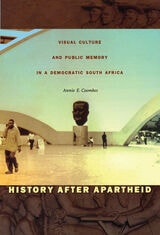
History after Apartheid
Visual Culture and Public Memory in a Democratic South AfricaAnnie E. Coombes
Duke University Press, 2003
History after Apartheid explores the dilemmas posed by a wide range of visual and material culture including key South African heritage sites. How prominent should Nelson Mandela and the African National Congress be in the museum at the infamous political prison on Robben Island? How should the postapartheid government deal with the Voortrekker Monument mythologizing the Boer Trek of 1838? Coombes highlights the contradictory investment in these sites among competing constituencies and the tensions involved in the rush to produce new histories for the “new” South Africa.
She reveals how artists and museum officials struggled to adequately represent painful and difficult histories ignored or disavowed under apartheid, including slavery, homelessness, and the attempted destruction of KhoiSan hunter-gatherers. Describing how contemporary South African artists address historical memory and the ambiguities uncovered by the Truth and Reconciliation Commission, Coombes illuminates a body of work dedicated to the struggle to simultaneously remember the past and move forward into the future.
History after Liberty
Tacitus on Tyrants, Sycophants, and RepublicansThomas E. Strunk
University of Michigan Press, 2017
History after Liberty explores Tacitus’ political thought through his understanding of liberty. Influenced by modern republican writers such as Quentin Skinner and Philip Pettit, this study defines Tacitean libertas as the freedom from the rule of a dominus and as freedom to participate in the traditional politics of Rome through military service, public service in the senate and magistracies, and public speech. All of these elements are balanced in Tacitus’ writings with examples of those resisting the corruption of politics in an effort to restore a sense of free civic engagement. The work concludes with an exploration of Tacitus’ own writings as an act of restoring liberty. In contrast to most studies on Tacitus, History after Liberty argues that Tacitus is a republican who writes both to demonstrate that Rome had become a tyranny and to show a way out of that tyranny.
History after Liberty addresses the political thought of Tacitus’ writings. As such it will be of most interest to those who study the history and historiography of the early Roman empire, namely classicists and ancient historians. The work will also be of use to those interested in the antecedents to modern political thought, particularly the history of republicanism and freedom; readers from this category will include political scientists, philosophers, and modern historians.
History and Health Policy in the United States
Putting the Past Back InStevens, Rosemary A
Rutgers University Press, 2006
In History and Health Policy in the United States, seventeen leading scholars of history, the history of medicine, bioethics, law, health policy, sociology, and organizational theory make the case for the usefulness of history in evaluating and formulating health policy today. In looking at issues as varied as the consumer economy, risk, and the plight of the uninsured, the contributors uncover the often unstated assumptions that shape the way we think about technology, the role of government, and contemporary medicine. They show how historical perspectives can help policymakers avoid the pitfalls of partisan, outdated, or merely fashionable approaches, as well as how knowledge of previous systems can offer alternatives when policy directions seem unclear.
Together, the essays argue that it is only by knowing where we have been that we can begin to understand health services today or speculate on policies for tomorrow.
History and Hope in the Heart of Dixie
Scholarship, Activism, and Wayne Flynt in the Modern SouthEdited by Gordon E. Harvey, Richard D. Starnes and Glenn Feldman
University of Alabama Press, 2006
Exploring the history, challenges, and promise of a changing South through the legacy of Wayne Flynt.
This collection of essays on the social and political history of the modern South consider the region’s poor, racial mores and race relations, economic opportunity, Protestant activism, political coalitions and interest groups, social justice, and progressive reform. History and Hope in the Heart of Dixie illuminates the dual role of historian and public advocate in modern America. In a time when the nation’s eyes have been focused by Hurricanes Katrina and Rita onto the vulnerability and dire condition of poor people in the South, the applicability of research, teaching, and activism for this voiceless element seems all the more relevant.
Responding to the example of Wayne Flynt, whose fierce devotion to his state of Alabama and its region has not blinded his recognition of the inequities and despair that define southern life for so many, the scholars assembled in this work present contributions to the themes Flynt so passionately explored in his own work.Two seasoned observers of southern history and culture—John Shelton Reed and Dan T. Carter—offer assessments of Flynt’s influence on the history profession as a whole and on the region of the South in particular.
History and Human Responsibility
The Unbearable Weight of Freedom in a Dystopian WorldMarcel van Herpen
St. Augustine's Press, 2023
In a time of crisis we face the accusations of history, however distant, and are subjected to the sound of its echoing ahead of us. But, Van Herpen asks, to what exactly (or to what extent) should we listen as we strive to respond to the challenges of present day? "Is it true that history is a teacher for our lives? And has it ever been? In crisis periods this question becomes more urgent: old certainties disappear and––independently from our wishes––a new, unknown world is emerging, which seems to be at odds with our established ways of thinking and our existing value patterns."
Van Herpen scrutinizes modern European history and the post-modern man and offers the reader a compelling account of human freedom in politics, morality, and the ways in which history will or will not ever guide us into the future. He proves himself to be a very capable political scientist and sociologist, but more importantly he has now pronounced himself to be an optimistic (yet sober) observer of both human beings and history, willing to confront the present generation with possible future outcomes of contemporary crises.
History and Legend
Ideas and Images in the Ming Historical NovelsShelley Hsueh-lun Chang
University of Michigan Press, 1990
This combination of influences in the historical novels was especially significant during the Ming dynasty because of the rise of both urban culture of great refinement and diversity and a popularizing vernacular designed to promote learning among all people. These two exuberant movements came together in the historical novel to propagate the difficult and complex Official Histories of the governing elite, as well as to adapt unofficial histories and fictitious narratives, thus opening the way to the influence of the common people in literature.
This book is the first study of the novels from a historical standpoint. Combining traditional historical research with new source material of the historical novels and with analytical strategies, Chang creates a three-dimensional picture of the “historical world” of the Ming people. Chang compares issues of the dynastic cycle and political legitimacy of a regime, human ambitions and immortality, ethics in the relations between historical personages and legendary heroes, ideals of government and grandiose imperial institutions, and supernatural power and the justice of history that emerged from the historical novels with those in the Official Histories and Confucian canon.
History and Memory in the Two Souths
Recent Southern and Spanish American FictionDeborah Cohn
Vanderbilt University Press, 1999
First, Cohn proposes that Faulkner's appeal derives from Spanish American authors' perception of similarities between the South's history and the experiences of their own respective nations. She delineates historical experiences common to the South and Spanish America, including civil wars, defeat and dispossession, regional marginalization, and socio-economic hardship. She also suggests that Spanish American authors found in Faulkner a set of concerns with which they could identify and that, as a result, they were inspired to take up the stylistic innovations characteristic of his writing. The resulting assimilation and adaptation of Euro-American modernism through Faulkner has been an indispensable part of what is known as la nueva narrativa, "the new narrative," as well as of successive movements in Spanish American literature.
From another perspective, Cohn's book shows points of contact between works by other southern and Spanish American novelists without positing relations of influence. Specifically, after identifying common, recurrent themes in modern southern and Spanish American literature in general, Cohn reveals levels of a shared understanding of regional history in Faulkner and Mario Vargas Llosa, in Ralph Ellison and Isabel Allende, as well as in Katherine Anne Porter and Juan Rulfo. Her analyses compare and contrast these authors' shared attempts to provide correctives to official, mainstream historical discourse through alternate, parallel strategies for reconstructing, recording, and reclaiming the past.
In yoking together the South and Spanish America as neighboring spaces with similar personalities, Cohn advances a daring and controversial thesis that both narrows and enhances the frame of comparison between the literatures of the South and Spanish America.

History and Modern Media
A Personal JourneyJohn Mraz
Vanderbilt University Press, 2021
The book interweaves an autobiographical narrative with concrete research. Mraz describes the resistance he encountered in US academia to this new way of showing and describing the past in films and photographs, as well as some illuminating experiences as a visiting professor at several US universities. More importantly, he reflects on what it has meant to move to Mexico and become a Mexican. Mexico is home to a thriving school of photohistorians perhaps unequaled in the world. Some were trained in art history, and a few continue to pursue that discipline. However, the great majority work from the discipline known as "photohistory" which focuses on vernacular photographs made outside of artistic intentions.
A central premise of the book is that knowing the cultures of the past and of the other is crucial in societies dominated by short-term and parochial thinking, and that today's hyper-audiovisuality requires historians to use modern media to offer their knowledge as alternatives to the "perpetual present" in which we live.
History and Myth in Romanian Consciousness
Lucian Boia
Central European University Press, 2001
There is a considerable difference between real history and discourse history - this book stems from this idea. The author points out that history is constantly reconstructed, adapted and sometimes mythified from the perspective of the present day, of present states of mind and ideologies. Boia closely examines the process of historical culture and conscience in nineteenth and twentieth century Romania, particularly concentrating on the impact of the national ideology on history. Based upon his findings, the author identifies several key mythical configurations and analyses the manner in which Romanians have reconstituted their own highly ideologized history over the last two centuries.
The strength of History and Myth in Romanian Consciousness lies in the author's ability to fully deconstruct the entire Romanian historiographic system and demonstrate the increasing acuteness of national problems in general, and in particular the exploitation of history to support national ideology.

History and Mythology of the Aztecs
The Codex ChimalpopocaJohn Bierhorst
University of Arizona Press, 1992
Of particular interest are the stories of the hero-god Quetzalcoatl, for which the Chimalpopoca is the premier source. John Bierhorst's work is the first major scholarship on the Codex Chimalpopoca in more than forty years. His is the first edition in English and the first in any language to include the complete text of the Legend of the Suns. The precise, readable translation not only contributes to the study of Aztec history and literature but also makes the codex an indispensable reference for Aztec cultural topics, including land tenure, statecraft, the role of women, the tribute system, warfare, and human sacrifice.

History and Philanthropy
Past, Present, FutureEdited by David Cannadine and Jill Pellew
University of London Press, 2008

History and Philosophy of Modern Mathematics
Volume XIWilliam Aspray and Philip Kitcher, Editors
University of Minnesota Press, 1988
History and Philosophy of Modern Mathematics was first published in 1988. Minnesota Archive Editions uses digital technology to make long-unavailable books once again accessible, and are published unaltered from the original University of Minnesota Press editions.
The fourteen essays in this volume build on the pioneering effort of Garrett Birkhoff, professor of mathematics at Harvard University, who in 1974 organized a conference of mathematicians and historians of modern mathematics to examine how the two disciplines approach the history of mathematics. In History and Philosophy of Modern Mathematics, William Aspray and Philip Kitcher bring together distinguished scholars from mathematics, history, and philosophy to assess the current state of the field. Their essays, which grow out of a 1985 conference at the University of Minnesota, develop the basic premise that mathematical thought needs to be studied from an interdisciplinary perspective.
The opening essays study issues arising within logic and the foundations of mathematics, a traditional area of interest to historians and philosophers. The second section examines issues in the history of mathematics within the framework of established historical periods and questions. Next come case studies that illustrate the power of an interdisciplinary approach to the study of mathematics. The collection closes with a look at mathematics from a sociohistorical perspective, including the way institutions affect what constitutes mathematical knowledge.
History and Philosophy of the Humanities
An IntroductionMichiel Leezenberg
Amsterdam University Press, 2018
History and Philosophy of the Humanities
An IntroductionMichiel Leezenberg
Amsterdam University Press, 2019
'History and Philosophy of the Humanities: An Introduction' presents a reasoned overview of the conceptual and historical backgrounds of the humanities. In four sections, it discusses:
- the most influential views on scientific knowledge from Aristotle to Thomas Kuhn;
- the birth of the modern humanities and its relation to the natural and social sciences;
- the various methodological schools and conceptual issues in the humanities;
- several themes that set the agenda for current debates in the humanities: critiques of modernity; gender, sexuality and identity; and postcolonialism.
Thus, it provides students in the humanities with a comprehensive understanding of the backgrounds of their own discipline, its relation to other disciplines, and the state of the art of the humanities at large.
History and Poetics in the Early Writings of William Morris, 1855–1870
Florence S. Boos
The Ohio State University Press, 2015
Boos’s study is the first to utilize surviving original manuscripts, periodical publications, and poems unpublished during Morris’s lifetime. History and Poetics in the Early Writings of William Morris, 1855–1870traces Morris’s literary evolution through his juvenile poems; the essays, poems, and prose romances of the Oxford and CambridgeMagazine; the startlingly original verses of The Defence of Guenevere; and the ten years of experimentation that preceded his two best-known epics, The Life and Deathof Jason and The Earthly Paradise. This book explores the young poet’s successive efforts to find a balancing ethical framework through poetry—a framework that was at once a motivation for action and a template for authentic, shared popular art, one that reemerges forcefully in his later work.
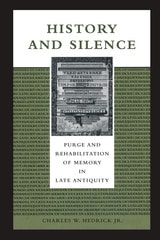
History and Silence
Purge and Rehabilitation of Memory in Late AntiquityBy Charles W. Hedrick Jr.
University of Texas Press, 2000
The ruling elite in ancient Rome sought to eradicate even the memory of their deceased opponents through a process now known as damnatio memoriae. These formal and traditional practices included removing the person's name and image from public monuments and inscriptions, making it illegal to speak of him, and forbidding funeral observances and mourning. Paradoxically, however, while these practices dishonored the person's memory, they did not destroy it. Indeed, a later turn of events could restore the offender not only to public favor but also to re-inclusion in the public record.
This book examines the process of purge and rehabilitation of memory in the person of Virius Nicomachus Flavianus(?-394). Charles Hedrick describes how Flavian was condemned for participating in the rebellion against the Christian emperor Theodosius the Great—and then restored to the public record a generation later as members of the newly Christianized senatorial class sought to reconcile their pagan past and Christian present. By selectively remembering and forgetting the actions of Flavian, Hedrick asserts, the Roman elite honored their ancestors while participating in profound social, cultural, and religious change.

History and Society in Central America
By Edelberto Torres Rivas
University of Texas Press, 1993
First published in Chile in 1969 as Interpretación del desarrollo social centroamericano, this classic is now available in English. The first attempt at an integrated analysis of modern Central America's socioeconomic structure, Torres Rivas's work traces the social development of Central America from independence (1871) up to the 1960s.
Using a dependency framework, but not limited by it, Torres Rivas describes the various divisions of Central American society and their evolution within the liberal development model that has been so much a part of the past century of Central American economic history. The book is compelling in its explanation of the relationship between foreign and native elements in the social development of the region. Torres Rivas describes and analyzes the resulting long-term problems this development has posed for Central America. With a new chapter added for the English edition, History and Society in Central America remains vital for readers interested in the region.

History and Theory after the Fall
An Essay on InterpretationFred Weinstein
University of Chicago Press, 1990
In the wake of this collapse or "fall," the rival claims of fiction, psychoanalysis, sociology, anthropology, and history have created the dilemma of radical relativism, the prospect of multiple interpretations of any complex historical event. The basic strategy of social theory and the social sciences—the search for underlying unities—proves so inherently contradictory and has provided so little in the way of reliable knowledge of social and historical relationships that to many critics it seems no longer worth pursuing.
Weinstein enters the debate by rejecting any search for underlying structural unities, dynamic or social, through which historians have attempted to find continuity with the past. He looks instead to ideological processes, to the construction of successive and changing versions of reality that mediate between the power of fantasy on the one side and the power of the social world on the other. He argues further that the need to use ideological constructs in this way accounts for the heterogeneous and changing content of social movements and for the persistent need people have always had for authoritative leaders, even in democratized societies. He suggests that people have historically been able to take a step away from leaders only by substituting the possession of objects such as property or money. This book is a breakthrough in poststructuralist theory that is sure to stimulate considerable discussion, especially about the shape of the social sciences and the future of historical interpretation.
History and Theory
Feminist Research, Debates, ContestationsEdited by Barbara Laslett, Ruth-Ellen Boetcher Joeres, Mary Jo Maynes, Evelyn Brooks Higginbotham
University of Chicago Press, 1997
History and Truth
Paul Ricoeur
Northwestern University Press, 1965
History and Truth
Paul Ricoeur, Foreward by David M. Rasmussen, Introduction by Charles Kelbley
Northwestern University Press, 2007
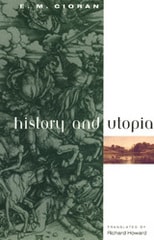
History and Utopia
E. M. Cioran
University of Chicago Press, 1998
"A small masterwork . . . a stringent examination of some persistent and murky notions in human history. . . . It is best to read Cioran while sitting. The impact upon the intellect can be temporarily stunning, and motor systems may give way under the assault."—Joseph Patrick Kennedy, Houston Chronicle
"Cioran has a claim to be regarded as among the handful of original minds . . . writing today."—New York Times
"A sort of final philosopher of the Western world. [Cioran's] statements have the compression of poetry and the audacity of cosmic clowning."—Washington Post
E. M. Cioran (1911-1995) was born and educated in Romania and lived in Paris from 1937 until his death. He is the author of numerous works, including On the Heights of Despair, also available from the University of Chicago Press.
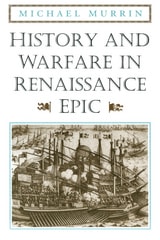
History and Warfare in Renaissance Epic
Michael Murrin
University of Chicago Press, 1994
Analyzing English, Italian, and Iberian epics published between 1483 and 1610, Murrin focuses on particular aspects of warfare (cavalry clashes, old and new style sieges, the tactical use of the gun, naval warfare) and the responses to them by authors from Malory to Milton. Throughout, Murrin traces a parallel development in the art of war and in the epic as it emerged from the romance.
Murrin demonstrates that with new technology and increasing levels of carnage, the practice of war gradually drifted from traditional epic modes. But before changes in warfare completely doomed the tradition in which the epic was rooted, this crisis provoked an unprecedented range of experiment which marks heroic narrative in the late Renaissance and ultimately led to the epic without war.
A much-needed introduction to the neglected subject of warfare in epic literature, this work is an uncommonly wide-ranging exercise in comparative criticism that will appeal to historians and students of literature alike.

History and the Climate Crisis
Environmental History in the ClassroomKate Hawkey
University College London, 2023
History education has a key contribution to make in developing a deeper understanding of the current environmental crisis, but its role is too often overlooked. When embedded in the school curriculum, environmental history adds crucial layers of knowledge to the learning from other subjects and can enable students to make their own informed contributions to one of the most pressing concerns of the twenty-first century.
History and the Climate Crisis provides much-needed environmental knowledge, an area that is new for most history teachers. The author considers the disciplinary and pedagogical challenges and demonstrates how including an environmental focus can strengthen students’ disciplinary knowledge. She also builds her argument through many examples and offers practical strategies for use in classrooms, including developed inquiries suitable for the secondary history curriculum. The book focuses on environmental history within a strong subject-bound curriculum and will be relevant to teachers, academics, and policymakers in the United Kingdom and internationally.
History and the New Left
Madison, Wisconsin, 1950-1970Paul Buhle
Temple University Press, 1991
History and the Social Web
A Collection of EssaysAugust C. Krey
University of Minnesota Press, 1955
History and the Social Web was first published in 1955. Minnesota Archive Editions uses digital technology to make long-unavailable books once again accessible, and are published unaltered from the original University of Minnesota Press editions.
In this volume of twelve essays a distinguished historian demonstrates that the roots and branches of history form a continuous social web, that the events and societies of pasts eras and modern times form a complex and interlocking pattern when seen as a whole, and that a knowledge of history has a profound application to the problems and pleasures of the present. The volume includes the well-known essay, "A City That Art Built," which has long been out of print. The first group of essays is devoted to aspects of medieval and renaissance history, and those in the second section point up the continuity of the thread of world history. The essays on law, education, and medicine which form a part of the first section will be of particular interest to members of these professions.
History as Art and as Science
Twin Vistas on the PastH. Stuart Hughes
University of Chicago Press, 1975
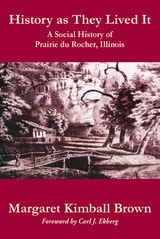
History as They Lived It
A Social History of Prairie du Rocher, IllinoisMargaret Kimball Brown, Foreword by Carl J. Ekberg
Southern Illinois University Press, 2005
“History as They Lived It deserves to be placed within the rich context of Illinois Country historiography going back more than a century. . . . It brings together the fully ripened thoughts of a mature scholar at the very moment that students of the Illinois Country need such a book.”—from the foreword by Carl J. Ekberg
Settled in 1722, Prairie du Rocher was at the geographic center of a French colony in the Mississippi Valley, which also included other villages in what is now Illinois and Missouri: Cahokia, Kaskaskia, Fort de Chartres, St. Philippe, Ste. Genevieve, and St. Louis. Located in an alluvial valley near towering limestone bluffs, which inspired the village’s name—French for “prairie of the rock”— Prairie du Rocher is the only one of the seven French colonial villages that still exists today as a small compact community.
The village of Prairie du Rocher endured governance by France, Great Britain, Virginia, and the Illinois territory before Illinois became a state in 1818. Despite these changes, the villagers persisted in maintaining the community and its values. Margaret Kimball Brown looks at one of the oldest towns in the region through the lenses of history and anthropology, utilizing extensive research in archives and public records to give historians, anthropologists, and general readers a lively depiction of this small community and its people.
History as a Kind of Writing
Textual Strategies in Contemporary French HistoriographyPhilippe Carrard
University of Chicago Press, 2017
Carrard’s work here is expansive—examining the conventions historians draw on to produce their texts and casting light on views put forward by literary theorists, theorists of history, and historians themselves. Ranging from discussions of lengthy dissertations on 1960s social and economic history to a more contemporary focus on events, actors, memory, and culture, the book digs deep into the how of history. How do historians arrange their data into narratives? What strategies do they employ to justify the validity of their descriptions? Are actors given their own voice? Along the way, Carrard also readdresses questions fundamental to the field, including its necessary membership in the narrative genre, the presumed objectivity of historiographic writing, and the place of history as a science, distinct from the natural and theoretical sciences.
History as an Art of Memory
Patrick H. Hutton
Brandeis University Press, 1993
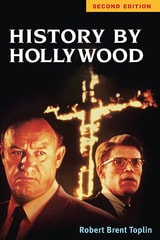
History by Hollywood, Second Edition
Robert Brent Toplin
University of Illinois Press, 2010
This newly updated edition of History by Hollywood explores the question of what happens to history when Hollywood filmmakers get their hands on it. With a fresh look at recent films and television productions such as Titanic, Pearl Harbor, The Patriot, and John Adams, Robert Brent Toplin examines how filmmakers have interpreted American history through their movies. Toplin discusses how writers, producers, and directors become involved in making historical films, what influences their interpretations of the past, and the responses they make to the controversies their works excite. With a realistic appreciation of the challenges filmmakers face, he effectively measures the strengths and weaknesses of Hollywood's presentation of history in the films Mississippi Burning, JFK, Sergeant York, Missing, Bonnie and Clyde, Patton, All the President's Men, and Norma Rae.
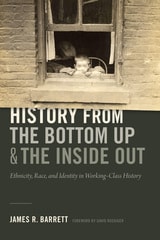
History from the Bottom Up and the Inside Out
Ethnicity, Race, and Identity in Working-Class HistoryJames R. Barrett
Duke University Press, 2017
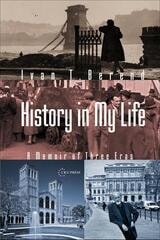
History in My Life
A Memoir of Three ErasIvan T. Berend is Distinguished Research Professor at the History Department of the University of California Los Angeles.
Central European University Press, 2009
Ivan T. Berend is Distinguished Professor at the University of California Los Angeles, Director of the European Studies Program. He was one of the masterminds of regime change in Hungary. He made a career in Hungary as a university professor, Rector of the University of Economics (1973–79), and President of the Hungarian Academy of Sciences (1985–90). He was President of the International Committee of Historical Sciences (1995–2000), and Vice-President of the International Economic History Association (1986–1994). His research interests are the complex economic, social, ideological, and cultural history of Central and Eastern Europe in the 19th–20th century; economic modernization; problems of European backwardness; transition from state socialism to capitalism. He published and 26 books and more than 120 studies.
Before he became a professor at UCLA, Ivan Berend had survived five regime changes and two revolutions in Hungary, had been in prison and German concentration camp in 1944–45.
His memoir offers an interesting case study, a subjective addition to the “objective” historical works on Central and Eastern European state socialism. It describes the hard choices of intellectuals in a dictatorial state: 1. remain in isolation, concentrate on scholarly works, and exclude politics in your personal life; 2. be in opposition, criticize and unveil the regime, accept discrimination and exclusion; 3. remain within the establishment and work for reforming the country using legal possibilities to criticize the regime and to achieve changes from within.
Berend’s book raises basic historical questions and debates, compares East European and American higher education systems, and presents an eyewitness’ insights on life in the United States.

History of Ancient Israel
Christian Frevel
SBL Press, 2023
This English translation of the second edition of Christian Frevel’s essential textbook Geschichte Israels (Kohlhammer, 2018) covers the history of Israel from its beginnings until the Bar Kokhba revolt (132–135 CE). Frevel draws on archaeological evidence, inscriptions and monuments, as well as the Bible to sketch a picture of the history of ancient Israel within the context of the southern Levant that is sometimes familiar but often fresh and unexpected. Frevel has updated the second German edition with the most recent research of archaeologists and biblical scholars, including those based in Europe. Tables of rulers, a glossary, a timeline of the ancient Near East, and resources arranged by subject make this book an accessible, essential textbook for students and scholars alike.

History of Biblical Interpretation, Volume 1
From the Old Testament to OrigenHenning Graf Reventlow
SBL Press, 2009
History of Biblical Interpretation, Volume 2
From Late Antiquity to the End of the Middle AgesHenning Graf Reventlow
SBL Press, 2010
History of Biblical Interpretation, Volume 3
Rennaissance, Reformation, HumanismHenning Graf Reventlow
SBL Press, 2009
History of Biblical Interpretation, Volume 4
From the Englightenment to the Twentieth CenturyHenning Graf Reventlow
SBL Press, 2010
History of Christian Philosophy in the Middle Ages
Etienne Gilson
Catholic University of America Press, 2019

History of Economic Thought
Isaac Ilyich Rubin
Pluto Press, 1987
History of Humanities, volume 10 number 1 (Spring 2025)
The University of Chicago Press
University of Chicago Press Journals, 2025
History of Humanities, volume 10 number 2 (Fall 2025)
The University of Chicago Press
University of Chicago Press Journals, 2025
History of Humanities, volume 11 number 1 (Spring 2026)
The University of Chicago Press
University of Chicago Press Journals, 2026

History of Humanities, volume 6 number 1 (Spring 2021)
The University of Chicago Press
University of Chicago Press Journals, 2021
History of Humanities, volume 6 number 2 (Fall 2021)
The University of Chicago Press
University of Chicago Press Journals, 2021
History of Humanities, volume 7 number 1 (Spring 2022)
The University of Chicago Press
University of Chicago Press Journals, 2022
History of Humanities, volume 7 number 2 (Fall 2022)
The University of Chicago Press
University of Chicago Press Journals, 2022
History of Humanities, volume 8 number 1 (Spring 2023)
The University of Chicago Press
University of Chicago Press Journals, 2023
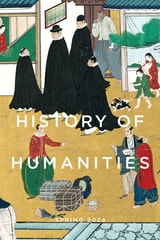
History of Humanities, volume 9 number 1 (Spring 2024)
The University of Chicago Press
University of Chicago Press Journals, 2024