Results by title
8642 books match the query '20th Century' and 252 start with h
Health Care for Some
Rights and Rationing in the United States since 1930Beatrix Hoffman
University of Chicago Press, 2012
Health and Efficiency
Fatigue, the Science of Work, and the Making of the Working-Class BodySteffan Blayney
University of Massachusetts Press, 2022
A new model of health emerged in Britain between 1870 and 1939. Centered on the working body, organized around the concept of efficiency, and grounded in scientific understandings of human labor, scientists, politicians, and capitalists of the era believed that national economic productivity could be maximized by transforming the body of the worker into a machine. At the core of this approach was the conviction that worker productivity was intimately connected to worker health.
Under this new “science of work,” fatigue was seen as the ultimate pathology of the working-class body, reducing workers’ capacity to perform continued physical or mental labor. As Steffan Blayney shows, the equation between health and efficiency did not go unchallenged. While biomedical and psychological experts sought to render the body measurable, governable, and intelligible, ordinary men and women found ways to resist the logics of productivity and efficiency imposed on them, and to articulate alternative perspectives on work, health, and the body.
Health and Hygiene in Chinese East Asia
Policies and Publics in the Long Twentieth CenturyAngela Ki Che Leung and Charlotte Furth, eds.
Duke University Press, 2010
Contributors. Warwick Anderson, Charlotte Furth, Marta E. Hanson, Sean Hsiang-lin Lei, Angela Ki Che Leung, Shang-Jen Li, Yushang Li, Yi-Ping Lin, Shiyung Liu, Ruth Rogaski, Yen-Fen Tseng, Chia-ling Wu, Xinzhong Yu
Hearing Happiness
Deafness Cures in HistoryJaipreet Virdi
University of Chicago Press, 2020
At the age of four, Jaipreet Virdi’s world went silent. A severe case of meningitis left her alive but deaf, suddenly treated differently by everyone. Her deafness downplayed by society and doctors, she struggled to “pass” as hearing for most of her life. Countless cures, treatments, and technologies led to dead ends. Never quite deaf enough for the Deaf community or quite hearing enough for the “normal” majority, Virdi was stuck in aural limbo for years. It wasn’t until her thirties, exasperated by problems with new digital hearing aids, that she began to actively assert her deafness and reexamine society’s—and her own—perception of life as a deaf person in America.
Through lyrical history and personal memoir, Hearing Happiness raises pivotal questions about deafness in American society and the endless quest for a cure. Taking us from the 1860s up to the present, Virdi combs archives and museums in order to understand the long history of curious cures: ear trumpets, violet ray apparatuses, vibrating massagers, electrotherapy machines, airplane diving, bloodletting, skull hammering, and many more. Hundreds of procedures and products have promised grand miracles but always failed to deliver a universal cure—a harmful legacy that is still present in contemporary biomedicine.
Weaving Virdi’s own experiences together with her exploration into the fascinating history of deafness cures, Hearing Happiness is a powerful story that America needs to hear.
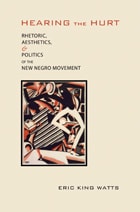
Hearing the Hurt
Rhetoric, Aesthetics, and Politics of the New Negro MovementEric King Watts
University of Alabama Press, 2012
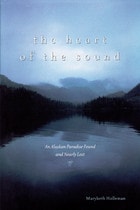
Heart Of The Sound
Marybeth Holleman
University of Utah Press, 2004
"You can’t step in the same river twice—although I once believed I could. I believed that the pieces of my life I had chosen, those I held close to my heart, would, once chosen and held, remain the same."—from the book
How does one recover from disaster? That question is at the heart of Marybeth Holleman’s lyrical, elegiac response to the repercussions of the Exxon Valdez oil spill that devastated Alaska’s Prince William Sound in 1989. Twining together the destruction of an ecosystem and the disintegration of her marriage, Holleman explores the resiliency of nature—both wild and human—and the ways in which that resiliency is tested. Like the oil that remains pooled beneath rocks years after the tanker spill, the emotional wounds of the past lie just below the surface. Recovery and restoration from the pain wrought by human hands does not come easily.
If much of nature writing is about the heart’s search for an unspoiled, perfect landscape, The Heart of the Sound is about what happens when the return-to-paradise fantasy is over and paradise is lost. In language rich with passion and hard-won insight, Holleman creates a captivating picture of a woman who found her Eden in the sweeping fjords of Alaska only to lose it to ecological tragedy. But somewhere within that loss, she finds herself.

Heart of Palms
My Peace Corps Years in TranquillaMeredith W. Cornett
University of Alabama Press, 2014
A memoir of service, culture and transformation in a rural Panamanian village by a young American woman trained as a community forester for the Peace Corp.
In the storied fifty-year history of the US Peace Corps, Heart of Palms is the first Peace Corps memoir set in Panama, the slender isthmus that connects two continents and two oceans. In her memoir, Meredith Cornett transports readers to the remote village of Tranquilla, where dugout canoes are the mainstay of daily transportation, life and nature are permeated by witchcraft, and a restful night’s sleep may be disturbed by a raiding phalanx of army ants.
Cornett is sent to help counter the rapid deforestation that is destroying the ecosystem and livelihoods of the Panama Canal watershed region. Her first chapters chronicle her arrival and struggles not only with the social issues of language, loneliness, and insecurity, but also with the tragicomic basics of mastering open-fire cookery and intrusions by insects and poisonous snakes. As she grows to understand the region and its people, her keen eye discerns the overwhelming scope of her task. Unable to plant trees faster than they are lost, she writes with moving clarity about her sense of powerlessness.
Combating deforestation leads Cornett into an equally fierce battle against her own feelings of fear and isolation. Her journey to Panama becomes a parallel journey into herself. In this way, Heart of Palms is much more than a record of her Peace Corps service; it is also a moving environmental coming-of-age story and nuanced meditation on one village’s relationship to nature. When she returns home two years later, Cornett brings with her both skills and experience and a remarkable, newfound sense of confidence and mission.
Writing with rueful, self-deprecating humor, Cornett lets us ride along with her on a wave of naïve optimism, a wave that breaks not only on fear and intimidation, but also on tedium and isolation. Heart of Palms offers a bracing alternative to the romantic idealism common to Peace Corps memoirs and will be valued as a welcome addition to writing about the Peace Corps and environmental service.
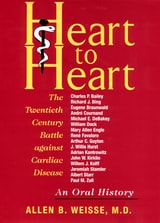
Heart to Heart
The Twentieth Century Battle against Cardiac Disease--An Oral HistoryWeisse, Allen B
Rutgers University Press, 2002
In Heart to Heart, Dr. Allen B. Weisse presents the first collection of in-depth conversations with some of the world's most renowned cardiologists and surgeons. Weisse's interviews bring a special vitality to the doctors' recollections of the people and events that influenced them, their motivations, their problems, their interactions with their contemporaries, and their hopes and beliefs for the future. Since not every doctor who has made important contributions to the treatment and prevention of heart disease could be interviewed for this volume, Weisse includes a biographical section listing other prominent cardiologists and surgeons as well as a list of recommended reading. This comprehensive history will be a resource for any student of cardiology or general medicine.
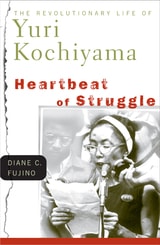
Heartbeat of Struggle
The Revolutionary Life of Yuri KochiyamaDiane C. Fujino
University of Minnesota Press, 2005

Hearts and Minds
Bodies, Poetry, and Resistance in the Vietnam EraMichael Bibby
Rutgers University Press, 1996
The early 1960s to the mid-1970s was one of the most turbulent periods in American history. The U.S. military was engaged in its longest, costliest overseas conflict, while the home front was torn apart by riots, protests, and social activism. In the midst of these upheavals, an underground and countercultural press emerged, giving activists an extraordinary forum for a range of imaginative expressions. Poetry held a prominent place in this alternative media. The poem was widely viewed by activists as an inherently anti-establishment form of free expression, and poets were often in the vanguards of political activism.
Hearts and Minds is the first book-length study of the poems of the Black Liberation, Women's Liberation, and GI Resistance movements during the Vietnam era. Drawing on recent cultural and literary theories, Bibby investigates the significance of images, tropes, and symbols of human bodies in activist poetry. Many key political slogans of the period––"black is beautiful," "off our backs"––foreground the body. Bibby demonstrates that figurations of bodies marked important sites of social and political struggle.
Although poetry played such an important role in Vietnam-era activism, literary criticism has largely ignored most of this literature. Bibby recuperates the cultural-historical importance of Vietnam-era activist poetry, highlighting both its relevant contexts and revealing how it engaged political and social struggles that continue to motivate contemporary history. Arguing for the need to read cultural history through these "underground" texts, Hearts and Minds offers new grounds for understanding the recent history of American poetry and the role poetry has played as a medium of imaginative political expression.
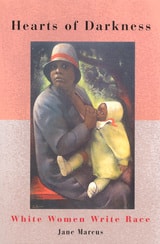
Hearts of Darkness
White Women Write RaceMarcus, Jane
Rutgers University Press, 2004
The centerpiece of the book is Marcus's dialogue with one of her best-known essays, "Britannia Rules The Waves." In that piece, she argues that The Waves makes a strong anti-imperialist statement. Although many already support that argument, she now goes further in order to question the moral value of such a buried critique on Woolf's part. In "A Very Fine Negress" she analyzes the painful subject of Virginia Woolf's racism in A Room of One's Own. Other chapters traverse the connected issues of modernism, race, and imperialism. In two of them, we follow Nancy Cunard through the making of the Negro anthology and her appearance in a popular novel of the freewheeling Jazz Age. Elsewhere, Marcus delivers a complex analysis of A Passage to India, in a reading that interrogates E. M. Forster's displacement of his fear of white Englishwomen struggling for the vote.
Marcus, as always, brings considerable gifts as both researcher and writer to this collection of new and reprinted essays, a combination resulting in a powerful interpretation of many of modernism's most cherished figures.
Heartwood
The First Generation of Theravada Buddhism in AmericaWendy Cadge
University of Chicago Press, 2004
Wendy Cadge first provides a historical overview of Theravada Buddhism and considers its specific origins here in the United States. She then brings her findings to bear on issues of personal identity, immigration, cultural assimilation, and the nature of religion in everyday life. Her work is the first systematic comparison of the ways in which immigrant and convert Buddhists understand, practice, and adapt the Buddhist tradition in America. The men and women whom Cadge meets and observes speak directly to us in this work, both in their personal testimonials and as they meditate, pray, and practice Buddhism.
Creative and insightful, Heartwood will be of enormous value to sociologists of religion and anyone wishing to understand the rise of Buddhism in the Western world.
Heather Raffo's 9 Parts of Desire
A PlayHeather Raffo
Northwestern University Press, 2006
As topical as today's newspaper headlines, these rich monologues bring to life nine distinct Iraqi women whose very different stories convey the complex and harrowing reality of being female in modern-day Iraq. Their monologues quickly become a series of overlapping conversations leading to a breakdown in communication as the chaos of Iraq intensifies. Layal is a sexy and impulsive painter favored by Saddam's regime, breezily bohemian one minute and defensive the next; another woman mourns the death of her family in a 1991 bunker, and another--a blond American of Iraqi descent--painfully recalls a telephone conversation with Baghdad relatives on the eve of the U. S. invasion. Other characters decry the savagery of Saddam Hussein in terrifying detail and express an ambivalent relief at the American presence; still others--like a Bedouin woman searching for love--transcend politics.
The title comes from the teachings of the seventh-century imam Ali ibn Abu Talib: "God created sexual desire in ten parts; then he gave nine parts to women and one part to men." Heather Raffo's monologues weave these nine parts into a finely textured, brilliantly colorful tapestry of feminine longing in dire times. This compassionate and heart-breaking work will forever change your view of Iraqi women and the people of the Middle East.
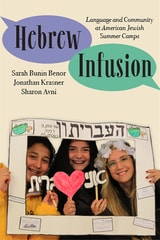
Hebrew Infusion
Language and Community at American Jewish Summer CampsSarah Bunin Benor, Jonathan B. Krasner, and Sharon Avni
Rutgers University Press, 2019
Each summer, tens of thousands of American Jews attend residential camps, where they may see Hebrew signs, sing and dance to Hebrew songs, and hear a camp-specific hybrid language register called Camp Hebraized English, as in: “Let’s hear some ruach (spirit) in this chadar ochel (dining hall)!” Using historical and sociolinguistic methods, this book explains how camp directors and staff came to infuse Hebrew in creative ways and how their rationales and practices have evolved from the early 20th century to today. Some Jewish leaders worry that Camp Hebraized English impedes Hebrew acquisition, while others recognize its power to strengthen campers’ bonds with Israel, Judaism, and the Jewish people. Hebrew Infusion explores these conflicting ideologies, showing how hybrid language can serve a formative role in fostering religious, diasporic communities. The insightful analysis and engaging descriptions of camp life will appeal to anyone interested in language, education, or American Jewish culture.
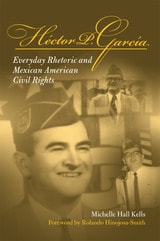
Hector P Garcia
Everyday Rhetoric and Mexican American Civil RightsMichelle Hall Kells. Foreword by Rolando Hinojosa-Smith
Southern Illinois University Press, 2006
Examining the Mexican American civil rights movement through the public rhetoric of a veteran activist
Héctor P. García: Everyday Rhetoric and Mexican American Civil Rights examines the transition of Mexican Americans from political and social marginalization to civic inclusion after World War II. Focusing on the public rhetoric of veteran rights activist and physician Dr. Héctor P. García, a Mexican immigrant who achieved unprecedented influence within the U.S. political system, author Michelle Hall Kells provides an important case study in the exercise of influence, the formation of civic identity, and the acquisition of social power among this underrepresented group.
As a major influence in national twentieth-century civil rights reform, García effectively operated between Anglo and Mexican American sociopolitical structures. The volume illustrates how García, a decorated World War II veteran and founder of the American GI Forum in Texas in 1948, successfully engendered a discourse that crossed geographical, political, and cultural borders, forming associations with the working poor as well as with prominent national figures such as John F. Kennedy and Lyndon B. Johnson. Through his rhetoric and action, García publicly revealed the plight of Mexican Americans, crossing class, regional, and racial lines to improve socioeconomic conditions for his people.
Héctor P. García, which is enhanced by sixteen illustrations, contributes to rhetorical, cultural, and historical studies and offers new scholarship establishing García’s role on the national front, effectively tracing Garcia’s legacy of resistance, the process of achieving enfranchisement, and the role of racism in the evolution from social marginalization to national influence.
Hegel, Heidegger, and the Ground of History
Michael Allen Gillespie
University of Chicago Press, 1984
Hegemony And Power
On the Relation between Gramsci and MachiavelliBenedetto Fontana
University of Minnesota Press, 1993
Presents a comparative and textual exploration of Gramsci's interpretation of Machiavelli's political analyses. This valuable contribution to our understanding of Gramsci includes a comparison of the major Machiavellian ideas such as the nature of political knowledge, the new principality, the concept of the people, and the relation between thought and action, to Gramsci's concepts of hegemony, moral and intellectual reform, and the collective will.
Heidegger, Strauss, and the Premises of Philosophy
On Original ForgettingRichard L. Velkley
University of Chicago Press, 2011
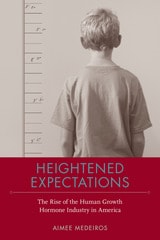
Heightened Expectations
The Rise of the Human Growth Hormone Industry in AmericaAimee Medeiros
University of Alabama Press, 2016
This book documents how the rise of modern capitalism and efforts to protect those most vulnerable to its harmful effects contributed to the social stigmatization of short statured children. Short boys bore the brunt of this discrimination by the mid-twentieth century, as cultural notions of masculinity deemed smallness a troubling trait in need of remedy. These boys became targets of growth hormone treatment, a trend accelerated by the development of effective HGH therapy in the late 1950s.
With a revisionist twist, Medeiros argues that HGH therapy was not plagued by a limited number of sources of the hormone but rather a difficult-to-access supply during the 1960s and 1970s. The advent of synthetic HGH remedied this situation. Therapy was available, however, only to those who could afford it. Very few could, which made short stature once again a mark of the underprivileged class.
Today, small boys with dreams of being taller remain the key customer base of the legitimate arm of the HGH industry. As gender and economic class disparities in treatment continue, some medical experts have alluded to patients’ parents as culprits of this trend. This book sheds light on how medicine’s attempt to make up for perceived physical shortcomings has deep roots in American culture.
Of interest to historians and scholars of medicine, gender studies, and disability studies, Heightened Expectations also offers much to policy makers and those curious about where standards and therapies originate.
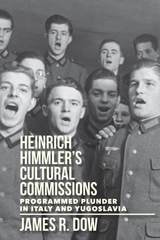
Heinrich Himmler's Cultural Commissions
Programmed Plunder in Italy and YugoslaviaJames R. Dow
University of Wisconsin Press, 2018
Drawing on extensive research in public and private archives and interviews with family members of fieldworkers, James R. Dow uncovers both details of the SS cultural commissions' work and the continuing vestiges of the materials they assembled. Teams of poorly qualified and ideologically motivated collectors were sent to South Tyrol in Italy and Gottschee in Slovenian Yugoslavia, from which ethnically German communities were to be resettled in the German Reich. Although a mass of information on narratives, songs and dances, beliefs, customs, local clothing and architecture, and folk speech was collected, the research was deeply tainted and skewed by racialist and nationalist preconditions. Dow sharply critiques the continued use of these ersatz archives.
Heirlooms
storiesRachel Hall
BkMk Press, 2016
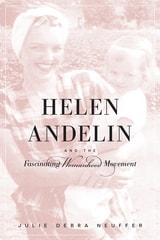
Helen Andelin and the Fascinating Womanhood Movement
Julie Debra Neuffer
University of Utah Press, 2014
Countering second-wave feminists in the 1960s, Andelin preached family values and urged women not to have careers, but to become good wives, mothers, and homemakers instead. A woman’s true happiness, taught Andelin, could only be realized if she admired, cared for, and obeyed her husband. As Andelin’s notoriety grew, so did the backlash from her critics. Undeterred, she became a national celebrity, who was interviewed extensively and appeared in sold-out speaking engagements.
Andelin’s message calling for the return to traditional roles appealed to many in a time of uncertainty and radical social change. This study provides an evenhanded and important look at a crucial, but often overlooked cross section of American women as they navigated their way through the turbulent decades following the post-war calm of the 1950s.
Winner of the Mormon History Association's Best Biography Award.
Hell's Not Far Off
Bruce Crawford and the Appalachian LeftJosh Howard
West Virginia University Press, 2024
A biography of Bruce Crawford, a southwest Virginia journalist-writer of the radical tradition and one of the first to interpret Appalachian labor history.
Hell’s Not Far Off is a grounded, politically engaged study of the Appalachian journalist and political critic Bruce Crawford, a scourge of coal and railway interests. Crawford fought injustices wherever he saw them at major risk to his own life and became an early interpreter of Appalachian labor history.
His writings and actions from the 1920s to the 1960s helped shape southwest Virginia and West Virginia. Through Crawford’s Weekly, a newspaper active from 1920 to 1935, Crawford challenged the Ku Klux Klan, lynch mobs, and the private police forces of coal barons. The wounds received for these efforts were the closing of his paper and a bullet to his leg during a Harlan County strike in the 1930s. In his work after journalism, he led the West Virginia branch of the Federal Writers’ Project during the political standoff over the contents of the state’s official guidebook.
In Hell’s Not Far Off, Josh Howard resurrects strands of a radical tradition centered especially on matters of labor, environment, and race, drawing attention to that tradition’s ongoing salience: “Present-day Appalachia’s fights were [Crawford’s], and his fights are still ours.”
Hemingway and Women
Female Critics and the Female VoiceLawrence R. Broer
University of Alabama Press, 2003
Ernest Hemingway has often been criticized as a misogynist because of his portrayal of women. But some of the most exciting Hemingway scholarship of recent years has come from women scholars who challenge traditional views of Hemingway and women. The essays in this collection range from discussions of Hemingway’s famous heroines Brett Ashley and Catherine Barkley to examinations of the central role of gender in his short stories and in the novel The Garden of Eden. Other essays address the real women in Hemingway’s life—those who cared for him, competed with him, and, ultimately, helped to shape his art. While Hemingway was certainly influenced by traditional perceptions of women, these essays show that he was also aware of the struggle of the emerging new woman of his time. Making this gender struggle a primary concern of his fiction, these critics argue, Hemingway created women with strength, depth, and a complexity that readers are only beginning to appreciate.
Hemingway in Italy
Richard Owen
Haus Publishing, 2017
In evocative prose, complemented by a rich selection of historical images, Richard Owen takes us on a tour through Hemingway’s Italy. He describes how Hemingway first visited the country of the Latins during World War I, an experience that set the scene for A Farewell to Arms. Then after World War II, it was in Italy that he found inspiration for Across the River and into the Trees. Again and again, the Italian landscape—from the Venetian lagoon to the Dolomites and beyond—deeply affected one of the greatest writers of the twentieth century. Hemingway in Italy demonstrates that Italy stands alongside Spain as a key influence on Hemingway’s work—and why the Italians themselves hold Hemingway and his writing close to their hearts.
Hemingway's Wars
Public and Private BattlesLinda Wagner-Martin
University of Missouri Press, 2017
Linda Wagner-Martin has written or edited more than sixty books including Ernest Hemingway, A Literary Life. She is Frank Borden Hanes Professor Emerita at the University of North Carolina-Chapel Hill and a winner of the Jay B. Hubbell Medal for Lifetime Achievement.
Hemingway’s Second War
Bearing Witness to the Spanish Civil WarAlex Vernon
University of Iowa Press, 2011
In 1937 and 1938, Ernest Hemingway made four trips to Spain to cover its civil war for the North American News Alliance wire service and to help create the pro-Republican documentary film The Spanish Earth. Hemingway’s Second War is the first book-length scholarly work devoted to this subject.
Henpecked
Winston Churchill and Women's SuffrageCheryl R. Jorgensen-Earp
Michigan State University Press, 2027
Henpecked: Winston Churchill and Women’s Suffrage explores the recurrent interactions between Winston Churchill and the women’s suffrage movement in Britain. Churchill purposely concealed, under a discursive veil, his complex and shifting perceptions of women’s competency to use the franchise. In balancing a public stance that vaguely favored the “principle” of women’s suffrage with his, often private, opposition to the movement’s legislative efforts, he employed every available rhetorical tool. This book presents a new understanding of his early Parliamentary career, his ability to manipulate public and private discourse, and his complicated stance on women’s right to vote. This rhetorical history challenges the view that Winston Churchill was only dissuaded in his support of women’s suffrage by the militancy of suffrage activists.
Henry Cow
The World Is a ProblemBenjamin Piekut
Duke University Press, 2019
Henry Ives Cobb's Chicago
Architecture, Institutions, and the Making of a Modern MetropolisEdward W. Wolner
University of Chicago Press, 2011
When championing the commercial buildings and homes that made the Windy City famous, one can’t help but mention the brilliant names of their architects—Daniel Burnham, Louis Sullivan, and Frank Lloyd Wright, among others. But few people are aware of Henry Ives Cobb (1859–1931), the man responsible for an extraordinarily rich chapter in the city’s turn-of-the-century building boom, and fewer still realize Cobb’s lasting importance as a designer of the private and public institutions that continue to enrich Chicago’s exceptional architectural heritage.
Henry Ives Cobb’s Chicago is the first book about this distinguished architect and the magnificent buildings he created, including the Newberry Library, the Chicago Historical Society, the Chicago Athletic Association, the Fisheries Building for the 1893 World’s Fair, and the Chicago Federal Building. Cobb filled a huge institutional void with his inventive Romanesque and Gothic buildings—something that the other architect-giants, occupied largely with residential and commercial work, did not do. Edward W. Wolner argues that these constructions and the enterprises they housed—including the first buildings and master plan for the University of Chicago—signaled that the city had come of age, that its leaders were finally pursuing the highest ambitions in the realms of culture and intellect.
Assembling a cast of colorful characters from a free-wheeling age gone by, and including over 140 images of Cobb’s most creative buildings, Henry Ives Cobb’s Chicago is a rare achievement: a dynamic portrait of an architect whose institutional designs decisively changed the city’s identity during its most critical phase of development.
Henry Miller, Happy Rock
Brassaï
University of Chicago Press, 2002
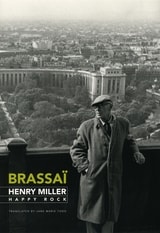
That's Henry Miller's advice for young aspiring artists, as remembered by his very good friend Brassaï in this lively book. One of two that Brassaï wrote about the man who called himself a "happy rock," this volume covers their lives and friendship from the 1950s to 1973. Over the course of a number of warm, intimate conversations, Brassaï and Miller revisit their careers; discuss art, literature, Paris, Greece, Japan, World War II, and more; and consider the lives and works of many others in their circle, including Lawrence Durrell, Henri Matisse, Salvador Dalí, Georges Simenon, André Malraux, Hans Reichel, Paul Klee, and Amedeo Modigliani. Throughout Miller's zest for life shines through, as do his love of art and his passionate intensity for just about everything he does, from discussing a movie or play he'd just seen to reminiscing about a decades-long love.
Brassaï's Henry Miller, Happy Rock presents a vivid portrait of two close friends who thoroughly enjoy each other's company—and just happen to be world—famous artists too.
Henry van de Velde
Selected Essays, 1889–1914Henry van de Velde
J. Paul Getty Trust, The, 2022
Belgian artist, architect, designer, and theorist Henry van de Velde (1863–1957) was a highly original and influential figure in Europe beginning in the 1890s. A founding member of the Art Nouveau and Jugendstil movements, he also directed the Grand-Ducal Saxon School of Arts and Crafts in Weimar, Germany, which eventually became the Bauhaus under Walter Gropius.
This selection of twenty-six essays, translated from French and German, includes van de Velde’s writings on William Morris and the English Arts and Crafts movement, Neo-Impressionist painting, and relationships between ornament, line, and abstraction in German aesthetics. The texts trace the evolution of van de Velde’s thoughts during his most productive period as a theorist in the artistic debates in France, Germany, Belgium, and the Netherlands. Katherine M. Kuenzli expertly guides readers to see how van de Velde’s writings reconcile themes of aesthetics and function, and expression and reason, throughout the artistic periods and regions represented by these texts. With introductory discussions of each essay and full annotations, this is an essential volume for a broad range of scholars and students of the history of fine and applied arts and ideas.
Henryk Grossman and the Recovery of Marxism
Rick Kuhn
University of Illinois Press, 2006
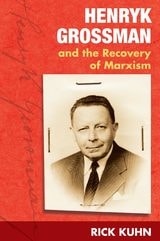
Rick Kuhn’s Henryk Grossman and the Recovery of Marxism is the definitive study of the life and work of this renowned economist, activist, and intellectual. As a young man, Grossman joined the socialist movement and participated in Jewish workers' strikes and demonstrations, as well as in boycotts against employers and the Austro-Hungarian state. He moved to Vienna, but was driven back to Poland by the Austrian state's racist citizenship policies. A member of the illegal Polish Communist Party, Grossman was frequently arrested and jailed, finally leaving Poland for a post at the Institute for Social Research in Frankfurt am Main, which gave rise to the famous 'Frankfurt School'.
Grossman published his best known work in Frankfurt, including studies of Marx's method in Capital and theories of economic crisis that remain influential today. In tracing Grossman's experiences, from Kraków to New York, and offering a detailed account of his ideas, the biography provides an intimate account of key events in twentieth century history, including the politicization of east European Jewry, the World Wars, the rise of Stalinism and Nazism, and the cold war.
Her Husband
Luigi Pirandello
Duke University Press, 2000
Evoking in vivid detail the literary world in Rome at the turn of the century, Her Husband tells the story of Silvia Roncella, a talented young female writer, and her husband Giustino Boggiolo. The novel opens with their arrival in Rome after having left their provincial southern Italian hometown following the success of Silvia’s first novel, the rather humorously titled House of Dwarves. As his wife’s self-appointed (and self-important) promoter, protector, counselor, and manager, Giustino becomes the primary target of Pirandello’s satire. But the couple’s relationship—and their dual career—is also complicated by a lively supporting cast of characters, including literary bohemians with avant-garde pretensions and would-be aristocratic esthetes who are all too aware of the newly acquired power of journalists and the publishing establishment to make or break their careers. Having based many of the characters—including Silvia and Giustino—on actual literary acquaintances of his, Pirandello reacted to the novel’s controversial reception by not allowing it to be reprinted after the first printing sold out. Not until after his death were copies again made available in Italy.
Readers will find Her Husband eerily evocative of the present in myriad ways—not the least of which is contemporary society’s ongoing transformation wrought by the changing roles of men and women, wives and husbands.
Her Kind of Want
Jennifer S. Davis
University of Iowa Press, 2002
Set mainly in the small towns of Alabama, the stories in Her Kind of Want ache with the relentless longing of the poor, struggling, usually discarded southern women who tell us their lives—lives that seem to revolve around men whose only presence is their absence.
Bebe, Luna, Melly, Little Hula, Dena. These are just a few of the women we meet in Jennifer Davis's award-winning collection. Women who married too fast, had children too young, and drink too much. Yet beneath their unpolished exteriors, these women are flesh and blood, and their wants and needs are as severe and deep as any.
Davis's characters relate their stories in voices as complex and raw as their southern environment. Each tale may sound slightly familiar—an unwanted pregnancy, a fast car flying down a country road—but Davis moves beyond the familiar stories of the rural South to expose the gaps that connect these women, creating startlingly real and vibrant characters.
Although often bleak and sometimes disturbing, Her Kind of Want is a celebration of southern people, their perseverance, their spirit, and their determination to make the ugly beautiful.
Her War Story
Twentieth-Century Women Write About WarEdited by Sayre P. Sheldon
Southern Illinois University Press, 1999
Sayre P. Sheldon chose the twentieth century for this collection of women's war writing because women's roles in war have changed dramatically in this century. The twentieth century has redefined the meaning of combat and expanded the territory of war to include women in larger numbers than ever before. When the technological advances of modern war began to target civilians, the home front became the front line. Women took an active part in war whether or not by choice, often by moving into occupations previously closed to them. Women covered wars for their newspapers, wrote war propaganda for their governments, published their wartime diaries, described fighting alongside men, and used wartime experience for their fiction and poetry.
Women writers also chose the right to imagine war, just as men for centuries had written about war without actually experiencing it. Women writers anthologized here include Anna Akhmatova, Vera Brittain, Gwendolyn Brooks, Willa Cather, Colette, Martha Gellhorn, H.D., Etty Hillesum, Käthe Kollwitz, Doris Lessing, Amy Lowell, Katherine Mansfield, Mary McCarthy, Toni Morrison, Dorothy Parker, Mary Lee Settle, Gertrude Stein, Huong Tram, Edith Wharton, Virginia Woolf, and Mitsuye Yamada.

Herbert Marcuse
An Aesthetics of LiberationMalcolm Miles
Pluto Press, 2012
When capitalism is clearly catastrophically out of control and its excesses cannot be sustained socially or ecologically, the ideas of Herbert Marcuse become as relevant as they were in the 1960s. This is the first English introduction to Marcuse to be published for decades, and deals specifically with his aesthetic theories and their relation to a critical theory of society.
Although Marcuse is best known as a critic of consumer society, epitomised in the classic One-Dimensional Man, Malcolm Miles provides an insight into how Marcuse's aesthetic theories evolved within his broader attitudes, from his anxiety at the rise of fascism in the 1930s through heady optimism of the 1960s, to acceptance in the 1970s that radical art becomes an invaluable progressive force when political change has become deadlocked.
Marcuse's aesthetics of liberation, in which art assumes a primary role in interrupting the operation of capitalism, made him a key figure for the student movement in the 1960s. As diverse forms of resistance rise once more, a new generation of students, scholars and activists will find Marcuse’s radical theory essential to their struggle.

Here I Stand
The Life and Legacy of John BeecherAngela J. Smith
University of Alabama Press, 2017
Biography of a forgotten poet who used his name and influence to speak up for those on the margins of society.
Few surnames resonate in American history more than Beecher. The family’s abolitionist ministers, educators, and writers are central figures in the historical narrative of the United States. The Beechers’ influence was greatest in the nineteenth century, but the family story continued—albeit with less public attention—with a descendant who grew up in Birmingham, Alabama, during the early twentieth century.
John Beecher (1904–1980) never had the public prominence of his famous ancestors, but as a poet, professor, sociologist, New Deal administrator, journalist, and civil rights activist, he spent his life fighting for the voiceless and oppressed with a distinct moral sensibility that reflected his self-identification as the twentieth-century torchbearer for his famous family. While John Beecher had many vocations in his lifetime, he always considered himself a poet and a teacher. Some critics have compared the populist elements of Beecher’s poetry to the work of Walt Whitman and Carl Sandburg, but his writing never gained a broad audience or critical acclaim during his lifetime.
In Here I Stand: The Life and Legacy of John Beecher, Angela J. Smith examines Beecher’s writing and activism and places them in the broader context of American culture at pivotal points in the twentieth century. Employing his extensive letters, articles, unpublished poetry and prose, and audio interviews in addition to his numerous published books, Smith uncovers a record of public concerns in American history ranging from the plight of workers in 1920s steel mills to sharecroppers’ struggles during the Depression to the civil rights movement of the 1960s.
Here for the Hearing
Analyzing the Music in Musical TheaterMichael Buchler and Gregory J. Decker, Editors
University of Michigan Press, 2023
Winner of the Society for Music Theory's Outstanding Multi-Author Collection Award
This book offers a series of essays that show the integrated role that musical structure (including harmony, melody, rhythm, meter, form, and musical association) plays in making sense of what transpires onstage in musicals. Written by a group of music analysts who care deeply about musical theater, this collection provides new understanding of how musicals are put together, how composers and lyricists structure words and music to complement one another, and how music helps us understand the human relationships and historical and social contexts. Using a wide range of musical examples, representing the history of musical theater from the 1920s to the present day, the book explores how music interacts with dramatic elements within individual shows and other pieces within and outside of the genre. These essays invite readers to consider issues that are fundamental both to our understanding of musical theater and to the multiple ways we engage with music.
Here on Lake Hallie
In Praise of Barflies, Fix-It Guys, and Other Folks in Our HometownPatti See
Wisconsin Historical Society Press, 2022
Growing up in the 1970s and 1980s as the youngest of eight children, Patti never imagined she’d stay in Chippewa Falls as an adult. Now, living on rural Lake Hallie just five miles from her childhood home, she has a new appreciation for all that comes with country living, from ice fishing and eagle sightings to pontoon rides and tavern dice. These brief essays—many of which were originally published in the Sawdust Stories column of the Eau Claire Leader-Telegram—establish that, above all else, it’s friends, family, and other folks in our hometown who provide us with a sense of belonging.
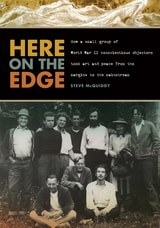
Here on the Edge
How a Small Group of World War II Conscientious Objectors Took Art and Peace from the Margins to the MainstreamSteve McQuiddy
Oregon State University Press, 2013
They worked six days a week—planting trees, crushing rock, building roads, and fighting forest fires—in exchange for only room and board. At night, they published books under the imprint of the Untide Press. They produced plays, art, and music—all during their limited non-work hours, with little money and few resources. This influential group included poet William Everson, later known as Brother Antoninus, “the Beat Friar”; violinist Broadus Erle, founder of the New Music Quartet; fine arts printer Adrian Wilson; Kermit Sheets, co-founder of San Francisco’s Interplayers theater group; architect Kemper Nomland, Jr.; and internationally renowned sculptor Clayton James.
After the war, camp members went on to participate in the San Francisco Poetry Renaissance of the 1950s, which heavily influenced the Beat Generation of Jack Kerouac, Allen Ginsberg, and Gary Snyder—who in turn inspired Ken Kesey and his Merry Pranksters, leading the way to the 1960s upheavals epitomized by San Francisco’s Summer of Love.
As camp members engaged in creative acts, they were plowing ground for the next generation, when a new set of young people, facing a war of their own in Vietnam, would populate the massive peace movements of the 1960s.
Twenty years in the making and packed with original research, Here on the Edge is the definitive history of the Fine Arts Group at Waldport, documenting how their actions resonated far beyond the borders of the camp. It will appeal to readers interested in peace studies, World War II history, influences on the 1960s generation, and in the rich social and cultural history of the West Coast.

Here to Stay, Here to Fight
A Race Today AnthologyPaul Field
Pluto Press, 2019
Here to Stay, Here to Fight
A Race Today AnthologyPaul Field
Pluto Press, 2019
Here to Stay
Uncovering South Asian American HistoryGeetika Rudra
Rutgers University Press, 2022
In Here to Stay, Geetika Rudra, a second-generation Indian immigrant and American history buff, takes readers on a journey across the country to unearth the little-known histories of earlier generations of South Asian Americans. She visits storied sites such as Oregon’s “Hindoo Alley,” home to many lumber workers at the turn of the century, and Angel Island, California’s immigration hub. She also introduces readers to such inspiring figures as Bhagat Singh Thind, an immigrant who had enlisted in the U.S. Army to serve his adopted country in World War I, but who was later denied citizenship and took his case all the way to the U.S. Supreme Court. In turns both serious and joyful, this book vividly reveals how South Asians have always been a vital part of the American tapestry.
Heredity under the Microscope
Chromosomes and the Study of the Human GenomeSoraya de Chadarevian
University of Chicago Press, 2020
Telling this history in full for the first time, Soraya de Chadarevian argues that the often bewildering variety of observations made under the microscope were central to the study of human genetics. Making space for microscope-based practices alongside molecular approaches, de Chadarevian analyzes the close connections between genetics and an array of scientific, medical, ethical, legal, and policy concerns in the atomic age. By exploring the visual evidence provided by chromosome research in the context of postwar biology and medicine, Heredity under the Microscope sheds new light on the cultural history of the human genome.
Heresy and the Ideal
On Contemporary PoetryDavid Baker
University of Arkansas Press, 2000
Heresy in the Heartland
The Controversy at The University of Dayton, 1960-67Mary Jude Brown
Catholic University of America Press, 2022
Heresy in the University
The Black Athena Controversy and the Responsibilities of American IntellectualsJacques Berlinerblau
Rutgers University Press, 1999
Heretics and Hellraisers
Women Contributors to The Masses, 1911-1917By Margaret C. Jones
University of Texas Press, 1993
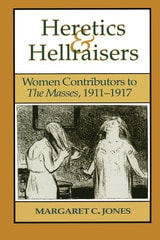
The Masses was the most dynamic and influential left-wing magazine of the early twentieth century, a touchstone for understanding radical thought and social movements in the United States during that era. As a magazine that supported feminist issues, it played a crucial role in shaping public discourse about women's concerns. Women editors, fiction writers, poets, and activists like Mary Heaton Vorse, Louise Bryant, Adriana Spadoni, Elsie Clews Parsons, Inez Haynes Gillmore, and Helen Hull contributed as significantly to the magazine as better-known male figures.
In this major revisionist work, Margaret C. Jones calls for reexamination of the relevance of Masses feminism to that of the 1990s. She explores women contributors' perspectives on crucial issues: patriarchy, birth control, the labor movement, woman suffrage, pacifism, and ethnicity. The book includes numerous examples of the writings and visual art of Masses women and a series of biographical/bibliographical sketches designed to aid other researchers.

Hermeneutical Heidegger
Edited by Michael Bowler and Ingo Farin
Northwestern University Press, 2016